
Bolshoi to Kamergersky: a Theatre Walk in Moscow
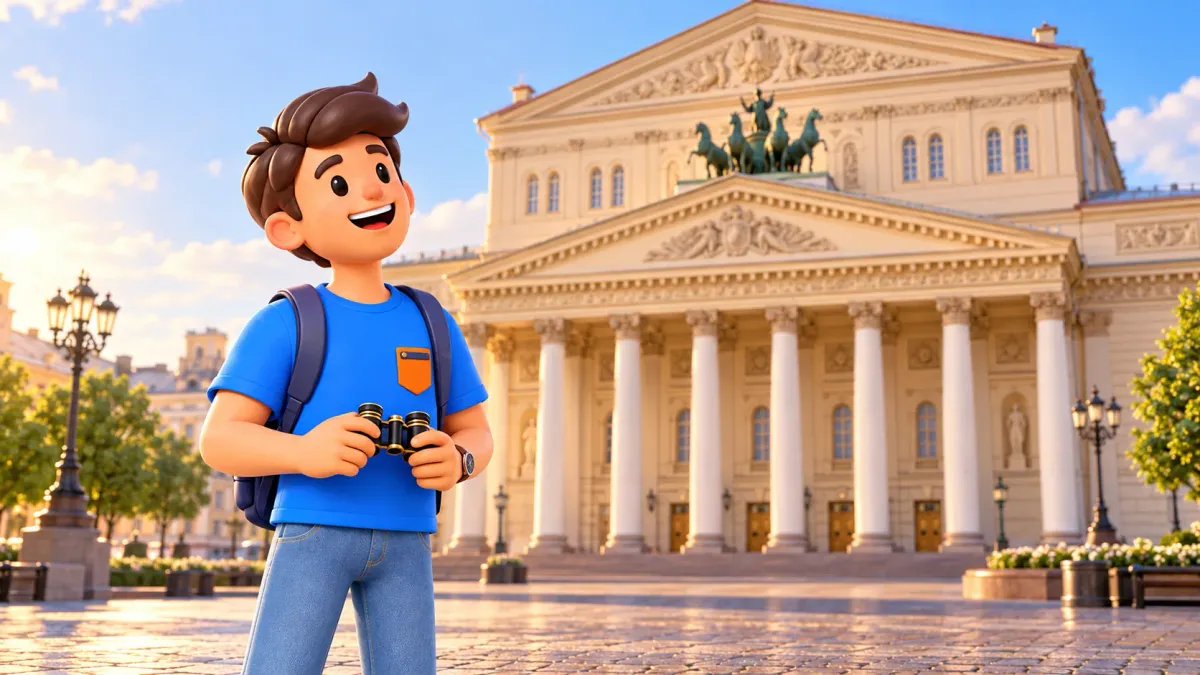
A walk from the Bolshoi Theatre to Kamergersky Lane offers a compact introduction to theatrical Moscow. Its interest comes from the changing city around the theatres: a formal square gives way to central streets and then a pedestrian lane, where a famous stage sits within everyday urban life. You can enjoy that contrast without buying a performance ticket or knowing the history of every company.
Allow roughly two to three hours for exterior sightseeing with pauses. This is a planning estimate, not a measured walking time. A performance, museum or guided interior visit needs additional time and separate arrangements. If the walk leads into an evening at the theatre, the address and starting time printed on your actual ticket should determine the rest of the day.
Plan the direction around your day
The basic sequence is Theatre Square, the Bolshoi and Maly theatres, then the streets towards Kamergersky Lane, the Chekhov Moscow Art Theatre and the monument to Stanislavsky and Nemirovich-Danchenko. Continue via Petrovka, Kuznetsky Most and Bolshaya Dmitrovka, using permitted crossings. You can finish towards Tverskaya. This is a short central walk with a clear theme rather than a survey of every theatrical address in Moscow.
To combine theatre with architecture, a museum or a proper break, try RoadMe: the app creates a personal trip plan around your interests, dates and pace. It is a convenient way to organise a coherent day in the city instead of fitting together separate lists of attractions yourself.
Before a performance, reverse the direction when useful. If your evening is at the Bolshoi, begin near Kamergersky and finish by the correct stage; for the Moscow Art Theatre, keep the square-to-lane order. Check the actual venue and entrance, not just the institution’s name. A theatre can use several stages. Leave time for entry arrangements and the cloakroom according to the organiser’s instructions.
For a daytime outing without a show, choose a starting point, a clear finish and one substantial pause. The common theme already connects the stops, so extra museums are optional. With a full day available, you could add part of the first-visit Moscow itinerary, shortening other sections to suit your energy. Treat the link as a choice of continuation, not an obligation to complete two programmes.
Theatre Square: look at the space first
On the square, put the phone away for a few minutes. Notice how the Bolshoi façade sets a scale, how neighbouring buildings sit around it and how much open space remains in front. This initial comparison helps you experience the square as a public stage. Find a place where you can look comfortably without blocking others before searching for the ideal photograph.
Ask a simple question: what makes a theatre recognisable before you enter its auditorium? At the Bolshoi, columns, the portico and the sculptural group above it provide an answer. The neighbouring Maly offers another scale and façade rhythm. Two buildings close together make the contrast understandable without a specialist vocabulary or a long lecture about architectural periods. It is an observation exercise, not a test of knowledge.
Keep the actual conditions in mind. Events, barriers and seasonal arrangements can change how the square is used. Do not make the entire outing depend on one camera position or access to every patch of pavement. If part is unavailable, look from a permitted side and continue. A view from directly opposite the main doors is only one possible way to appreciate the space.
You can also compare the building’s overall silhouette with a single close detail. From farther away, the columns seem part of one composition; nearer, their proportions and spacing become clearer. There is no need to attach a historical date to every observation. A small amount of attention makes the next theatre more interesting because you have something specific to compare.
The Bolshoi: a familiar image and a real building
The Bolshoi is associated above all with opera and ballet. On this walk, consider it also as a large building designed for an audience’s ceremonial arrival. Distance reveals the outline, while a closer permitted position brings architectural details into view. Exterior sightseeing and a performance offer different experiences; the façade alone cannot tell you what an evening inside will feel like.
If seeing a production is the main reason for your trip, choose the performance, date and stage first, then arrange the walk around them. Standing outside does not mean you can enter freely to see the auditorium. A guided tour, a show and an open ticket office are different visiting arrangements. Check the theatre’s current information for the activity you want; none is automatically included in this outdoor itinerary.
For the first stop, an overall view and one noticed detail are enough. Compare perspectives from permitted parts of the square without crossing roads for every new angle. If your companion has little interest in theatre, talk about the architecture: why it feels festive, how it is separated from the street and what changes when an audience gathers. That makes the subject approachable without reciting the repertoire.
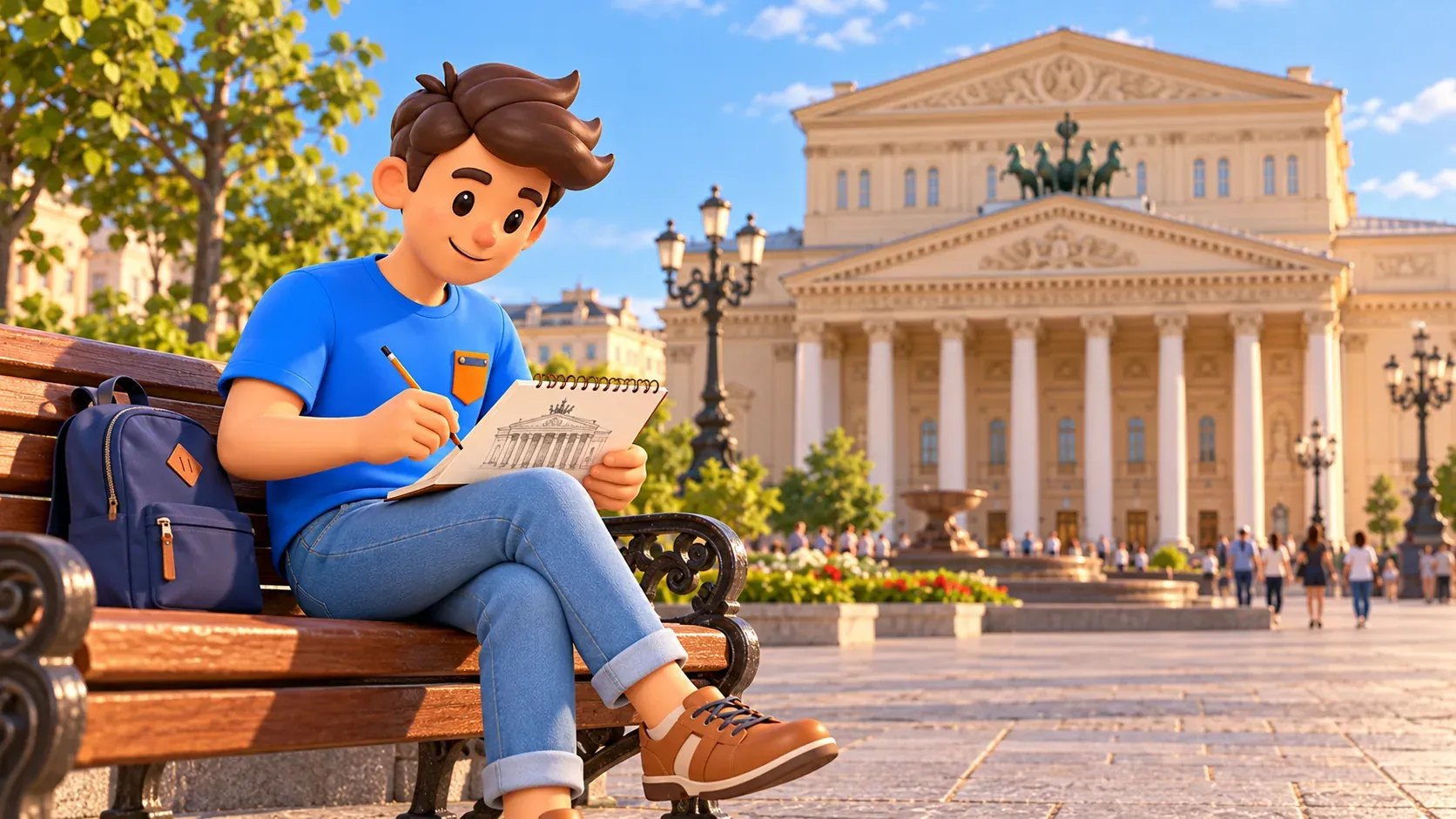
Before attending, read the production title and genre too. Opera, ballet and spoken drama bring different expectations, but preparing does not require becoming a specialist. A short introduction to the work can be enough; detailed interpretation can follow the experience. Discuss expectations before buying tickets, since enjoying the building’s architecture does not necessarily mean enjoying every production performed within it.
The Maly: another scale and a dramatic tradition
Pause at the Maly beside the Bolshoi. Its story is connected with the house of merchant Vasily Vargin: the theatre occupied the building on the square in 1824. Its association with Alexander Ostrovsky explains the description “House of Ostrovsky”. These few points give the façade a context beyond being an attractive neighbour. The institution’s fuller history can become a separate interest for another visit.
The difference is easier to notice if you resist immediately heading for the next street. Look at the windows, the entrance and the relationship to the square. There is no winner to choose between the theatres. The useful discovery is that theatrical space can take different forms. The same word connects different genres, building sizes and ways of meeting an audience.
If a performance follows, finish exterior sightseeing before you find yourself checking the time every minute. Do not add a spontaneous museum simply because it is nearby. Reaching your evening in a relaxed state matters more than technically fitting another stop into the afternoon. Without tickets, save an appealing theatre idea for a future visit and continue towards Kamergersky.

The streets to Kamergersky are part of the story
Continue towards Petrovka, then Kuznetsky Most and Bolshaya Dmitrovka, from which you can reach Kamergersky Lane. The important thing is a clear order of streets and authorised crossings, rather than an imaginary perfectly straight line. Check the chosen path on a current map. Closed courtyards and service passages are unnecessary shortcuts for this compact city walk.
Your way of looking changes along the link. On the square, attention embraced a broad space; on the streets, it shifts naturally to windows, shopfronts and entrances. Notice that change without turning every façade into an additional attraction. The theatre theme gives you permission to pass other addresses. That is how the outing remains compact rather than becoming an endless list of central Moscow.
Choose a break before you become tired. A long stop at a table changes the total duration, which is perfectly reasonable. Before a show, decide how much time you actually want outside and how much belongs to food and preparation. In rain, shorten the outdoor observations rather than assuming every neighbouring theatre will provide freely accessible shelter and interiors.
The Chekhov Moscow Art Theatre: a theatre within a lane
Find the Chekhov Moscow Art Theatre in Kamergersky Lane. It began working here in 1902, in a building reworked by Fyodor Schechtel. Its history is connected with Konstantin Stanislavsky and Vladimir Nemirovich-Danchenko. The address provides a clear contrast with your starting point: a theatre embedded in a lane’s continuing urban life, rather than facing a large ceremonial square.
Look at it as a meeting of architectural and theatrical ideas. Schechtel’s contribution went beyond alterations to the building; the theatre’s visual design and famous seagull emblem are part of that association. This short context helps draw attention to an overall artistic identity. It does not mean you can see every associated room during one short walk, since different spaces have their own visiting conditions.
The Moscow Art Theatre Museum is a possible separate continuation if theatre history has become your main interest. Check its current programme, correct entrance and the terms of the particular event. An exhibition, tour and performance are different activities. A similar institutional name or neighbouring address cannot replace checking the booking. Add a separate block of time instead of silently squeezing a museum into the walk’s two hours.
Stay for one more observation: what does a theatre look like before the show begins? The lane does not turn into a museum corridor; passers-by continue their own lives. That ordinary activity around a celebrated address is part of the appeal. Do not expect a meeting with performers or enter working areas. The accessible street and building exterior already offer enough material for the walk.
The founders’ monument and an unhurried finish
End the theatrical section at the monument to Stanislavsky and Nemirovich-Danchenko. After two different theatrical settings, the stop brings attention back to people and ideas. You do not need to explain an acting system or the whole history of directing. Connect the names with the building you have just seen and notice how theatrical memory remains part of an ordinary pedestrian lane.
To make this walk part of your own Moscow trip, try RoadMe: it builds a personal day-by-day plan connecting theatre with your other chosen interests. Keeping the wider programme together makes it easier to use the route in the city while allowing your own pace and time to take things in.
Finish according to your energy. Continue towards Tverskaya, pause in the lane or go to your booked performance. An optional extension should not become another list of demands. With children, ask which building looks most festive and why; adults can compare their answers too. The walk leaves a few clear images, helping you decide whether your next experience should be architectural, museum-based or on the stage.


