
From Bastille to Gare de Lyon: A Walk through a Market and Old Streets
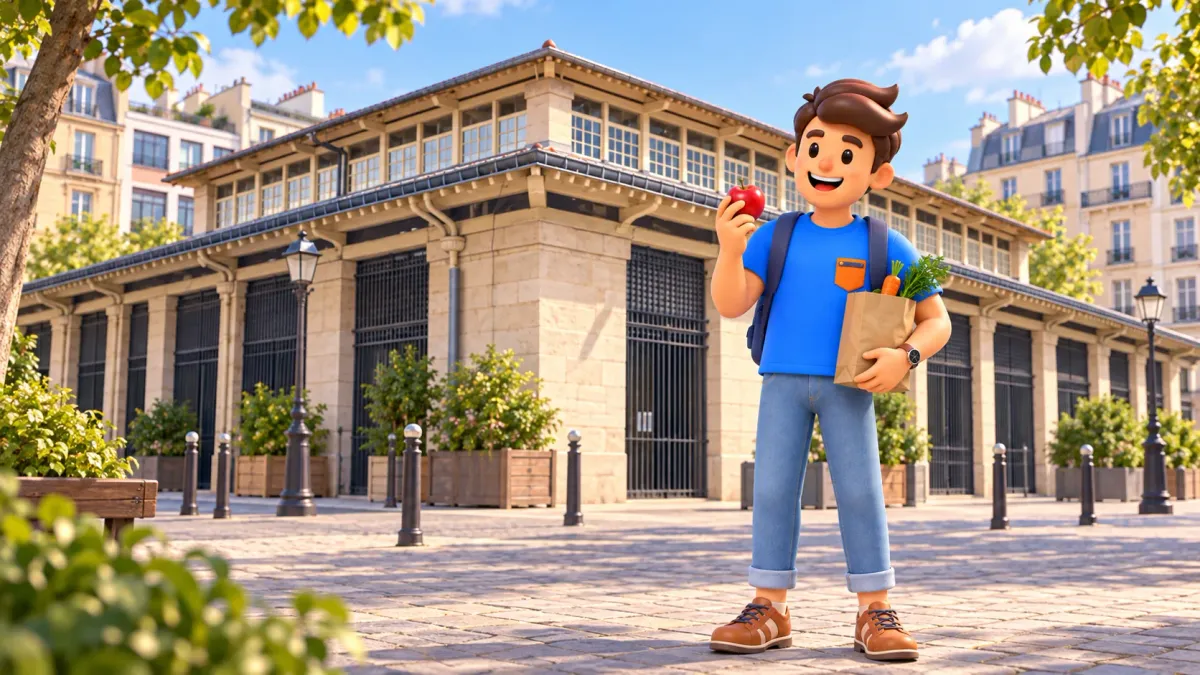
The walk from Bastille to Gare de Lyon can be a small journey through eastern Paris in its own right. Begin with a monumental square, follow streets shaped by craft and commerce, pause inside the covered Beauvau market and finish at the station’s clock tower. Between the famous endpoints, everyday buildings give the route its character.
Allow about two and a half hours, preferably on a Tuesday–Sunday morning. The programme includes time to look, a short market visit and a proper pause. Saint-Antoine-des-Quinze-Vingts can be appreciated from outside, so entering a working church is optional. If you have a train afterwards, keep its departure preparations separate from the walk.
A 150-minute walk with time between the stops
Try RoadMe to build a complete personal trip plan around your dates, interests, pace and budget. Organising the day in the app makes it much more convenient to connect neighbourhood walks, visits and breaks across your Paris stay.
Start on the eastern side of Place de la Bastille. Walk east along rue du Faubourg Saint-Antoine, then turn south into rue de Cotte towards Place d’Aligre and the covered market. Afterwards, continue along rue de Cotte to rue de Charenton, turn right, then left into avenue Ledru-Rollin for the church at 66 avenue Ledru-Rollin. Continue towards rue de Lyon and finish on Place Louis-Armand, at Gare de Lyon’s main approach.
The connections between the main stops cover about 1.9 kilometres. With movement around the square, inside the market and at the station forecourt, allow roughly 2–2.5 kilometres overall. These are map-based and editorial estimates, with time for crossings and observations; they are not a timed walk or a guarantee of an entirely step-free route.
| Part of the walk | Allowance | With a 10:00 start |
|---|---|---|
| Bastille square and column exterior | 15 minutes | 10:00–10:15 |
| Faubourg Saint-Antoine and rue de Cotte | 25 minutes | 10:15–10:40 |
| Covered Beauvau market | 25 minutes | 10:40–11:05 |
| Walk to the church | 15 minutes | 11:05–11:20 |
| Saint-Antoine exterior or optional quiet entry | 15 minutes | 11:20–11:35 |
| Pause | 20 minutes | 11:35–11:55 |
| Walk towards the station | 15 minutes | 11:55–12:10 |
| Station exterior and orientation | 20 minutes | 12:10–12:30 |
The total is 150 minutes, from Bastille to the station stop. Travel to the start, a full meal, extensive shopping, luggage arrangements and train boarding are additional. An unexpected queue or a longer conversation at a stall also needs an adjustment. The church exterior keeps the middle of the itinerary workable even when a service prevents a quiet visit inside.
Bastille: distinguish the square from the column’s story
Begin by taking in the July Column from a comfortable public position. The name Bastille recalls the fortress and the events of 1789, but the column tells a later story: the July Revolution of 1830. Inaugurated in 1840, the monument also became a place of remembrance for those killed in the revolution of February 1848.
That distinction makes a short stop more meaningful. You are looking at a place whose political memories accumulated over time. Notice how the tall vertical monument organises a broad square, then turn your attention towards the street where the walk continues. Fifteen minutes are enough for this introduction without needing a complete account of the revolutions.
Remain in the accessible public areas and use marked crossings. The programme is an exterior look at the square and column; a visit beneath the monument or an opera performance would be another activity. Keep the first stop modest, since the district between Bastille and the station deserves most of your attention.
Faubourg Saint-Antoine and rue de Cotte: follow the working city
Head along rue du Faubourg Saint-Antoine, watching for rue de Cotte on your right. The faubourg has a longstanding association with furniture making, carpentry and related trades. That history offers a way to look at the street: as a setting for work and trade, with shopfronts and entrances connecting public movement to spaces behind the façades.
Choose a few details as you go. Compare the width of an entrance with the scale of the windows above it, or notice how a commercial frontage occupies the ground floor of a residential building. These are observation prompts, not proof that every doorway still serves an old workshop. The neighbourhood’s character comes from different uses existing close together.
Private courtyards and working businesses have their own access conditions. Look from the public street unless a place is clearly open to visitors, and let residents or deliveries pass. The twenty-five-minute allowance covers the connection to Beauvau with a little architectural attention; a workshop visit, lengthy shop browsing or a detour through several courts would extend it.
Turn into rue de Cotte and continue towards Place d’Aligre. The change in scale is part of the walk’s appeal: a busy artery gives way to streets surrounding a neighbourhood market. Keep the covered hall as your next destination, rather than assuming that every market stall you encounter belongs to the same opening schedule.
Beauvau: a wooden roof above everyday trade
The covered Beauvau market stands on Place d’Aligre. Enter through an open public doorway and pause where you leave space for customers. Looking around requires no purchase. Inside, the timber roof structure is an especially useful detail: its shape has been compared to an upturned boat hull. The wooden frame is a defining feature of this traditional covered market.
The hall was rebuilt in 1843 under municipal architect Marc-Gabriel Jolivet. Its roof frame was restored in 2015 after a fire. Those two moments connect practical architecture with continuing use: a building made for trade has needed care and renewal while remaining part of the neighbourhood’s daily activity.
Look along one aisle, then lift your eyes towards the roof without standing in the middle of the flow. If the historic fountain at the crossing of the four aisles catches your attention, treat it as an architectural feature: it is no longer supplied with water. A short look at produce displays and the arrangement of stalls adds another layer without requiring a food tour.
The city lists the covered hall as closed on Monday; Tuesday–Friday 08:00–13:00 and 16:00–19:30; Saturday 08:00–19:30; Sunday 08:00–13:30. A 10:00 start from Bastille brings you here around 10:40, comfortably before the ordinary morning closure. Check current exceptions and any individual merchant you particularly want to see.
The open-air Aligre market is separate. Its ordinary hours are Tuesday–Friday 07:30–13:30 and Saturday–Sunday 07:30–14:30, with Monday closed. The outdoor rows can contribute to the morning atmosphere, but their hours do not replace Beauvau’s. The municipal market listings indicate no public toilets, so plan that practical stop elsewhere.
Saint-Antoine: make room for a quieter stop
Leave the market for the public street connection towards rue de Charenton and avenue Ledru-Rollin. The church’s main entrance is at 66 avenue Ledru-Rollin. The fifteen-minute walking allowance leaves room for street crossings and finding the approach.
Saint-Antoine-des-Quinze-Vingts belongs to the early twentieth century. Its first stone was laid in 1902, and the church was blessed in 1903; the project involved Émile Vaudremer and then Lucien Roy. Notice the entrance and overall façade before deciding whether to go inside.
The parish’s current opening information lists Monday 16:00–19:30 and Tuesday–Sunday 08:00–19:30. Worship takes priority over sightseeing. A door being open does not ensure that this particular fifteen-minute stop is suitable for looking around; follow staff guidance and remain outside during a service when a visit would disturb it.
An exterior stop is enough for the route. If a quiet entry is possible, use it respectfully and keep the duration modest. Otherwise, spend the time looking at the building from the public approach. This pause in the sequence brings a different kind of neighbourhood place between the market’s activity and the station’s movement.
Pause before the station becomes the main concern
Keep twenty minutes for rest before the final connection. Choose a suitable available place without counting on an empty bench or café table. A purchase is optional; if you want refreshments, allow for ordering and service, and extend the outing when necessary. A proper lunch belongs outside this short allowance.
Build the wider day in RoadMe according to the places you enjoy and the time you want to spend in them. Its complete personal plan makes it easier to combine a market morning, architecture and the rest of your trip at a comfortable pace.
After the pause, continue towards rue de Lyon and Place Louis-Armand. The station is your final architectural stop, with the main approach facing the square. Follow the current public directions as you get closer, keeping passenger movement clear and allowing yourself to switch from leisurely observation to practical orientation.
Gare de Lyon: a railway station with the presence of a palace
Look at the façade and clock tower from the public forecourt, where the available view allows. Marius Toudoire reshaped the station for the Universal Exhibition of 1900, giving it a monumental architectural presence. The clock makes the building immediately legible as a place concerned with journeys and time, while its surrounding stonework gives that practical function a ceremonial setting.
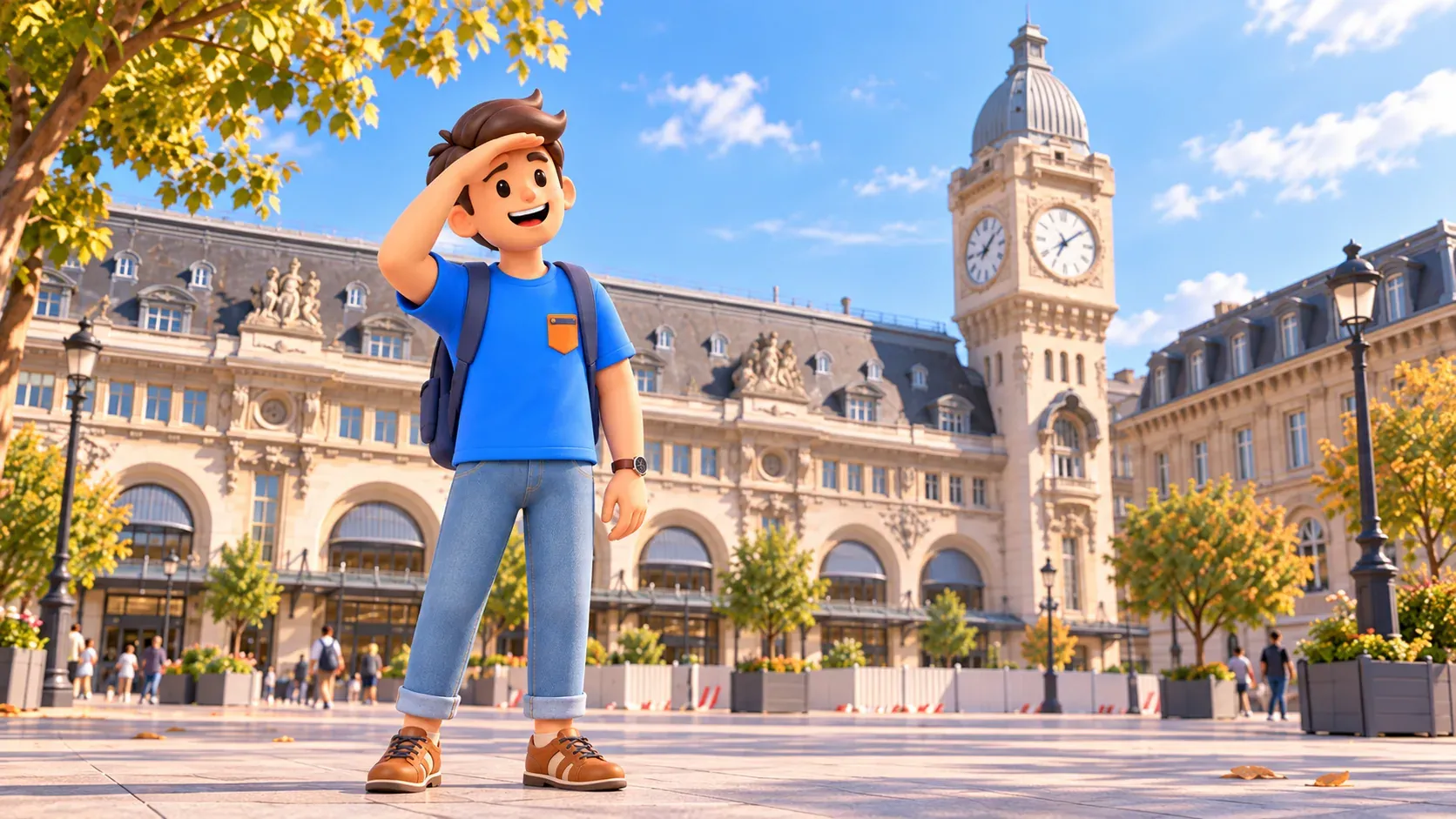
If visible, look for the decorative references to travel and the industrial age, including allegories of navigation and steam. They connect the building to the movement of people and goods. The clock tower belongs to the same station stop: this programme includes an exterior view, without an additional tower visit or access to technical areas.
As checked in October 2026, restoration work on the main façade is concentrated in 2025–2027, and the separate Côté Seine redevelopment is scheduled through 2029. These projects do not mean the whole station is closed, but parts of the decoration or approaches may be affected. Follow signs and barriers; a clear view of the complete historic façade cannot be promised.
Finish the walk and keep train preparations separate
If you are departing by train, add a separate reserve for locating the correct hall, dealing with luggage and meeting the requirements of your actual operator and ticket. The 12:30 finish in the example is an estimated end to sightseeing, not a recommended train departure time. Different services have different boarding arrangements, so one universal buffer would be misleading.
SNCF warns that station works have substantially reduced locker capacity. Do not begin the walk assuming a locker will be available at the finish. Confirm luggage arrangements before setting out and allow time for storage and collection separately. Walking through a busy market with a large suitcase may also make the neighbourhood outing less comfortable.
On Monday, move the full programme to another day: both markets are closed, and the church opens only later. For a separate outing, our two-hour Bercy walk follows gardens, former wine warehouses and cinema. Give it its own time and connection; this route already has a complete finish at Gare de Lyon.


