
Bercy in Two Hours: Gardens, Wine Warehouses and Cinema
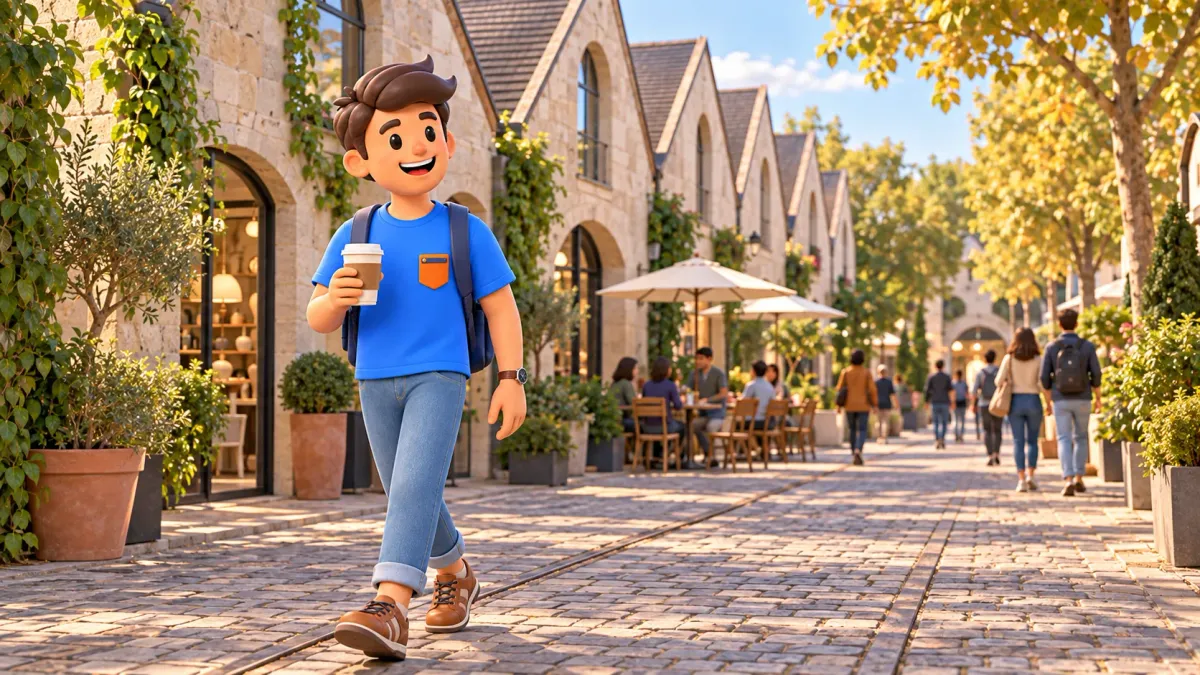
Bercy suits a Paris afternoon when you want greenery, smaller buildings and a story beyond the famous monuments. A former wine trading district has become a place for gardens, shopping and cinema. Its past emerges through the relationship between paths, surviving warehouses and an unusual cultural building, rather than through one landmark that explains the whole neighbourhood.
This two-hour walk starts at Bercy Métro and ends at Cour Saint-Émilion. See the Cinémathèque française from outside, cross the park and finish among former wine warehouses at Bercy Village. The basic outdoor route requires no admission ticket. A visit to the Musée Méliès or a film screening needs additional time and a plan shaped around its actual opening hours or showtime.
A practical two-hour Bercy itinerary
Start at Bercy on Métro lines 6 and 14. Your first stop is the Cinémathèque française at 51 rue de Bercy. Continue through the central garden plots, cross rue Joseph-Kessel using a park footbridge and explore the romantic garden. Leave towards rue François-Truffaut, then follow Cour Saint-Émilion through Bercy Village. Cour Saint-Émilion Métro, on line 14, provides the finish.
Allow roughly 15 minutes for the Cinémathèque exterior, 35 for the central gardens, 25 around the romantic garden and 20 among the warehouses. Reserve another 25 minutes for walking between these stops and a short pause. That makes approximately two hours: an editorial estimate, not a measured journey. Travel from your accommodation, museum admission and a proper sit-down meal are additional.
Try planning your visit with RoadMe, which creates a personal day-by-day trip plan around your dates, interests, pace and budget. A considered itinerary is much easier to use on the move and helps Bercy fit naturally into your wider Paris stay.
Give the walk three themes: cinema, garden design and the wine trade. Choose one detail at each stop instead of searching for every pavilion or plant. This leaves enough time to understand the setting. If photographs or a coffee take longer than expected, shorten a later stop rather than assuming that the two-hour estimate will absorb unlimited additions.
The Cinémathèque: start with the building
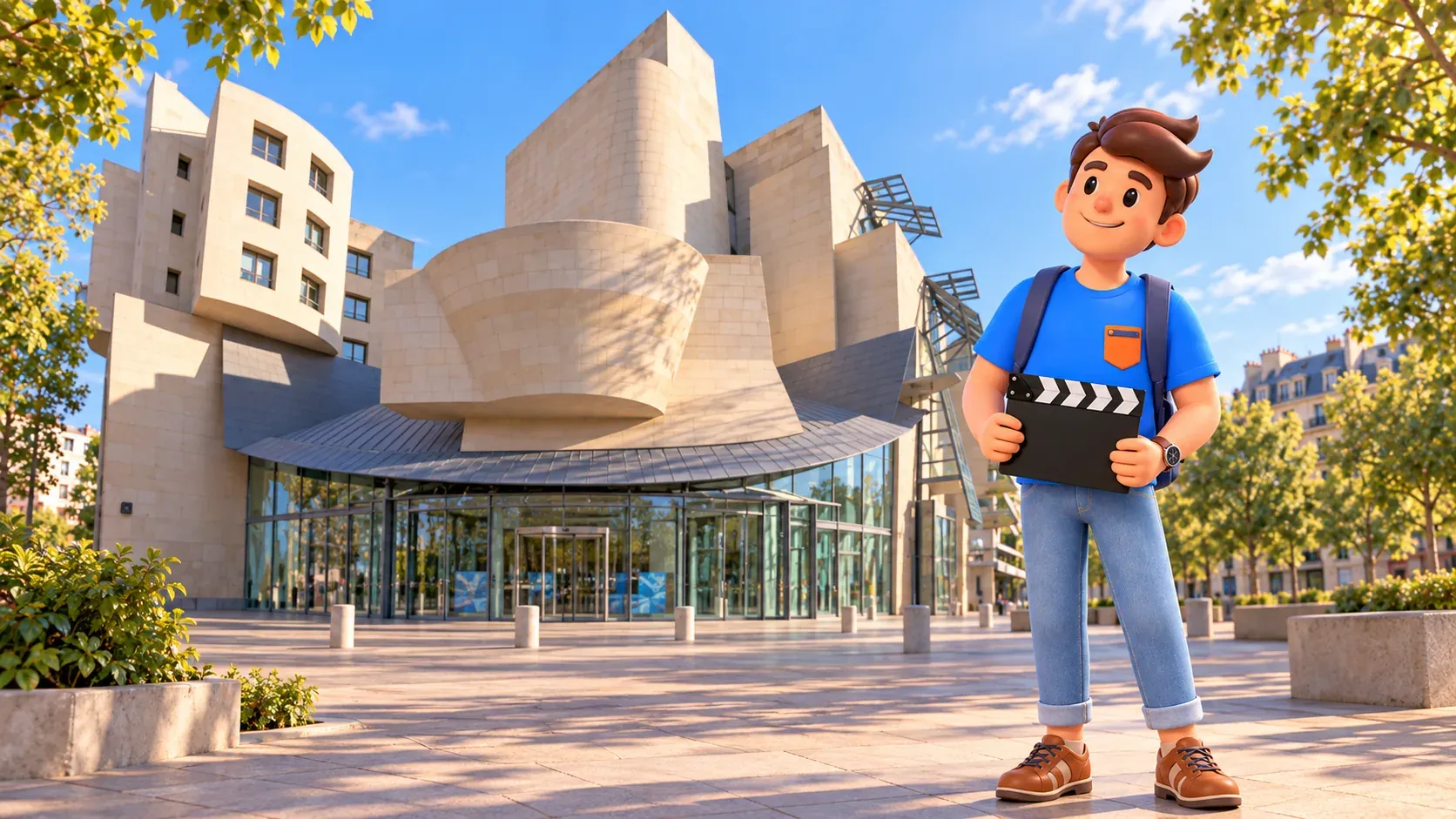
Pause on the public space beside the Cinémathèque française. Pale stone forms curve, project and meet a glazed lower level. A small change of viewpoint reveals a different relationship between the rounded volumes, angular walls and windows. You can enjoy this exterior without entering the building. Museum galleries and screenings are separate visits, rather than automatic extensions of looking at the façade.
Frank Gehry designed the building for the American cultural centre, which opened in 1994. The Cinémathèque has occupied it since September 2005; the institution itself was founded in 1936. These are different stages of the story. Its role includes preserving and showing cinema heritage, so the place is concerned with how films survive and are understood as well as with what is screening today.
Look at the façade as an arrangement of forms. Where does a heavy wall meet the transparent entrance? Which outline becomes more noticeable in shadow? These observations link the architecture to an interest in images without needing a long account of the architect’s career. Keep to the public space and take photographs without blocking the entrance or implying that an exterior view gives access inside.
If cinema is your main interest, the Musée Méliès can justify a longer visit. Its subject is the magic of film, explored through optical devices, costumes, objects and the history of screen effects. Georges Méliès came to filmmaking from stage illusion and is associated with A Trip to the Moon. Select a few objects that help connect a technical idea with an image rather than trying to memorise the entire collection.
Central gardens and traces of the wine district
Move into the park and keep heading towards the central garden plots. Parc de Bercy took shape in the 1990s on former wine warehouse land. Surviving features recall that earlier use, but the present gardens are not an operating storage yard. Let the scale of your attention change: from a large cultural building to paths, planting areas and smaller structures encountered at walking speed.
The central Jardin Yitzhak Rabin is arranged as a sequence of garden squares. Kitchen gardening, fruit trees, roses and vines appear among its themes. Choose a couple of areas according to the season. When flowers are scarce, supports, branches and the layout of paths become easier to notice. A winter visit can still make sense without expecting the same display as a spring or summer walk.
The vines recall Bercy’s trading history. Think of goods arriving, being stored and moving onward, rather than imagining a rural vineyard untouched by the city. The preserved warehouses and rails later in the walk reinforce this working past. Seeing vines here does not mean that your ordinary park visit includes a tasting or access to harvesting activities. Their value on this route is the link they make between landscape and memory.
Observe planted areas from public paths and respect any barriers. For a garden-focused outing, spend a little longer here and reduce the shopping street stop. If architecture appeals more, a brief comparison of two garden plots may be enough. These shifts change the emphasis without adding distant destinations. The route remains a straightforward progression through one district rather than a checklist spread across eastern Paris.
The romantic garden: a pause beside water
Cross rue Joseph-Kessel by one of the park’s pedestrian bridges to continue into the romantic garden. This crossing is above a city street. It is not the Passerelle Simone de Beauvoir over the Seine, and you do not need to cross the river for this itinerary. Follow the garden paths towards the small lake, keeping the later exit towards Bercy Village in mind.
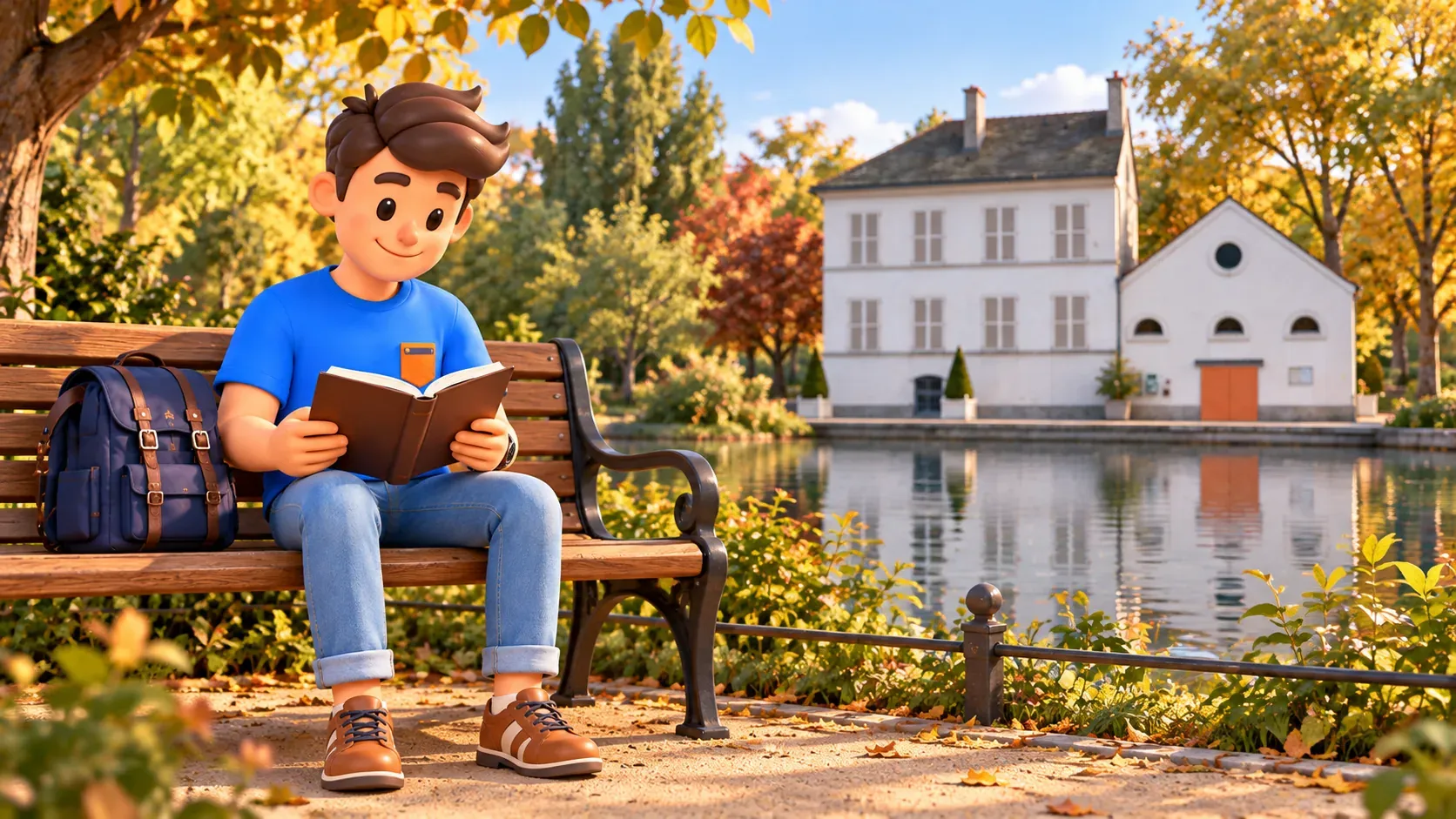
The composition becomes less regular here. Water, trees and curved paths replace the rhythm of garden squares. Maison du Lac stands on an island in a small lake: a pale building with a dark roof, set among greenery. Look at it from a public path and compare the shape of the façade with its reflection. The setting offers a quieter visual subject than the commercial street ahead.
Maison du Lac is now associated with the Paris climate agency. Do not assume that it operates as a museum open whenever you arrive; this itinerary treats it as an exterior stop. Birds may appear around the water, but a sighting is not guaranteed. If they do, watch from a respectful distance. A pleasant pause does not need an activity or a particular wildlife encounter to justify its place in the walk.
Take a few minutes on a free bench if one is available. Decide whether you want a short drink at the finish or more time observing buildings. Then continue towards the exit on rue François-Truffaut, on the Bercy Village side of the garden. Avoid making a full circuit of every path when your available time really is two hours. The pause works best when it remains part of the route.
Bercy Village: wine warehouses with a new purpose
Continue to Cour Saint-Émilion. Low pale stone buildings, repeating gables and paving create a different scale from the larger contemporary blocks nearby. These former wine warehouses now accommodate shops, restaurants and leisure uses. The word Village describes the atmosphere of the place; it does not mean that an unchanged rural settlement survives in the middle of Paris.
The wine trade was central to Bercy in the nineteenth century. As activity declined in the twentieth century, the district changed and some warehouses were kept for new uses. Notice the rails in the paving and the repeated fronts: they suggest movement of goods and a series of practical storage spaces. Windows, shopfronts and tables now show how a working landscape can acquire a different everyday life.
Walk along the street without feeling obliged to enter every shop. For a photograph, try combining a gable, stonework and a modern shopfront rather than concentrating only on a shopping centre sign. Watch your footing around rails and uneven paving. Shopping and a long restaurant meal can extend the walk substantially. A brief drink is possible if you have time left and find a suitable place.
As checked on 13 October 2026, Bercy Village lists daily centre hours of 10am–2am and shop hours of 10am–8pm. That does not guarantee that every restaurant serves throughout the centre’s entire opening period. Check your chosen business individually. A late opening at the commercial destination also does not mean that you can reach it through gardens that have already closed.
In rain, shorten the exterior pauses and decide whether a separate museum visit would suit you better than a long walk. Paving and steps may be slippery afterwards. Put your phone away while negotiating an awkward surface, then stop for a photograph where you leave room for others. Walking, framing a picture and checking the next turn need not happen simultaneously.
Opening hours and the option of a longer cinema visit
Check the timetable for the central and romantic gardens specifically. The park’s large lawns are open around the clock, but that rule does not cover every section. From 1 to 24 October 2026, the named gardens open at 8am on weekdays and 9am at weekends, closing at 7.30pm. From 25 October, the published winter closing time is 5.45pm. Consult the seasonal calendar for other dates.
Regular Musée Méliès hours are noon–7pm on Monday and Wednesday to Friday, and 11am–8pm at weekends; Tuesday is closed. School holidays and public holidays follow a separate timetable. Last admission is 45 minutes before closing. On the second Thursday of the month, ordinary museum access ends at 6pm; the youth evening has specific eligibility and registration conditions. Do not treat it as unrestricted late opening.
For a film, consider reversing the walk: start at Cour Saint-Émilion, cross the park and end at the Cinémathèque. Choose the screening first and shape the walk around it. The institution recommends arriving 30 minutes before a screening and does not admit latecomers to the auditorium. Museum, temporary exhibition and screening tickets have their own conditions. They are not automatically one combined purchase.
Suitcases and large bags are not admitted to the Cinémathèque; only small handbags or backpacks are accepted. Its interior provides lifts and adapted toilets for visitors with reduced mobility. That does not establish a step-free route through the entire park: municipal accessibility information for the central gardens is unspecified, and bridges and paving need individual assessment. Confirm the crossing you require if steps are significant for you.
Use RoadMe to turn your preferred walks, museums and rest periods into a personal plan for the whole trip. One itinerary shaped around your interests and pace is much more convenient and effective to use than assembling each day from separate lists.
Finish at Cour Saint-Émilion Métro, preserving the one-way sequence. On another day, our La Villette walk with music and science continues the theme of former industrial land and cultural life. Keep Bercy for a smaller encounter: an expressive façade, a green crossing, a pause beside water and a few details of the old wine district.


