
Two days in Barcelona: the old city, Gaudí and the sea
With two days in Barcelona, give the first to the old city, green space and the waterfront, and the second to Gaudí and Modernisme. Separating the areas helps avoid repeatedly crossing the centre for another famous building. You can experience different sides of the city and choose a worthwhile indoor visit without spending the whole weekend moving between entrances and transport connections.
This plan assumes two days already available in Barcelona. Airport transfers, checking in and collecting luggage are additional. Either day can come first, depending on your bookings and arrival. If you only have one full date, use our one-day Barcelona itinerary instead of trying to compress both programmes into a single outing.
Divide the two days before making reservations
Day one connects the Gothic Quarter, El Born, Ciutadella and the water. Day two links the Sagrada Família, an exterior look at Sant Pau and Passeig de Gràcia. Montjuïc and Park Güell are not compulsory additions. Each deserves a proper block that can replace part of this programme, rather than appearing as an extra stop in an already occupied afternoon.
For a more convenient and efficient way to organise the trip around yourself, try RoadMe: the app develops a personal day-by-day itinerary using your interests, dates, pace and budget. Start with the experience you want most, whether architecture, art or time by the sea, and let the plan take shape around your preferences.
Find a suitable time for your main indoor visit first, then arrange the walks. A Sagrada Família booking belongs in the architecture day. If the Picasso Museum matters more, give it a separate El Born block and shorten the park. Two days let you choose where to go deeper; they do not make every nearby museum essential.
Allow approximately six to eight hours for day one and seven to nine for day two with the main interior. These are editorial planning estimates, not measured walks. Named blocks include their pauses and stops, but not your journey to the start. Create a slower pace by reducing the programme, rather than expecting everyone to keep recovering time by walking faster.
Day one: the Gothic Quarter through its public spaces
Begin outside Barcelona Cathedral, dedicated to the Holy Cross and Saint Eulalia. It provides a clear first landmark in the old centre. The aim is to compare spaces: the open cathedral square, the more enclosed Plaça del Rei and the administrative setting of Plaça de Sant Jaume. You do not need to enter every religious building to understand these differences.
The cathedral offers a useful reminder that the quarter developed in layers. Work on its Gothic building began in 1298, while the familiar façade belongs to a later period. Remembering this difference makes the streets more interesting than imagining everything as one untouched medieval scene. Look at the outline of the church and its neighbours before moving on.
At Plaça del Rei, notice the former royal-palace ensemble and how its buildings enclose the square. The history museum and underground archaeology require a different rhythm from an exterior walk. The basic version stays outside. If Roman history is a particular interest, give the museum part of the time otherwise assigned to the park, after checking admission for your date.
Continue to Plaça de Sant Jaume, with city hall and the Catalan government palace. Historic architecture here accompanies the continuing administration of the city. Allow roughly ninety minutes to two hours for the morning section, excluding a separate interior visit. A small detour into one neighbouring lane is enough; following every attractive opening would turn a compact walk into a different outing.
El Born: Gothic architecture, art and lunch
Cross towards Via Laietana and follow Carrer de l’Argenteria to Santa Maria del Mar. Viewing the basilica outside gives you another Gothic façade to compare with the cathedral. Take a little time around the square and observe the proportions and surrounding streets. A detailed tour of the church is a separate visit, rather than an assumed part of this block.
The Picasso Museum and other cultural venues are nearby. Decide whether this is a museum-focused day with a shorter walk, or a neighbourhood introduction without collections. Walking along Carrer de Montcada is not equivalent to visiting the Picasso Museum. If you want to see the art, protect a real block instead of expecting a few minutes between lunch and the park to be sufficient.
Lunch is the moment to assess how the day is actually going. Allow around an hour and choose somewhere with a clear menu rather than making one particular restaurant indispensable. If eating and conversation take longer, retain only one green section afterwards. The point is to keep your enthusiasm for tomorrow, rather than finish the first day exhausted.
After lunch: Ciutadella and the Arc de Triomf
Head from El Born into Parc de la Ciutadella for a change from narrow streets to paths, trees and open space. Choose the monumental cascade and a few nearby details instead of circling the entire park. If a path is closed, enjoy the accessible section. Running fountains and admission to every park building are not conditions on which this route depends.
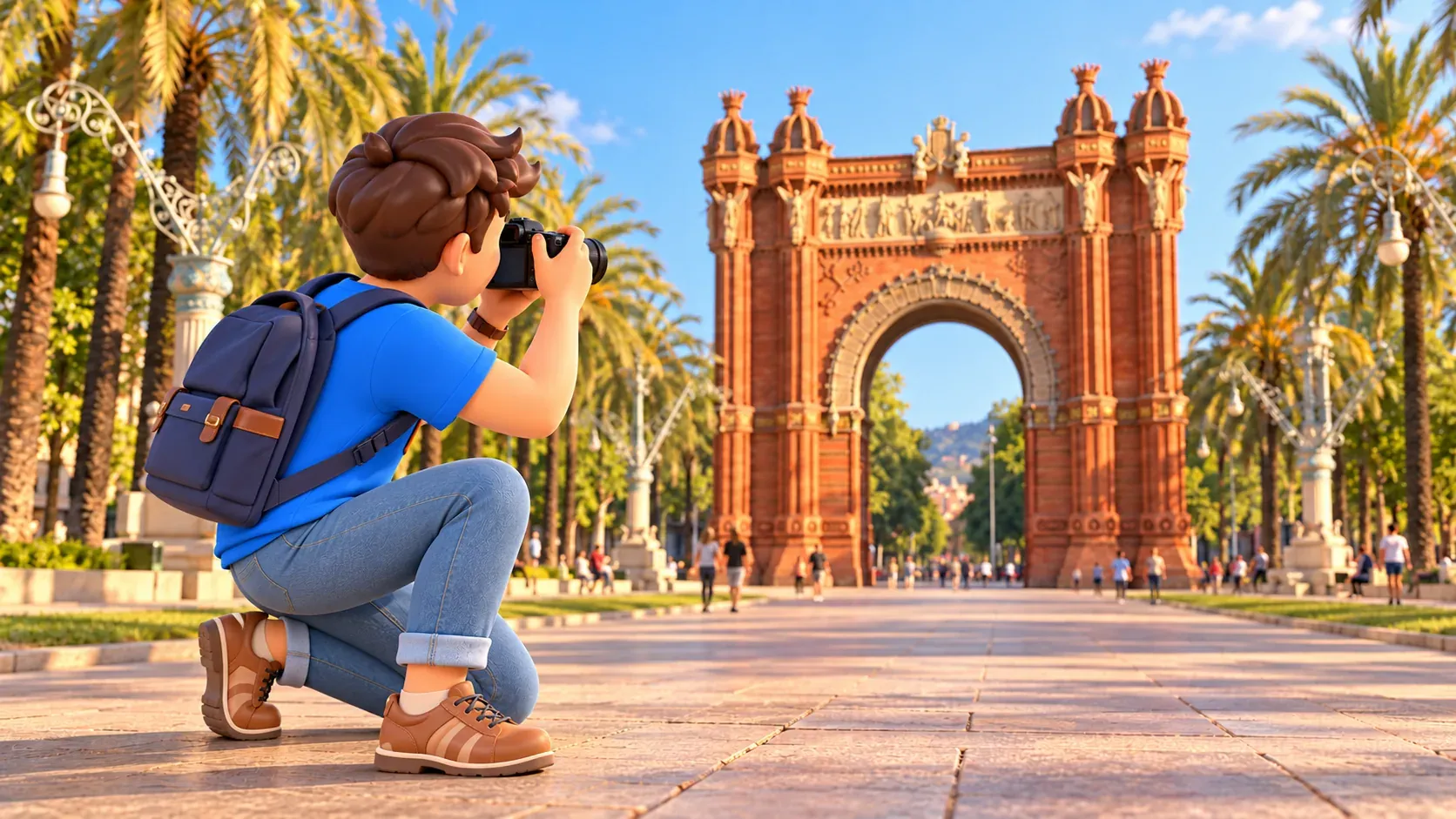
Then follow the promenade towards the Arc de Triomf along Passeig de Lluís Companys. The arch was built as the entrance to the 1888 Universal Exhibition held in Ciutadella. That fact connects the two stops: this is part of a major civic event’s history, rather than an isolated ceremonial monument. Look at the red brick and reliefs without needing to learn the subject of every panel.
Allow around ninety minutes for the park and arch together, longer if you want to sit in the shade. At the arch, choose whether to finish nearby or make your way back through El Born to the water. The second option involves another walk; the shoreline does not start immediately behind the monument. Save it for another evening if you are already tired.
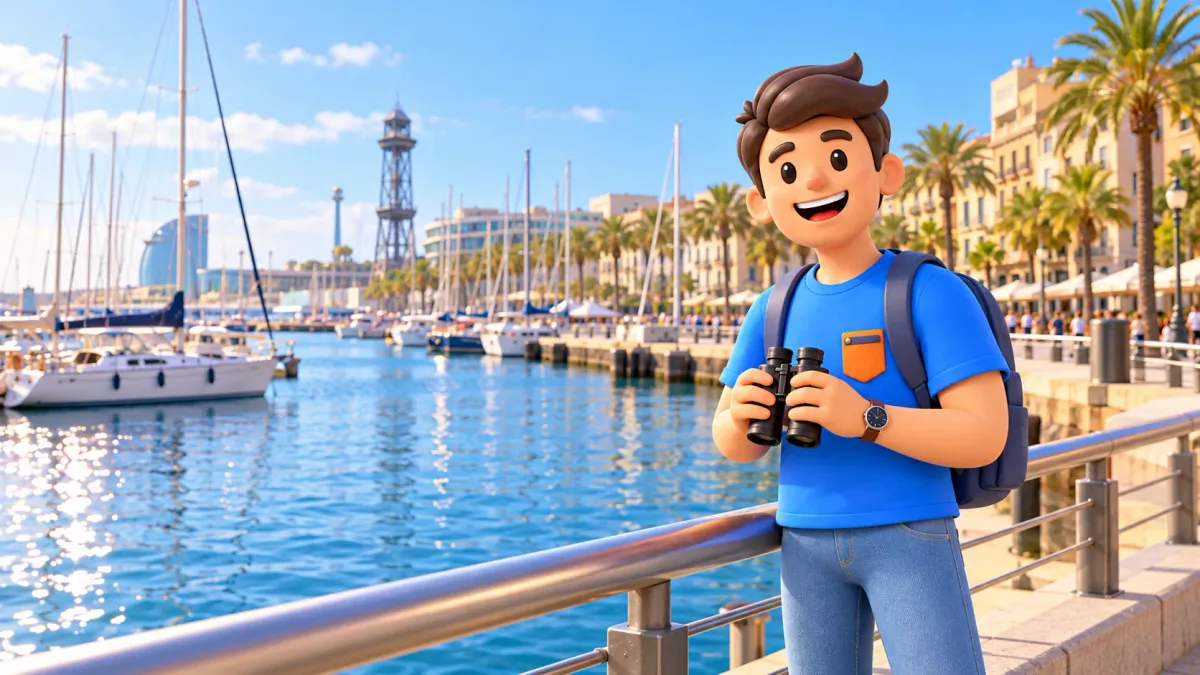
A waterfront finish: Port Vell or Barceloneta
For a compact finish, choose Port Vell and Rambla de Mar. From the arch area, budget roughly thirty to forty minutes for the urban walk towards the water, rather than reading a straight line on the map as your route. Returning through El Born also gives you the option of dinner in an area you have already started to recognise.
Barceloneta suits those who prefer the sea and a coastal promenade to harbour and bridge views. It is a different continuation, with its own return to transport. You need not complete every port space followed by the full beach. Swimming is not automatically included: it requires suitable conditions, time and arrangements for changing, rather than simply finding water at the end of a walk.
Consider tomorrow’s plans before adding another distant stop tonight. A relaxed meal and an earlier return can be the better choice. You have already encountered historic squares, El Born’s streets, parkland and the waterfront. Those contrasting settings provide a complete first day without requiring a viewpoint on the other side of the city to make it count.
Day two: the Sagrada Família and a look at Sant Pau
Build the architecture day around your confirmed Sagrada Família entry. Tickets are purchased online for a specific time, and arriving late can prevent admission. Normal Sunday tourist opening starts at 10:30, so do not treat nine in the morning as the universal starting point. Follow your date and booking instructions, allowing for special events that may change access.
Allow around ninety minutes for a visit without the towers, plus a buffer before entry. This is a planning estimate. Inside, concentrate on the space, columns and light; outside, compare the façades. If you want a deeper visit, give it more time and remove an optional section afterwards. The next unbooked address should not become a reason to rush your main experience.
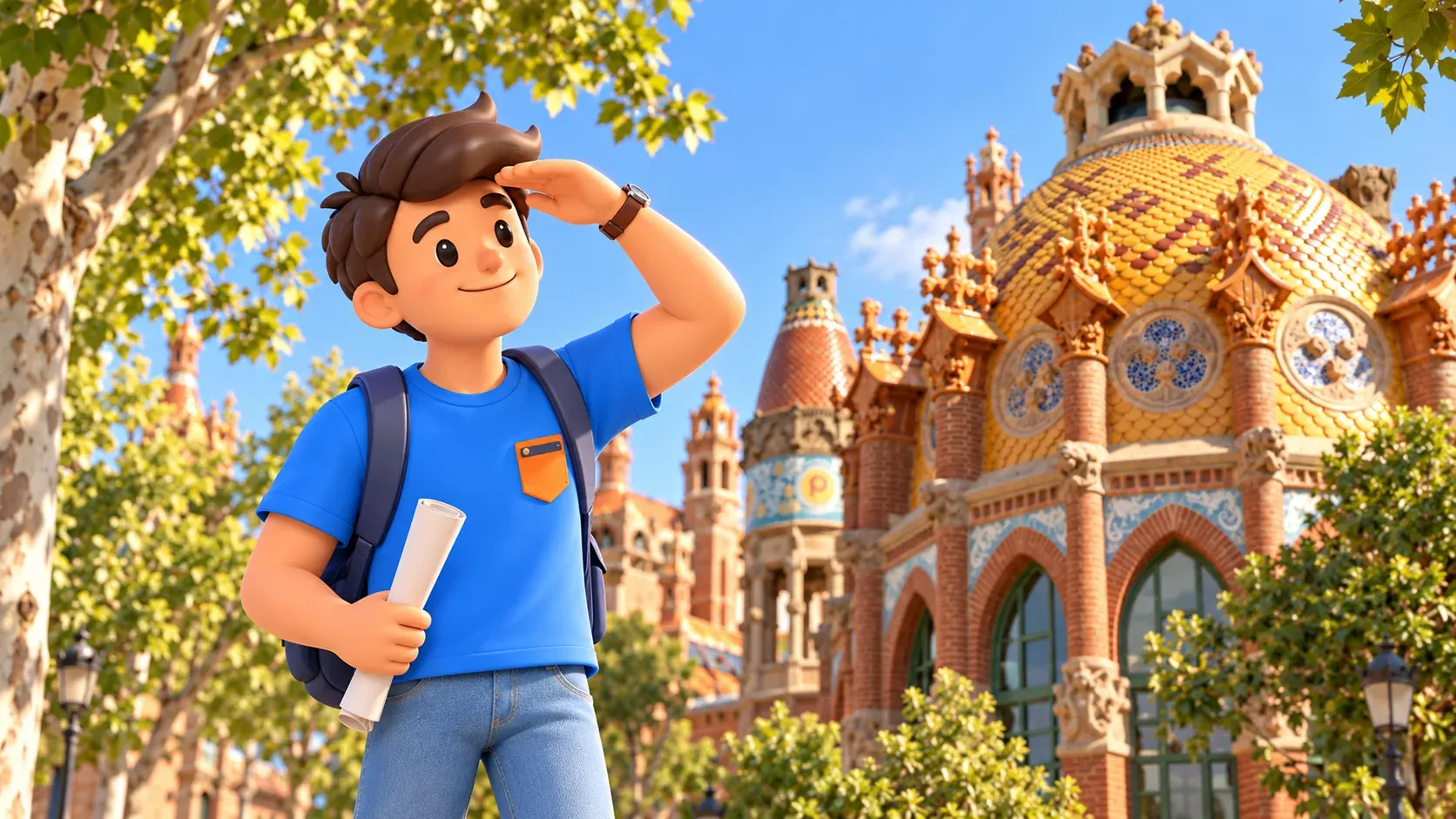
Afterwards, you can walk along Avinguda Gaudí towards the Sant Pau Art Nouveau Site. Allow approximately forty-five minutes for the walk, stops and a look at its main entrance façade. This is an exterior introduction; the internal grounds and pavilions require their own visit. The historic ensemble should not be confused with an invitation to wander into a working healthcare building.
Sant Pau shows how Barcelona’s Modernisme extended beyond private houses and churches. Lluís Domènech i Montaner designed a hospital ensemble in which light, ventilation and open spaces formed part of the architectural idea. That is enough context to change how you look at it. If you want to enter, make it your main additional visit and remove a later block.
Passeig de Gràcia: compare two Gaudí houses
Return to Sagrada Família for L2 to Passeig de Gràcia, or plan a separate connection from the Sant Pau area using the current transport map. The first option includes walking back to the station: visiting the Sant Pau exterior does not move you automatically onto L2. Leave a generous interval for lunch and the transfer rather than counting only the minutes spent on the train.
On the avenue, begin with Casa Batlló and its neighbours Casa Amatller and Casa Lleó Morera, then continue towards Casa Milà. Gaudí created Casa Milà between 1906 and 1912. Compare its stone waves with Casa Batlló’s colourful surface. They are different architectural answers by the same designer, not two interchangeable museums that everyone needs to book consecutively.
Allow around an hour for the outside views and pauses along this section. If houses interest you more than the basilica, choose one interior and organise the morning around that decision instead. Gràcia can be a short extension from the upper end of the avenue, but an extensive neighbourhood route belongs to a separate walk. Leave the second evening open.
Let RoadMe work out a personal route for both days around your interests and preferred pace, making it more convenient to organise the main experiences alongside breaks and free time. Download the city beforehand while online if you want to use its maps and navigation without mobile internet.
Adjust for Park Güell, rain or an early departure
If Park Güell is essential to you, give it a proper day-two block instead of Sant Pau and part of Passeig de Gràcia. Include the ticket, reaching your chosen entrance and time within the grounds. This is not an ordinary small square to slip into for a few minutes between houses. Check a suitable entry time before fixing the rest of the day.
In rain, give more time to the chosen interior and shorten the park or long waterfront section. If an entry is unavailable on one date, swap the days. Moving an entire coherent area usually works better than dropping a single distant attraction into the middle of the other day. Before an early departure, reduce the last afternoon and count luggage collection and terminal travel separately.
Budget admission, food and transport as separate expenses: exterior sightseeing does not make the whole trip free. Two days are valuable because you can discover what you actually enjoy and spend longer on it. Keep some uncommitted time for those discoveries, and Barcelona becomes a personal short break rather than a list completed at someone else’s pace.


