
One day in Barcelona: a first visit without rushing
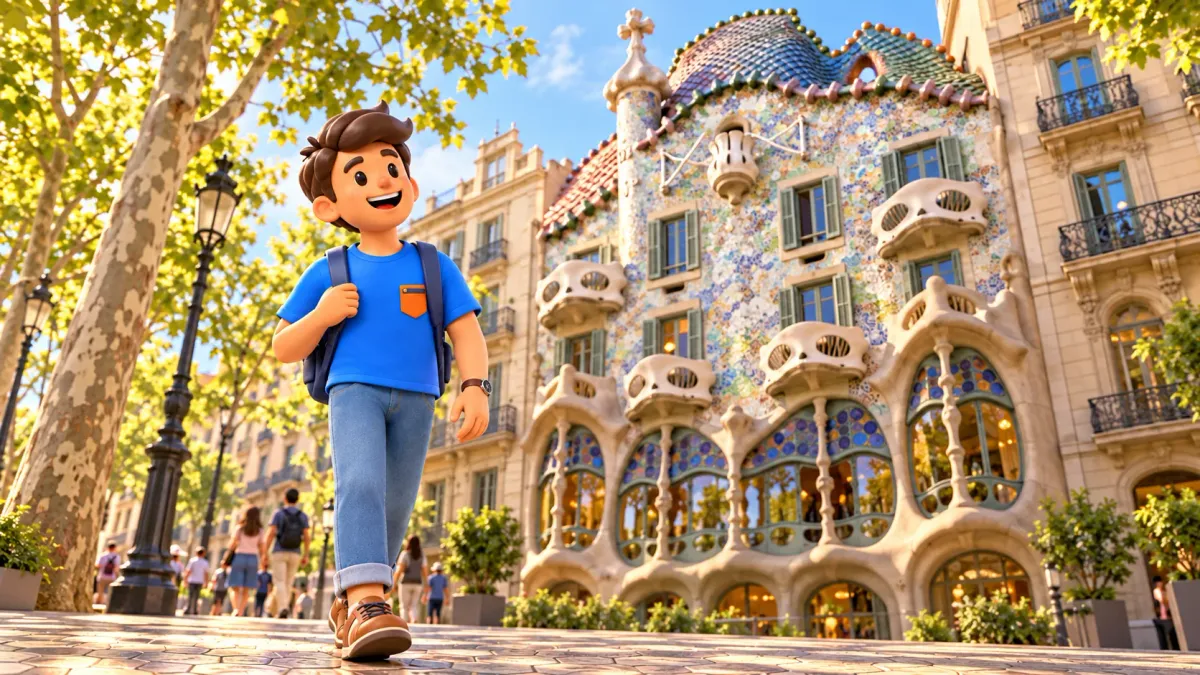
One day in Barcelona can give you Gaudí, the old city and time beside the water, provided you choose one substantial indoor visit rather than booking every famous attraction. This itinerary links the Sagrada Família area, Passeig de Gràcia, the Gothic Quarter and El Born, with an optional finish at Port Vell. There is space for lunch, looking around and changing your mind.
The full version assumes a day already available in the city. Airport journeys, cruise-terminal transfers and travel from your station are additional. If you have a strict return deadline, use the shorter version near the end instead of trying to squeeze this entire walk between two transfers. Seeing fewer places carefully will give the day a clearer shape.
Choose one anchor visit before planning the rest
Decide whether your priority is going inside the Sagrada Família, visiting a Gaudí house or spending the day outdoors. A basilica ticket determines your morning; a house visit makes Passeig de Gràcia a sensible starting point. An exterior-only day gives you more freedom in the old town. None of these choices requires treating the others as missed opportunities.
For a more convenient way to turn those choices into a day that suits you, try RoadMe: the app creates a personal itinerary around your interests, dates, pace and budget. Give it the kind of trip you actually want, whether architecture, history or art, rather than spending your preparation time stitching every popular attraction into one oversized list.
Allow roughly eight to ten hours for the complete version, including one indoor visit, lunch and breaks. That is a planning estimate, not a timed test or a promise about queues. Start with the block you have booked and let the unbooked sections absorb changes. Avoid placing another fixed appointment immediately after the waterfront finish.
- Morning: the Sagrada Família or your chosen Gaudí house.
- Late morning: the façades of Passeig de Gràcia.
- Midday: lunch and the transition into the old city.
- Afternoon: the cathedral, Plaça del Rei and Plaça de Sant Jaume.
- Finish: El Born, with Port Vell if time and energy allow.
Begin with the Sagrada Família if it matters most
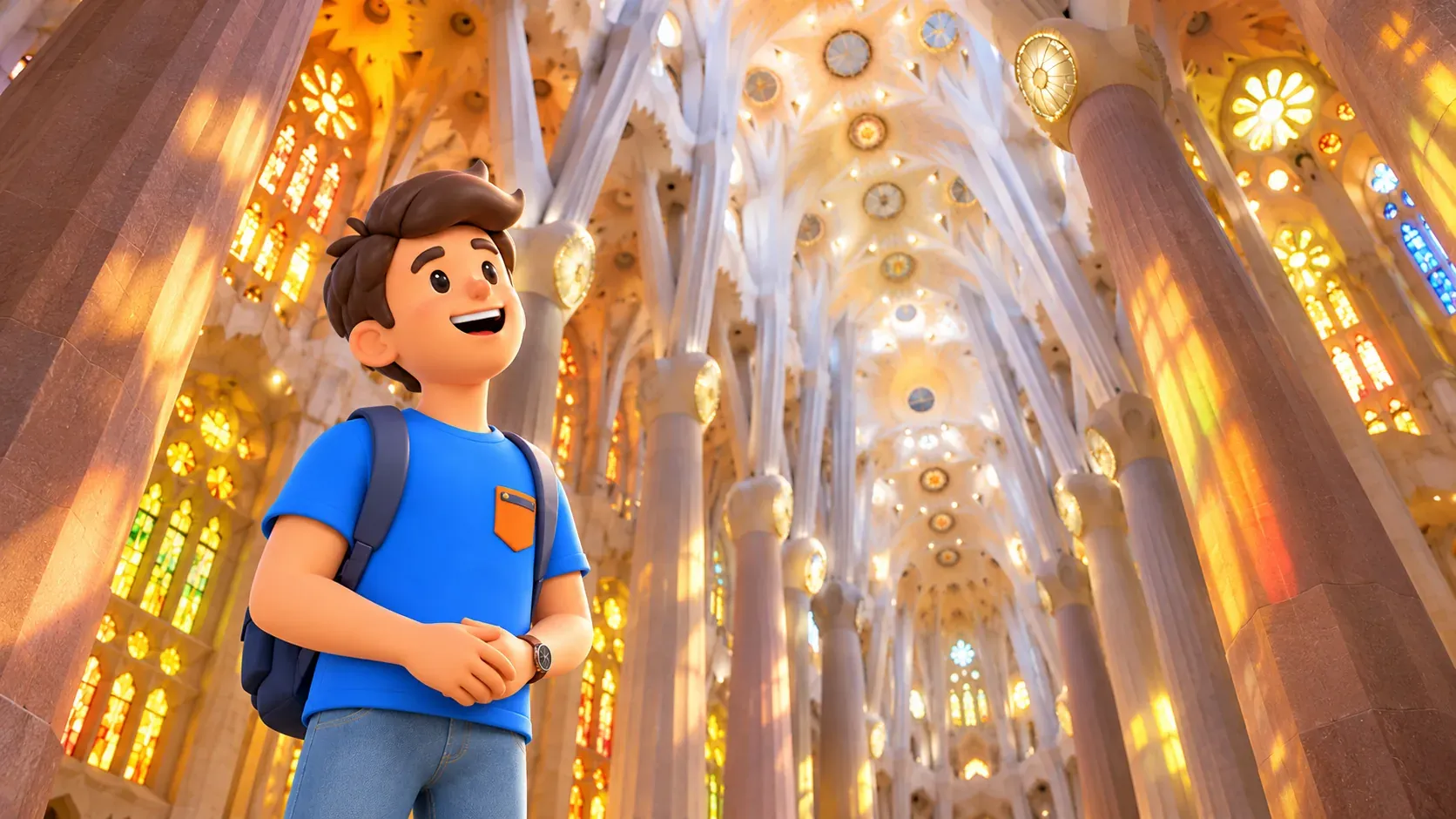
The outside and the interior offer different experiences. From the streets you can study the sculptural façades and the building’s scale; inside, space and light become the focus. If entering is the reason you came to Barcelona, build the morning around that decision. If it is not, an unhurried exterior stop can still be worthwhile.
Construction began in 1882, and Gaudí took over in 1883. That small piece of history is enough to change a first encounter: this is a project shaped across generations, rather than a building completed during one architect’s career. You do not need to decode every symbol to appreciate its ambition. Choose a few details and give yourself time to look.
Purchase tickets online for your chosen time; arriving late can mean losing admission. Standard Sunday tourist opening starts at 10:30, so a universal 9:00 interior plan will not work every day. Follow the arrangements shown for your visit date and booking, since special events can alter access. Let that confirmed appointment set the order of your morning.
As a planning allowance, set aside around ninety minutes for a visit without the towers, plus time to approach and enter. This is an estimate, not the operator’s guaranteed tour length. If you enjoy longer explanations, reduce the next block rather than hurrying through the basilica. A tower ticket is an additional choice, not something to add automatically to a one-day introduction.
Use Passeig de Gràcia to discover more than one architect
Metro line L2 connects Sagrada Família with Passeig de Gràcia. Budget around half an hour overall for reaching the station, waiting, travelling and finding your exit; actual conditions vary. Walking between the areas is another option, but it uses a separate portion of the day. Do not count it as a time-free substitute for the train.
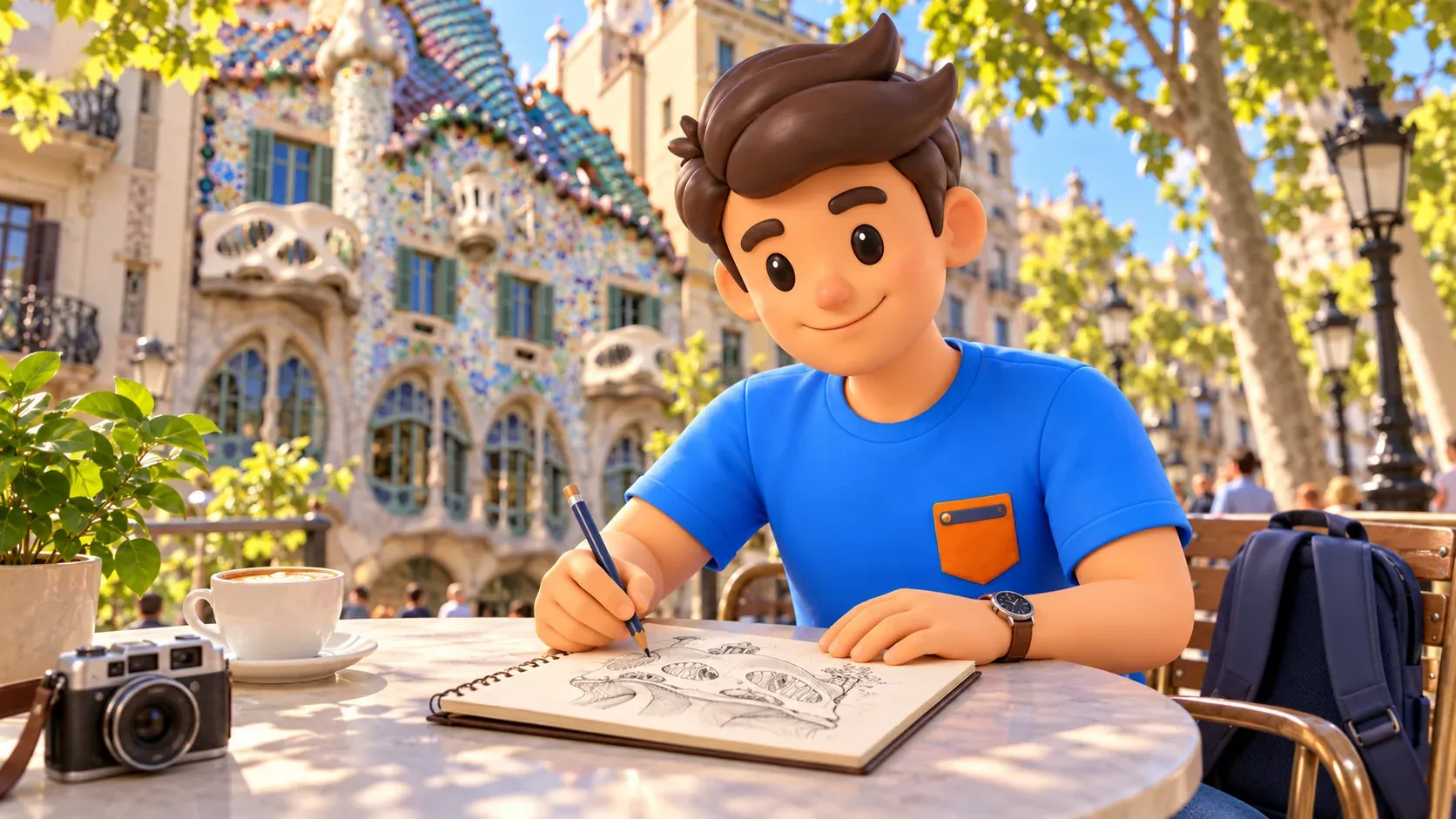
At Casa Batlló, step back far enough to notice its neighbours as well. Casa Amatller and Casa Lleó Morera introduce other architects within the Modernisme movement. Compare rooflines, window shapes and the way decoration sits on the building. This simple exercise turns a famous-photo stop into an architectural encounter without needing a lecture at every doorway.
Gaudí transformed Casa Batlló in a renovation carried out between 1904 and 1906. Its appearance therefore tells a story of remaking an existing house. Look at the balconies and the changing surface of the façade, then compare it with the neighbouring buildings. One memorable idea is more useful on this walk than a long sequence of owners and construction dates.
If a Casa Batlló interior visit is your morning priority, make that your main booking and leave the basilica exterior or its interior for another occasion. Casa Milà lies farther along the avenue towards Gràcia. It can be an optional extension, but you then need to turn back towards Plaça de Catalunya. The basic itinerary does not require that extra loop.
Allow about forty-five minutes for this façade-focused section, without an indoor visit. Resist booking several neighbouring interiors simply because they are close together: each consumes attention as well as time. This is a useful moment to decide whether the waterfront still appeals or whether you would prefer a longer old-town afternoon.
Pause for lunch before entering the old city
Continue towards Plaça de Catalunya, a practical landmark between the broader streets of the Eixample and the older centre. From the Casa Batlló area, allow approximately fifteen to twenty minutes without lengthy stops. You can then take Portal de l’Àngel towards the cathedral square. The route becomes easier to follow when you keep these larger landmarks in mind.
Make lunch an actual break rather than something eaten while checking the next reservation. Choose somewhere with a clear menu, prices that suit you and a table available. No particular restaurant needs to become a condition for enjoying the day. Allow around an hour and avoid another rigid booking immediately afterwards, so a slow meal does not create a rushed afternoon.
La Rambla and La Boqueria are deliberately outside the core sequence. They are worthwhile alternatives, but including them automatically creates another branch. If a market visit matters more than the Modernisme façades, substitute that block rather than adding it. The day usually becomes overcrowded through several individually tempting detours, not through one obviously unreasonable decision.
Explore the Gothic Quarter through three distinct spaces
Start outside Barcelona Cathedral, dedicated to the Holy Cross and Saint Eulalia. It is a different church from the Sagrada Família. Work on the Gothic cathedral began in 1298, while the familiar façade belongs to later building campaigns. Remembering that difference helps you see the quarter as a place with layers of history rather than a single preserved medieval scene.
The core route views the cathedral from outside. If you want to go in, give that visit its own time and remove something later; do not assume that tourist admission to the full complex is unrestricted or free. The square and the building’s exterior already provide a strong contrast with the architecture you saw in the morning.
Continue to Plaça del Rei, enclosed by the former royal-palace ensemble. Stop for a moment to notice how the buildings shape a room-like public space. The history museum and its archaeological remains are a substantial visit in their own right. They should not be treated as a quick, invisible addition to crossing the square on a first-day walk.
Next, head to Plaça de Sant Jaume. The city hall and the Catalan government palace introduce the administrative life of the centre, which continues alongside its historic buildings. You can wander into a neighbouring street between stops, but keep your general direction towards El Born. Allow roughly ninety minutes to two hours for this section, including pauses rather than constant walking.

Finish in El Born, or continue to Port Vell
From Plaça de Sant Jaume, make your way towards Via Laietana and then along Carrer de l’Argenteria to Santa Maria del Mar. The basilica offers another expression of Gothic architecture. For this introductory day, looking at its proportions and the space around it is enough. A detailed interior visit belongs to a different version of the plan.
El Born is a good place to stop for dinner and end the itinerary. Choose that finish if your morning visit ran long, children need a break or you simply feel ready to sit down. The nearby Picasso Museum is an option for another dedicated block; walking past its building is not equivalent to seeing the collection.
If the water still appeals, continue towards Port Vell by the Llotja de Mar area. Allow around fifteen to twenty minutes from Santa Maria del Mar to the waterfront, longer with stops. Rambla de Mar can be your final promenade. Barceloneta beach is a further extension, not an obligation to complete before the day counts as successful.
For a longer stay, let RoadMe develop a personal trip plan around the interests you discovered today, arranging visits by day and at your preferred pace. It is a convenient way to turn ideas into your own itinerary; download the city in advance while online to use its maps and navigation offline.
Shorten the day without losing its purpose
With only four or five hours actually available in the city, choose one coherent area. The cathedral, Plaça del Rei, Plaça de Sant Jaume and El Born make a complete old-town walk. Alternatively, concentrate on the Sagrada Família and Passeig de Gràcia. Do not combine both shortened options back into the full day when your time limit has not changed.
In rain, make your chosen indoor visit the anchor and shorten the exposed sections. Another museum only helps if tickets and time are available, and getting there still uses part of the day. In hot weather, extend lunch and reduce the final stretch instead of trying to walk faster through fatigue. Judge each change against your remaining time, not a tally of attractions.
Before a fixed departure, decide when you must leave the centre and remove the final optional stop first. Admission, meals and transport are separate expenses: seeing façades does not make the whole outing free. A satisfying introduction leaves you with a sense of several different Barcelonas and a clear idea of which one you would like to return to.


