
Your first evening in Barcelona: an easy walk after check-in
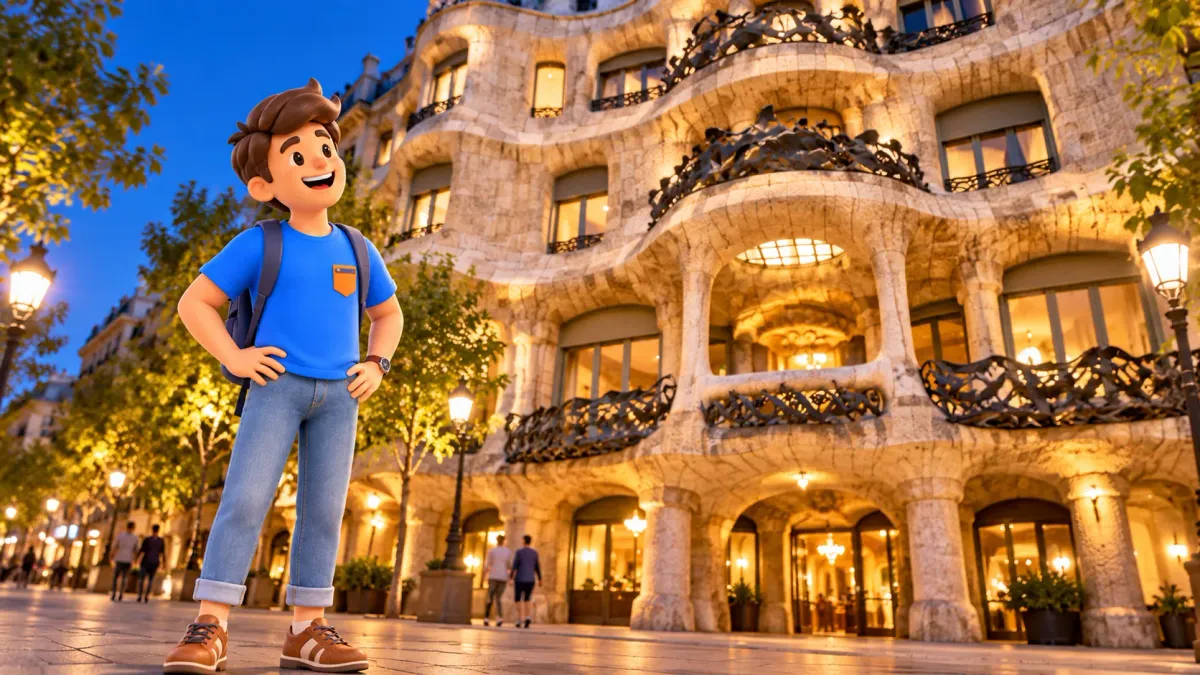
Your first evening in Barcelona can be a small introduction: find your bearings, look at a few façades and enjoy dinner without watching the clock. After travelling, the most useful route is often one with a clear direction and an easy stopping point. Passeig de Gràcia offers that structure. You can start at Plaça de Catalunya, pause near Casa Batlló and continue to Casa Milà if you still feel like walking.
This is an exterior walk after checking in, not a programme between the airport and your accommodation. Allow approximately ninety minutes to two hours with pauses. Dinner and the journeys to the start and back are additional. These are editorial planning estimates. For the following full day, our one-day Barcelona itinerary offers a different framework with time for a principal visit.
A first evening with one direction and two possible finishes
The basic line moves north from Plaça de Catalunya along Passeig de Gràcia. The first possible finish is the group of houses around Casa Batlló. The longer version continues to Casa Milà near Carrer de Provença. Both versions provide a recognisable introduction without requiring an interior reservation. Pick the shorter finish before leaving if the journey has already used most of your energy.
For a more convenient and efficient start to the whole trip, try RoadMe: the app develops a personal itinerary around your interests, dates, pace and budget. Tell it whether you prefer architecture, food or relaxed exploring, and build your Barcelona days around what you actually want from the stay.
Treat the first evening as part of the trip rather than an examination you must pass before the real sightseeing begins. Looking at the avenue and choosing one place to revisit already gives tomorrow useful direction. If your accommodation is far away, include the extra journey before deciding this is the right evening. A pleasant local meal can be a complete arrival plan too.
The walk has no assumed evening access to a rooftop, exhibition or courtyard. A façade seen from the pavement is its own experience. Paid evening visits need their own booking and time, and would replace part of this programme. The same applies to shopping: an appealing window does not establish that a shop remains open when you arrive.
Decide when the evening actually starts
Begin counting available time once you have checked in and put down your bags. A landing time is not a walking start time. Allow for the arrival journey, accommodation arrangements and a short pause before making a dinner commitment. This makes the plan resilient to ordinary travel delays without requiring you to recalculate every street stop.
Choose a finishing time first, then work backwards through the evening. If you want to be sitting down for dinner soon, use the Casa Batlló finish or a short nearby section. If several comfortable hours remain, continue to Casa Milà. Agree on this with your companions so everyone understands whether the main aim is food, fresh air or a first look at architecture.
Evening does not always mean darkness. Summer and winter offer very different light, so do not build the walk around an unverified sunset hour. The buildings remain architectural subjects before dark; after dark, visibility depends on street lighting and the circumstances of that date. No particular façade illumination, music event or special display is required for this route to make sense.
Start at Plaça de Catalunya and read the avenue
Use Plaça de Catalunya as the clear starting anchor, then find Passeig de Gràcia heading north. Set aside roughly fifteen to twenty minutes for orientation and the first section, extending that if you enjoy the square. You are entering the Eixample’s broad urban setting. Follow the public pavements and use marked crossings rather than chasing the shortest line between photographs.
Passeig de Gràcia connects the central area with Gràcia and became a setting for imposing homes as Barcelona expanded. Its interest lies in comparison: different architects used the same important avenue to create distinct buildings. That is enough historical context for a first evening. You can notice the city’s ambition without remembering the biography of every household along the way.
Notice the pavement and street furniture as well as rooflines. The avenue’s white-mosaic benches and streetlamps are associated with Pere Falqués. Keeping his name separate from Gaudí’s is a useful small distinction in a city where the most famous architect can overshadow others. Observation works at ground level too; you need not keep looking upwards throughout the walk.
Pause where there is room to stand comfortably. The avenue is also a working street, with traffic, people going home and businesses serving customers. Leave entrances and pavement flow clear. Often a few steps sideways offer a better view of a façade than joining a group directly beneath it. Take the photograph you want, then give yourself a moment to look without a screen.
The first stopping point: three neighbouring architectural voices
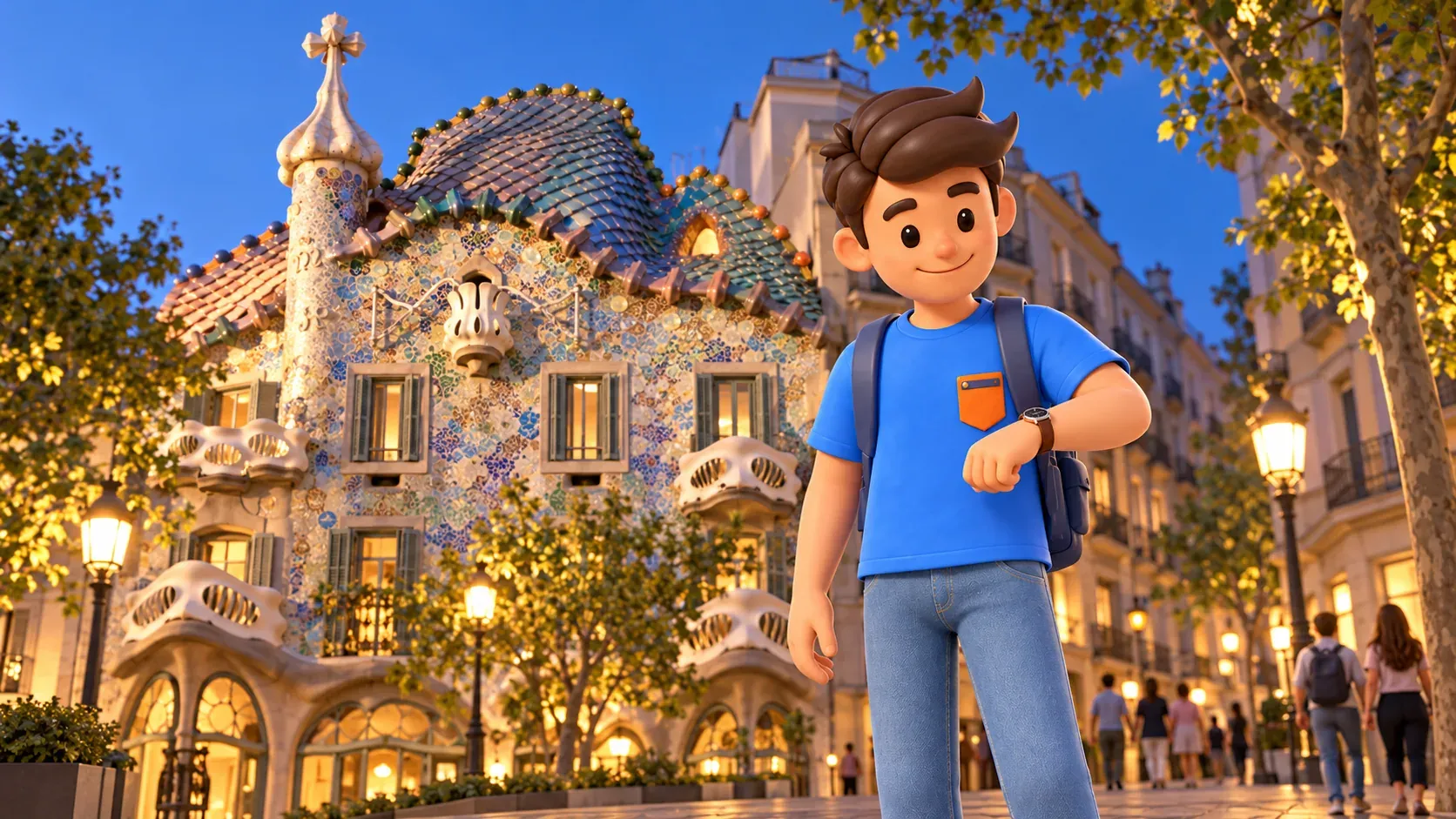
The group around Casa Lleó Morera, Casa Amatller and Casa Batlló offers a compact first encounter. They sit on the same side of the avenue, allowing you to compare their exteriors without a journey across town. Give this section around twenty to thirty minutes with pauses. A longer photography stop can use more; these figures are allowances rather than measured visitor durations.
Casa Lleó Morera is associated with Lluís Domènech i Montaner, Casa Amatller with Josep Puig i Cadafalch, and Casa Batlló with Antoni Gaudí. You do not have to rank them. Choose a question instead: which silhouette catches your eye, how do the windows differ, or where does colour change the impression of the stone? One question makes three buildings easier to remember.
Gaudí’s renovation of Casa Batlló dates to 1904–1906. Remembering that it was a transformation, rather than treating the whole building as a single new invention, adds a little depth. For this evening, the exterior is enough. If it leaves you curious about the rooms, save that interest for a visit with the time and reservation it needs.
This is the shorter route’s finish. Check how you feel before automatically continuing. You have seen an avenue, encountered several architects and found something that may shape the next day. Dinner nearby or a return to your accommodation makes a coherent conclusion. Finishing here is a planned version of the evening, not a failure to complete the city.
Continue to Casa Milà if there is room in the evening
For the longer version, keep moving north towards Casa Milà, also called La Pedrera. Allow roughly fifteen to twenty minutes for the connection with ordinary pauses and crossings. The distance is only part of the calculation: stoplights, photographs and your walking pace count too. Use an appropriate marked crossing when changing sides to view the building.
Casa Milà stands at the Passeig de Gràcia and Provença corner. Built between 1906 and 1912, it provides a different impression from the coloured surfaces seen earlier. Look at the relationship between the stone façade and the balconies. A simple comparison gives the walk a conclusion without requiring another set of historical dates or a complete architectural lecture.
The pavement view does not include the roof. A roof visit is a separate experience with its own access arrangements, even when photographs make it appear part of a casual street walk. Resist turning a newly noticed entrance into an immediate appointment. Save the building’s name and decide on another day whether an interior belongs among your priorities.
Casa Milà is the main route’s finish, near the Provença and Diagonal area. Work out your actual dinner or return direction from here. Station names and street entrances are not interchangeable with your accommodation’s door. Allow time for reaching the correct platform or pickup point, especially if everyone is already ready to sit down.
Give dinner its own place in the plan
Reserve another hour or more for a sit-down meal, depending on what you choose. That time is additional to the walk. Find an option matching appetite, menu, opening hours and the group’s preferences. A first-night dinner does not need to become the trip’s most complicated reservation. The useful choice is one you can reach comfortably from the point where you decide to finish.
If hungry before starting, eat first and shorten the walk afterwards. If arriving late, keep only the nearest suitable section. The order can change while the evening remains enjoyable. Include any travel to a restaurant in the overall allowance rather than treating a distant address as if it were beside the last façade. Food, admission if added, and transport remain separate expenses.

Use the discoveries from this evening to shape a personal trip plan in RoadMe: the app develops your days around the interests and pace that suit you, making the ideas easier to use throughout the stay. Download the city beforehand while online to have maps and navigation available offline during your walks.
A shorter version for a late arrival
With only forty to sixty comfortable minutes, choose a small section near your actual starting point and one façade rather than travelling specially to complete the whole avenue. Those figures are a planning guide, not a fixed minimum. After a long journey, a meal and a brief look around can be enough. Keep tomorrow’s booked visit in mind when deciding how late to stay out.
In rain, reduce the outdoor section and make the meal the main pause. In warm weather, allow water and more time sitting down. Check your return before your phone battery runs low and keep the accommodation address accessible. End with one clear idea for tomorrow: a building to enter, a district to explore or more time simply walking. That is already a useful first evening in Barcelona.


