
An evening in Barcelona: four old-town squares in 90 minutes
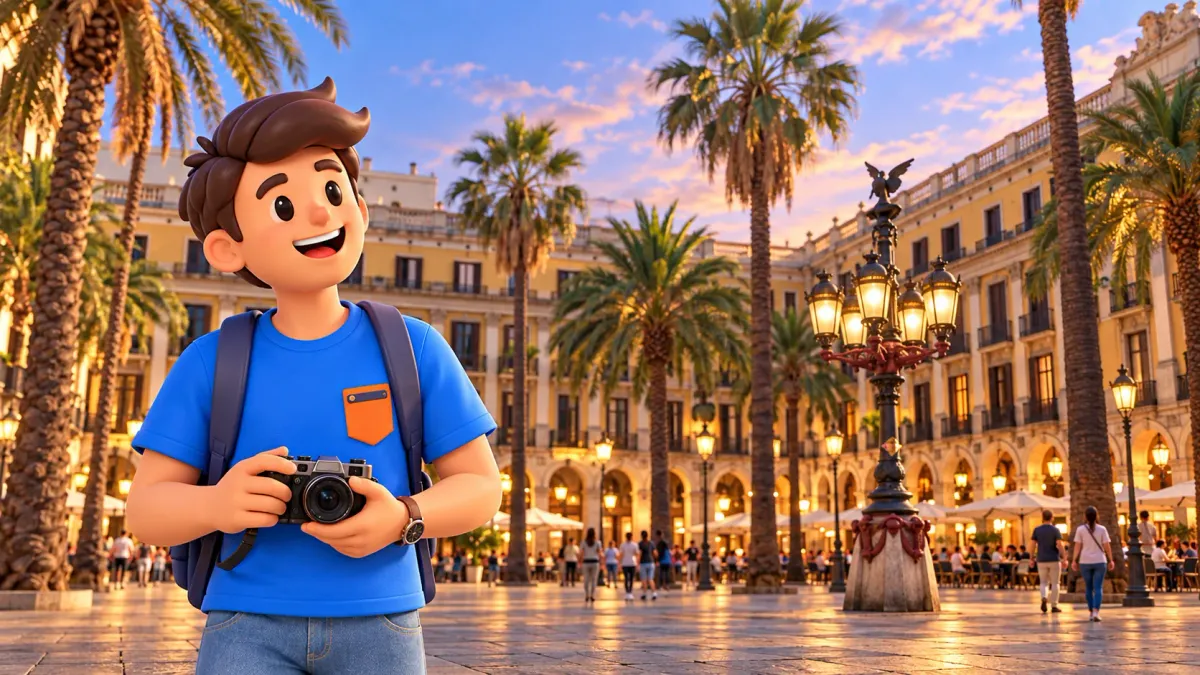
An evening in Barcelona does not have to become another full sightseeing session. Four old-town squares offer a satisfying change of scale: a stone royal setting, an open civic space, a small square with a literary name, then broad arcades and palms. Short walks connect them, leaving more time for looking than for collecting addresses.
Allow about ninety minutes for Plaça del Rei → Plaça de Sant Jaume → Plaça de George Orwell → Plaça Reial. This is an outdoor walk, without museum rooms, palace interiors or a compulsory drink at the finish. Dinner comes afterwards if you want it. The plan suits an evening when your booked visits are over but you still have the energy to enjoy the city at a gentler pace.
A ninety-minute plan with time to stop
Use 18:30 as an illustrative starting time at Plaça del Rei. Stay until 18:50, then allow five minutes to reach Plaça de Sant Jaume. Fifteen minutes there takes you to 19:10. Allow ten minutes to reach Plaça de George Orwell, stay until 19:30, then another five minutes to Plaça Reial. The final twenty-five minutes bring the walk to a finish at 20:00.
To fit this evening comfortably into your trip, try RoadMe: the app develops a personal day-by-day plan around your interests, dates, pace and budget. A complete Barcelona itinerary is easier and more efficient to use than repeatedly joining separate ideas together while you travel.
That gives sixty-five minutes in the squares and twenty-five between them. These are planning estimates, not timings measured on the ground. Crowds, photographs, a slower pace or temporary barriers may add time. Getting to the starting point and returning after the finish are extra. If you have a dinner reservation, allow separately for reaching the restaurant.
Starting at 18:30 does not guarantee sunset or darkness. In summer it can still feel like daytime; another season brings a different light. Choose a starting time for your date, weather and preference for daylight or dusk, then shift the blocks together. The walk depends on changing urban spaces rather than a particular lighting programme or photographic effect.
Plaça del Rei: read the space before its details
Begin on an accessible part of the square and look at the whole ensemble. Pale stone walls, grouped windows, the broad staircase and the Santa Àgata chapel frontage create an enclosed setting after the narrow approach. It feels like an outdoor room. There is no need to start by finding every doorway or working out which interior might still be open.
The historical anchor is the Palau Reial Major, associated with the counts of Barcelona and the monarchs of the Crown of Aragon. Medieval Gothic architecture strongly shapes the view. That does not make everything around you an unchanged survival from one century: the old town developed and was altered over a long period. Tonight, understanding the royal setting is more useful than trying to master its entire building history.
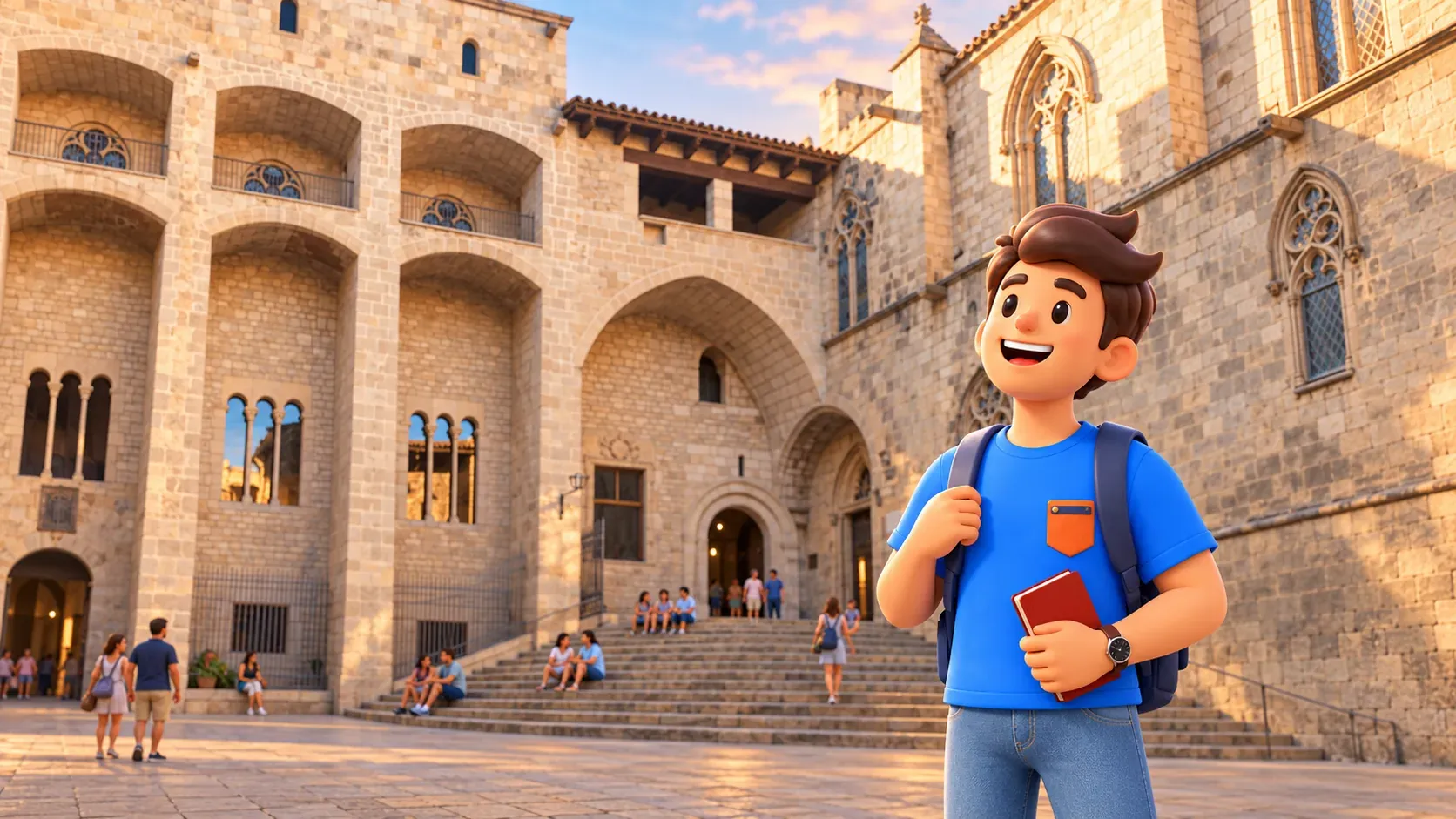
Spend the first few minutes noticing proportions. How high do the walls seem beside the open ground? How does the staircase draw your attention? Where does a large opening sit beside a small one? Then choose a detail for a photograph. Looking first helps prevent the camera from deciding your entire encounter with the square.
Twenty minutes is enough for that kind of outdoor introduction, not for a palace and museum visit. Events may occupy part of the space; silence, empty steps and unrestricted views are not guaranteed. Use the area that is available without blocking circulation. The city history museum, Tinell hall and chapel are separate visits, with their own conditions. An open door is not an invitation to follow another group inside.
Sant Jaume: two façades and a working civic centre
The next square changes the subject from royal history to current institutions. The Palau de la Generalitat, seat of Catalonia’s government, faces Barcelona’s City Hall, the Casa de la Ciutat. These are working buildings as well as historical architecture. Thinking of the space as a civic centre makes the stop more interesting than treating its façades as a decorative backdrop.
Compare the two fronts rather than memorising dates. The Generalitat façade facing the square is Renaissance, despite its position in the Gothic Quarter. The City Hall front opposite is neoclassical. City Hall also has a Gothic façade on Carrer de la Ciutat, but that is a different side of the building. The neighbourhood’s name should not determine the age or style of every surface you see.
In fifteen minutes, look at the arrangement of entrances, the rhythm of windows and the emphasis given to each central section. You do not need a specialist vocabulary to notice how ordered façades frame the open space between them. The comparison provides a clear purpose for a short stop and explains why the historic centre continues to matter to the present city.
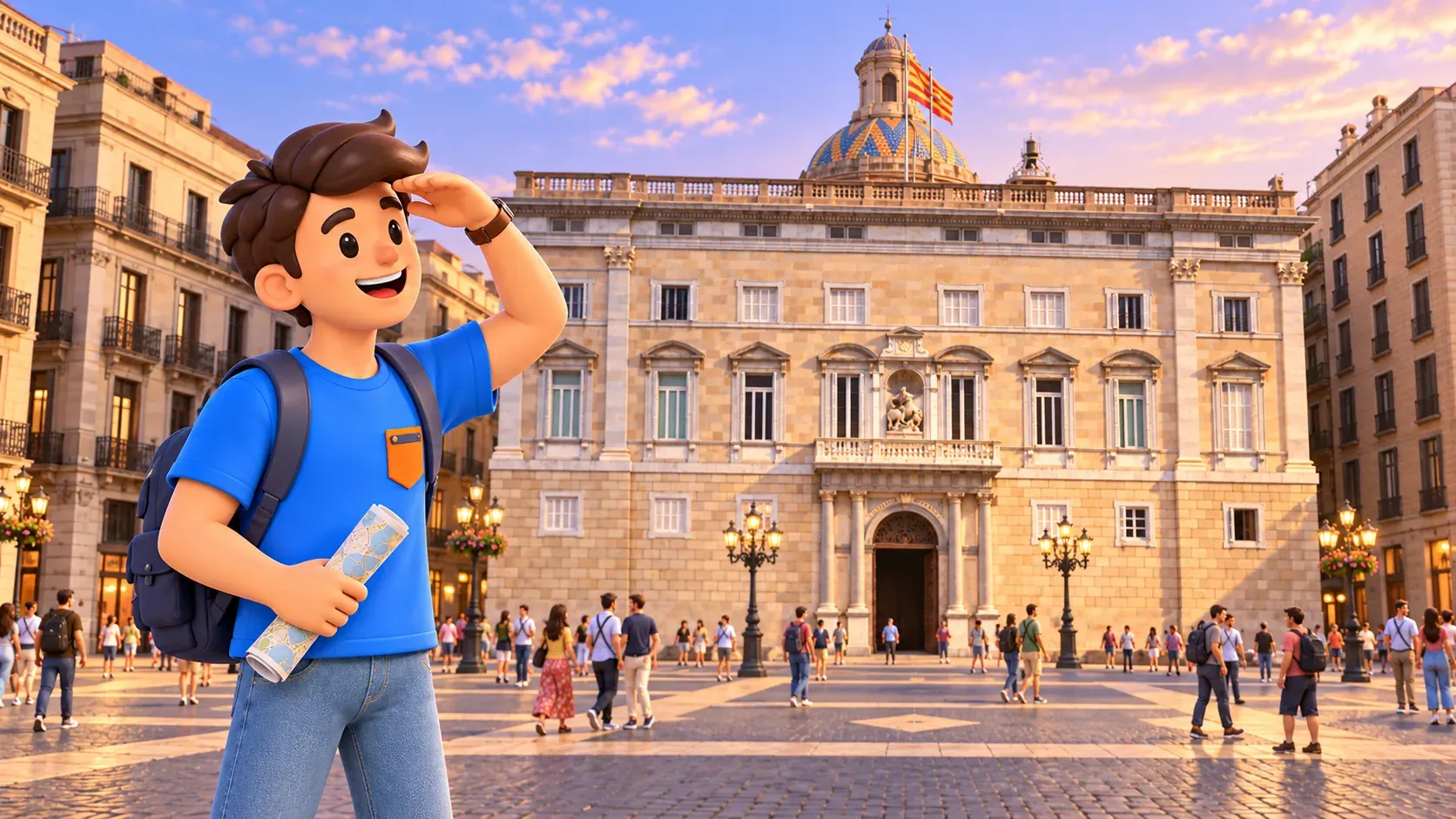
Public gatherings, ceremonies and temporary restrictions can change circulation. Follow signs and keep outside barriers, even if that means giving up a symmetrical photograph. Neither government offices nor courtyards are included in this walk. Visiting an interior requires a separate check. Staying outdoors keeps the evening independent of a museum entry slot without promising identical access on every date.
George Orwell: a smaller square and a literary connection
Allow around ten minutes for the next connection, including time to orient yourself in the lanes. Follow available public streets rather than assuming every open passage is a shortcut. Plaça de George Orwell needs only a brief pause in this itinerary. Its role is to change the scale and introduce a different cultural association after two formal historical spaces.
Orwell’s Barcelona connection comes through his experience of the Spanish Civil War and his book Homage to Catalonia. The square’s name is a useful literary prompt, not proof that he lived on this particular spot or wrote Nineteen Eighty-Four here. A place name can suggest something worth reading later without becoming a precise biographical address.
The square also contains Leandre Cristòfol’s abstract Monument. After palace walls and balanced civic façades, take a moment to notice how a modern sculptural form sits within an everyday urban setting. There is no need to settle on a single interpretation. The change from architectural representation to literature and abstract art is enough to give this ten-minute stop its own character.
Do not rely on a performance, quiet atmosphere or other event being available. Continue the conversation about the book while walking if you prefer. If the square is occupied or does not suit a pause, move on. A short encounter can still contribute to the evening without a photograph, drink or extra visit.
Plaça Reial: arcades, palms and an early Gaudí detail
After roughly five more minutes, reach Plaça Reial. Its name sounds similar to Plaça del Rei, where you began, but these are different squares. The first introduced a stone palace ensemble; the last is a spacious nineteenth-century composition with regular façades and arcades. That contrast helps explain why the old town cannot be reduced to a single medieval image.
Francesc Daniel Molina’s project began in 1848 on the site of a former Capuchin convent. The repeated façades, round arches and balconies create a coherent neoclassical setting. Palms add an irregular pattern against that architectural order. After the tighter lanes, the relationship between open ground and surrounding buildings is a good reason to slow down.
Near the Three Graces fountain, look for two six-armed lampposts by the young Antoni Gaudí. Here you can encounter his work without arranging another major paid visit. Gaudí did not design the whole square: part of the interest lies in recognising a small authored detail within another architect’s ensemble. One attentive look at a lamp is enough; tonight need not become a hunt for every work in the city.
If these Gaudí details appeal alongside museums and unhurried evenings, prepare your trip in RoadMe. The app develops a personal programme around your interests and pace, making the itinerary simpler to follow in the city and reducing the work of planning each day.
Use the final twenty-five minutes for a wider view, the arcades and a detail that catches your attention. Restaurants and bars surround the space, but the walk does not require ordering a drink or continuing into a club. It is perfectly reasonable to finish after looking around. If you want a table, treat that as another part of the evening, with its own time and spending.
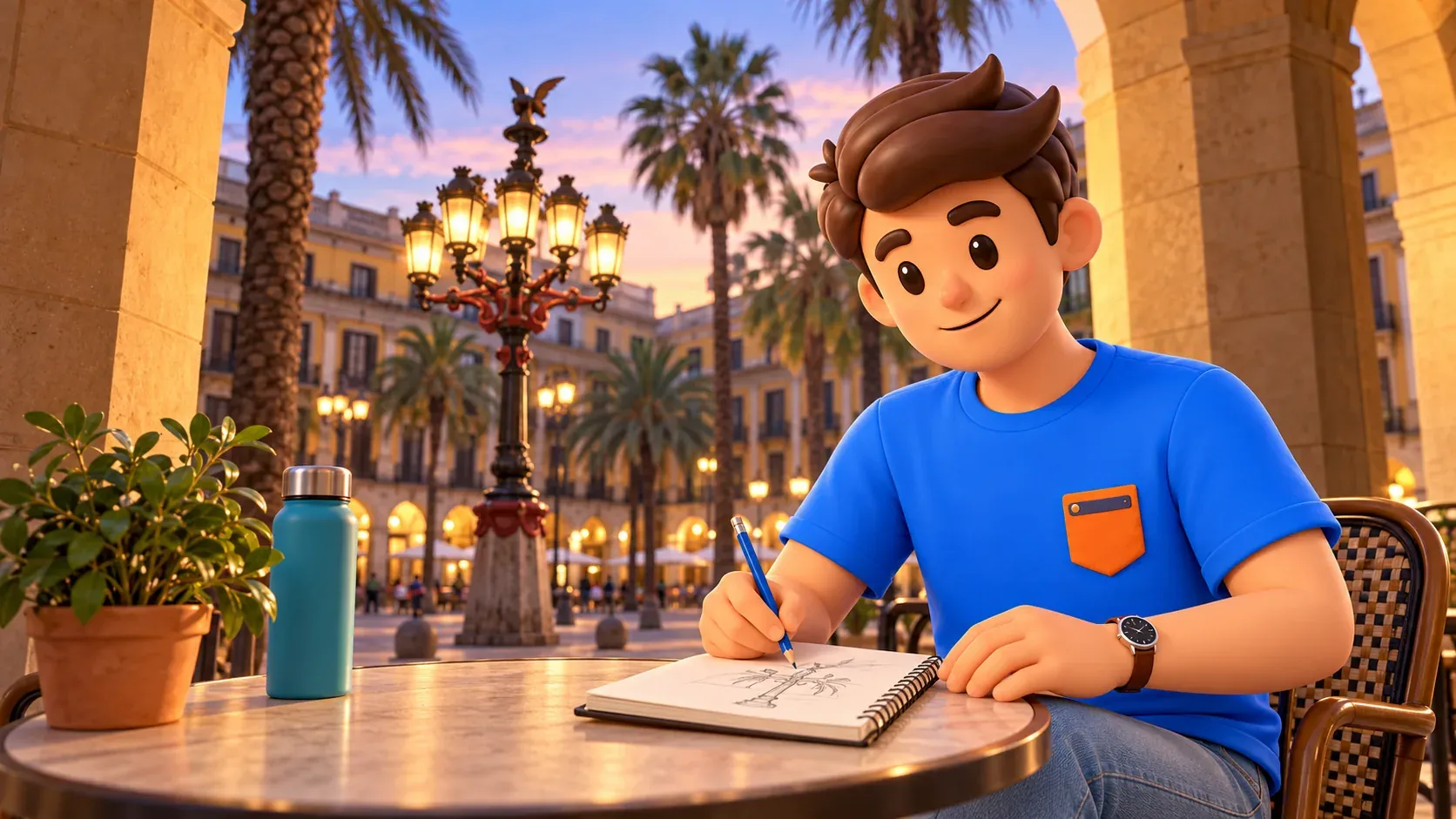
Keep the finish open
Looking around these public squares requires no admission ticket. Food, drinks, paid events and building interiors are separate. A free walk does not make the whole evening free: check the current menu before ordering and the venue’s conditions before a late continuation. A restaurant meal has deliberately not been squeezed into the ninety minutes.
For photographs, choose one idea at each stop: the scale of the royal staircase, two facing institutional façades, the literary name, then an arcade or lamppost. Step out of the moving flow and stop before taking a picture. Ask before making close photographs of other people, and avoid filling a narrow passage with equipment. The walk should leave room for ordinary city life around you.
If you are tired, reduce the number of stops or finish early. Do not compensate for a missed square by adding an obligatory museum entrance. If an event closes an approach, follow permitted streets and allow longer or omit the stop. The schedule is a useful framework; the available public space and your energy should determine the final version.
For a different day with more attention to the cathedral, bridge and historical corners, save the two-hour Gothic Quarter walk. Tonight, four contrasting squares leave a complete impression while giving you a choice of what comes next: dinner, a conversation, a little more wandering or simply the journey back.


