
Augustus by the Tiber: Ara Pacis and Mausoleum Walk
Augustan Rome reaches beyond the Forum. Beside the Tiber, the first emperor’s mausoleum and the Ara Pacis Museum offer different ways of preserving memory through family, power and public order. A square, contemporary architecture and ordinary city life fit between them. They make a compact walk without requiring a major archaeological day.
Start on Piazza Augusto Imperatore beside the mausoleum, look at the Ara Pacis Museum from outside, then continue to Ponte Umberto I. The basic version takes about ninety minutes with a rest and finishes on the Prati side. Seeing the altar inside the museum is a separate extension: allow around two hours forty-five minutes overall, sometimes longer.
Choose a walk or a museum morning first
The shorter version concerns urban context: the mausoleum’s setting, the museum building, the wall carrying the Res Gestae and the approach to the river. It does not promise close study of altar reliefs through glass. That requires an interior visit with its own time and an appropriate current ticket.
With RoadMe, it is easier to turn an interest in antiquity into a personal plan for the entire trip, based on dates, pace and budget. The app helps distribute museums, themed walks and rest across your days, making a considered itinerary more convenient and effective to use on the ground.
At the October 2026 check, visits to the Mausoleum of Augustus remain suspended. The renovated square’s reopening does not mean admission to the funerary structure itself. The core route therefore uses an exterior view. If a confirmed visiting programme appears before your trip, recalculate the day separately.
Both versions begin in one area and need no added Colosseum, Forum or Pantheon for historical completeness. Their purpose is to understand a small part of the city, then finish beside the Tiber. The approach to the first stop, onward transport and lunch are additional.
Ninety minutes from the mausoleum to Prati
| Minutes from the start | Exterior programme |
|---|---|
| 0–25 | Available public area of Piazza Augusto Imperatore and mausoleum exterior |
| 25–35 | Short connection towards the museum complex and its southern Via Tomacelli side |
| 35–50 | Modern Ara Pacis building and Res Gestae wall outside |
| 50–65 | Fifteen-minute rest in a suitable available place |
| 65–80 | Upper urban pavements towards the eastern, city-centre end of Ponte Umberto I |
| 80–90 | Cross on the bridge pavement to Prati, towards the Palace of Justice |
The total is ninety minutes. All intervals are estimates, not measurements. A 10:00 start could finish around 11:30. The square and museum are neighbours, so the ten-minute connection includes orientation and crossings rather than a long walk to a distant district.
Add the museum after observing the building outside: fifteen minutes for admission arrangements and about an hour with the altar. That adds seventy-five minutes, making one hundred and sixty-five overall. A 10:00 start would finish around 12:45. Admission may take longer; the fifteen-minute allowance is not a queue forecast.
The mausoleum: remembrance of a person and a dynasty
Octavian began building the mausoleum in 28 BC, before the familiar image of imperial Rome had fully developed. The great circular tomb was intended for him and members of his family. For this walk, the idea matters: a ruler’s future memory received a prominent place beside the northern Campus Martius.
Do not expect a completely restored ancient structure with its original upper part intact. Today, its circular mass and setting invite some imagination. Compare the long curve with the square’s ordinary straight façades. That approach conveys scale without exact dimensions or a complete list of burials.
Different periods gave the site different uses: a stronghold, a garden, a setting for spectacles and eventually a concert space. These changes explain why it is no sealed capsule of one ancient day. Roman monuments continued participating in city life, sometimes far beyond their original purpose.
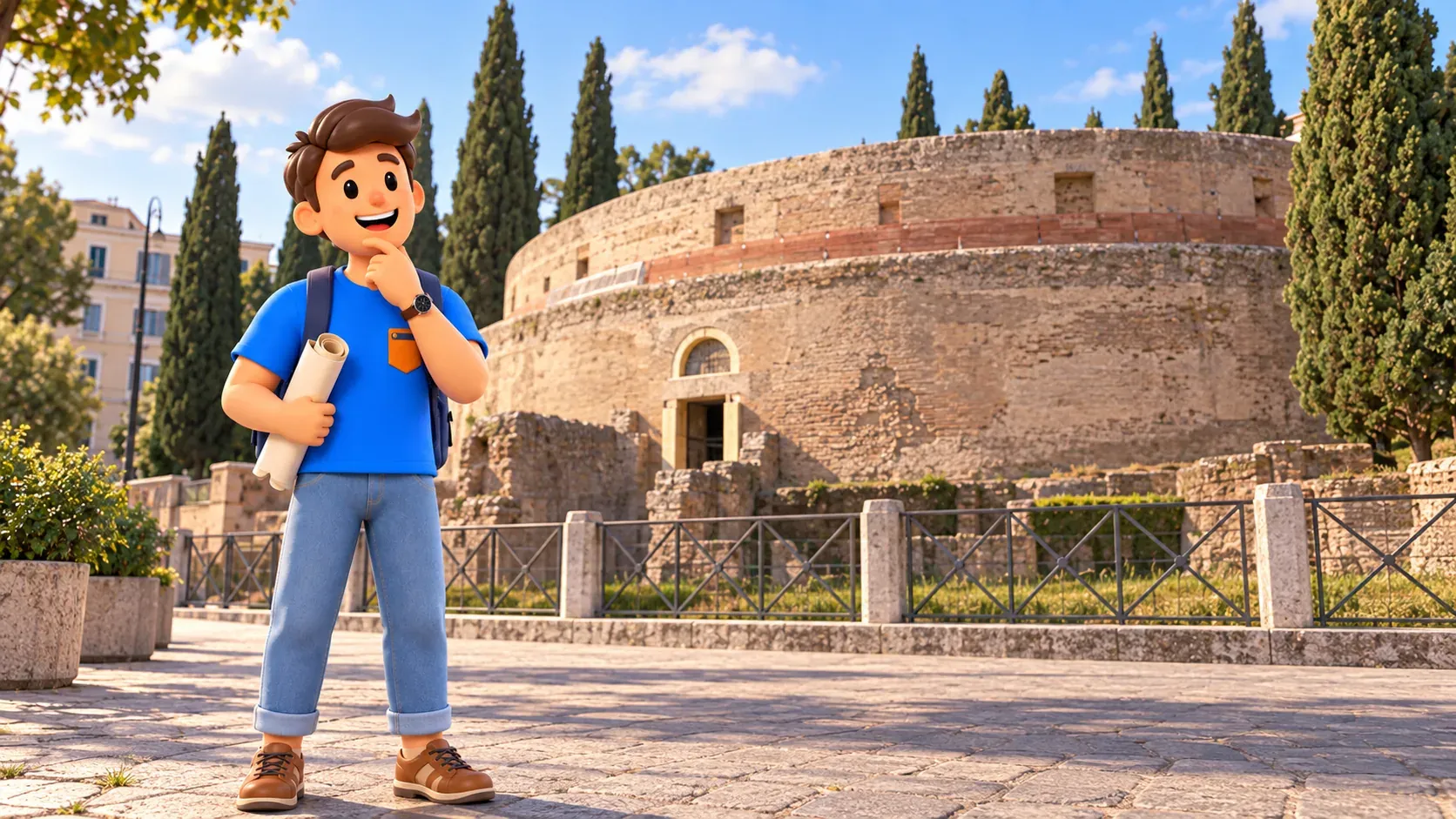
Remain in the available public area and respect current barriers. Exterior sightseeing does not involve entering corridors or finding a way around a closed door. Distinguish Augustus’s mausoleum from Hadrian’s former mausoleum, now Castel Sant’Angelo: the river connects their settings, but they are different buildings with different histories.
The square also records time
The mausoleum’s present surroundings do not reproduce the ancient Campus Martius. The area changed in the twentieth century, then the square was redesigned again to connect today’s street level with the monument’s lower ancient level. Reopening the renewed public space in 2025 was distinct from completing the mausoleum’s interior works.
Notice changes in height and the way an ancient circular form sits within a later urban frame. There is no need to descend every staircase: available public approaches are enough for this walk. If step-free access matters, confirm the specific route and choose an appropriate level while retaining the same observation.
A useful question is how the city presents antiquity today. A raised or lowered platform, an open passage and a modern façade change the experience of an old monument. The square makes that work visible even while an interior visit is unavailable.
The Altar of Peace and its museum belong to different times
The Senate voted to create the Altar of Peace in 13 BC after Augustus returned from Gaul and Spain. The monument connected peace with the power and order represented by the ruler. That context is enough for an introduction: its name expresses a ceremonial state idea rather than an everyday promise that all wars had ceased.
The altar originally stood elsewhere in the northern Campus Martius. Following discoveries and research, it was reconstructed beside the mausoleum in 1938. Today’s adjacency therefore should not be read as an entirely surviving ancient arrangement. A small area brings together ancient history and decisions by later researchers and architects.
Richard Meier designed the present museum; the new complex opened in 2006. Pale stone, glass and large simple volumes create a contemporary protective enclosure. Looking at the building is worthwhile, but differs from visiting the altar. Reflections, distance and available approaches prevent any promise of a detailed introduction through the windows.
The Res Gestae: an emperor tells his story
A wall of the museum complex reproduces the Res Gestae, Augustus’s account of his achievements. This is a modern inscription associated with the setting, rather than miraculously preserved bronze tablets from the ancient entrance. The text’s original meaning and the age of today’s surface need to be distinguished.
There is no need to read all the Latin during a brief stop. Understand the genre: a ruler selects achievements through which he wishes to be remembered. With his tomb nearby, the link between text and remembrance becomes particularly clear. It connects the monuments meaningfully without requiring a complete translation of a historical document.
The fifteen-minute exterior museum block includes both architecture and this wall. Deliberately add time if the inscription interests you in depth. Passages and entrance areas remain in use, so choose a stopping place that allows others to move comfortably.
If you decide to enter the museum
Allow about an hour inside beyond admission arrangements. Look at the altar precinct’s two decorative levels: plant motifs below and figures above. Then choose one section of procession or mythological scene. A focus like this reveals the relief’s effect without requiring identification of every participant.
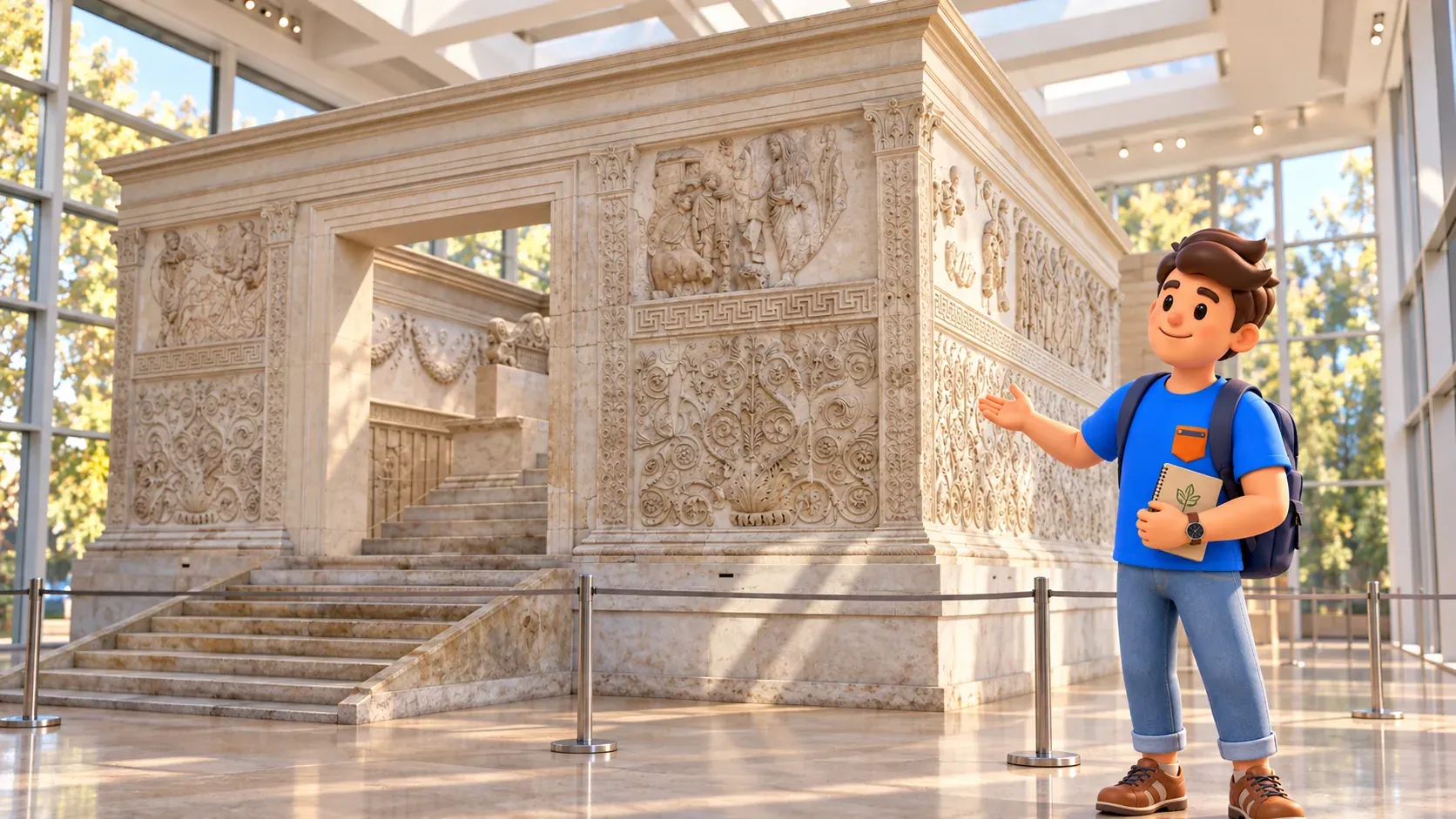
Some figures’ identities and the procession’s precise interpretation remain debated. Avoid treating it as a photograph of one conclusively established event. Notice instead how movement, drapery and plant patterns create an ordered world. Parts of the monument are restored, so its impression of completeness also involves conservation decisions.
Ordinary museum hours are daily, 9:30–19:30, with last admission an hour before closing; holiday exceptions apply. An ordinary visiting non-resident without an applicable concession needs a paid ticket. Check that your purchase is for the museum: temporary exhibitions and multimedia programmes may follow separate arrangements.
Online purchase can simplify preparation, without requiring the whole day to revolve around any exhibition you find. Our hour concerns the altar itself. Increase the programme again for a temporary display. Rome resident concessions should not be presented as free admission for all travellers.
A pause before the Tiber
After the exterior block or museum visit, retain fifteen minutes for rest. Find a suitable available place away from a passage. A particular bench, café or vacant table is not guaranteed. Water brought beforehand preserves a short pause rather than turning it into another search for service.

Compare two kinds of remembrance: a tomb planned for a family’s future and a public account of a ruler’s achievements. No final judgement or full sequence of dates is necessary. One clear connection is easier to remember than a long inventory seen without stopping.
A proper lunch with an order is excluded from this block. Shift the finish and subsequent plans if you want a substantial meal. A short route remains coherent through clear boundaries rather than an obligation to make every ordinary action faster.
Ponte Umberto I: finish in another period of Rome
Follow upper public embankment pavements south, from Lungotevere in Augusta towards Lungotevere Marzio and the city-centre end of Ponte Umberto I. Allow fifteen minutes for the connection. Use current crossings; the lower riverside path is unnecessary and should not be treated as a guaranteed shortcut.
Another bridge, Ponte Cavour, lies nearby north of the museum. It is not this walk’s finish. At Umberto I, cross from the historic-centre bank to Prati, towards the Palace of Justice. A return to the mausoleum afterwards is excluded.
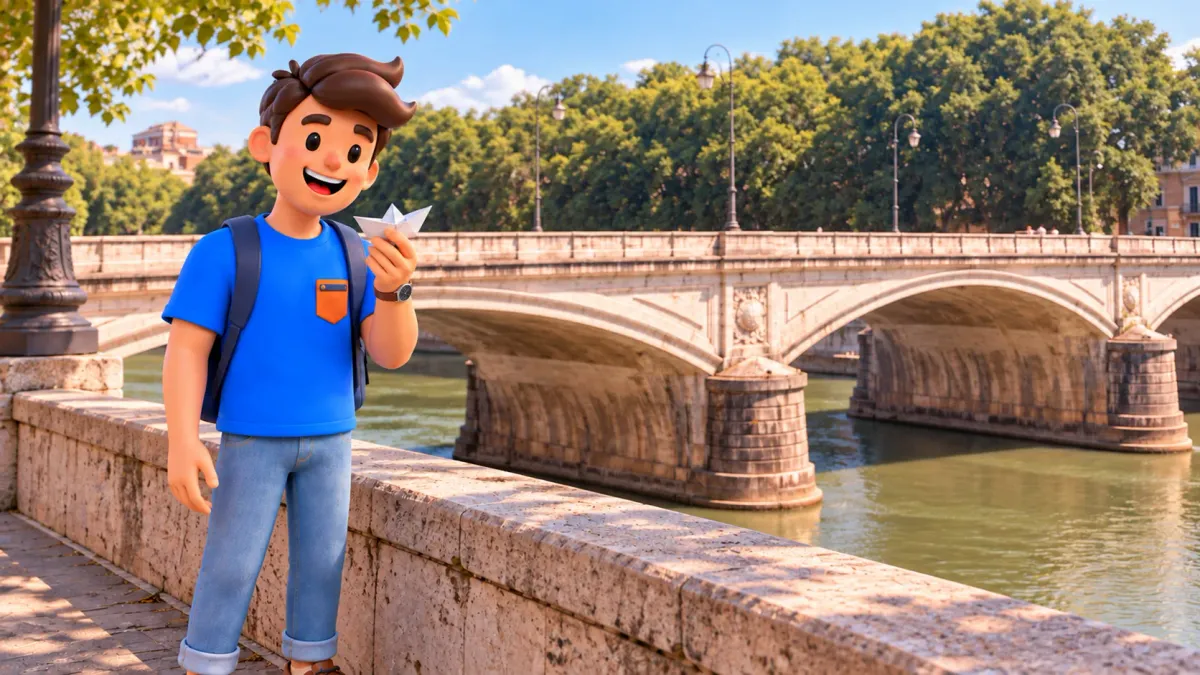
The bridge belongs to the late nineteenth century, rather than Augustus’s time. Its three arches and quiet stone line introduce another urban layer. Opened in 1895, it relates to development across the river. Being named for King Umberto I does not turn it into an ancient Roman monument.
Pause on the pavement without obstructing others. A view towards Ponte Sant’Angelo and St Peter’s dome can make an attractive conclusion, but those places remain further away. This walk includes no castle or Vatican visit. Umberto’s bridge itself has no row of angel statues: they belong to its famous neighbour.
Leave the continuation to your personal plan
Finish the main route at the Prati end of the bridge. The Palace of Justice forms part of the city view; no interior visit is assumed. Travel to transport or another district takes additional time. If tired, the transition from ancient remembrance to the modern city already offers a complete ending.
RoadMe can create a personal plan for the whole trip around your interests, with a museum today or a freer walk. The app makes it more convenient to fit the continuation together with your other days, connections and rest, so the itinerary follows your own pace.
For another exterior introduction to antiquity, see our Colosseum to Capitoline walk. Here, the mausoleum, the Altar of Peace in your chosen format and a Tiber crossing are enough. A compact area reveals several periods while leaving room for a relaxed remainder of the day.


