
Paseo del Prado outdoors: a two-hour art and architecture walk
Paseo del Prado is rewarding as a city walk in its own right, even when museum galleries are outside today’s plans. Art appears in fountains, architecture and the arrangement of public space: classical figures stand among trees, a major museum building unfolds beside the street, and a former power station becomes an unusual cultural centre. One outing can compare different ways of making a city expressive, without trying to fit every famous collection into the same day.
Allow about two hours from Plaza de Cibeles south to CaixaForum. The estimate includes connections, exterior views and short pauses; it is an editorial allocation without a timed field walk. Museums, the botanical garden and exhibitions require additional time. On checking on 16 October 2026, the city tourism site warned of restoration scaffolding around Cibeles Fountain. Begin with the square and palace architecture, without expecting an unobstructed view of the entire fountain sculpture or a special restoration visit.
Look at the boulevard as a work of art
The Prado name usually brings painting to mind first. A walk introduces what exists between galleries: tree rhythms, stone figures, façade proportions and contemporary architectural choices. This format suits time after an intensive museum or before a separate substantial visit another day. Specialist preparation is unnecessary. Watch changes in material, scale and the relationship between buildings and the street, keeping several quiet stops for comparison.
Putting the day together is much easier with RoadMe, which develops a personal route around your interests, available time and pace. Choose architecture, art and walks for a connected trip plan with a combination of visits and rest that suits you.
Paseo del Prado belongs to a broader idea combining public promenading, culture and scientific knowledge. Eighteenth-century renewal of the Salón del Prado included fountains and institutions intended to represent an enlightened city. That helps connect the stops without reducing them to dates. Together with Buen Retiro, the area entered UNESCO’s World Heritage List in 2021. For this outing, what matters is the urban landscape: the relationship between open spaces, planting and cultural buildings, alongside the individual objects receiving most attention.
Daylight helps with sculpture and textures. In hot weather, choose a cooler time and use available shade without assuming continuous coverage. Traffic remains nearby: this is an urban boulevard. During events or works, follow permitted passages and shorten stops as circumstances require. If the group tires, retain the most interesting section. Enjoying the street is more useful than insisting on reaching every original point, particularly when one place has already given you enough material for a satisfying short outing.
Six parts of a two-hour walk
- 15 minutes: Cibeles. See the square and palace from public pavement.
- 20 minutes: towards Apollo. Notice trees, boulevard space and the fountain.
- 20 minutes: Neptune. Connect and observe from a permitted pedestrian side of the square.
- 25 minutes: the Prado façade. Approach the side facing the boulevard and compare its proportions.
- 15 minutes: the Four Fountains. Continue south near Plaza de Murillo and see the smaller ensemble.
- 25 minutes: CaixaForum. Cross to the western side for the brick building and vertical garden outside.
The total is 120 minutes, with connections inside the blocks. The overall direction is south, without returning to Cibeles. Arrival and onward travel are additional. If you have an Atocha train afterwards, allow your own margin for walking, finding the entrance and station procedures: the plan ends at the cultural centre, rather than at your platform. The allocation helps choose a pace; it is not a guaranteed timetable for every step or every person’s walking speed.
Use designated crossings between the central promenade, museum side and CaixaForum. Neptune stands in a traffic square: view the sculpture from public pavements instead of approaching through the carriageway. Choose specific connections according to your needs. Step-free routes, more frequent seats or a particular building approach deserve advance checking. Nearby map points do not replace that preparation.
From Cibeles to Apollo: notice the changing scale
Begin with the palace and the directions of the large square, then head towards Prado’s pedestrian space. The transition already reveals the difference between a prominent urban junction and an elongated promenade. Do not linger seeking an impossible clear photograph if restoration conceals the fountain. Conservation is part of the monument’s present condition. There are enough other objects ahead for the walk to remain substantial, and no need to make the whole outing depend on one familiar postcard composition.
Apollo is on the boulevard and is also known as the Fountain of the Four Seasons. Its design brings together the god with a lyre and allegorical seasonal figures. The project is associated with Ventura Rodríguez and the Salón del Prado; work continued into the early nineteenth century. For a short encounter, seeing how the figures form one image is more rewarding than listing every participant or trying to remember the detailed chronology of the long process that produced it.
Compare the vertical figure with the arrangement of the other sculptures. A street monument reads differently from a page illustration because trees, distance and the side of approach affect it. With children, look for the musical connection and discuss the changing seasons. You need not identify every allegory from one uncertain detail. The broader idea is already engaging: a fountain can decorate the city with water while also communicating cultural meaning and a recurring natural cycle to people passing through.
Neptune: water, movement and silhouette
Continue towards Plaza de Cánovas del Castillo, often recognised by Neptune. The sculpture shows the sea god with a trident on a shell-shaped chariot drawn by two sea horses. With Apollo and Cibeles, it belongs to the Salón del Prado’s decoration through designs by Ventura Rodríguez. Today the fountains occupy differently arranged spaces. Your impression comes both from the composition and from where pedestrian access allows you to observe it, at different distances and with a different surrounding urban frame.
Begin with the overall outline: figure, chariot, animals and the wider base. Then choose one feature identifying the sea theme. Distance does not prevent that comparison. You do not need to approach every sculpture equally closely to understand their differences. Apollo and Neptune introduce distinct images within a shared urban programme: music and the seasonal rhythm in one case, water and movement in the other.
If an event occupies the square or the view is partly blocked, shorten the stop and continue towards the museum building. Several clearly observed things are more useful than photographs where the main subject is difficult to see. Outdoor art exists within a changing city, and traffic, light and temporary structures affect the encounter. A route remains practical when it permits a reasonable adjustment of pace, rather than requiring identical viewing conditions at every object to count as worthwhile.
The Prado outside: history begins with the building
Cross towards the Prado side facing the boulevard. Juan de Villanueva designed its original project in 1785 for a Natural History Cabinet; the Prado opened as an art museum in 1819. This change of purpose matters: a celebrated collection entered architecture conceived for another area of knowledge. That brief history encourages closer attention to the façade even when painting galleries are outside your plans. It connects the building with the scientific ambitions of the wider promenade, alongside its later artistic role.
Consider the long horizontal body and the more ceremonial central section. Columns, stone, repeated elements and spaces between them establish a rhythm. Look first at the proportions, then at one closer detail. The experience differs from Neptune, where an individual figure occupied a broad square. Here a building forms an extended edge to urban space. Both contribute to the art of city composition, while asking the eye to move differently. That comparison is accessible without knowing every architectural term involved.
An exterior stop is not a shortened viewing of the collection. If the façade makes you want to see painting, choose a separate visit with its own time. Even a free museum period, when offered under current rules, does not make entry a brief interval between fountains. Avoid leaving companions unexpectedly waiting for hours. For the two-hour version, remain in permitted open pedestrian areas and continue south.

The Four Fountains: give smaller things attention
Near the junction with Plaza de Murillo are the Four Fountains, or Las Fuentecillas. They were conceived to complete the larger Salón del Prado ensemble. Ventura Rodríguez’s design dates to 1781, with the repeated motif of a triton holding a dolphin. After larger monuments, the smaller scale and repetition are interesting in themselves. This is a separate fountain group: do not confuse its name with Apollo’s four seasonal allegories, which you encountered farther north along the boulevard earlier in the walk.
There is a useful conservation detail. In 1996, the original sculptural groups were replaced with replicas because of their condition, and the originals moved to San Isidro Museum. The street experience therefore presents the historical design without every visible figure being its original eighteenth-century sculpture. That brief distinction adds meaning to a short look. The separate museum address is outside this itinerary: it belongs to another part of the centre and deserves a deliberate decision, rather than a hurried detour here.
To combine the outdoor walk comfortably with museum visits, ask RoadMe to prepare a personal plan around your dates and preferences. The app helps organise interesting places and rest across your days, keeping enough time for the collections and neighbourhoods that matter most to you.
Choose an accessible overall view and compare the repeated forms without trying to circle every composition through inconvenient crossings. After several major monuments, a small ensemble changes the pace. Close details and relationships between similar objects become the subject. Remembering the triton-and-dolphin motif can connect this stop with Neptune’s chariot in your mind. The separate places then begin to form a personal account of the outing, rather than remaining individual lines in a list of sights to be completed.
CaixaForum: finish with an architectural contrast
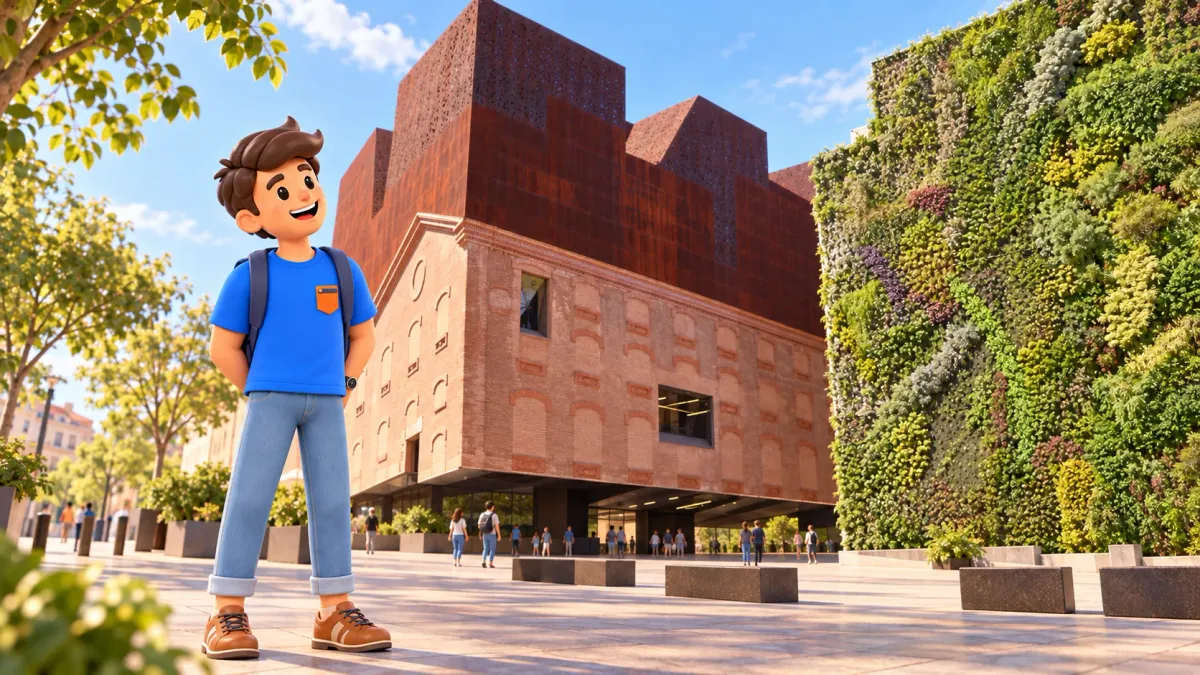
Cross towards the western side and CaixaForum at Paseo del Prado, 36. The cultural centre opened in 2008 following conversion of a former power station. Herzog & de Meuron retained the brick shell and created a marked contrast with the new upper volume. The lower arrangement makes the heavy building appear raised above the square.
Beside it is Patrick Blanc’s vertical garden, a planted wall at the side of the square rather than a green covering over the entire brick building. Compare three textures: brick, the upper metal section and vegetation. After classical stone fountains and museum proportions, the finish introduces another expressive language. Contemporary architecture works through contrast, conversion and unexpected material relationships. An exterior pause is enough to appreciate that idea, without requiring an exhibition visit to justify reaching the final address.

Finish here or choose an independent continuation according to your energy. An exhibition, lunch or botanical garden visit changes the two-hour plan, so add it deliberately. For another boulevard outing, our Recoletos route from Colón to Cibeles considers the northern continuation of this urban axis. Prado already leaves a complete comparison: classical fountain, building for knowledge, small repeated ensemble and a new cultural role for industrial architecture, joined through the experience of walking between them.


