
Andersonville and Edgewater in Half a Day: One Museum and a Neighbourhood Walk

A half-day around Andersonville and nearby Edgewater can be built around one small museum, time on Clark Street and a quieter residential section. Choose the Swedish American Museum for an immigration and cultural focus, or the Edgewater Historical Society Museum for neighbourhood history when its weekend opening suits. Keep the other institution as a short exterior stop.
Allow roughly three and a half hours within the area, apart from travel across Chicago. This is a compact neighbourhood outing, not an attempt to cover the whole North Side or add the lakefront automatically. One real museum visit, several street observations and a proper pause provide a clear shape without crowding the afternoon.
Choose one museum before fixing the order
A useful outline gives the main museum seventy-five minutes, the other museum’s exterior fifteen, street observations forty-five, connecting movement thirty and a break or flexible margin forty-five. These are editorial planning allowances rather than measured durations. If an exhibition takes longer, use some of the margin instead of pretending every activity can stay unchanged.
RoadMe helps build a complete personal trip around your dates, interests and preferred pace. Try choosing immigration or neighbourhood history as this half-day’s focus, then balance other Chicago days with the museums, architecture and outdoor time that suit you.
The Swedish American Museum normally opens Tuesday to Friday from 10am to 4pm and Saturday and Sunday from 11am to 4pm, closing on Monday. The Edgewater museum’s ordinary public window is Saturday and Sunday from 1pm to 4pm. Check each actual calendar for holidays, special events and temporary changes before travelling.
For the Edgewater option, begin with the confirmed afternoon opening and let the streets follow. On a suitable weekday, the Swedish American Museum can be the first substantial stop. Monday is not a normal museum day for either choice; a street-only walk then should be described as a different outing.
Start around Clark Street and Foster
The Swedish American Museum is at 5211 North Clark Street, near Foster Avenue. The Edgewater Historical Society Museum is at 5358 North Ashland Avenue, at Balmoral. These addresses sit within a compact local street network, but they are distinct institutions with different subjects and access arrangements.
Check the current transit route from your own starting point and include the final walk. Clark Street buses can be useful for this corridor, while rail connections need their own approach. Do not turn an older visitor page’s station or journey suggestion into a promise that every service and entrance is operating unchanged.
Give yourself a few minutes to orient before the museum. Clark is a commercial street with shops, services and people moving through their normal day. Notice the width of shopfronts, doors and upper floors. These observations provide a scale for the later residential section without requiring you to enter every business.
Use public sidewalks and permitted crossings. Keep entrances clear when reading or taking photographs, and pause somewhere that does not narrow the route for others. A short neighbourhood walk works through ordinary public space rather than needing private courtyards or a series of special-access buildings.
Choose the Swedish American Museum for immigration history
The museum interprets Swedish-American experience, including the relationship between immigration, life in Chicago and contemporary cultural identity. Its core exhibition is called We Are America. Use the current name rather than planning around an older description of Dream of America, which belongs to a previous exhibition arrangement.
Begin with a question about making a new home. An everyday object, a photograph or an interpreted personal item can connect a wider migration story with a specific decision or activity. Read the explanation before assuming that one object represents every person who moved from Sweden or every generation that followed.
Choose a small group of exhibits to examine rather than trying to memorise the entire collection. Look first, read, then return to a detail whose meaning has changed. That method makes a modest museum visit substantial without requiring a complete historical background or a family connection to the subject.
The museum’s holdings extend beyond what is currently displayed, and research access follows separate arrangements. A collection page is not a guarantee that a particular object waits in the gallery today. Likewise, archive appointments should not be treated as a casual addition to an ordinary walk-in exhibition visit.
Check current admission categories and any conditions for a guided visit. Special programmes may affect access to a temporary gallery. A museum can be open while one room is being used differently, so confirm ahead if a particular exhibition is the main reason for travelling.
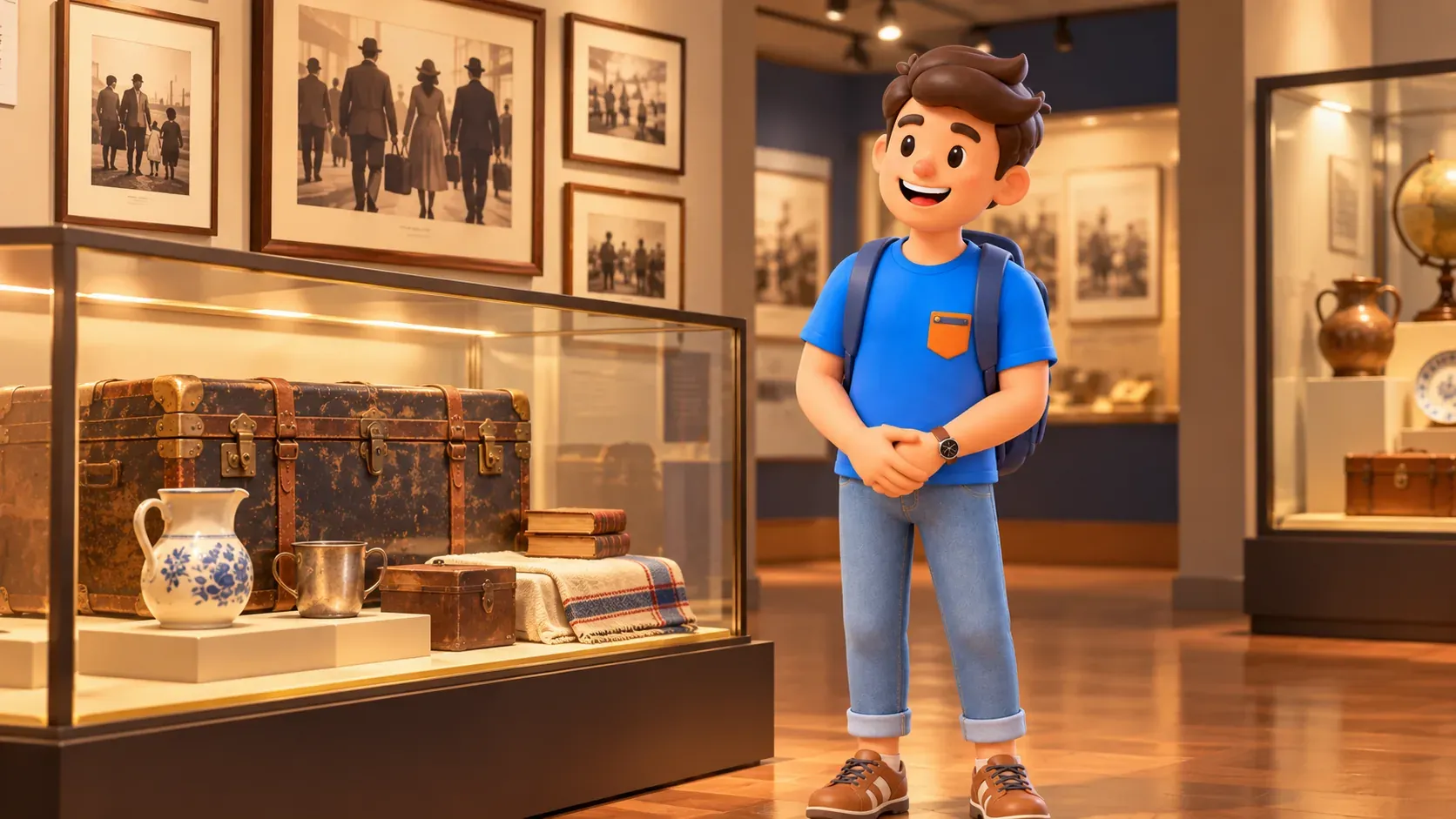
Give children’s activities their own calendar
The Brunk Children’s Museum of Immigration is part of the museum’s offer, but its opening pattern differs from the main museum on some weekdays. Do not assume a morning general opening means every children’s space is available at that time. Check the specific hours and any programme arrangements for the date you choose.
If visiting with children, decide whether that experience is the main part of the seventy-five-minute block or needs additional time. You can shorten the later street section rather than turning the outing into a succession of deadlines. A family visit can remain focused on one question, such as what people carry when moving to another place.
Follow the instructions for handling or not handling objects in each space. A family-oriented museum is not the same as permission to touch every historical item. Let the actual display and staff guidance determine the activity instead of expecting every exhibition to work like a playground.
Walk Clark Street as a present-day corridor
After the main visit, or before an afternoon museum opening, use the Clark Street stretch around Foster and Balmoral. Give the commercial street time as a place of current activity. Historical Swedish associations matter, but the neighbourhood is not a preserved Swedish village whose residents and businesses all share one identity.
Look for contrasts between storefront level and the upper building: display windows, entrances and the rhythm of the facade can reveal different kinds of use. You do not need a long list of named shops. A few deliberate observations provide a more coherent walk than repeatedly crossing the street to tick off businesses.
Enter a shop only if you want to and it is actually open. Browsing, buying, eating and looking from the sidewalk are different choices, each with its own time. The route is complete without spending money in a particular place, and no business’s ordinary opening should be inferred from the museum calendar.
If a festival or street event is important, check its actual date separately. A neighbourhood known for seasonal celebrations does not offer them every week. Crowds or temporary street arrangements can also change the pace, so use the margin rather than assuming an ordinary quiet walk on every possible day.
Add a quiet residential section on public streets
Near Balmoral, compare the commercial corridor with adjacent residential streets and the connection towards Ashland. Keep the section compact and choose public sidewalks. The point is to notice a change in scale and use, not to extend the outing into a full architectural survey of every nearby district.
Look at the relationship between houses, front gardens and the street. Repeated materials or entrances can make a block feel coherent even when details differ. You do not need to assign a style or date to each facade without evidence; several concrete observations are enough to appreciate the transition.
These are private homes. Do not climb steps for photographs, enter gardens or peer through windows. An attractive doorway remains someone’s entrance. If you want a specialist house tour, treat it as a separate programme with actual permission rather than a general feature of this walk.
Let the group’s energy set the length. A quieter block and a short rest can be more useful after the museum than adding distant streets simply because they also appear on a neighbourhood map. Preserve time for your selected museum if you have not yet entered it.
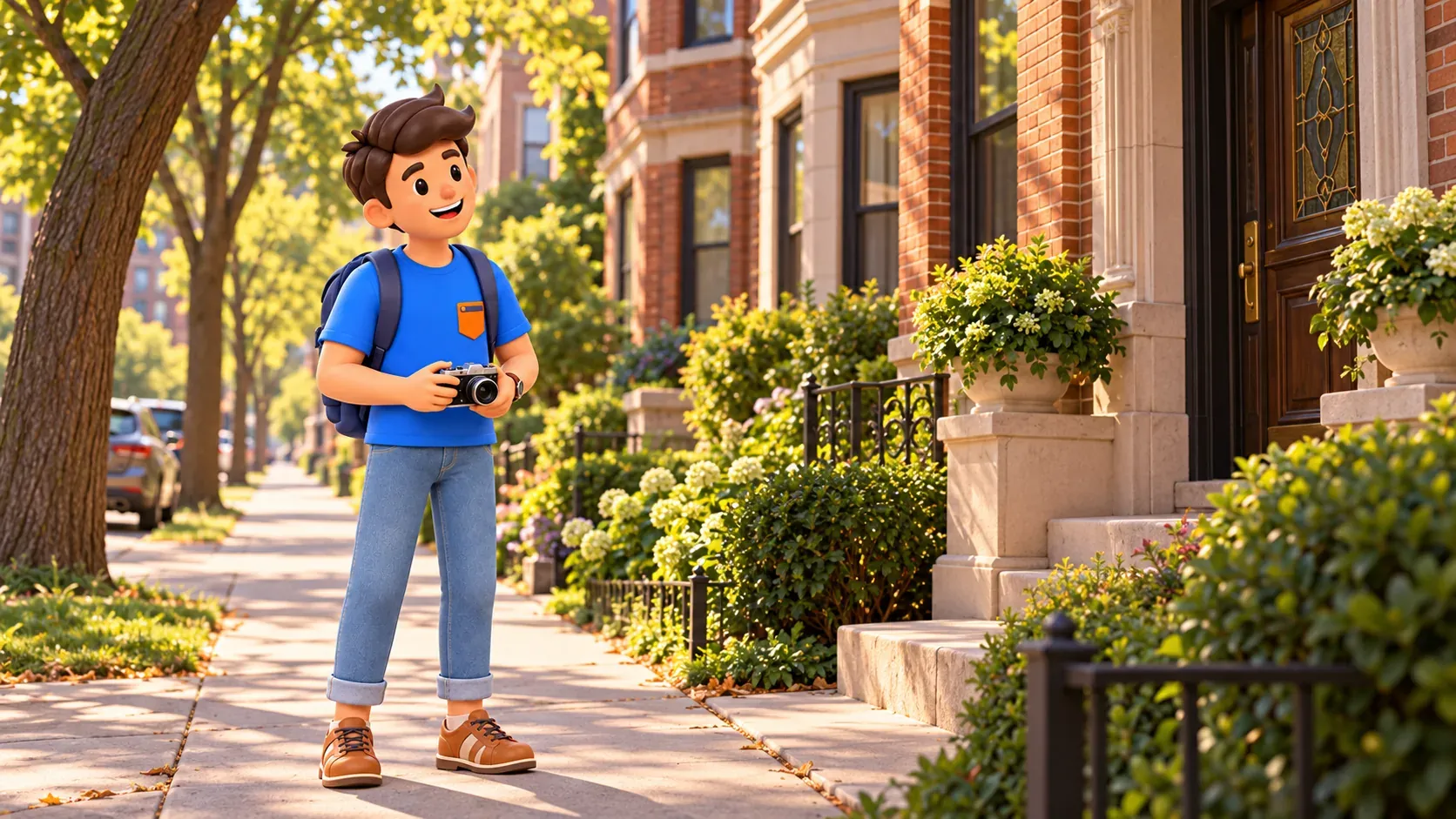
Use the Edgewater Historical Society as the alternative
The museum at 5358 North Ashland Avenue occupies a restored former firehouse and focuses on the neighbourhood’s history and memories. Choose it when you want to connect local places, residents and changes over time. Its ordinary Saturday and Sunday afternoon window is much narrower than a general all-week museum schedule.
Admission is free, with donations welcomed. A voluntary contribution is not the same as a compulsory ticket. If you need a group visit or a special arrangement outside the public window, contact the society in advance rather than assuming volunteers will be available whenever you arrive.
Let the exhibitions actually open guide your visit. The society’s website contains material about different past subjects, and an archive of an exhibition is not proof that the same display remains installed. A photograph, map or recorded memory can be a useful starting point for asking how a neighbourhood changes.
Keep sources and observation distinct. A historical map may show a vanished building, while the street outside shows the present. Comparing them is valuable precisely because they are not identical. Do not describe an old hotel or former institution as something you have just visited merely because its story appears in the museum.
If this is your main museum, the Swedish American Museum can stay an exterior stop today. If you already visited the Swedish American Museum, the firehouse frontage may be enough. The plan does not require both interiors, and an outside view should be remembered as an outside view.
Keep the break substantial enough to be useful
Choose a suitable cafe or food option according to current opening and your own needs, without treating one dish as an explanation of the whole neighbourhood. A short drink and a full meal take different amounts of time. Use the generous flexible block honestly, rather than hiding a long lunch inside a few minutes.
The Swedish American Museum has a cafe with its own schedule, which should not be assumed identical to every gallery’s hours. If using it matters, check before relying on it. You can also pause elsewhere; the museum choice should not force a purchase or a particular food experience.
In rain or cold, keep the main interior and shorten the residential comparison. In pleasant weather, use some margin on the streets. If access, standing or uneven surfaces matter to your group, check actual conditions instead of assuming a small geographical area guarantees an easy experience at every doorway.
Finish with one museum properly visited
Plan onward travel from the actual final stop, whether on Clark or Ashland. There is no need to add the lakefront or another distant museum just because the wider area has more attractions. A clear ending leaves the day coherent and allows the rest of your trip to keep its intended pace.
RoadMe can organise the rest of Chicago around the interests and pace that worked here. Try saving the second museum for another suitable day, with realistic room for travel, meals and rest across the complete trip.
For a different neighbourhood pairing of green space and a specialist museum, save the Bridgeport half-day with Palmisano Park and the Maritime Museum. Here the emphasis is smaller: one chosen museum, a living commercial corridor and enough unhurried street time to connect the two.


