
Cinema, photography and architecture: a three-hour Tuschinski to Foam walk
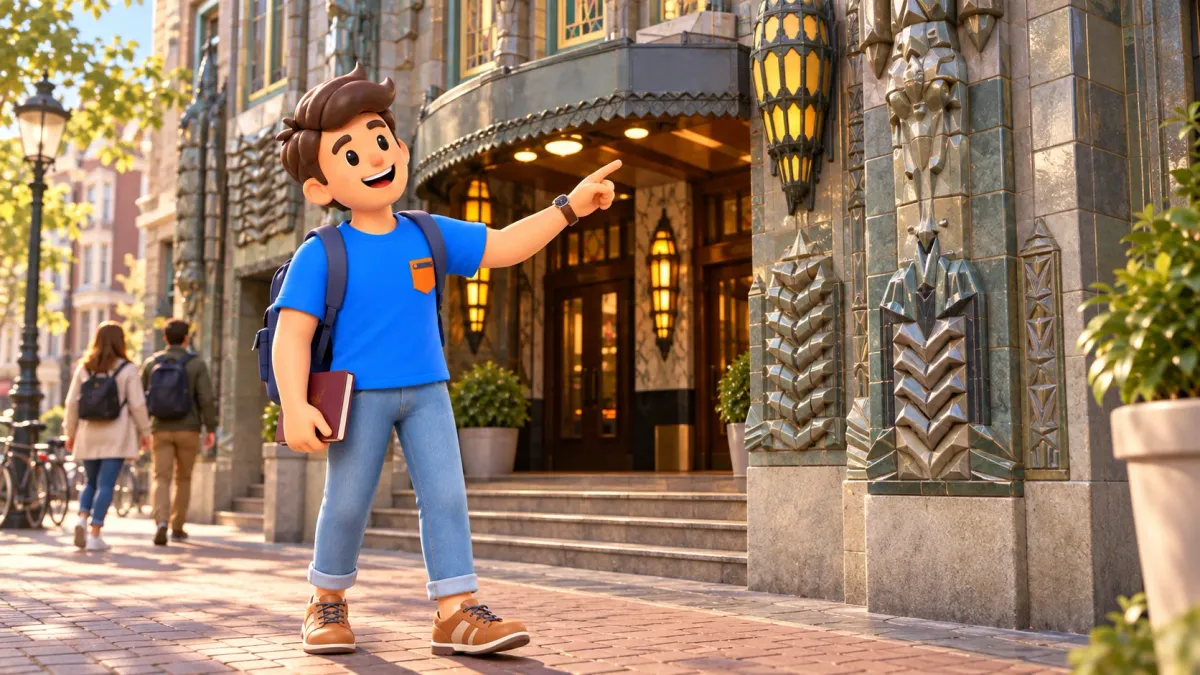
A short route from Tuschinski cinema to Foam connects ways of looking at images and space. At the first address, the experience begins outside: a building creates anticipation before a screen lights up. At the photography museum, attention shifts towards framing, sequence and an artist’s viewpoint. A brief walk to Keizersgracht provides a change of pace between them. You do not need specialist film or photography knowledge. Curiosity is enough: what makes you look closely, how is an impression constructed and why does one detail stay with you? Two cultural addresses can develop those questions without an exhaustive tour of central Amsterdam.
Allow around three hours, from 10:00 to 13:00, conditional on a suitable morning Tuschinski audio-tour window. The example assumes your purchased block allows a 10:15 start. Confirm that before fixing the rest of the timetable; it is not a promised daily departure. A forty-five-minute audio tour is followed by a short walk, a small pause and ninety minutes at Foam. No film screening is included. Travel to the start, your return and a substantial lunch are additional. The programme concerns cinema architecture and photography, rather than inserting a complete film between two walking stops.
First decide what you want to experience
Tuschinski offers different ways to visit: the street facade, an audio tour, a guided tour or a ticket for a particular film. Their experiences and durations differ. This main version uses the audio tour to give the building attention while preserving time for photography. If a screening is the priority, choose its film, language, auditorium and start first, then rebuild the day. One format should not be purchased expecting another. At Foam, read the current exhibition programme. A museum being nearby does not mean every subject on your date will interest everyone equally.
Try RoadMe for a complete personal route or trip plan shaped around your interests and pace. The app makes it much more convenient to connect cinema, photography, architecture and rest into a suitable programme for your whole journey.
Discuss a shared interest before leaving. Someone may enjoy decoration, another the way a photographer tells through a series. Choose one question for each part. In the building, consider how space directs attention; at the museum, consider what remains within and outside the frame. These are observation suggestions, not promised guided activities. Everything need not appeal equally. Sometimes the memorable result is a difference between two ways of working with images, rather than the number of rooms completed during a limited morning. Leave space for companions to notice something you would otherwise have passed.
How the three hours fit together
Keep 10:00–10:15 for Tuschinski’s exterior and entry preparation. If the purchased window permits, take the audio tour from 10:15 to 11:00. Allow 11:00–11:15 to walk towards Foam, 11:15–11:30 for a brief pause, and 11:30–13:00 for the museum including entry. The total is 15 + 45 + 15 + 15 + 90 minutes: three hours. A fifteen-minute pause is not a restaurant lunch. Extend the outing for a proper meal. The clock explains proportions, without guaranteeing queue lengths, service times or a place on the tour.
From Reguliersbreestraat 26–34, head west towards Vijzelstraat, south to Keizersgracht and west along the canal towards number 609. Use current navigation for precise turns and permitted pedestrian crossings. The connection is roughly 600 metres by our estimate, not a measured track; fifteen minutes includes orientation and calm movement. Do not seek a shortcut through a private house or another museum on the opposite bank. If your audio-tour window differs, shift the timetable and check museum arrangements again. Keeping illustrative clock times is less important than giving each visit a workable approach.
Tuschinski: a building that prepares you for cinema
Tuschinski opened in 1921 through Abraham Tuschinski’s initiative. Its decoration combines artistic languages including Art Deco, Jugendstil and the Amsterdam School. The visitor’s interest need not be identifying a list of labels: notice how an unusual building creates anticipation. Look at vertical lines, ornament, windows and the entrance. An ordinary doorway becomes a sequence of visual signals. One close detail and one view of the whole facade can explain how architecture contributes to the cinema experience. You do not need to identify every contributing artist before the building can become interesting.
Nor is it frozen in its opening year. The operator describes subsequent changes and restoration, so avoid treating every visible detail as an unchanged 1921 original. The audio tour can introduce how this environment developed. Separate its historic image from the assumption that all rooms are always accessible with any ticket. A working cinema accommodates screenings and events; building access follows the chosen format. For this outing, arrange the morning architectural visit instead of expecting to wander freely through every auditorium between films. The building’s continuing use is part of its appeal, alongside its decorative history.
An audio tour does not include a screening
The official audio-tour product specifies forty-five minutes and explicitly excludes a film. You may start within your purchased time block. The theatre introduction describes morning visits roughly between 09:30 and 11:30, subject to events; your actual ticket confirms the arrangement for your date. The current product lists Dutch, English and French. Do not assume official Russian, German or Spanish support because a third-party service advertises a guide in those languages. Those may be different products, with different content and entry conditions. Confirm what you are buying rather than relying on a translated search result alone.
A guided tour is a separate option lasting around ninety minutes. Its conditions also request earlier arrival and allow route changes for events. It cannot replace the example’s forty-five-minute audio block unchanged. If you prefer a live guide, choose that deliberately and extend the outing, or visit Foam another time. A cinema ticket likewise does not promise entry to every historic room. Check the specific screening’s auditorium, language and subtitles. Interest in architecture and watching a film can work well within one trip, without having to occupy precisely the same short morning.
If no suitable audio visit is available, retain the exterior and make Foam the main admission. Start later, spend longer beside the canal or increase the pause without automatically buying another museum entry. Contact the operator before purchase about significant access needs. On 16 October 2026, the cinema page reports its lift temporarily out of service; general information describing access by lift does not establish that it is currently working. The guided-tour page also says not all areas are wheelchair accessible. Choose the format using actual arrangements rather than only an appealing entrance photograph.
A short connection changes how you look
On the way to Keizersgracht, shift from rich decoration towards quieter urban lines. Choose one thing to notice: repeated windows, a reflection or the change in scale when approaching water. This is not an extra tour of every intervening building. The short journey lets your eyes rest before photography. Taking pictures is optional. Consider what you would include in an imagined frame and what you would leave outside. Keep observation separate from movement: find a suitable stopping place before looking closely or taking out a camera, then continue with attention to crossings and other people.
Before the museum, keep fifteen minutes for a simple pause somewhere you choose. Sit, drink water or discuss one remembered detail. Do not promise yourself service at a particular café within an exact quarter-hour. If you need more rest, give it more time and move the later block. Compact geography should reduce travel effort, not eliminate ordinary needs. Organise wet belongings or purchases before entering rather than beginning the photographic visit distracted. The outing works through a change of attention, and that is harder to enjoy when you are already hungry, hurried or uncomfortable.
Foam: look beyond the number of rooms
Foam is a photography museum at Keizersgracht 609. Its programme changes, making current exhibitions worth checking before choosing admission. Consider how photographs shape seeing through framing, distance, light, sequence and relationships between images. These are questions about the medium, not a guaranteed range of genres in one exhibition. Avoid expecting an unchanged set of familiar pictures from somebody’s older report. Choose one current subject that interests you. The museum then develops the curiosity about visual experience begun at the cinema, while changing its language and scale rather than repeating the first visit.
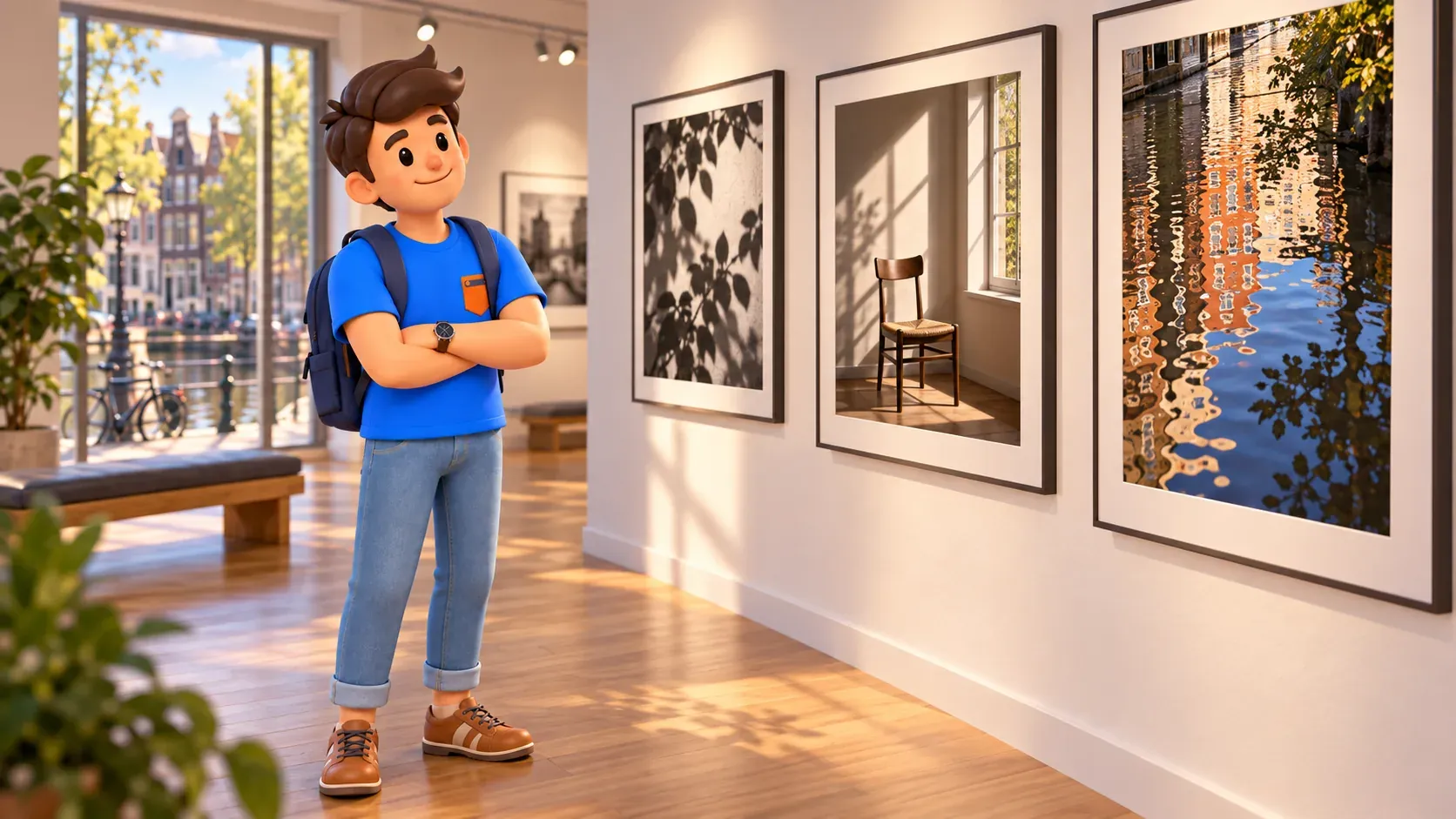
Look at one photograph before reading a long explanation, then compare the impression after available context. What becomes clearer, and what remains a question? Consider neighbouring images: a sequence can tell differently from one striking frame. You do not need to identify an artist’s intention immediately. Form an observation and see whether it changes as you continue. Ninety minutes is a plan for a selected part of the programme including entry, not a promise to cover everything. If an exhibition holds you longer, there is no compulsory next attraction after the suggested 13:00 finish.
Photography and cinema also invite comparison through sequence. In one, a screening sets order and duration; in the other, you can linger and return to a neighbouring image. That provides a conversation after leaving. You need not immediately reproduce a style with your own camera or turn a companion into a model. Keep one observation about space, image relationships or the effect of a label. If another medium interests you more, our guide to choosing Amsterdam art museums helps select a separate visit on another day, without adding a cross-city journey to this compact programme.

Practical arrangements at Foam
Ordinary Foam hours are daily, 10:00–18:00, with Thursday and Friday evenings until 21:00. Advance tickets are recommended, while visitors without reservations are welcome. Payments on site are by card. Check your date, available programme and correct admission category. The historic building is not fully wheelchair accessible; contact the museum about significant mobility requirements. A short distance from the cinema does not establish a step-free outing. Read old building-work notices with their dates: the published temporary closure during August–September 2026 is not evidence that the museum is closed on a future visiting day.
With RoadMe, get a personal plan for the whole trip connecting cultural interests with walks and rest. Try the app for a much more convenient and effective way to give cinema, photography and other experiences suitable days at a comfortable pace.
Finish after Foam or leave time for lunch. Your return and any evening continuation are separate arrangements. Our three Amsterdam squares walk offers another outdoor outing; its three hours do not join this morning without additional time. Today’s connection runs from a space preparing you to watch towards images that change your viewpoint. Two addresses can provide a coherent cultural experience. You do not need another ticket to validate it: a conversation, a little waterside walking and curiosity saved for another day may be a satisfying continuation of what you have already seen.


