Amsterdam art museums: choose Stedelijk, STRAAT, Foam or Eye
Choosing contemporary art in Amsterdam is easier when you start with how you enjoy looking. Perhaps you want to compare forms and objects, experience an image at a large scale, follow a photographic story or explore moving images. Stedelijk, STRAAT, Foam and Eye support different interests. They do not form one short museum itinerary. Choose a main experience and give it time. Here, contemporary art means an interest in visual culture rather than a promise that every work was recently made. The history of a medium also belongs within these programmes.
Allow roughly two to three hours for one independent exhibition visit, then count travel, food and rest separately. This is our planning estimate, not a museum limit or a promise of complete coverage. For a film at Eye, use the screening’s actual running time; it does not automatically fit the same exhibition block. Check calendars and admission conditions for all four choices. Works and temporary projects change, so select a programme for your date as well as an institution’s name. The comparison helps place one experience within your trip without continual transfers between venues.
Choose the language of the image
Ask what you want to notice afterwards. For relationships between art, design and everyday form, begin with Stedelijk. For street art and graffiti at scale, consider STRAAT. For photography as a way of seeing and telling, choose Foam. For film and movement, look at Eye. These are useful directions rather than rigid collection boundaries. Photography appears outside photography museums, and film can belong in an art exhibition. Such overlaps need not complicate the decision. The task is choosing a principal experience, not assembling every possible medium into one exhausting day.
Try RoadMe for a complete personal route or trip plan shaped around your interests and pace. The app makes it much more convenient to select cultural experiences and combine them with walks and rest across your whole visit.
Prior expertise is unnecessary. Curiosity about material, colour, a person’s viewpoint or the construction of an image is enough. With companions whose preferences differ, agree on one shared question and a comfortable duration. You might discuss how scale changes a response or what makes an image persuasive. A common interest helps more than requiring everyone to love each gallery equally. Nobody needs the correct reaction to everything.
Stedelijk: art beside design
Stedelijk offers modern and contemporary art and design within one field of attention. Consider how form works in images and objects, how artistic languages connect with life, and why an everyday thing changes perception in a museum. The collection programme relates different periods; avoid reducing the institution to only the newest work. For a traveller, its value includes looking at visual surroundings beyond a sequence of paintings. Afterwards, a street sign, furniture or the organisation of familiar space may attract a different kind of attention.
For a first encounter, choose several works or objects you want to compare. Notice your response before reading the explanation. Context may change your understanding or leave the original question open. Everything need not appeal for the visit to have substance. Find a connection through colour, repetition or material. This is an editorial suggestion for attentive looking, not a promised activity or guided tour. Check current works through the programme: interest in one artist does not guarantee every familiar piece will be displayed on your date.
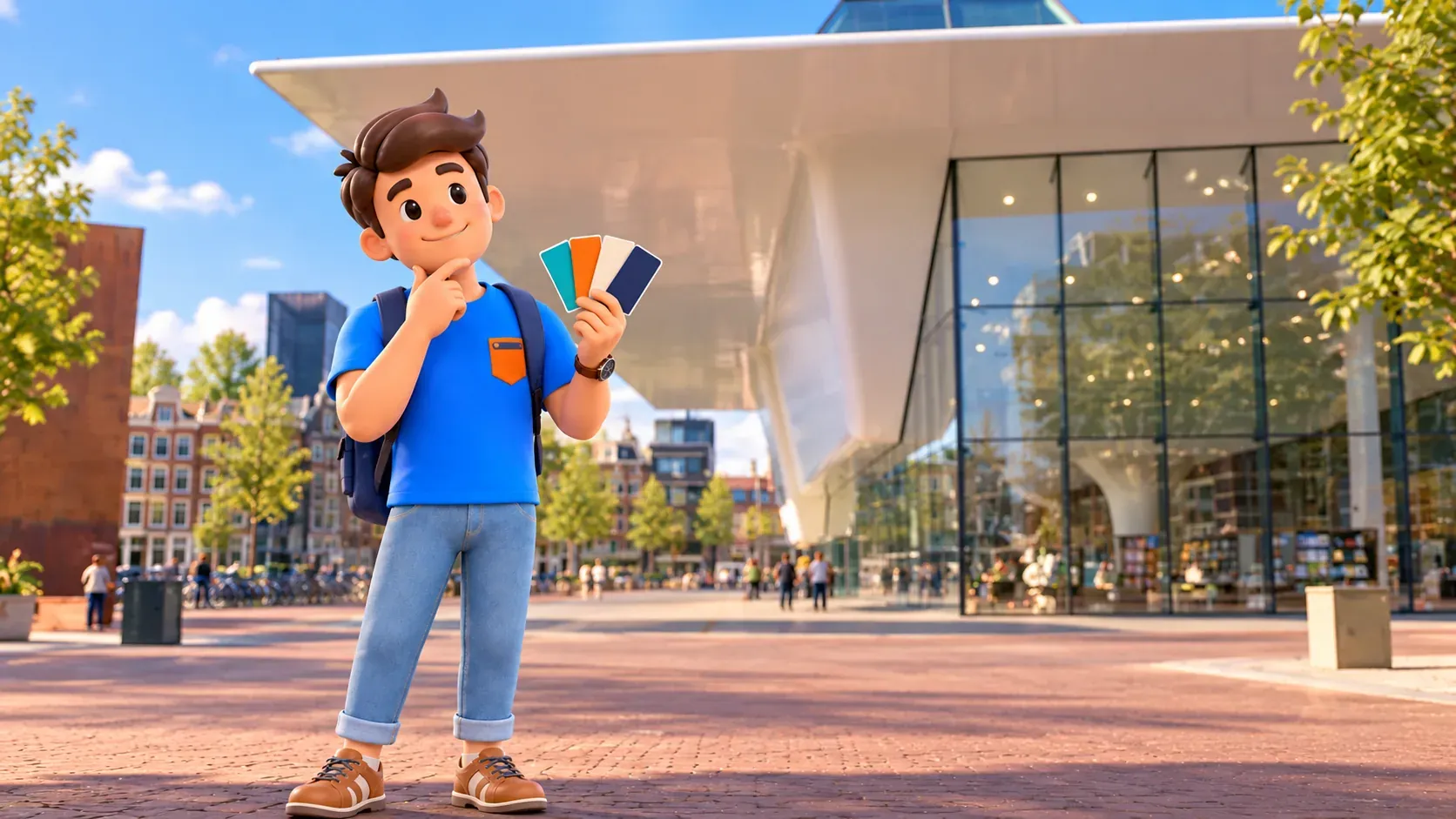
The museum is by Museumplein. Ordinary hours are daily 10:00–18:00, with admission ending at 17:45 and earlier opening on certain dates. Advance online tickets are requested; Museumkaart holders are asked to reserve a slot. Backpacks cannot enter the galleries and can remain in lockers. Allow preparation time rather than beginning with a hurried search for somewhere to leave belongings. Discuss particular mobility or companion requirements beforehand. Neighbouring museums do not establish identical conditions inside, nor does proximity make another admission an obligatory continuation when your attention would benefit from a pause.
STRAAT: feel the scale of street art
STRAAT is dedicated to street art and graffiti in a former industrial warehouse at NDSM. Works were created on site, and many approach the size of outdoor walls. This differs from passing individual street images during an ordinary walk. The museum adds context and time to examine a work. Do not consider the paid gallery merely a compulsory repeat of things visible outside for free. The formats have different purposes: one encounters the city while moving, the other lets you stay with an image and consider its choices within an exhibition setting.
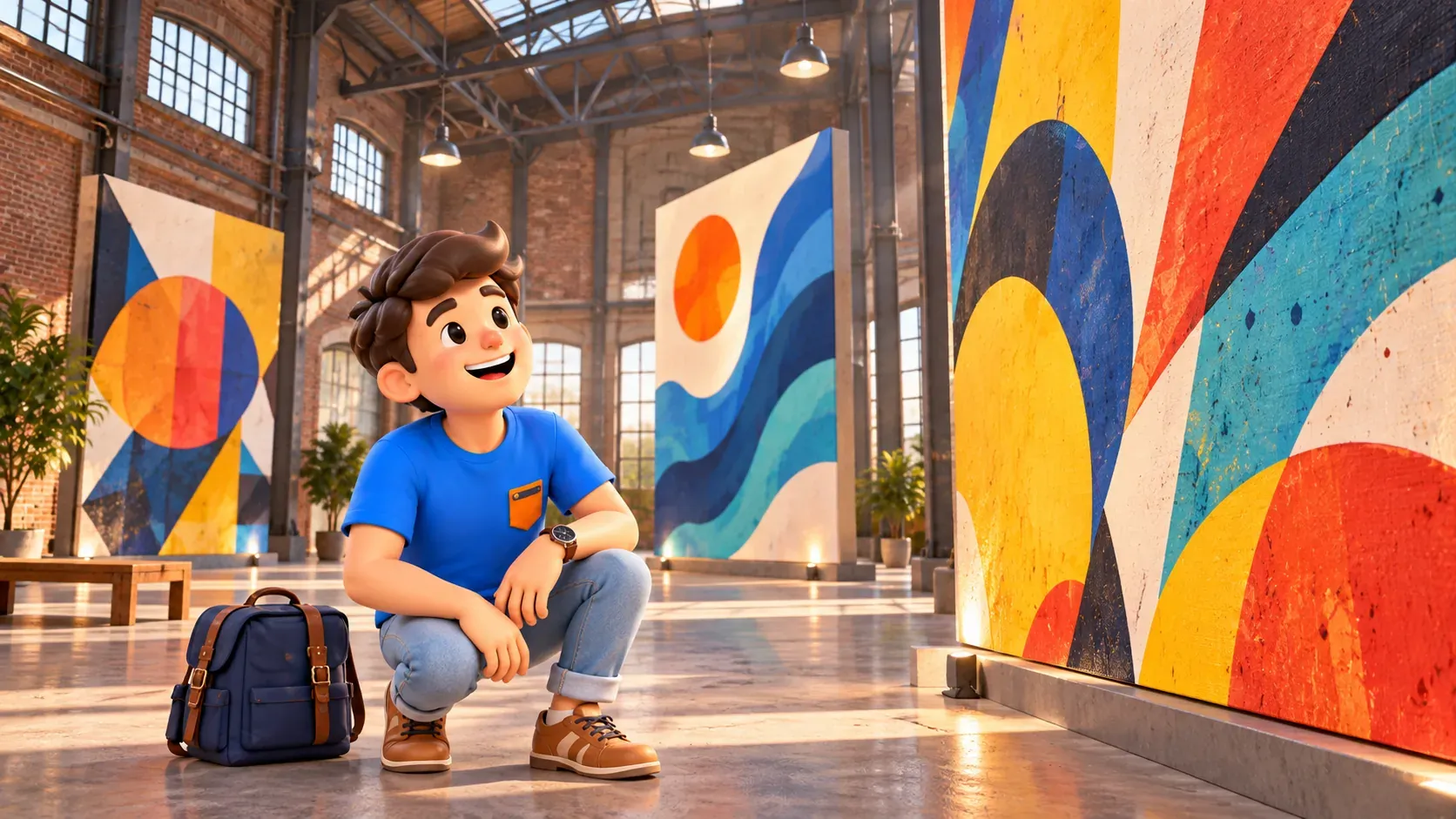
Try looking from a distance, then moving closer within the visitor route and permitted separation from the artwork. Does the image change, do details emerge, does colour feel different? There is no need to touch a surface or press close for a photograph. Personal photography is permitted without flash, tripods or selfie sticks. Still, a picture should not replace observation: large scale is easy to lose on a small screen. Spend a few minutes simply considering relationships between the image, your position and the surrounding space. That is part of the reason to give this visit its own time.
STRAAT ordinarily opens at noon on Monday and 10:00 on other days. Thursdays run until 21:00; other ordinary days finish at 17:00. Exceptions exist, so check your date before travelling to NDSM. Advance booking is recommended. The industrial hall cannot maintain a fully regulated temperature: it can feel cold in winter and warm in summer. Dress accordingly rather than expecting a conventional climate-controlled gallery. For a broader neighbourhood visit, choose the separate half-day NDSM itinerary with art and the old shipyard. Its outdoor continuation needs additional time beyond the museum itself.
Foam: look beyond a photograph’s subject
Choose Foam at Keizersgracht 609 for photography and different ways of telling through images. The programme changes, making current exhibition descriptions particularly useful. Names are not the only guide: consider whether you want a document, a personal viewpoint, a sequence or a visual experiment. These are questions to ask of the medium, not a guaranteed set of genres on one date. A single exhibition matching your interest can leave a more connected impression than several institutions selected only because each appears on a well-known list.
Notice the order of photographs and how understanding changes within a series. Meaning can emerge between images rather than solely in the most striking one. Compare an initial response with the impression after reading. You need not reproduce the style with your own camera immediately outside. Take away one question about viewpoint, framing or trust in an image instead. A historic canal building also changes the scale of the experience compared with STRAAT’s warehouse. That can help you choose the kind of space you prefer today, without ranking one format above the other as universally better.
Foam ordinarily opens daily 10:00–18:00, with Thursday and Friday evenings until 21:00. Check your date and available programme areas beforehand. Advance tickets are recommended and on-site payments are by card. The historic building has access limitations; contact the museum ahead if mobility arrangements matter. Do not transfer conditions from a neighbouring institution to this address. For photography combined with another interior nearby, use the separate rainy day with Foam and Museum Van Loon. It describes a different complete scenario, which should replace rather than automatically join the end of this choice.
Eye: turn towards the moving image
Eye is a museum of film and film culture on the northern IJ bank, opposite Centraal. Film history meets exhibitions at the intersection of cinema and visual art. It is more than a striking white building and does not behave like an art museum where every object follows one viewing pattern. Decide whether your main purpose is a temporary exhibition, the permanent What is Film? presentation or a particular screening. Time, ticket and the day’s character follow that choice. Interest in current visual languages can also have a historical continuation in understanding how moving images developed.
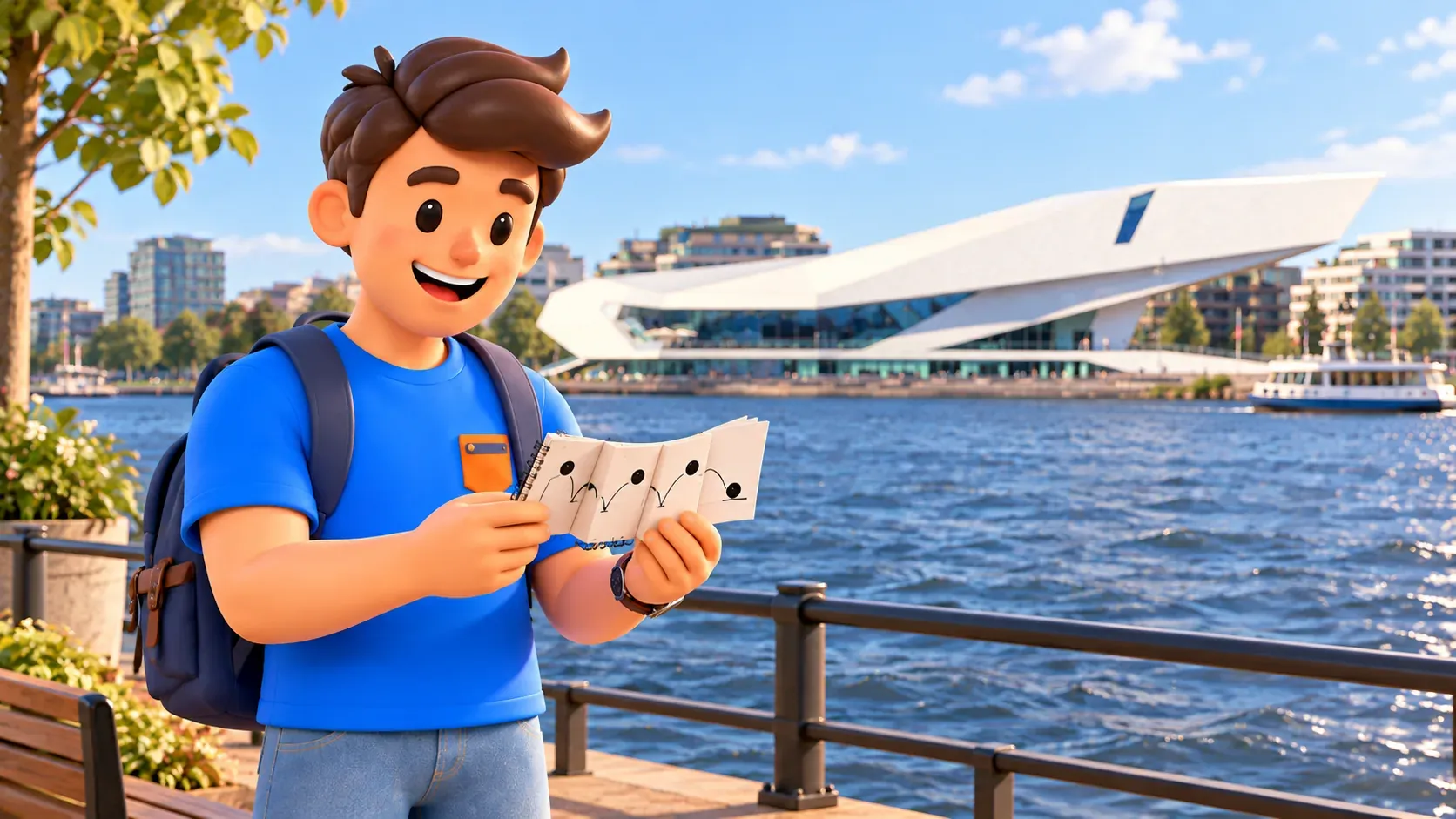
The permanent presentation can be visited with a film or exhibition ticket; do not assume it is a freely accessible adult attraction within the building. For a screening, check the programme, language and subtitles separately. An exhibition ticket does not promise a seat at any film. If cinema is the goal, allow its full running time and preparation before the start. Avoid placing it against a return journey or another appointment: the point is lost when half your attention goes to the clock.
Exhibitions ordinarily open Tuesday–Sunday 10:00–19:00; on Mondays outside official school holidays, they close. Installation and dismantling between temporary projects can also close the exhibition area. Check the calendar rather than restaurant or box-office hours alone. Different parts of Eye operate differently. A usual approach is the free F3 ferry to Buiksloterweg from Centraal’s IJ side, followed by the current pedestrian route. Wayfinding and works can change the approach. This guide promises no fixed few-minute walk and does not include ferry waiting within museum time. Check the journey as part of the day’s arrangements.
Let geography support the decision
Stedelijk belongs with Museumplein, Foam with the central canals, STRAAT with NDSM and Eye with the bank opposite Centraal. The two northern venues are not neighbouring doors. A ferry to NDSM and F3 to Buiksloterweg support different plans. A free crossing does not make museum admission free either. Choose the main visit, then arrange its journey. With other commitments in the centre, a compact connection may be more useful than another transfer. For a dedicated shipyard outing, give it room in the day rather than treating it as something casually adjacent to Eye.
For evenings, the weekday is particularly important. One late Thursday does not mean all four venues are available after dinner. Do not buy multiple entries merely to fill gaps between them. After a substantial exhibition, an ordinary walk, a meal or returning to accommodation can be a worthwhile continuation. Allow separate time. A comfortable day depends on real attention, travel and the people’s needs, not simply the hours between institutions opening and closing. In this comparison, one thoughtfully chosen museum already provides a complete basis for the programme.
Check the programme and build your day
Before buying, compare medium, exhibition on your date and logistics. For each visitor, check the correct ticket category and any card conditions. Do not transfer concessions between institutions or combine cinema and exhibition admission as if identical. Discuss significant access requirements before payment and travel. Questions to the particular museum help more than assuming all cultural spaces work alike. Our two-to-three-hour allowance can expand or contract according to content, while preserving a real pause afterwards.
In RoadMe, get a personal plan for the whole trip that combines art with your other interests and preferred pace. Try the app for a much more convenient, effective way to distribute cultural visits, walks and rest across your days.
Afterwards, keep one observation: what changed in your way of looking? It might concern form, scale, photographic sequence or movement. Museums need not compete through the number of works you liked. They offer different languages and ways to spend time. Your chosen day can continue through that observation outside, without another purchase or compulsory walk to the next entrance. Art then becomes part of the journey rather than a separate list of names to complete before leaving Amsterdam.