
Musical Amsterdam: a walk from Concertgebouw to Paradiso and Melkweg
Amsterdam’s music scene is easy to picture after dark: a queue outside, a ticket ready, the first sound from a stage. Yet an afternoon walk offers a different introduction. Between Museumplein and Leidseplein, three buildings tell three stories about where music finds a home: a purpose-built concert hall, a former religious meeting place and a reused dairy factory. Concertgebouw, Paradiso and Melkweg make a compact theme without requiring you to attend a performance at each stop, or even to have a concert ticket today.
Allow roughly two and a half hours, from 15:00 to 17:30. The main route uses public streets and exterior views; hall tours, performances and dinner are additional plans. You can choose an evening event afterwards, but match it to your date, the actual programme and its precise location. The walk works on its own as an exploration of the city. Live music can then become a considered continuation rather than a purchase made simply because you liked the building you happened to pass.
A music walk for different kinds of listeners
You do not need to recognise composers or follow the Dutch music industry. Curiosity about buildings and the people they bring together is enough. This route also suits a group with mixed tastes: one person notices architecture, another remembers favourite bands, another considers what sort of evening would feel enjoyable. There is no need to decide whether classical music or a club night is the more authentic experience. The interesting part is seeing different ways a city makes room for listening, gathering and cultural change.
Try RoadMe for a fully developed personal route or trip plan shaped around your interests, dates and pace. The app makes it much easier to bring music, museums, food and rest together in a coherent plan for each day.
The direction is south to north: begin with Concertgebouw from the Museumplein side, continue to Paradiso and finish at Melkweg near Leidseplein. This is a useful walking sequence rather than a ranking of venues. Three stops leave room to look closely, cross busy streets comfortably and talk about what you might enjoy later. A longer checklist would dilute that experience. If a particular concert is already the reason for your trip, build the day around that event and treat the walk as an adaptable addition.
Two and a half hours, with room to pause
Start at 15:00 with Concertgebouw, allowing until 15:35 for its frontage and details from public viewpoints. Give the next 25 minutes to the approach across Museumplein towards Paradiso at Weteringschans 6–8. Spend 16:00–16:30 outside Paradiso. Then allow 20 minutes for the available public crossings through the Leidseplein area towards Melkweg, Lijnbaansgracht 234a. Look at its exterior from 16:50 to 17:10, followed by a short personal break nearby until 17:30.
These are planning allowances, not a measured walking track. Use a current map for public paths and crossings, and leave space for traffic lights, bicycles and temporary works. Travel to the start and away from the finish is extra. The final break does not include a reserved café table or a full dinner. If you plan to eat properly before a concert, give that its own time. The route finishes near Melkweg; an evening performance at Concertgebouw requires a separate return journey rather than another forward step.
Choose the day first, then decide whether a performance belongs in it. No admission ticket is required for this exterior format, but access inside each venue follows its own programme and conditions. An open door does not automatically mean an invitation to tour a hall. In poor weather, shorten the outdoor stops and arrange an interior visit separately if one appeals. A concert foyer is a working space with its own opening arrangements, so it should not become the route’s assumed daytime shelter.
Concertgebouw: a building made for music
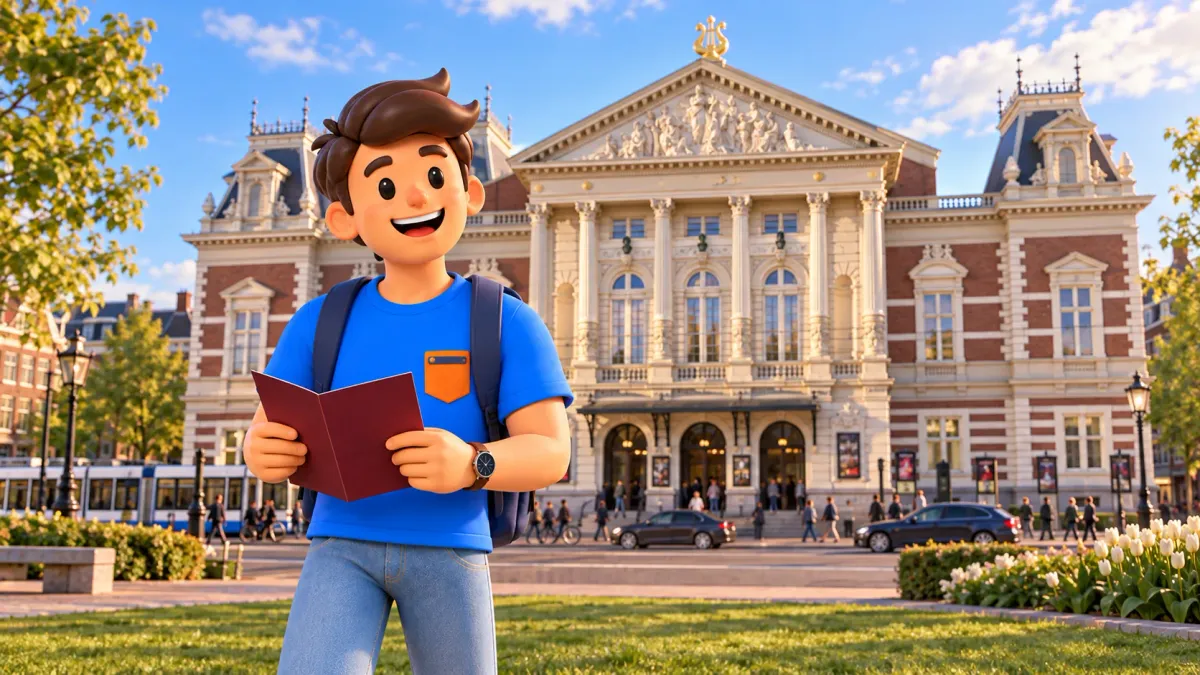
Begin with the overall frontage from the Museumplein side: pale columns, a triangular pediment and the golden lyre above. The musical purpose is visible before you read a programme. Then select one detail, perhaps the sculptural relief or the rhythm of the windows, and study it from a comfortable public position. You do not need to cross the road for every possible angle. One considered view already explains how a building intended for concerts can present itself differently from the surrounding city.
Designed by Dolf van Gendt, Concertgebouw opened on 11 April 1888. Meadows still surrounded it at the time. That brief piece of history changes the familiar view: imagine removing the present traffic and nearby urban activity, leaving the concert hall as a much more isolated landmark. It is also useful to remember that a historic appearance does not make every element an unchanged nineteenth-century object. The roof’s lyre, for example, has been replaced and restored over time.
For this stop, understanding the building’s purpose is enough. You cannot judge acoustics from the pavement, and enjoying a concert depends on the programme and your interests as well as the reputation of its setting. If you are considering a later visit, start with what you want to hear: a familiar work, an unfamiliar performer or a format you would like to try. A famous venue can suggest an atmosphere, but it cannot replace reading the details of the actual event you are buying.
An interior tour is a separate visit with current arrangements to check and later stops to move. For this afternoon, a few considered exterior views are enough; the two contrasting buildings ahead matter more than a complete photographic record.
The approach to Paradiso
The walk towards Paradiso lets you shift from a single landmark to the ordinary movement of the city. Follow available public paths across Museumplein towards Weteringschans, checking the exit and crossings on a current map. A museum visit is not included in this connection. Even a brief stop inside would change the scale of the afternoon. If you want one, place it before the start as a separate block and consider how much energy you will still have for walking and an evening out.
Along the way, decide whether you would prefer a seated evening of close listening or a more energetic event. Neither needs to be chosen merely because its venue comes next. The walk can be rewarding without ending in a purchase.
Paradiso: a familiar shape with a changed purpose
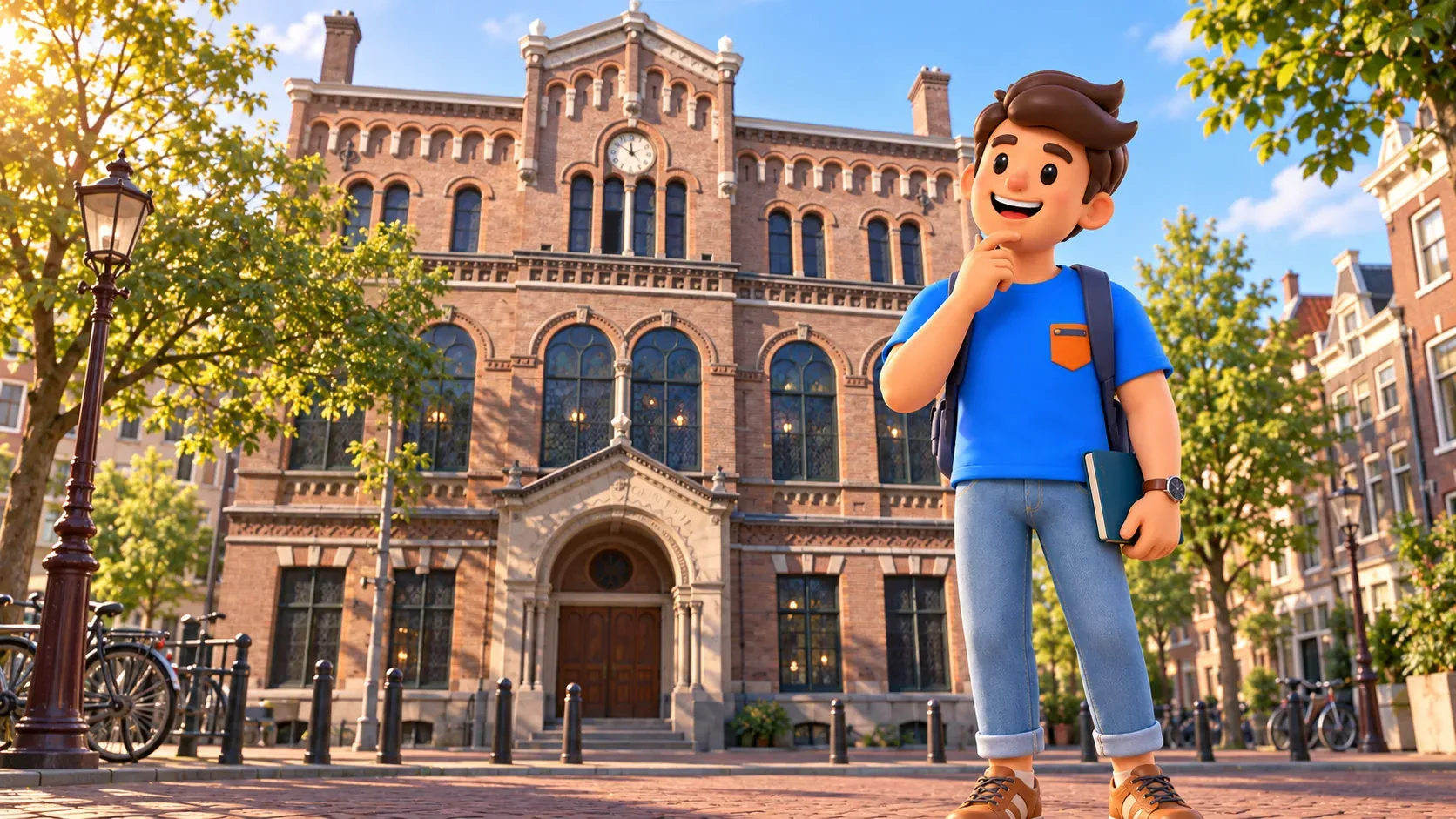
At Weteringschans 6–8, notice the brick frontage, tall arched windows and central clock. Its proportions make an impression before you reach the entrance. Gerrit Salm designed the building for the religious association Vrije Gemeente, which opened it in 1880; this is not a medieval cathedral. Paradiso’s music history began on 30 March 1968. The useful thread for the walk is that change of purpose: a place created for one kind of gathering became a home for a very different cultural energy.
Leave the entrance and passing space clear. Compare Paradiso with Concertgebouw: one was purpose-built for music, the other adapted to it. Neither approach makes a venue better; together they show different relationships between architecture, gathering and cultural change.
Check evening plans carefully: Paradiso presents events at several Amsterdam locations. Its name on a listing does not guarantee Weteringschans as the address. Read the specific event page for the venue, room, doors and performance start; current information can differ from an older ticket. Many programmes require membership, so check what your purchase contains. Payments inside are cashless. If you rely on a particular card, establish whether you can use it beforehand rather than assuming every bank’s card will work in the same way.
Do not expect a concert through an open window or free access to the stained glass inside. One memorable exterior detail is enough. If you return for a performance, the daytime view can give the evening setting a different meaning.
Melkweg: a factory’s cultural afterlife
Continue through the Leidseplein area to Lijnbaansgracht 234a using available public crossings. At Melkweg, the architectural language changes again: brick and generous windows suggest an industrial past. A youth cultural project occupied a vacant dairy factory here in the summer of 1970, and Melkweg has operated permanently since 1973. Rather than treating old and new as opposites, consider how a building with an earlier practical purpose could become useful to the city in a different way.
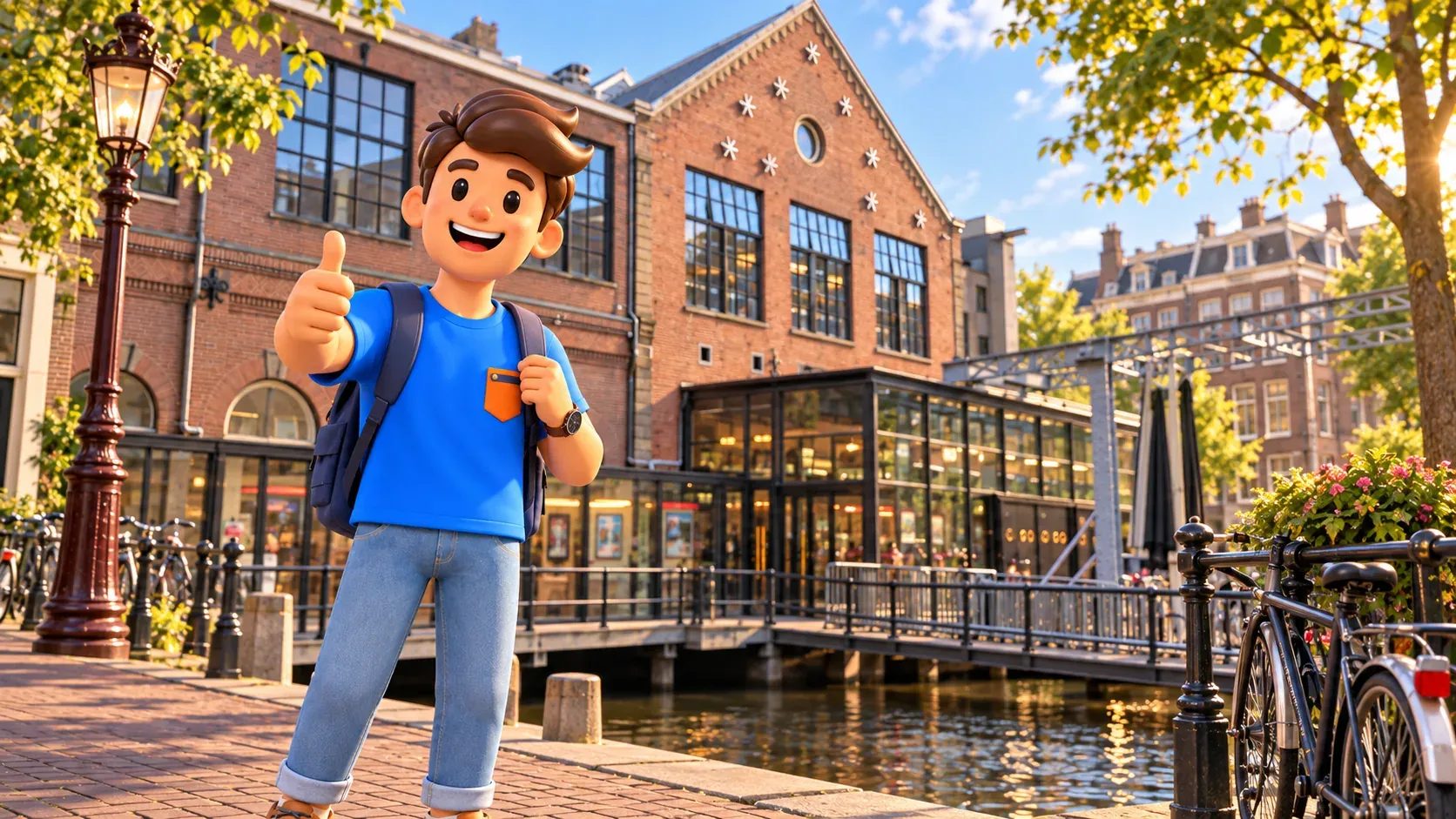
Allow about 20 minutes outside. Look at the window rhythm and the relationship between older brickwork and later additions, then move away from the entrance. You do not need to circle every part of the complex or investigate service access. For the theme of this walk, the third example is already clear: a concert hall can be built for its task, a religious meeting place can be adapted, and a former factory can develop into a cultural venue. Those three ideas are easy to remember without an architectural glossary.
If a Melkweg performance appeals, check the precise room and address. Its ANN/Annie space is at Lijnbaansgracht 238, opposite the regular entrance. Calendar opening times refer to doors, not automatically to the main act. Mobile-only tickets require the valid barcode in your account with its moving animation; screenshots are not valid tickets. Check membership within the order where relevant: the current monthly option is already included in the ticket, so do not automatically add another purchase based on an older account of visiting.
Choose an available place for the final break according to the day. Do not depend specifically on Melkweg’s café: it is undergoing renovation at the time of checking. Twenty minutes allows a short rest, rather than a leisurely dinner including ordering and waiting. Finishing comfortably gives you the freedom to return to your accommodation, eat or prepare for an event. An unfilled interval before an evening out is often more useful than one more attraction added merely to occupy the remaining space in a schedule.
Turning the walk into an evening of music
Choose one event you genuinely want to hear, then check its address, room and the order of your evening: finishing the walk, eating and getting to the entrance. Leave room for the queue and practical arrangements without inventing a universal arrival interval for every venue. If seating, access without stairs or attending with a child matters, establish the conditions of the particular room and event. A building’s fame alone cannot answer those questions, and a daytime look at its façade does not settle them either.

With RoadMe, it is much easier to turn a musical interest into a personal plan for the whole trip, with suitable walks, culture and time to rest. Try the app to bring each day together around the pace and experiences you enjoy.
Avoid placing a late performance after an overfilled museum day simply because both activities sound appealing on their own. One main daytime experience and one evening focus can make a more enjoyable combination. If architecture becomes the stronger interest, explore the central Amsterdam brick architecture walk on another day. This musical route already has a complete story: three buildings and three ways to make music part of urban life. A concert can continue it when the programme, your energy and the timing fit.


