
Why Amsterdam’s bridges look so different: four examples to notice
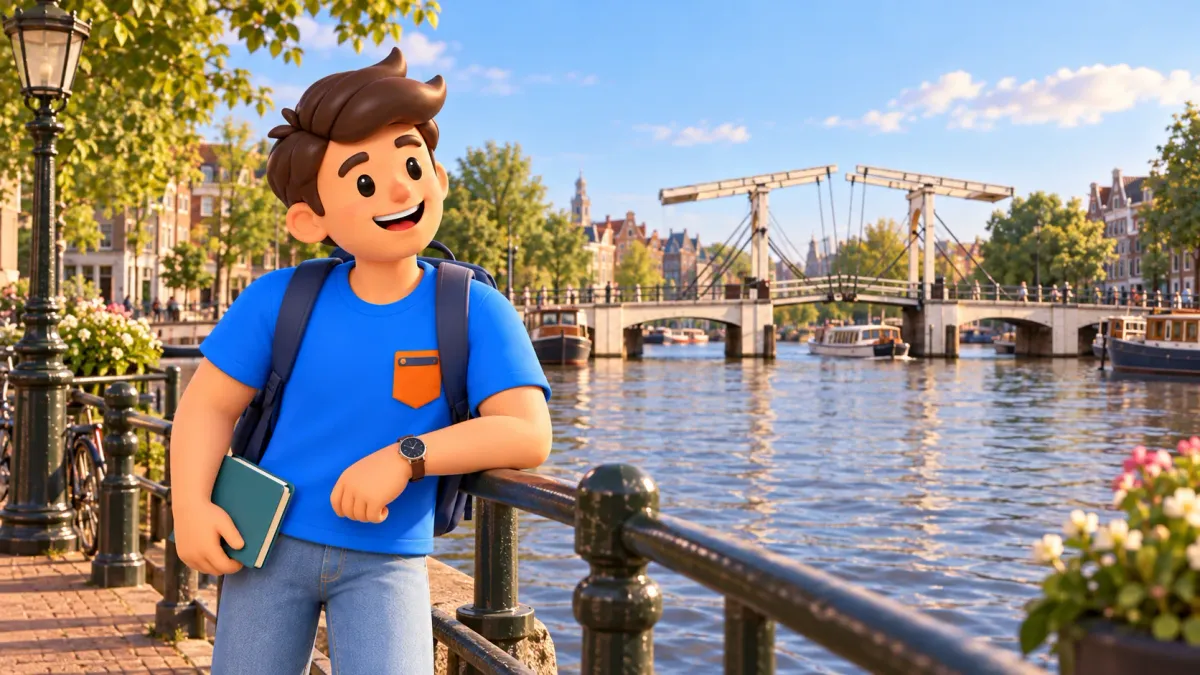
Amsterdam bridges can become repeating scenery: water, railings, houses and another attractive view. Four examples reveal how differently a crossing can work. Magere Brug lifts its central parts above the Amstel; Blauwbrug gives a connection a ceremonial appearance; Torensluis feels almost like a square; Pythonbrug turns a pedestrian crossing into a red wave. Comparing construction and setting is more rewarding than making another beauty ranking. An ordinary walk begins to reveal choices hidden behind familiar postcard images. Engineering vocabulary is optional: start by asking who moves above the water and what needs to pass underneath.
This article offers four ways of looking, rather than a short itinerary through all four bridges. Magere Brug and Blauwbrug cross the central Amstel, Torensluis crosses the Singel, and Pythonbrug lies in the Eastern Docklands between Borneo and Sporenburg. Do not append the last to a central walk as a neighbouring stop. Choose a suitable city section and compare it mentally with the other examples. Exterior observation is already a complete format, without entering historical rooms or waiting for a special performance. Each place retains actual access conditions, everyday movement and its own ordinary urban rhythm.
Three questions behind a bridge’s shape
First, notice how it crosses the water: does everything remain fixed, or can parts lift? Then consider the space above: a narrow connection, broad street or place where people linger? Finally, choose one relationship with its surroundings: a railing following the bank, a lamp marking an entrance, a high curve changing a residential district’s outline. This is not a complete classification of Amsterdam bridges. Four examples develop attention rather than replace a technical handbook. One well-observed detail can make a crossing more than a quick way to the opposite bank, giving it a history and purpose of its own.
Try RoadMe for a fully developed personal route or trip plan shaped around your interests and pace. The app makes it much more convenient to connect bridge architecture, waterside walks, other visits and rest across your whole journey.
Do not equate material with age. A timber appearance can result from later renewal in an older style; modern steel can belong to a former port’s new life. A name may likewise describe neither today’s colour nor a surviving structure. A Blue Bridge need not be entirely blue, and a Tower Bridge need not have a tower now. Such mismatches invite a useful pause. Remember one verified historical turn and look for its relationship with what is visible from permitted public space.
| Bridge | Main idea | One detail to notice |
|---|---|---|
| Magere Brug | Movement for crossings and boats | White lifting frames |
| Blauwbrug | Ornament on a fixed crossing | Ship motifs and crowned lamps |
| Torensluis | Bridge as city space | Width and an absent tower’s memory |
| Pythonbrug | New connection in former docks | Red wave and steps |
Magere Brug: historic appearance is not unchanged age
White timber Magere Brug connects Kerkstraat and Nieuwe Kerkstraat across the Amstel. Its recognisable centre is a double drawbridge, with two moving halves meeting. Begin from an available permitted bank position where the relationship between long, low crossing and elevated lifting frames is clear. That difference gives the silhouette expression. A side view can be more informative than immediately crossing and seeing only nearby railings. Here the river supplies a wider horizontal setting than a closely framed canal. No single correct photograph is required to notice how the structure sits against water and sky.
In 1934 the bridge was renewed in the old style to Piet Kramer’s design. Its historic appearance therefore does not establish an untouched seventeenth-century construction. The interesting choice is retaining a familiar image while renewing city infrastructure. You need not list every earlier rebuilding to appreciate it. Look at timber, white elements and the clarity of the overall outline. The age of a location, individual parts and chosen architectural form can differ. This is useful beyond Amsterdam: familiar-looking old places often contain a history of maintenance, repair and deliberate continuation of an earlier appearance.
The name Skinny Bridge is associated with its earlier narrowness. Amsterdam’s own account calls the popular story about two Mager sisters building it between their homes a fairy tale. A legend can remain interesting when labelled as such, without becoming documented history. For this walk, the lifting principle matters more. If an opening starts, follow barriers and instructions. This article promises neither an opening at your chosen minute, lighting to a fixed visitor schedule nor an uninterrupted crossing. The bridge remains working infrastructure rather than scenery required to perform for a photograph imagined before arrival.
Blauwbrug: a crossing with a formal city presence
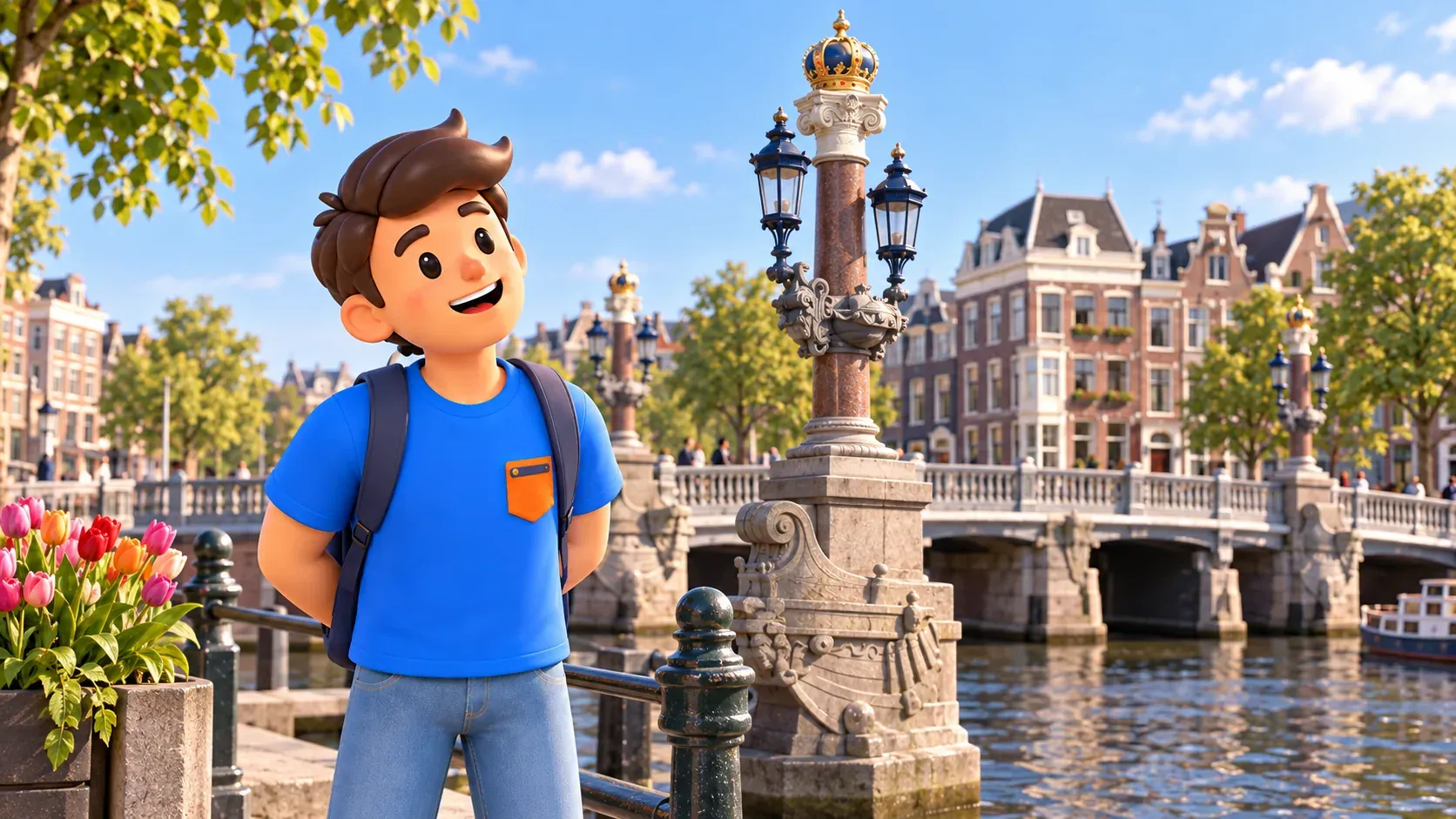
Blauwbrug also crosses the Amstel, connecting Amstelstraat with Waterlooplein and Nieuwe Amstelstraat. Its appearance differs: this is a fixed bridge with three navigation passages. Instead of white lightness, notice substantial supports, ornament and a more formal urban scale. Look at the whole bridge from available public space, then choose one detail. Memorising every material is unnecessary. Notice how an ordinary connection acquires a ceremonial tone. Water still belongs to everyday infrastructure, while architecture gives a practical link another layer of public presence.
The present bridge opened in 1883 and was designed by Bastiaan de Greef and Willem Springer. Its Blue Bridge name came from a predecessor whose timber elements were painted blue. Do not search for an obligatory continuous blue surface today. The name survived an earlier construction and became urban memory in its own right. This contrasts with Magere Brug: there, renewal preserved a familiar image; here, an older name accompanies a different architectural solution. The distinction is understandable without a complete chronology of every crossing on the site.
Piers carry ship-prow forms; decorative columns support lamps and have crowns above. Select one motif and consider its relationship with a water-based city. There is no need to wait for an empty bridge. People and traffic belong to its role too. Stop with enough room, keep equipment off historical ornament and remain clear of the roadway. Our three-hour photography walk with reflections, Magere Brug and Blauwbrug offers a separate looking exercise. It has its own start and schedule; its duration does not cover a circuit of all four examples here. Choose that programme deliberately rather than automatically combining different days.
Torensluis: when a bridge almost becomes a square
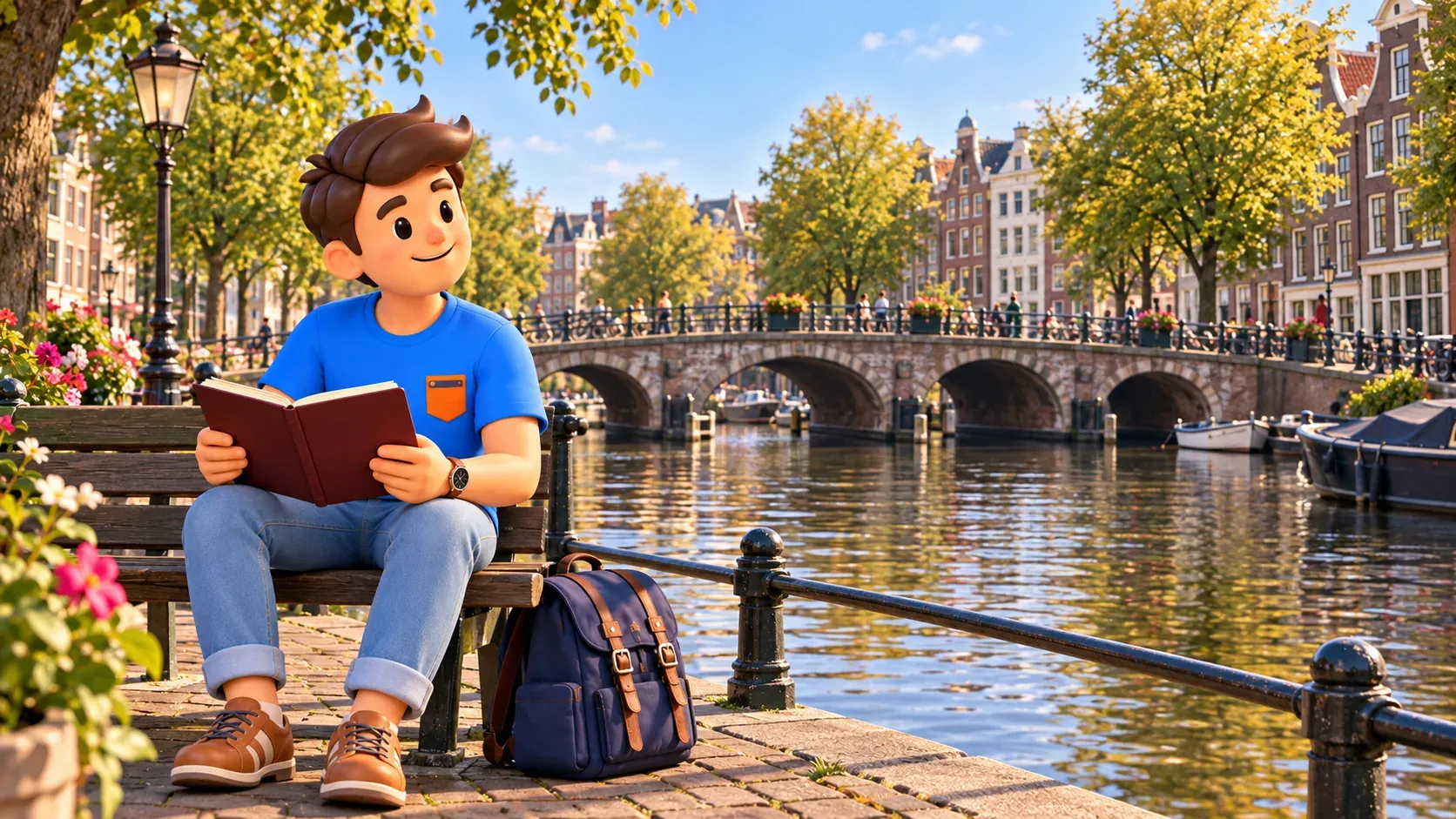
Torensluis crosses the Singel and stands out for its width, around 42 metres: width, not the distance across the canal. On top, the surface feels broader than an ordinary connecting strip and invites thinking about a bridge as public space. Do not reduce its interest to a contest for the oldest or widest crossing in the city. Notice the difference in experience: banks and surrounding houses can feel like the setting of a small square. From an available quay position, look at the arches too. Views above and from the side reveal different parts without requiring an interior visit.
The stone bridge was built in 1648 around the Jan Roodenpoortstoren, a tower that then occupied the site. The tower was demolished in 1829. Its presence in the name therefore does not promise a vertical landmark to look up at today. Its outline is marked in the paving, while historic vaulted spaces recall another layer. Rooms underneath were once used as a prison. That brief fact is enough without retelling punishment details or inventing a frightening tour. A pleasant present-day surface and former roles can coexist in urban memory. An absent element sometimes explains a name better than a visible neighbouring facade.
Do not interpret the historical account as permission to enter all spaces beneath the bridge. Access, events and opening arrangements need separate checks. For an exterior introduction, an available permitted position above or a view from the bank is enough. You need not enter a closed room to make the history worthwhile. Ask how a structure for crossing water becomes a place to pause. Width, street connections and a tower’s memory give material for an answer. Actual tables, free seats and venue service remain outside what an architecture walk can promise. They depend on the ordinary conditions you encounter.
Pythonbrug: a red wave in a new residential setting
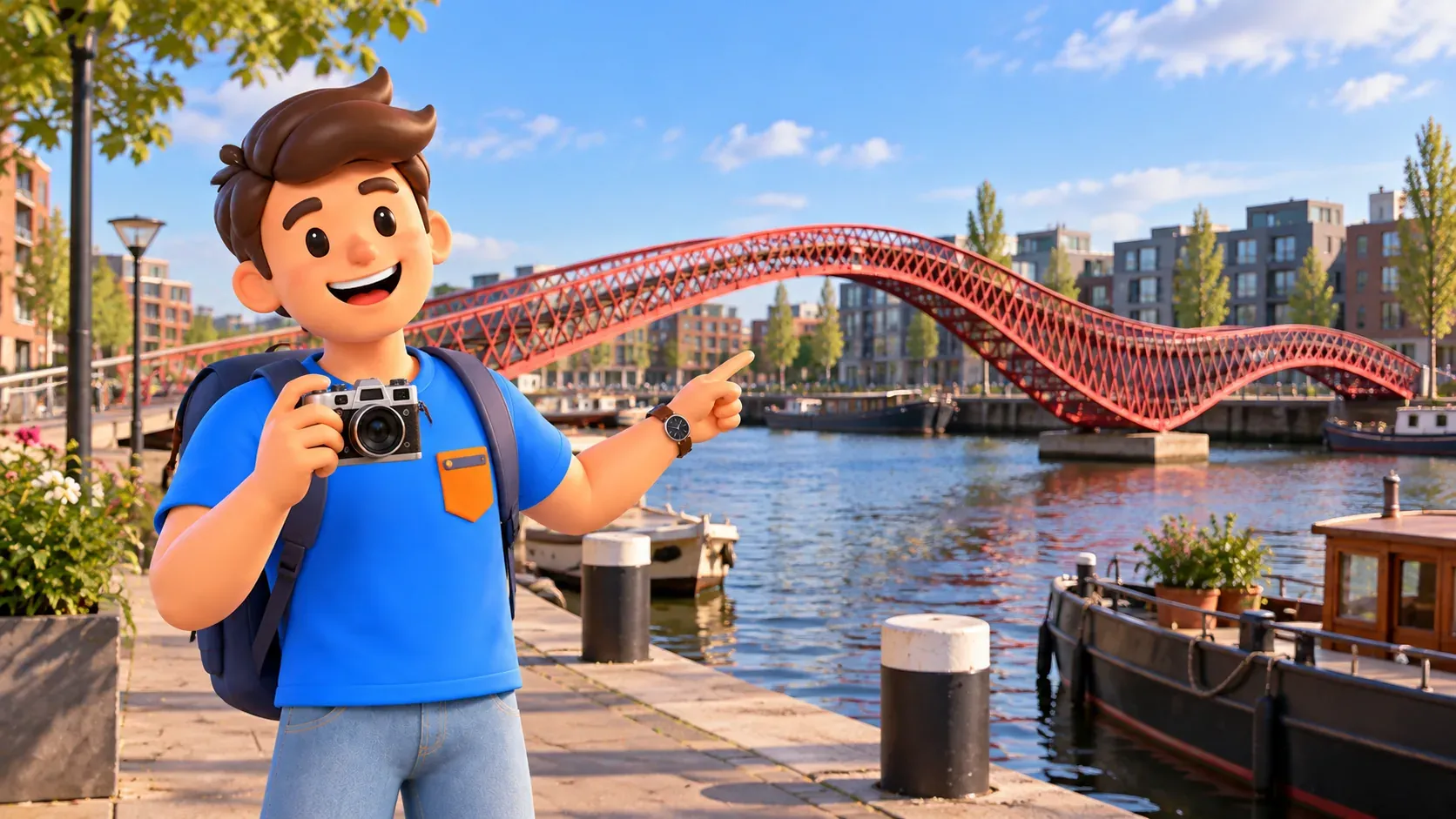
Pythonbrug links Borneo and Sporenburg in the Eastern Docklands. It belongs to the former harbour’s transformation into housing around the turn of the twenty-first century; West 8 designed the bridges. This is a different Amsterdam from the central canals. Begin from a permitted public quay position: the red steel framework rises and dips like a wave. Its shape is easier to read from the side than while standing between structural members. A place does not need an old-fashioned outline to belong to city history. New crossings also reveal changing uses of water and ways of living beside it.
The raised section has a practical task: providing room for boats underneath. Crossing also becomes an experience, since pedestrians gain height and see the surroundings differently. Pythonbrug is for pedestrians and includes steps; it is not a level, step-free connection. The neighbouring low red bridge is a different structure, also accommodating cyclists. Do not mistake it for another angle of the same wave. If climbing does not suit, an exterior side view already explains the main architectural idea. An appropriate alternative connection and actual available approaches need separate checking against your requirements and the time available that day.
At closer range, notice red steel, timber decking and lamps with shapes reminiscent of gulls’ heads. One detail alongside the overall outline is enough. Stay off railings and treat private houseboat decks as private rather than viewpoints. Follow on-site instructions if passage is restricted; this article does not establish permanent access to every part. Our Eastern Docklands walk to the Python Bridge supplies a separate day’s framework. Its three and a half hours concern an exterior outing with its own beginning and finish, excluding returning, concerts and a full lunch. It cannot silently become a central bridge tour too.
Bring the way of looking into your own walk
Four bridges suggest four relationships: movable construction and navigation, formal ornament and street, broad surface and absent tower, new housing and sculptural crossing. You need not collect them in one day. Compare the two Amstel examples during a central outing and leave the former port for separate time. Choose available public approaches and check current restrictions. Architectural curiosity does not demand crossing every bridge completely, entering every vault or waiting for an event. A quiet side view may explain more than repeated hurried crossings with a sightseeing list constantly in hand. Give one chosen observation enough attention to become memorable.
With RoadMe, getting a personal plan for the whole trip becomes much more convenient and effective, distributing waterside walks, architecture and rest around your interests. Try the app to connect Amsterdam’s different settings into a thoughtful programme at a suitable pace.
At the next bridge, ask the same questions: what moves, where do people linger, and how does the crossing meet its banks? Avoid inventing history from material alone, but leave room for observation. White timber, substantial ornament, broad stone paving and a red wave become more than variations of one postcard. Each answers a shared task, connecting a city across water, in a different way. That understanding makes ordinary crossings part of the trip’s experience without a complete catalogue of Amsterdam bridges or reading every story in full before discovering the place yourself.


