
Why Dada Began in Zurich
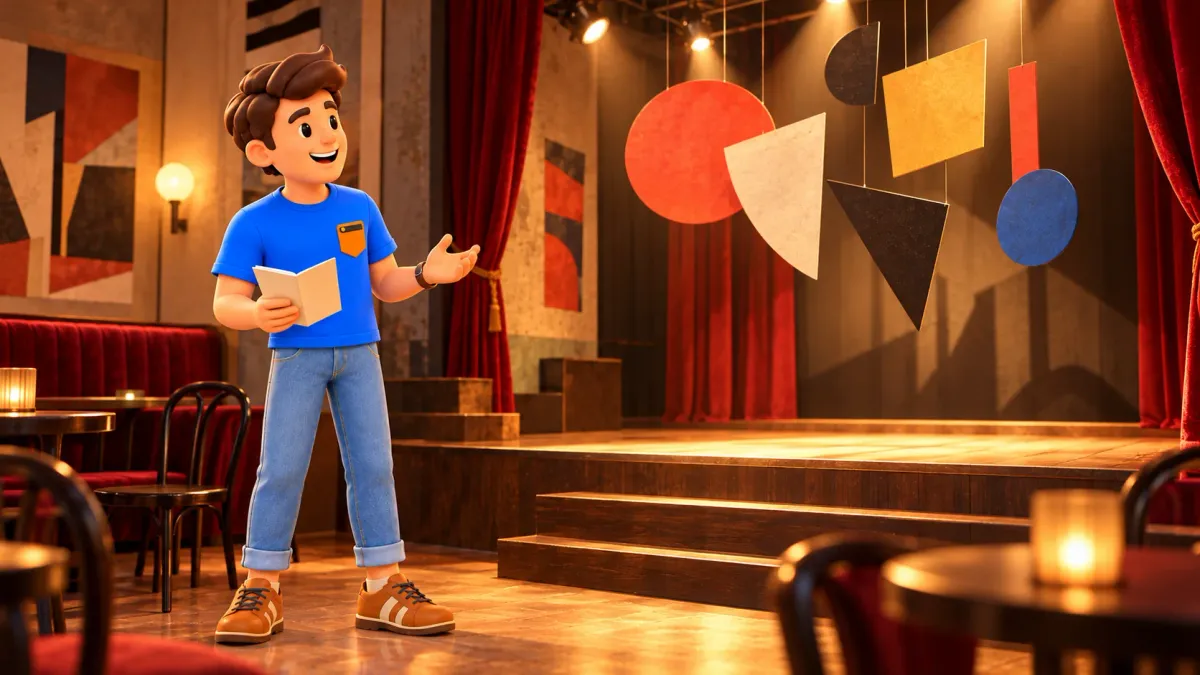
Dada emerged in Zurich through a particular meeting of people, circumstances and a place to perform. During the First World War, neutral Switzerland offered refuge to people from different countries. Writers, artists and performers gathered in Zurich, bringing experiences of exile and objections to war and the language used to justify it. Hugo Ball and Emmy Hennings opened the Cabaret Voltaire at Spiegelgasse 1 on 5 February 1916.
A small stage, several languages and a live audience are a better starting point than searching for one Dada painting style. Sound poetry, masks, dance, music and visual experiments challenged familiar artistic rules. Today, you can visit the address, choose an exhibition or event and add other historical locations to a walk. The present cultural venue is not an untouched room preserved exactly as it stood in 1916.
Why Zurich became the meeting point
Use RoadMe to make a personalised plan for the whole trip around interests and pace. If art and urban history matter to you, give Dada a focused part of the day with room for travel and a pause.
Swiss neutrality created the possibility of living outside the belligerent states, without making the war a distant concern. People arrived with dislocation, anxiety and disagreements about the society around them. Zurich became a crossing point for languages and artistic backgrounds. That network of particular encounters matters more than assuming any neutral city would inevitably have produced the same movement. A historical opportunity still needed people prepared to use it.
The cabaret supplied a recurring place for that network to act. Artists could test something new, connect literature with music, show work and receive an audience's response. Dada's emergence depended on shared practice as well as individual objects. Within a compact room, voices, bodies, materials and spectators became part of the event. Familiar borders between an exhibition, a reading and a concert no longer explained everything happening together.
The contrast with Zurich's orderly reputation is memorable, but it is not a complete explanation. Dada grew from war, migration and artistic searching rather than simply boredom or a wish to annoy neighbours. Behind apparent absurdity was a serious question: what confidence should be placed in cultural rules and persuasive language when a society proud of those rules had produced destructive war? Different participants developed different answers.
Ball, Hennings and the people around them
Ball and Hennings opened the Cabaret Voltaire in a back room of the Meierei establishment on 5 February 1916. Ball brought writing and theatre experience; Hennings was a poet and accomplished performer. She should not be reduced to the companion of a better-known man. Her songs, performances and texts were part of the place the two were making together. Cabaret experience was practical creative work, not a decorative background.
An international circle formed around the venue, including Tristan Tzara, Marcel Janco, Hans Arp and Richard Huelsenbeck, among others. Roles and moments of involvement differed. Do not imagine a fixed team signing a fully developed movement into existence in one evening. Encounters, publications and performances gradually formed what became Dada. Differences within the group provided creative energy as well as disagreement; they did not all follow a single programme.
Sophie Taeuber, later Taeuber-Arp, is important to Zurich Dada as an artist and participant in experimental dance. Recognising her role broadens a story too easily reduced to men writing manifestos. The movement also involved bodies, space, materials and rhythm. For a first city visit, remember that combination rather than treating one famous artwork as the origin of everything. Several ways of making art were being placed in conversation.

What a small stage could change
A sound poem shifts attention from ordinary word meaning to vocal sound, breath and rhythm. Listeners may not receive a conventional statement, but they notice how a voice works without the usual narrative. In a simultaneous poem, several voices overlap, sometimes using different languages. Following one clear message becomes difficult. That experience belongs to the work rather than being an accidental failure of performance or poor technical presentation.
Masks and unusual costumes changed the body on stage, making it seem angular, constrained or unexpectedly mobile. Music, language and dance appeared together without fitting neatly into a single category. To approach the experiment, you do not have to approve every performance. Ask what familiar rule it puts under pressure. A useful response can begin with discomfort or confusion, provided you consider how the work produces it.
A celebrated episode is Ball's performance of sound poems on 23 June 1916 in a geometric costume. Its historical photograph became almost an emblem of Dada. It should not obscure the other voices and practices. One photograph cannot restore the whole evening, its sound or its audience's response. If you explore further, distinguish a historical document, an original text and a later interpretation or re-performance rather than treating them as interchangeable evidence.
The word Dada has no single secure origin story
Several accounts connect the name with different languages or with a word supposedly discovered by chance. Who first found it, and exactly how, remains uncertain. The Cabaret Voltaire's historical material places adoption of the name in spring 1916. Preserve that uncertainty instead of presenting a colourful dictionary anecdote as the only established fact. A memorable story and a documented conclusion are not always the same thing.
The name's multiple resonances suit a movement resistant to a final formula. This does not mean nothing reliable can be said about Dada. Context, participants, places, practices and documents can all be identified. Difficulty of definition is not absence of history. For a visitor, both ideas are useful: Dada cannot be confined to one style, and its emergence is connected to a very specific Zurich setting.
Absurdity should not be reduced to permission for any random nonsense. Against the background of war, disrupting normal language could carry a critical force. Participants did not share one identical political programme, and it would be misleading to supply one retrospectively. It is enough to recognise mistrust of conventional justifications and a search for different artistic actions. The apparent lightness of an act could coexist with serious rejection.
The cabaret was a beginning, not the entire movement
The first Cabaret Voltaire period lasted only a few months. Dada continued through performances and meetings elsewhere rather than disappearing with that initial room. On 14 July 1916, the first Dada evening took place at the Zunfthaus zur Waag, where Ball read an opening manifesto. The February cabaret opening and the July manifesto evening were different events at different addresses, an easy distinction to lose in a compressed retelling.
The Zunfthaus zur Waag is at Münsterhof 8. It can serve as an external historical reference during a walk, but association with 1916 does not grant entry to rooms regardless of their present use. The guild house continues its own life. A specific interior, event or restaurant visit has separate conditions. Viewing a façade from public space is a different experience from entering a permanent museum exhibition.
Dada's subsequent history extended beyond Zurich. Saying the movement began here does not mean every later technique, group and work originated in that one room. The Zurich beginnings had their own setting, while international developments brought further concerns and forms. A first visit can focus on the initial experiment without attempting a complete twentieth-century avant-garde survey. A clear starting point is more useful than an overfull catalogue of later names.
What Cabaret Voltaire offers today
Today's Cabaret Voltaire at Spiegelgasse 1 is a platform for contemporary art and discussion, with a Historical Hall, a bar, temporary exhibitions in the Vaulted Cellar and a Dada library. It is not a daily repetition of a 1916 performance. Choose your purpose before coming: seeing the place, attending the current exhibition or joining an announced event. These formats follow different conditions and may need different amounts of time.
Current regular exhibition hours are Tuesday to Thursday, 17:00–20:00, and Friday to Sunday, 13:30–18:00; additional opening is available on request. Bar and café hours are separate and may continue after exhibition closing. Do not assume a late drink includes gallery access. Monday is outside the regular exhibition week. An event announcement, rather than the general bar timetable, is the relevant source for a particular performance.
The house visit is listed as free; Vaulted Cellar exhibitions require separate paid admission, while events follow their individual announcements. Check the date, language and booking arrangements when a programme is the reason for travelling. For access requirements, ask about the specific rooms and movement between them beforehand. A historic address by itself does not establish an easy route throughout the building or identical access to every space.
A compact walk without turning it into a checklist
With RoadMe, distribute the whole trip around interests and pace, using one chosen exhibition or evening event as the day's main anchor. Leave time between addresses for walking and a comfortable pause.
For an introduction, Cabaret Voltaire plus an exterior stop at Waag on Münsterhof is enough. Begin with the story at Spiegelgasse and continue to the square only if it fits the day. Around ninety minutes to two hours can be an editorial allowance for a modest visit and walk, not a measured route time. A full scheduled event requires its own window. Meaning matters more than collecting stops.
For a deeper continuation, Kunsthaus holds a substantial Dada collection and offers digitised material. Do not assume all stored documents are permanently displayed: paper originals need careful conservation and presentation. Check the current museum display, then use digital collections for close reading before or after the walk. A museum ticket and access to material online are different ways of engaging, with different practical conditions. Neither requires treating every object as essential.

Leaving Spiegelgasse, remember more than the founding date. Zurich brought together people displaced by war, a space for shared practice and a willingness to question familiar artistic language. A small stage gave that meeting a form. Dada is explained by those historical circumstances and concrete creative actions together. Their traces remain readable in the city even when the rooms and the cultural programme have changed.


