
Zurich Viewpoints: Which Panorama Should You Choose?
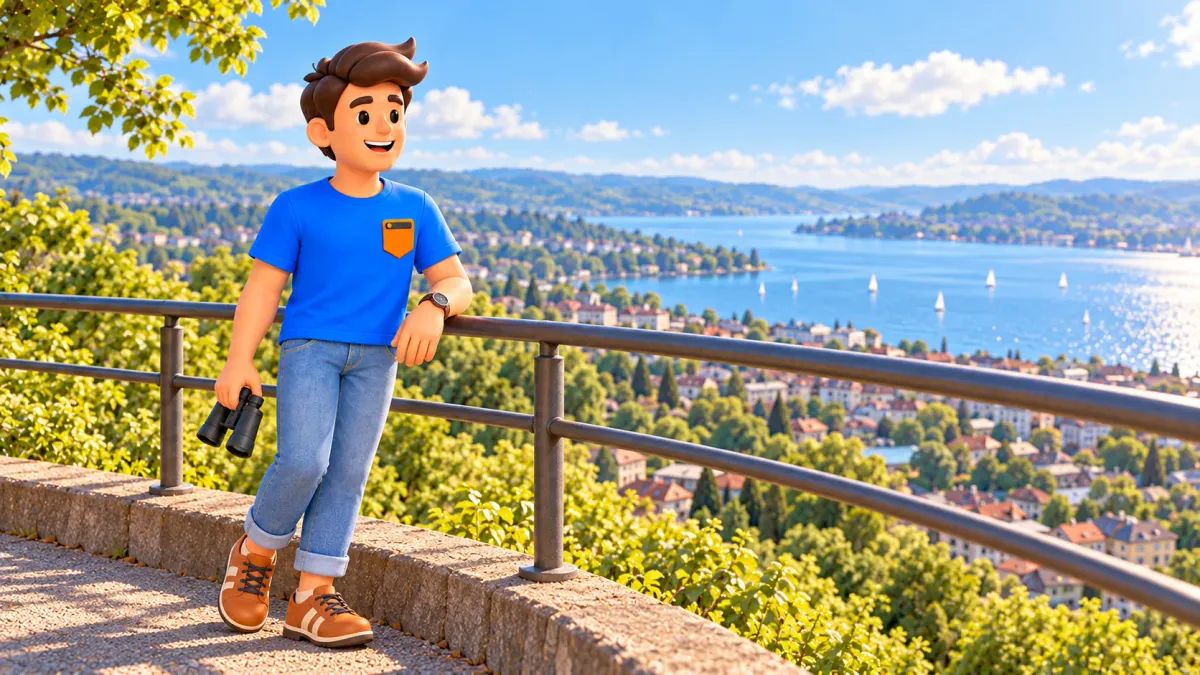
Zurich has no single viewpoint that answers every possible wish better than the others. Choose Lindenhof for a close old-town view, Polyterrasse for roofs beside the university district, Waid for a broad city-and-lake landscape, and Uetliberg for a separate outing with natural surroundings. Begin with the experience you want rather than a competition in height. One appropriate perspective can explain more than several rushed stops.
This article helps select one panorama rather than visit all four in a day. Consider the complete return journey, the final approach, visibility and available time. Suggested durations are editorial planning guides, not measured routes. Free public access does not automatically provide free transport, a restaurant table or admission to a separate tower. Keep those arrangements distinct when deciding which option fits.
What do you want to see today?
RoadMe helps you prepare a personalised plan for the whole trip around interests and pace. Choose one viewpoint that suits the rest of the day and allow time to examine it instead of rushing between heights.
For a quick centre view between other visits, consider Lindenhof or Polyterrasse first. They change the perspective on familiar streets without requiring an extended excursion. To understand the broader relationship between city and lake, give Waid its own time. Choose Uetliberg when the journey, walking approach and natural setting interest you as much as the final view. None of these priorities is inherently better than another.
A panorama becomes clearer with one question. Follow the Limmat, compare roof density or notice where the city gives way to lake and green slopes. Seeing every famous building simultaneously is unnecessary. Sometimes a closer location reveals more detail than a higher distant one, where familiar landmarks become tiny pieces. The right choice follows the observation you actually want to make.
With reduced mobility, check the whole connection rather than only the viewing platform. Street slope, stop exit and a separate stairway may change the decision. A best-view ranking rarely describes those details. If an approach is unsuitable, choose another without feeling that the only correct panorama has been missed. Public space and the means of reaching it need separate assessment.
Lindenhof: the old town at close range
Lindenhof occupies a hill within the old town. Its public square looks towards the right bank of the Limmat, historic buildings and the university district. Choose it to relate the river to streets just explored. No admission or tower queue is required to obtain a meaningful city view. It fits naturally into an old-town day without becoming a separate distant excursion.
Approach from the Rennweg area by a suitable open old-town connection. The final section rises, and some options contain steps or uneven surfaces. Around twenty to forty minutes for a visit with a pause is a possible allowance for someone already nearby, not a duration from any accommodation. Add the journey separately when starting farther away. The small hill still deserves an appropriate access decision.
The site belongs to early settlement and successive historical layers. Viewing does not require the archaeological Lindenhof-Keller, which has separate arrangements and was closed for repairs at the check. Do not confuse that room with the public square above. The panorama remains an outdoor experience rather than an addition to an obligatory underground tour. An interior closure does not define access to the whole hilltop space.
Begin with the overall river view, then select one fragment across the bank. Do not expect a circular panorama of all Zurich or Alps in every weather. Visitors and events mean solitude is not guaranteed either. Remain on normal ground and share convenient viewing positions. A few attentive minutes can provide more than repeatedly changing between nearly identical photographs. The square also belongs to everyday local use.
Polyterrasse: roofs beside the university district
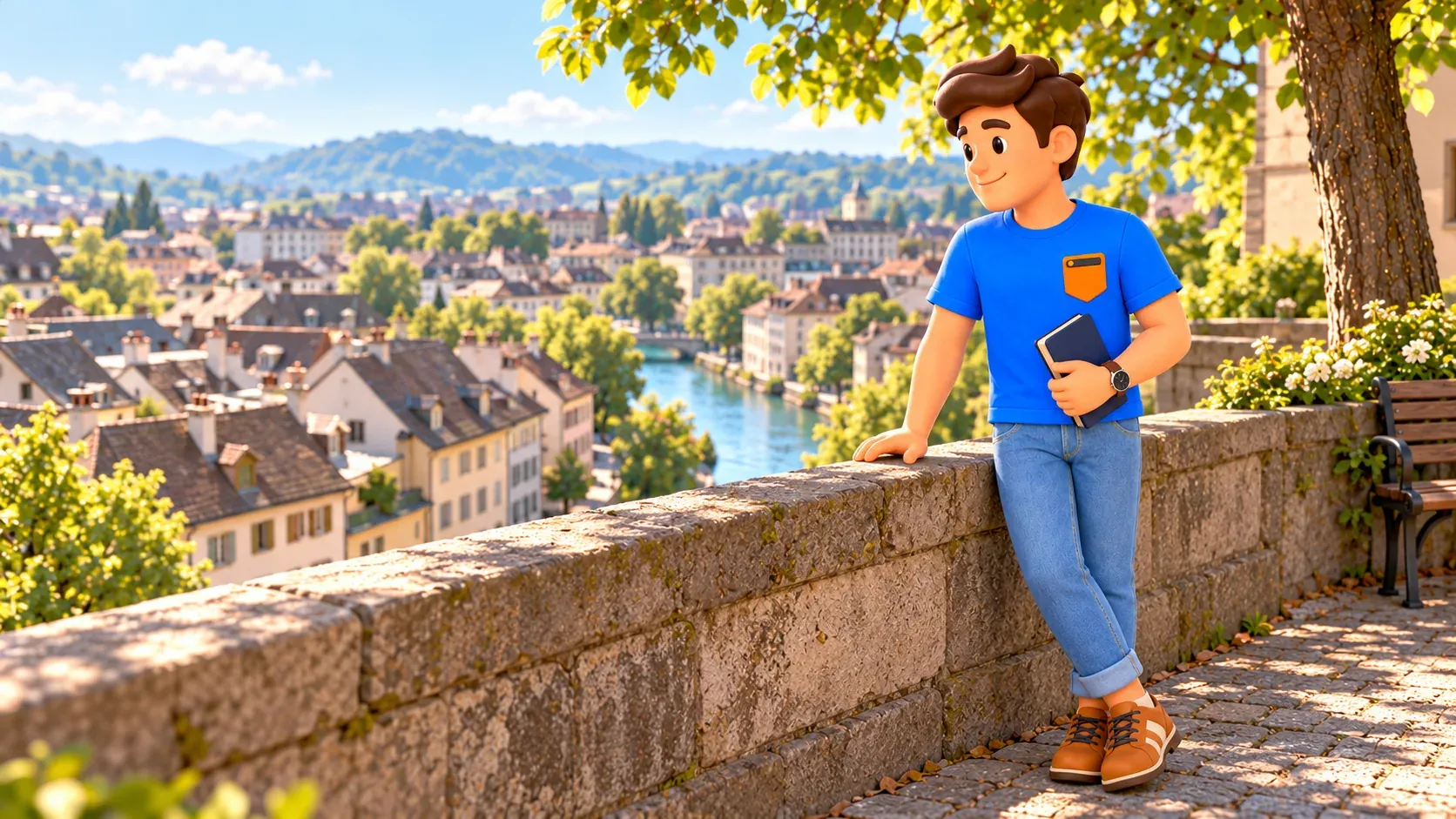
Polyterrasse is publicly accessible free of charge in front of ETH's main building. The view comes with the atmosphere of a university area, rather than a place existing only as tourist scenery. Choose it to see the centre from another slope and continue nearby, perhaps with a selected museum visit. That museum still needs its own calendar and interest check; proximity does not make it an automatic second activity.
Polybahn connects Central with the terrace, using historic red funicular cars on a line operating since 1889. The ride has separate fare rules; an appropriate valid ZVV zone 110 ticket includes it without another ticket. A free terrace does not make the ride free for someone without valid travel entitlement. A walking approach involves climbing rather than a level continuation of the riverside promenade.
The current timetable includes Sunday operation, with different hours by day and possible maintenance interruptions. Do not rely on the older statement that it does not run on Sundays. Check the actual date, especially when the return depends on the funicular. Terrace access and transport operation remain separate matters. A later visit needs another understood route if the line is no longer operating.
Polybahn is not step-free. Wheelchair users need an appropriate transport alternative and a checked onward approach rather than transferring terrace accessibility to the cars and stations. Around thirty to sixty minutes for an outing from the Central area with travel and a pause can be an initial allowance, but the particular connection and waiting change the duration. Ask for help with a specific access requirement before committing.
Respect university life and current terrace rules. It is not a setting for loud music, grilling or filling a passage with equipment. Choose a quiet position, understand the overall roof pattern and put the phone down. A panorama can explain where the centre lies instead of merely proving you rose above the street. Give ordinary users room to pass and continue their day.
Waid: a broad city-and-lake landscape
The public Waid viewpoint on Käferberg suits a wider perspective in which city, lake and greenery form one scene. Use the Waidbadstrasse area above the urban district as the location. Its scale differs from Lindenhof: individual façades become less important than the city's form. Distant mountains may appear in clear visibility, but they are no guaranteed part of every visit or season.
Shorten the approach by bus, selecting a current connection and open walking route from the stop. Walking all the way up from the centre is an outing with time and effort, not a short free lift to the view. Around ninety minutes to two hours including travel and a pause can begin the calculation, then adjust for your actual start and transport. A distant hotel changes the allowance considerably.
The public viewpoint and nearby Die Waid restaurant operate under different conditions. Ordering food is unnecessary for the public view, while a restaurant table is not a freely available viewing deck. Check hours and booking separately if combining a panorama with lunch or dinner. The right sunset timing guarantees neither a table nor drinks-only service. Public space can remain the visit's purpose without a restaurant reservation.
At Waid, look without camera magnification first. Follow the lake's overall shape and the edge of dense development, then choose a nearer reference point. Haze may hide distance while leaving an interesting city layer. However, do not travel through solid fog solely for a promised photograph. Move the visit to another day if broad visibility is the main expectation. A different nearby activity may suit today's conditions better.

Uetliberg: when the outing itself matters
Choose Uetliberg for a separate excursion with a walking approach and natural surroundings. A walk remains beyond the railway station, so the train does not complete the entire ascent to the desired place. This is not a quick stop between two central museums. Preserve substantial room for transport, walking, observation and return, especially with children or when an unhurried pace matters.
An important 2026 change affects SZU between Zürich HB and Selnau: closure runs through 12 December inclusive, with reopening announced for 13 December. Plan S10 using current arrangements and an approach to Selnau or another recommended connection instead of an old instruction to board at HB. After that period, still check the timetable for the actual date rather than treating an announced reopening as a permanent travel guarantee.
Uetliberg station is in fare zone 155. Do not automatically assume a city-zone-110-only ticket is sufficient; check the complete route and any pass held. At the top, a public view, a separate observation tower and restaurant service are not equivalent. The tower belongs to the hotel, and complimentary admission for hotel guests does not mean everyone can climb free. Confirm the applicable conditions before adding it.
Weather affects the experience more than height in a list. Low-cloud tops vary, so Uetliberg may rise above fog or remain within it. Distant Alps require suitable atmospheric clarity. Check forecast and current visibility before travelling, and assess paths for the season. Do not turn hope for a clear horizon into a promise to yourself or a child. An enjoyable nature setting can still matter when distant visibility is limited.
Half a day is a reasonable initial allowance for a separate relaxed outing with a pause, not a measured compulsory duration. With little time or a simple wish to see the old centre, choose a nearer viewpoint. Additional height need not create more enjoyment when the remaining day disappears into rushed connections. The natural excursion works best through the chance not to hurry, rather than a rapid comparison with every urban terrace.
Choose light without collecting every viewpoint
Architectural details benefit from adequate daylight and visibility; changing light depends on sunset for the precise date. A universal recommendation for eight in the evening fails across seasons. For an evening panorama, check the journey back before departure and leave room for weather. Sunset does not cancel transport closure, local restrictions or reduced visibility on an unfamiliar path. Finishing comfortably matters as much as reaching the viewpoint.
Comparing all four at once is unnecessary. Lindenhof or Polyterrasse suffices for a central day, Waid for a broader lake landscape and Uetliberg for a nature outing. Add another only for a distinct interest in scale. Repeatedly changing platforms can increase travel time faster than genuinely new observations. One well-understood view may explain the city better than several photographs taken during hurried arrivals and departures.
One well-chosen panorama
Use RoadMe to distribute the whole trip around interests and pace, making a viewpoint part of a suitable day. A close urban view and a separate nature excursion can serve different purposes without competing in height.
Before leaving, answer what you want to see, how much time the complete outing can take and which approach is comfortable. Then check weather, transport and separate paid conditions. This is a more useful basis than someone else's photograph without date or context. If cloud hides the expected distance, choose close city detail and leave the wider perspective to another forecast. Flexibility preserves the value of the rest of the trip.
Lindenhof explains the old centre, Polyterrasse its position beside the university area, Waid city and lake together, and Uetliberg the wider natural setting. Any can be right for a particular day. One calmly considered panorama is enough, leaving time to continue the journey at a comfortable pace. The best choice belongs to the experience you want today.


