
Toni-Areal and Around: A Walk Through Contemporary Zurich

At Toni-Areal, Zurich’s recent changes are easier to understand through everyday use than through a skyline photograph. A former production building has become a place for learning and culture; a nearby park makes room to pause; another industrial hall has a theatrical life. The interesting thread is how large structures begin to work at a human scale.
This walk starts at Toni-Areal, continues through Pfingstweidpark and ends by Schiffbau, with Hardbrücke station as a practical onward connection. Allow roughly two to three hours outside with unhurried stops; a museum visit, guided activity or performance needs extra time. These are editorial planning estimates, not measured walking times. Choose the indoor part before setting off so the outing remains manageable.
Begin with Toni-Areal rather than a list of Zurich-West sights
Use Pfingstweidstrasse 96 as your first destination and orient yourself at the main entrance. For the 2026 timetable, ZHdK identifies tram 51 at the Toni-Areal stop as the replacement for line 4. Check the actual journey on your travel day: old transport instructions can remain online long after a change, and a familiar line number is not evidence that it is currently serving the stop.
Starting here keeps the building and its present use at the centre of the outing. After the exterior and any chosen museum visit, walk towards Pfingstweidpark using public pavements and designated crossings. Continue east towards the Schiffbau area, then choose your route to Hardbrücke station. Do not assume you can cut through every large building or courtyard visible on a map.
For a contemporary-city walk with your own emphasis, try a personal route in RoadMe. The app takes your interests and pace into account, helping you balance design, architecture and time in the neighbourhood.
A shorter version ends after the park. A longer version can include the design museum, but not by squeezing it into the same outdoor allowance. Decide which of those versions you want before arriving. If someone in your group is mainly interested in photographs and someone else in exhibitions, agree on the shared part rather than expecting every stop to satisfy both interests equally.
Read the building as a transformation
The Toni dairy closed in 1999; the conversion into the present campus was completed in 2014. These dates establish the change without requiring a detailed industrial chronology. Look for the relationship between the large existing structure and the ways people now enter, move and gather. The building is interesting because its scale had to find a new purpose, not simply because it is large.
From outside, compare repetitive parts of the façade with places that announce an entrance. Notice where the building gives pedestrians a clear address and where it still feels like a substantial industrial object. Step back only where there is room, and avoid crossing traffic lanes for a supposedly perfect photograph. The broad view can usually be studied more comfortably from a suitable public edge.
A useful observation task is to find a transition between two scales: a long façade and a doorway, a high volume and a meeting place, a hard surface and a planted edge. You do not need to identify every material correctly. What matters is asking how a place once organised around production now accommodates people arriving for different activities.
Separate a public visit from campus life
Toni-Areal is a working educational environment, not an attraction in which every corridor is a sightseeing route. Enter through the appropriate visitor entrance, use signs and ask at reception when access is unclear. Teaching rooms, work areas and private events should not be treated as extensions of an informal architecture walk.
That distinction makes the visit more useful. You can see how a large institution presents itself to the public without trying every staircase or following people through controlled doors. If a public programme gives access to a specific room or activity, use its own instructions. A general opening time for the building is not a promise that every destination inside is available.
The same care applies to roof gardens or elevated spaces mentioned in architectural accounts. If you want to include one, establish the permitted route and current access on site. Do not make a roof view essential to this walk. It works from public ground-level spaces, and an inaccessible optional area does not undo the main idea of seeing how the former industrial setting functions now.
Choose the right Museum für Gestaltung location
The Museum für Gestaltung has a location in Toni-Areal, distinct from its building on Ausstellungsstrasse. Check the address and current programme before buying admission or arranging to meet someone. A museum name alone is not a sufficient destination when the institution has more than one site. Avoid using the first attractive exhibition image you find as proof that it is at this campus.
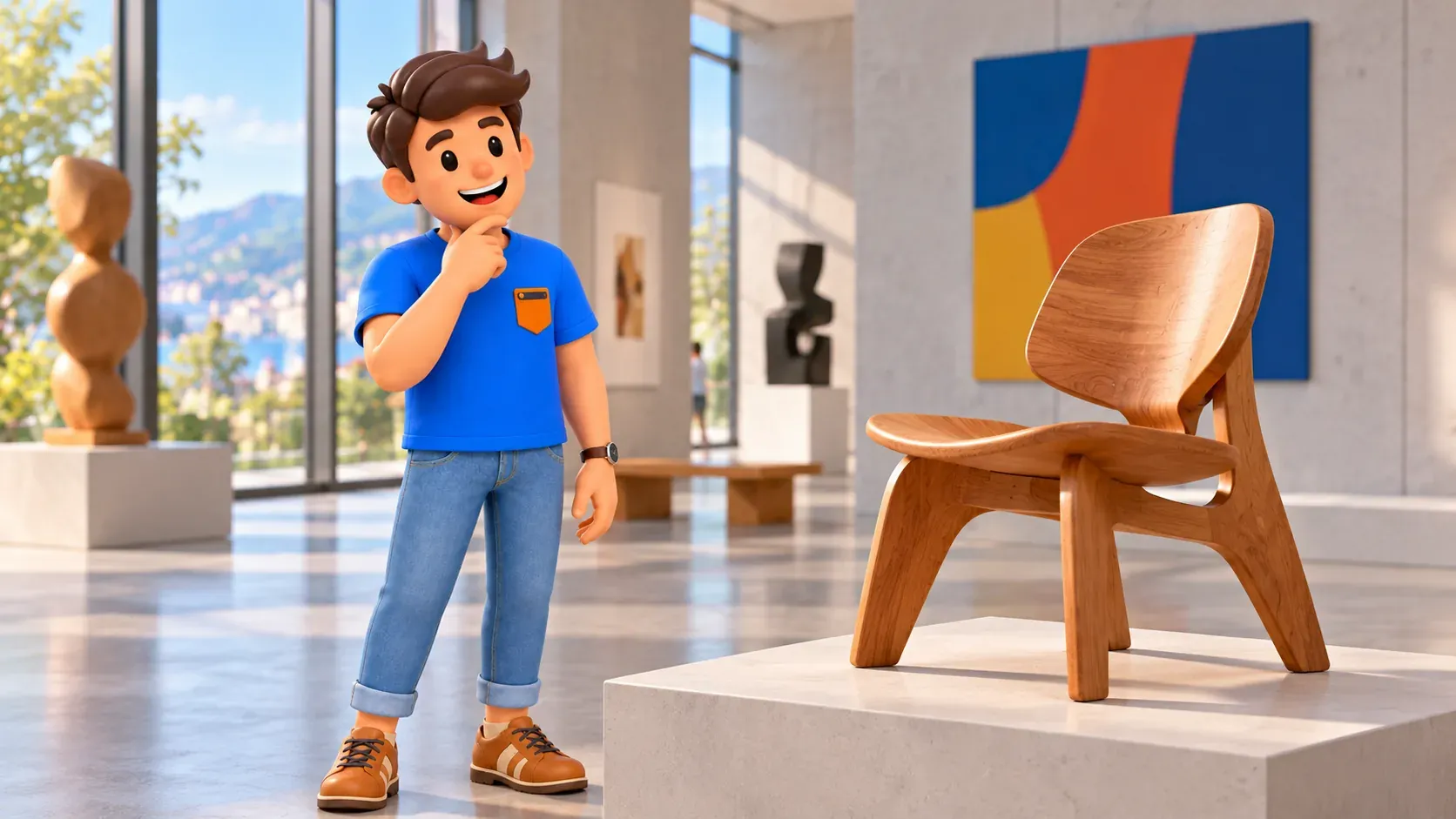
Once you have chosen a visit here, give it one clear question. How does a chair invite a person to sit? How does a graphic layout guide the eye? How does an everyday object communicate its use? Let the actual displays decide what is relevant rather than assuming that the particular object or poster you remember will be present.
Collection storage and guided archive visits require their own arrangements. Do not confuse having an archive in the building with being able to wander through it at any time. Current museum information is the place to check what is accessible independently and what belongs to a tour. This article does not guarantee access to a particular store, room or object, and it does not include a ticket price that may not match your chosen visit.
Take design observations back outside
After the museum, continue looking at everyday design instead of ending the subject at the exit. A handrail, a route sign, a seat and a doorway all involve choices about use. Ask which ones are easy to understand without instructions. This gives the next section of the walk a purpose even if you have not spent a long time inside.
Photograph a detail only where it does not reveal private work or interrupt people. Avoid treating students and staff as background props. A quick sketch or a note about what works well can be more revealing than another wide view of the same façade. You do not have to make a professional assessment; you are comparing the experience of moving through different spaces.
For a different art-and-landscape outing, Rietberg and Rieterpark offer another balance. Keep that as an alternative rather than an automatic addition. Combining both neighbourhoods simply because they contain museums may make the day less coherent than giving one of them proper attention.

Pfingstweidpark: use the pause to change the scale
From Toni-Areal, make your way to Pfingstweidpark on the public walking network. The park is a useful counterpoint to the large campus. Instead of studying a building as an object, you can see how open space serves people who live, work or pass through the neighbourhood. Choose a suitable place to stop rather than circling every edge out of a sense of duty.
The city describes reused material from former main-station platforms in the park’s construction. This is a modest but revealing link: urban transformation is not only a change of building use, but can also involve material moving into another public role. You do not need to identify every fragment on the spot for that idea to enrich the walk.
Leave play areas to their actual users and follow restrictions around planted or maintained surfaces. For a child, the park can be a proper break rather than another lesson. For an adult, sitting briefly is enough to notice how the surrounding scale feels after the museum. Weather, noise and available seating will affect the best pause; no particular bench is part of the promised route.
Schiffbau: another way to reuse an industrial hall
Continue east towards Schiffbau at Schiffbaustrasse 4, then assess your remaining time before heading to Hardbrücke station. The Schiffbau’s role as a venue of Schauspielhaus Zürich gives the walk a second kind of cultural use. Here the focus changes from study and display to performance. Viewing the exterior is already sufficient to make that comparison.
Do not assume an open hall, rehearsal or backstage visit is included in simply arriving. For a performance, check the date, venue, start time and ticket conditions separately. A show at another Schauspielhaus location is not automatically here. If you do have a booking, leave the architecture pause early enough to find the correct entrance without rushing.
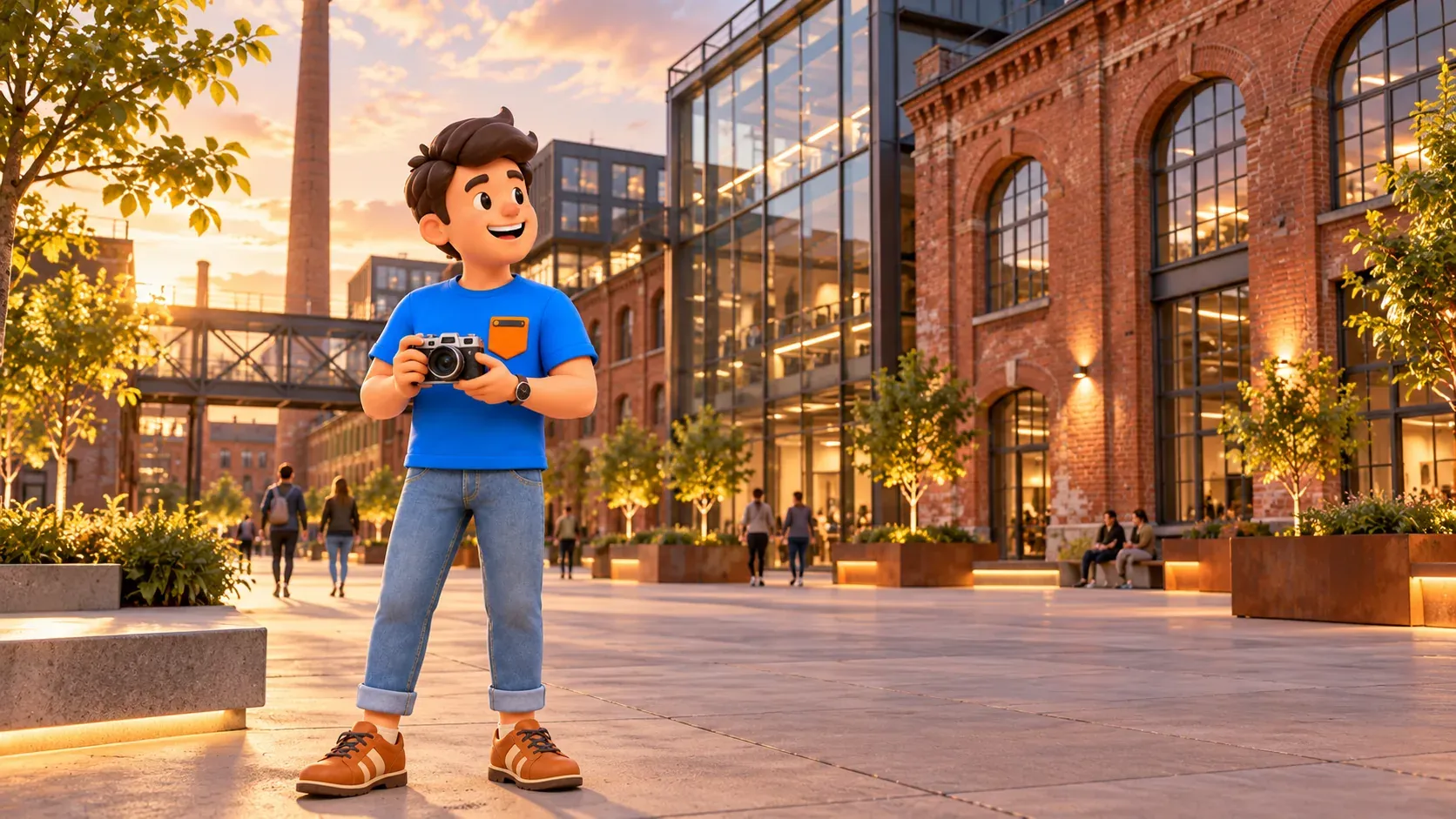
Around the hall, look at the relationship between the old volume, newer surroundings and outdoor gathering spaces. Compare that with the beginning at Toni-Areal. The answer need not be that one conversion is better: the useful difference is what activities each must support. Two buildings with industrial histories can produce very different experiences for a visitor.
Make the route fit the day you actually have
For a mostly outdoor outing, keep the campus visit modest and let the museum become a future visit. In rain, make a confirmed indoor visit the main event and shorten the linking sections. Large façades and exposed pavements are less comfortable places for long pauses in bad weather. Do not add a restaurant stop without allowing its own time, and check that your choice is actually open.
To adapt the day after choosing an exhibition or a performance, you can adjust the stops in a personal plan in RoadMe. Keep the places that match your interests and set a pace that leaves room for a real pause.
With reduced mobility or a pushchair, check the exact museum entrance, route between public spaces and access to the station. A modern-looking building does not by itself certify every part of an informal walk as step-free. Use designated crossings and current directions around works. Finish with enough margin for your onward connection: a successful route is one you can understand and enjoy, not one that includes every possible attraction in Zurich-West.


