
Sonnenberg: A Walk to Vineyards Above Zurich

Sonnenberg reveals a quieter arrangement of Zurich: a vineyard on a residential hillside, public benches facing the lake and the Uetliberg across the city. It suits a day when you want to exchange the waterfront for a little height without organising a mountain excursion. The appeal lies in the meeting of a working vineyard, a park and everyday urban life, rather than in a record-breaking panorama.
A clear first plan starts at Klusplatz, climbs to the public Sonnenberg park by Hitzigweg and returns after an unhurried stop. Allow approximately ninety minutes to two hours for the outing. This is an editorial planning allowance, not a measured walking time. Your chosen approach, pace and time on a bench will determine the actual length; transport from the centre and a restaurant meal need separate time.
Why give Sonnenberg a place in your trip?
RoadMe helps you plan the whole trip around your interests and pace. Sonnenberg can be a quiet interval between busy days or a small outing before dinner.
This is a useful change after several days of museums and central streets. There is no large collection to work through and no need to cross an entire forest. Walk up, choose a place to pause and see the city at another scale. The lake becomes more than the edge of a promenade, while the Uetliberg becomes an understandable opposite slope. Even a modest stop can connect impressions gathered elsewhere in Zurich.
Do not make solitude part of the promise. Tourism descriptions present the viewpoint as peaceful, but an empty bench and a lack of other visitors depend on the date, weather and activity nearby. Think of it as a public park used by residents too. That makes other walkers part of the setting rather than an interruption to a supposedly secret place. If you are travelling together, agree how much time you actually want to spend sitting and looking.
Save Sonnenberg Aussichtspunkt, Hitzigweg, Zürich in your map. Sonnenberg alone can lead to similarly named places elsewhere in Switzerland. The public viewpoint and Restaurant Sonnenberg are close to one another, but they are different destinations. Choose the park for the walk and save the restaurant separately if you book a meal. This simple distinction helps you arrive at the public area instead of treating a private table as the viewpoint.
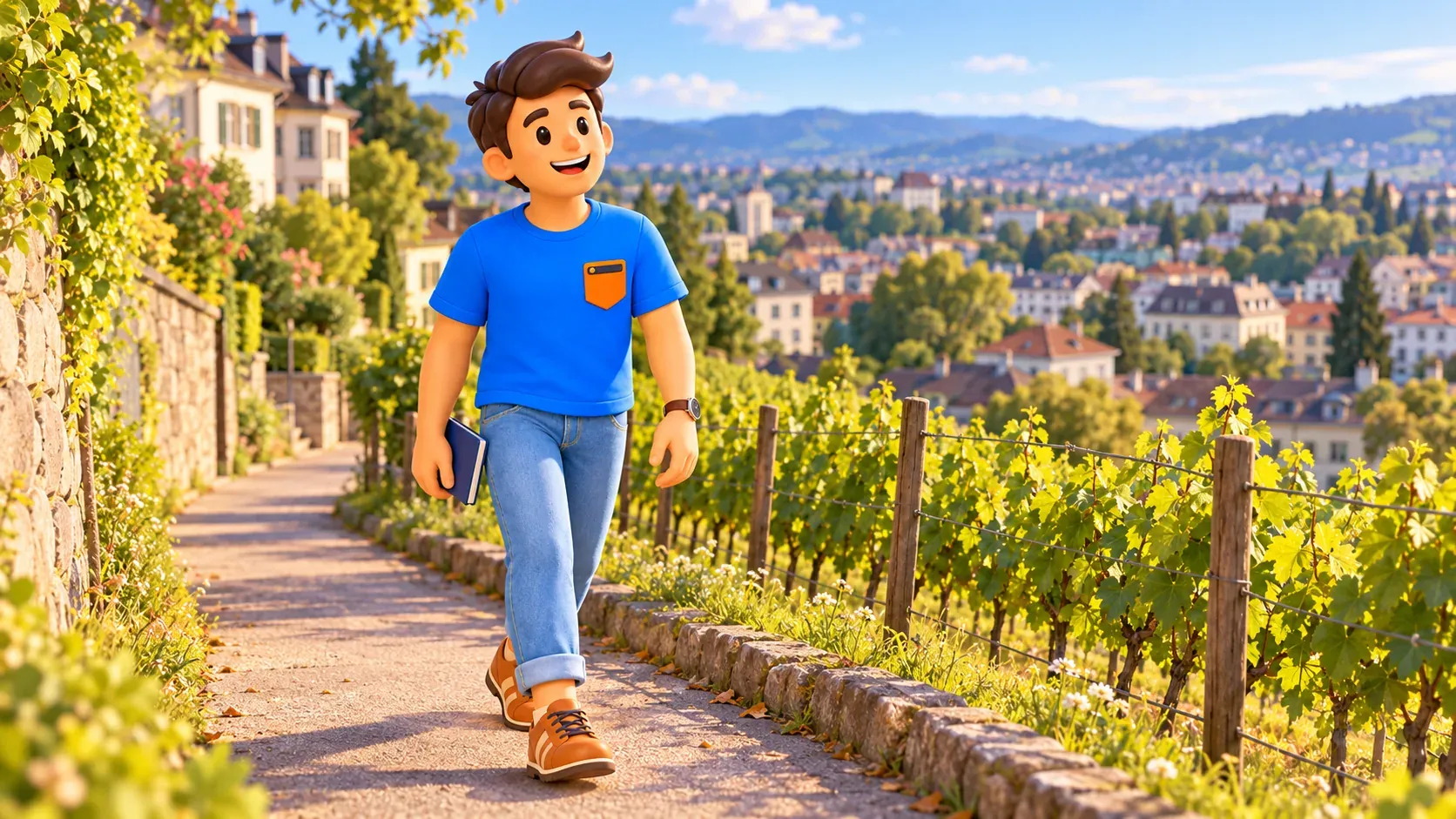
The climb from Klusplatz and an alternative approach
Reach Klusplatz using the current urban transport planner, then select a pedestrian approach to Hitzigweg. Zurich Tourism describes a short ascent from here. Short does not mean level: allow for the gradient and a slower pace if needed. This article gives the start and destination, rather than instructions for every neighbourhood junction. Use public paths and designated crossings, following your walking map instead of taking shortcuts through courtyards or restricted land.
Another approach described by the tourism office begins at Titlisstrasse station on the Dolderbahn. It can work if a rack railway ride appeals as part of the outing. Choose one approach in advance rather than automatically combining both into a larger circuit. For a first visit, returning along the same route to Klusplatz keeps the ending straightforward, with familiar turns and a known transport stop.
If you choose Titlisstrasse, check services and the appropriate ticket for your actual journey. The Dolderbahn is a public transport line with its own stops, rather than a ride delivering passengers directly to every panoramic bench. There is still a walking section. A railway journey does not certify the whole outing as step-free: paths, crossings and gradients need separate checking against your particular requirements.
Park, vineyard and restaurant are separate spaces
In the public park you can pause by the benches and enjoy the outlook without making a restaurant visit compulsory. That independence makes Sonnenberg useful as a small plan: its main purpose does not depend on a menu or reservation. If a bench is occupied, continue along the permitted path and find another comfortable place. Restaurant seating is not simply an extension of the public park, even when it offers a similar view.
The vineyard is part of a working landscape. Look at the vines from the public route, without stepping between the rows or picking grapes for a photograph. The scene is legible from the edge: regular lines, the slope, sunlight and the surrounding city. Seeing grapes nearby does not mean that harvesting, a tasting or an unarranged vineyard tour is included in the walk. Keeping to the public path preserves the distinction.
Restaurant Sonnenberg is a separate business at Hitzigweg 15. For lunch or dinner, check its own opening arrangements, terrace availability and reservations for your date. Directories do not always agree about its timetable, so avoid building your day around copied hours. A closed restaurant does not remove the purpose of the public viewpoint. If the park itself has a local restriction, follow the notice and choose another time or plan.
Read the lake and the opposite hillside
Begin with the near slope. Vineyard rows introduce a rhythm unlike the façades below and show how much productive green space can remain within a city. Then look towards the roofs, lake and opposite ridge. There is no need to identify every famous building immediately. The interest here is the relationship between urban Zurich and its landscape, rather than a checklist of landmarks that must be visible from one position.
The Uetliberg provides a useful reference across the city even if you have not visited it. Light and haze can change the view more than a few steps along the park. On a clear day the layers separate sharply; softer light can make the city appear quieter and less contrasty. Distant mountains are not guaranteed. The outing should not depend on the Alps making a mandatory appearance on your particular afternoon.
For a photograph, try keeping some vines or a green edge in the foreground. This conveys the character of Sonnenberg better than zooming only into distant roofs. Stay out of the growing rows and keep the path clear of equipment. Direct sun may be awkward for a portrait; sometimes it is better to look first and photograph later. A pause without a camera also suits a place where time need not be filled with another activity.

Urban winegrowing and a small encounter with art
The vines belong to Zurich's urban winegrowing culture. The grower rebwerk lists Sonnenberg in Hottingen among the sites it works, alongside other vineyards within the city. That is useful context for what you see: this is a contemporary working landscape rather than a rural-looking set created only for visitors. Knowing that does not turn an ordinary park visit into an organised wine tasting.
If you would like to try local wine, choose a separate confirmed opportunity to buy or taste it and check the arrangements. Do not assume that every wine at the nearest restaurant comes from the slope in front of you. Vineyard name, producer, vintage and point of sale are different pieces of information. For the walk, it is enough to recognise that agricultural work survives alongside Zurich's streets, homes and parks.
A small art stop is in the park near Hitzigweg 11. The city's art collection catalogue records Eduard Bick's bronze Stehender Jüngling (Selbstporträt), or Standing Young Man (Self-Portrait), here. The work dates from 1910 and was placed in the park in 1933. Keep those dates distinct: the creation of a sculpture and its arrival in a particular public space can be separated by decades.
Look at the figure as a form within greenery: its stance, silhouette and the background revealed by moving a few steps along the permitted path. You do not need to turn the outing into a full art itinerary. One precise encounter adds a different layer to the hillside. Instead of a general description of a park with a view, you have a particular artwork that has long belonged to the city's everyday public space.
Leave room for an actual pause
Use RoadMe to build a personalised plan for the whole trip and distribute walks around your interests and pace. Give Sonnenberg time for a view and a rest if that is what is missing between larger visits.
Ninety minutes to two hours provides a useful frame for the approach from Klusplatz, a walk through the public areas, a viewpoint stop and the return. You do not have to fill the allowance with walking: stopping is part of the point. Add separate time for a meal and service if you plan to eat. Families may also want a break at the public playground noted by the tourism office, at their own pace.
Decide the return before settling on a bench. Save Klusplatz and a suitable pedestrian route, and check your phone charge. If you prefer a different exit via Titlisstrasse, make it a deliberate part of the plan rather than searching for the quickest way downhill at dusk. The pleasure of a quiet viewpoint is easier to preserve when the ending does not become a race to a dinner booking in the centre.

Timing, weather and who will enjoy it
Later afternoon can bring pleasant light over the city, but sunset timing and visibility vary with the season and weather. The name Sonnenberg is not a forecast for your date. In heat, bring water and sun protection; in damp conditions, wear shoes with suitable grip. In winter, consider ice and the available daylight. Heavy rain is a good reason to move a panorama-focused outing to another day.
This plan suits people who enjoy a modest climb, a generous stop and a return with few compulsory destinations. It is not certified here as fully step-free. Families should assess actual gradients rather than treating the existence of a playground as proof that every approach is suitable. When predictable surfaces are essential, check the chosen path in advance, keeping transport access, the walking route and the stopping place as separate practical questions.
There is no need to combine Sonnenberg with Loorenkopf tower simply because they lie on the same side of Zurich. The woodland route has a different duration and purpose. Here you can keep the plan small: vines, city below the slope, lake, a few minutes with a sculpture and a familiar route back. It is especially useful when your trip needs a place for impressions to settle rather than another large programme.


