
Rigiblick: A Short Funicular Ride and Zurich Hillside Walk
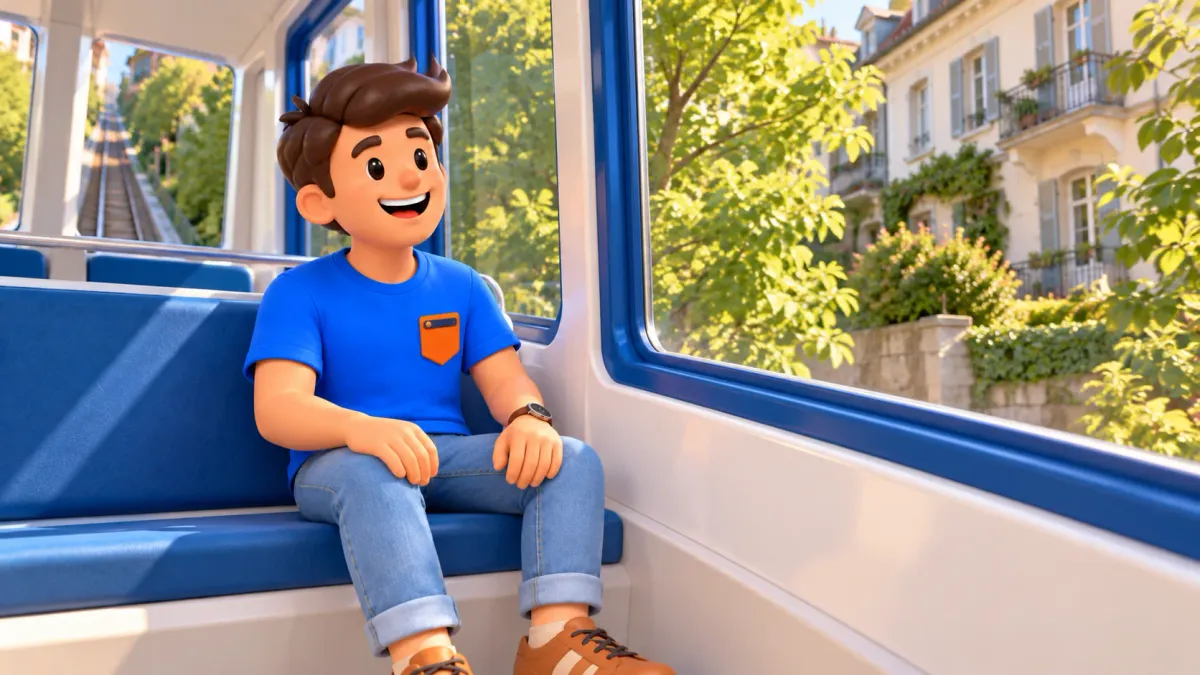
Rigiblick introduces hilly Zurich in a compact format. A short funicular ride changes your height and the city's scale; above, you can pause for a view, find a theatre address and walk a little among greenery. This is neither a major hike nor an attempt to collect every city panorama in one day. Its interest is the way transport connects a residential quarter with recreation and cultural life on the slope.
Begin at the lower Seilbahn Rigiblick station on Universitätstrasse, travel to the upper Rigiblick stop and explore available public space with a view and the area around Theater Rigiblick. If you wish, add a short out-and-back towards Orelliweg. Allow roughly ninety minutes to two hours, excluding a performance or substantial meal. Travel from another district is additional. The duration is an estimate affected by the walking section you choose.
Decide how much green walking you want
The shortest version is the ride, a viewpoint pause and the return by funicular. It fits between other city activities provided the brief climb does not quietly become the start of a long woodland route. With more time, add the connection towards Orelliweg and a bench pause. A theatre visit needs another calculation: a production has its own start, duration and admission arrangements, unlike an ordinary exterior stop.
To connect the ride, green walking and cultural interests, prepare a personal plan in RoadMe around your dates and pace. Give more time to what you actually enjoy, rather than assigning the same crowded programme to every day of the trip.
Choose daylight for a first visit. It helps you understand the upper station and local paths and distinguish public space from restaurant seating. A late performance or evening view can become another version once the return connection is checked. Proximity to the centre does not mean that every unfamiliar green passage remains equally straightforward after dark, particularly if you have not walked the approach before.
Find the lower station and count the whole journey
The lower station is on Universitätstrasse; Universitätstrasse 120 and the Seilbahn Rigiblick stop are useful references. Build a current connection from your starting point instead of memorising a tram number from an old description. After alighting, find the funicular entrance first. Street, stop and line names connect the parts of the journey, but do not establish the direction of every vehicle standing nearby.
The ride itself takes about two minutes. That means movement, not the entire climb from your hotel door. Approach, waiting, boarding and finding your bearings above take additional minutes. A short transport section is easy to underestimate in a tight schedule: the place appears to require almost no time, although the interesting part begins after leaving the cabin and needs a proper pause to make the visit worthwhile.
Check your ticket and the conditions of a particular pass. A tourist card is not automatically universal permission for all city services. Confirm the departure, fare arrangements and any technical notices with the operator and transport system. We do not give a rough price that may not correspond to a product already purchased. Identifying the journey and checking validity are more useful than remembering an amount without its conditions.
If service is interrupted, choose another city block or assess a pedestrian climb separately. It does not become an equivalent two-minute replacement because the endpoints look close on a map. Gradients and steps change the effort. If riding the funicular is your main interest, postponing it may be better than quietly turning a small transport experience into an unplanned exercise walk that no longer fits the day.
A railway shaped by neighbourhood growth
The predecessor opened in 1901 as Seilbahn Rigiviertel. Its purpose was not only leisure at a height: it helped connect and develop a residential district on the slope. That short history changes the ride. This is not a decorative attraction built solely for visitor photographs, but urban infrastructure that gave higher ground an everyday transport role and made the hillside part of ordinary city movement.
Modernisation in 1978–1979 extended the route to Rigiblick, and the renewed line opened in 1979. The current name accompanied that upper destination. Another renewal in 2025 brought new cabins and technical changes. Older photographs therefore do not always show today's transport, and the age of the original idea does not mean every visible part has survived unchanged since the beginning of the twentieth century.
The established blue-and-white colour combination distinguishes Rigiblick from the red Polybahn nearer the centre. There is no need to turn the difference into a competition: each has a separate urban setting. If transport interests you, look at the relationship between entrance, residential streets and upper space. It explains the neighbourhood as effectively as dimensions and technical statistics that are easily forgotten after a very short journey.
Above, look before seeking another stop
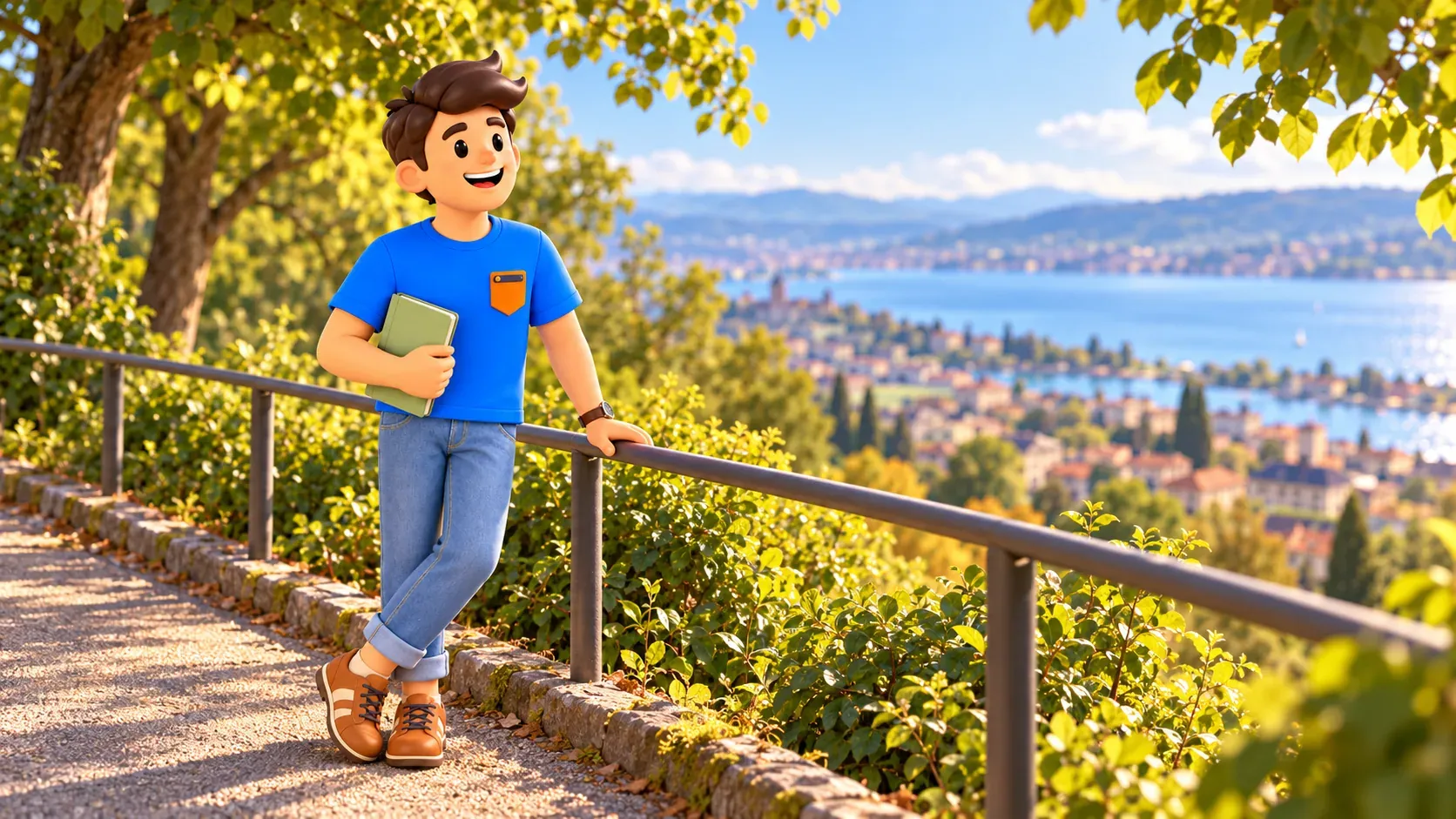
After leaving the upper station, find an appropriate public place for the view. A restaurant table is unnecessary if the panorama is your purpose. Rigiblick lies on the Zürichberg slope; clear days open views over city and lake, with actual distance dependent on air and position. Trees and neighbouring buildings belong to the scene rather than represent an error in the route or something to overcome.
Start with the direction of water and the overall city arrangement, then choose a familiar area if you can distinguish it. That sequence connects the view with streets already walked, without requiring every silhouette to be identified. For a first impression, understanding that residential quarters climb well above the familiar centre and meet green space may be enough. It gives an ordinary district a wider setting.
A mountain backdrop is not compulsory. Clear air extends the view, haze shortens it and low cloud can change the stop entirely. The quiet ride and walk remain experiences in their own right. If a distant photographic horizon is the sole purpose, choose conditions according to current visibility rather than an image taken in another week or season. A hill cannot supply identical scenery on demand.
Photograph without taking over the passage or aiming into private windows. Transport and everyday routines continue around the viewpoint. Put the phone away briefly and look without framing the scene. The view may then become more than an image on a screen: a way to sense the distance between the street below, the upper station beside you and the line of the lake farther away.
Theater Rigiblick needs its own cultural time
Theater Rigiblick is at Germaniastrasse 99. The address gives the climb a cultural dimension, but an exterior stop is not a performance visit. For a production, check programme, language, start and ticket availability. Do not expect free admission to the auditorium because you have reached a recognised theatre during the day. Building and event offer different kinds of encounter and should not be combined into a single promise.
The site's history connects with a spa house opened in 1901; theatrical use from 1980 shows its later cultural development. This change of role is enough for the short route. Rest, food, meetings and performance share the same hillside setting instead of requiring a separate trip across Zurich to a large cultural district. The interesting relationship is the way those uses sit near the transport connection.
Return separately if a suitable evening appeals. Alternatively, organise the whole visit around the performance and shorten the walk in advance. The basic ninety-minute to two-hour programme excludes the show's duration, admission waiting and a late meal. A clear boundary makes it possible to choose a real cultural event rather than squeeze it between other activities without acknowledging that the day has changed.
Towards Orelliweg without a long hike
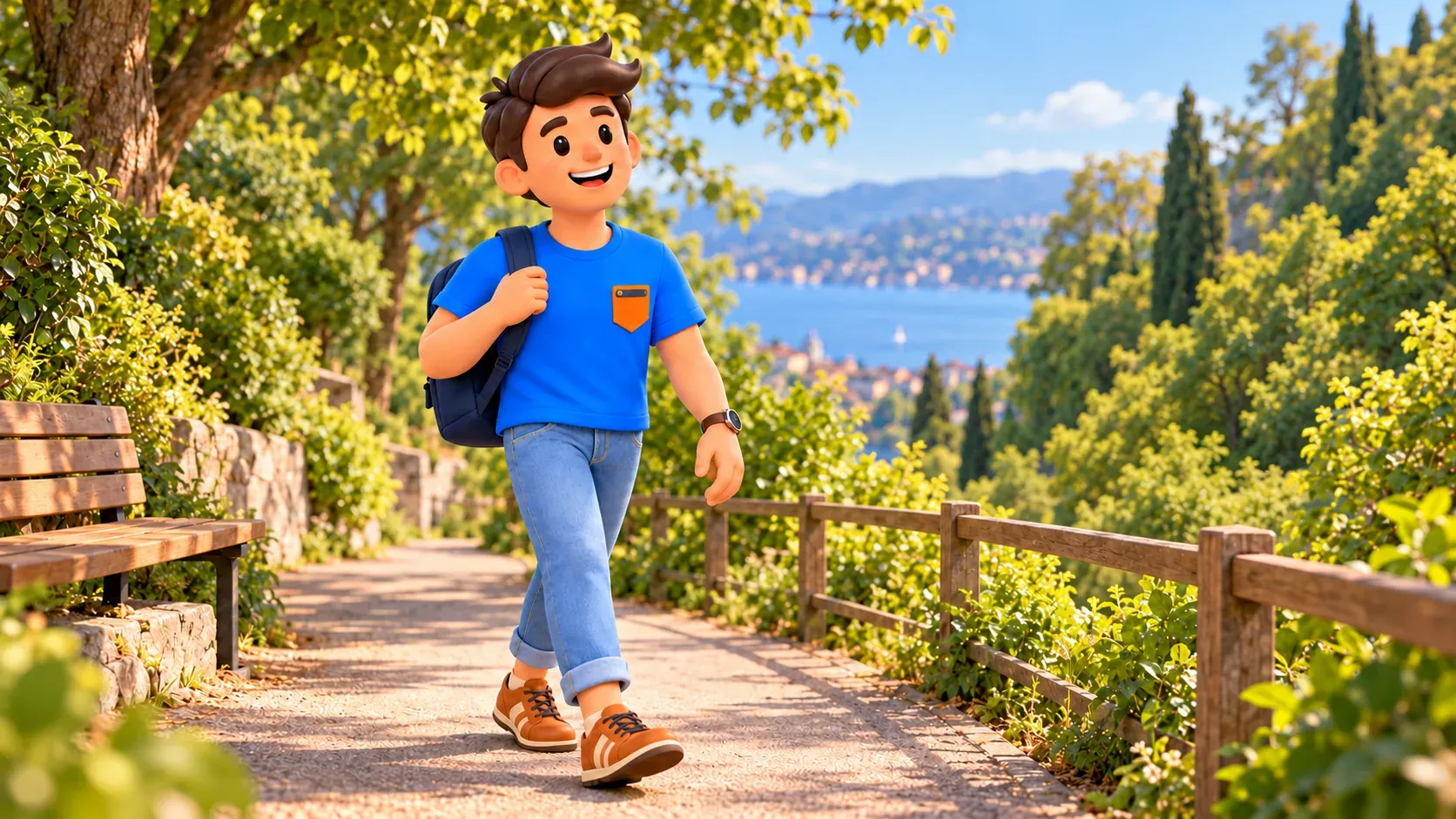
A short forest connection leads from Rigiblick towards Orelliweg; Zurich Tourism also gives an alternative via Susenbergstrasse and Hinterbergstrasse. Select the precise way on a current pedestrian map. The idea here is a modest extension towards the promenade and back, not a compulsory journey all the way to the zoo. A brief outing remains worthwhile even when it does not reach the next well-known address.
Orelliweg has a hard surface and benches that suit unhurried walking with regular pauses. One path's characteristics do not establish the accessibility of all links from the station. With a pushchair or limited mobility, check slopes, crossings and your chosen approach separately. Forest and street alternatives can feel different, particularly after rain or in the colder season, and neither should be treated as a universal guarantee.
Change the scale of attention on the green section. After a city view, notice light under the trees, a nearby trunk or an opening towards water. You need not seek another viewpoint every few minutes. Variation comes from different impressions rather than distance alone. With companions, this is also an opportunity to return to ordinary conversation after photography, instead of keeping the entire visit focused on producing a sequence of pictures.
Choose a turnaround point or time before leaving. The path can continue towards the zoo and other parts of Zürichberg, but they need their own calculation. A familiar direction does not automatically mean a short remaining walk. To continue substantially, check map, transport and daylight, then consciously change the programme. Otherwise return towards the upper station you already understand, keeping the short outing clear.
If greenery appeals more than a cultural continuation, reshape your personal route in RoadMe around your interests and pace. Give walking more time or keep the short climb, so the rest of the trip follows activities that suit you.
Nearby food and rest are choices
Businesses near the upper area offer food and pauses, but operate independently of the funicular and public paths. Check the specific place for a meal or a particular interval between events. A view does not automatically provide a free table or suitable menu. Enlarge the time block for relaxed dining rather than allowing it to displace the entire walking section without a decision.
Your own water and a short rest in an appropriate public place can be enough. That does not make the visit less complete: the main experience already exists in the ride, changed city height and green walking. There is no need to remain in a business because it happens to stand beside your final photograph. Choose the pause that protects an enjoyable pace and the energy you want for later.
Return by the same clear connection
For the basic version, return to the upper station and descend by funicular. Check the connection in advance, especially after staying for an event. Two minutes of movement do not describe the full journey to the next destination: exit, further transport and crossings again need time. A distant connection should not be planned as though the outing ends the moment cabin doors open below.
Compare beginning and end: the slope first separated residential streets, then became a setting for a view, theatre and walking. That is enough for a meaningful small excursion. For a more wooded half day with a train and another panorama, choose the separate Uetliberg outing. You need not combine both in one day. Rigiblick has its own gentle scale and brief story of city transport.


