
Zurich at Dusk: Bridges, Squares and Limmat Reflections
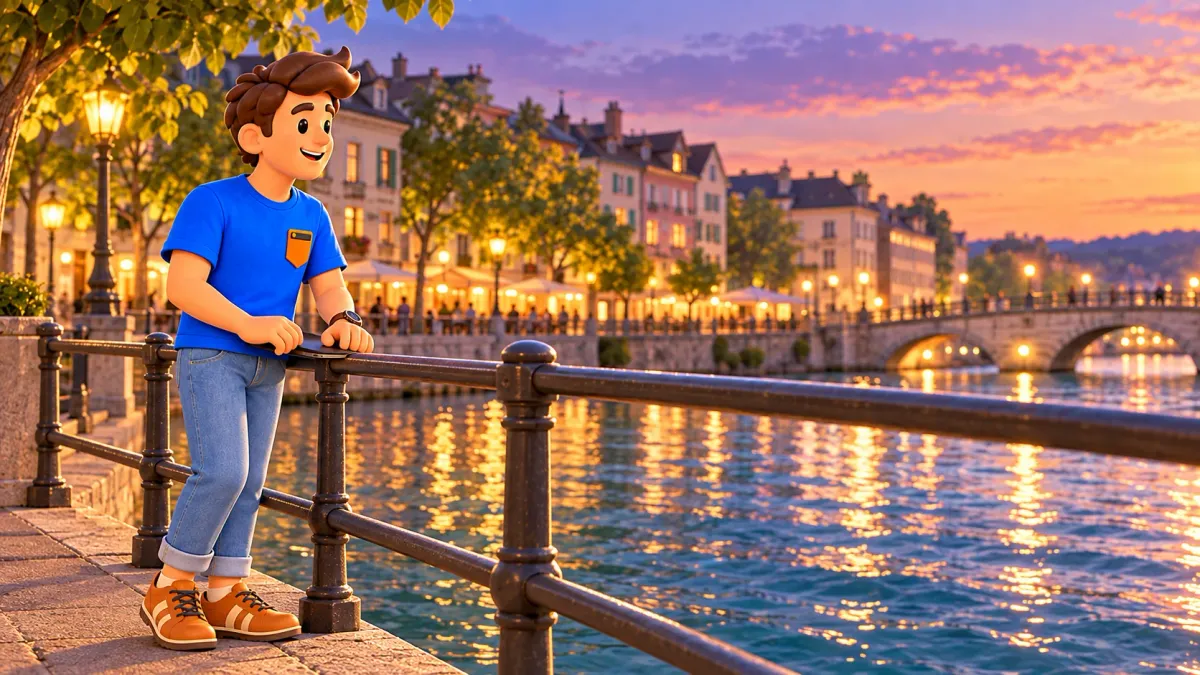
In the evening, the Limmat changes how Zurich is seen. By day, attention quickly collects façades, signs and individual sights. At dusk, the spaces between banks, bridge silhouettes and light broken by moving water become more noticeable. This walk needs no list of open museums. Public spaces and a few quiet stops create the interest.
The suggested route begins at Central, follows Limmatquai to Rudolf-Brun-Brücke, crosses west, reaches Münsterhof through the Rennweg area and returns across Münsterbrücke to the eastern bank and Bellevue. Add Lindenhof early in the dusk period if an uphill section suits you. Allow around ninety minutes to two hours without dinner or interiors. This is an editorial estimate with pauses, rather than measured timing or a guarantee of unchanged access everywhere.
When to start and what light to expect
RoadMe helps you create a personalised plan for the whole trip around your interests and pace. Leave several stops and some time without an obligatory next doorway, so an evening Limmat walk can keep its own rhythm.
Choose the transition from daylight to dusk, checking local sunset for your travel date. A fixed instruction to begin at seven works poorly across summer and winter. Summer evenings stay bright for longer, while winter darkness comes earlier. To see both overall form and reflections, arrive before complete darkness and notice the transition itself.
Zurich's Plan Lumière uses directed accents on buildings, bridges and squares. It is neither a continuous light show nor a promise of equally bright façades at every step. The city's published principles specify switching off decorative building and site lighting at midnight; street and path lighting serve a different purpose. Late night is therefore not equivalent to early evening for this subject.
Reflections depend on water movement, wind and the source of light. Do not expect an unmoving mirror reproducing a postcard. One elongated colour can be more interesting than a complete building silhouette. Watch without a phone for half a minute: the image continually forms again instead of remaining fixed on the surface. This does not require approaching the water's edge.
The main itinerary stays outside. It does not include evening access to churches, towers or historic halls. Choose a separate scheduled visit if an interior interests you. A closed door is not a failed stop on a walk about streets and water. In poor weather, shorten the plan to one bridge and one square rather than retaining every connection.
From Central along Limmatquai: establish a pace
At Central, reach the eastern bank and the start of your Limmatquai section by designated crossings. Complete the transport interchange crossings before stopping for a view. A useful first position is on an ordinary pavement where you can look along the river for several seconds without obstructing movement.
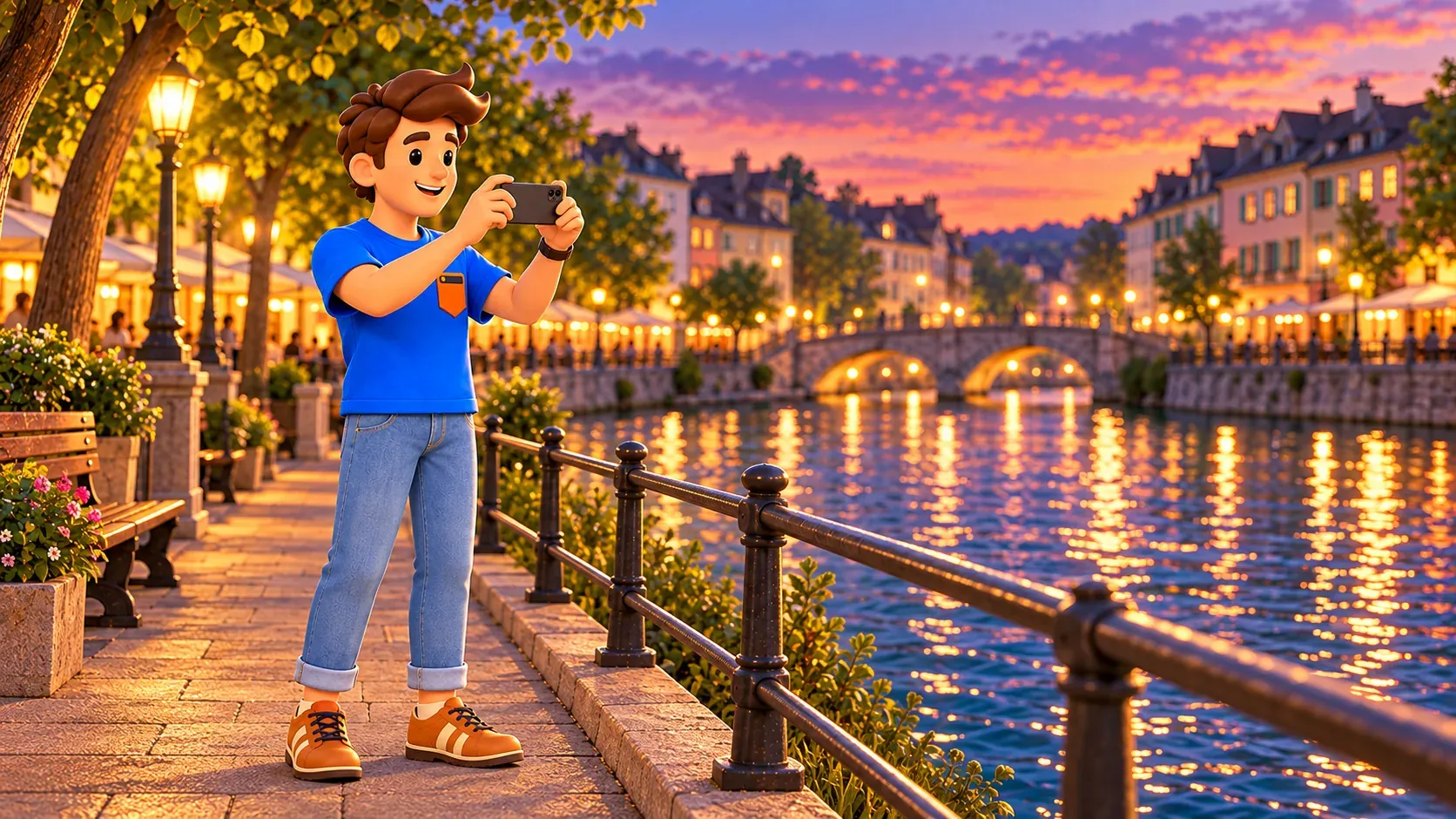
Walk south with the water to your right. There is no need immediately to frame a famous tower perfectly. Compare the row of buildings, bank line and open space above the water. Evening reveals the difference between a small illuminated window and light emphasising part of an urban composition. Some details remain dark, which also belongs to the experience.
A simple rule can help: after one photograph, look around again. Repeated screen-checking can slow a walk without making it more attentive. With companions, select a stopping place before discussing a picture, rather than pausing within the flow. A few successful observations need not lead to a long series of almost identical images.
With a child, find two reflections and describe which changes faster. Adults can compare a real façade with its moving trace of colour. There is no need to illuminate water or a historic building with a bright personal light. Existing illumination is enough for observation, and residential windows across the river are not a deliberately arranged exhibition.
Rudolf-Brun-Brücke: change banks and viewing direction
At Rudolf-Brun-Brücke, cross west by the open pedestrian route. The angle changes: the river now extends along your view and both banks form a shared scene. Keep the walking line clear. If busy, finish crossing and choose a position aside; an important view does not require every observer to occupy the middle of the passage.
The bridge belongs partly to twentieth-century urban history: its original name, Uraniabrücke, was later replaced by the present one. For this walk, that is a reminder that the centre contains different periods rather than only medieval lanes. Save the fuller naming history for a separate themed visit. The immediate question is how one crossing changes the relationship between buildings, water and movement.
On the western side, continue through the Uraniastrasse area towards Rennweg by an open route. This avoids depending on a compulsory Rathausbrücke crossing. Replacement of that bridge began in January 2026, with main work scheduled for 2026–2028 and completion in 2029. Do not imagine the area as the quiet finished bridge-square shown in older photographs.
Follow temporary passages and signs around works. There is no need to find a secret descent to bypass a barrier. If a phone route suggests an awkward section, choose a designated pedestrian diversion. Reduced light makes unfamiliar steps and level changes harder to assess, so an understandable street connection matters more than saving a little distance.
Lindenhof: an optional view from above
If it is not yet fully dark and an uphill section suits you, add Lindenhof from the old-town side. The hilltop square looks towards the right bank, Limmat and university buildings. This changes scale after viewing water from street level. Do not confuse the open square with the archaeological Lindenhof-Keller: no underground room is needed for this itinerary.
The site belongs to Zurich's early development and has long served as public space. Reconstructing its entire history at dusk is unnecessary. Notice how the river line and density of buildings read from above. Individual fronts seen below become a broader urban fabric. One observation can make the climb worthwhile.
Approaches involve slopes, and a chosen connection may contain steps or uneven surfaces. Skip this part with fatigue, slippery conditions or difficulty climbing. The route remains worthwhile without Lindenhof: continue from Rennweg towards St. Peterhofstatt and Münsterhof by an appropriate open path. Shortening it does not require replacing the hill with another compulsory viewpoint.
Münsterhof: a pause between narrow streets
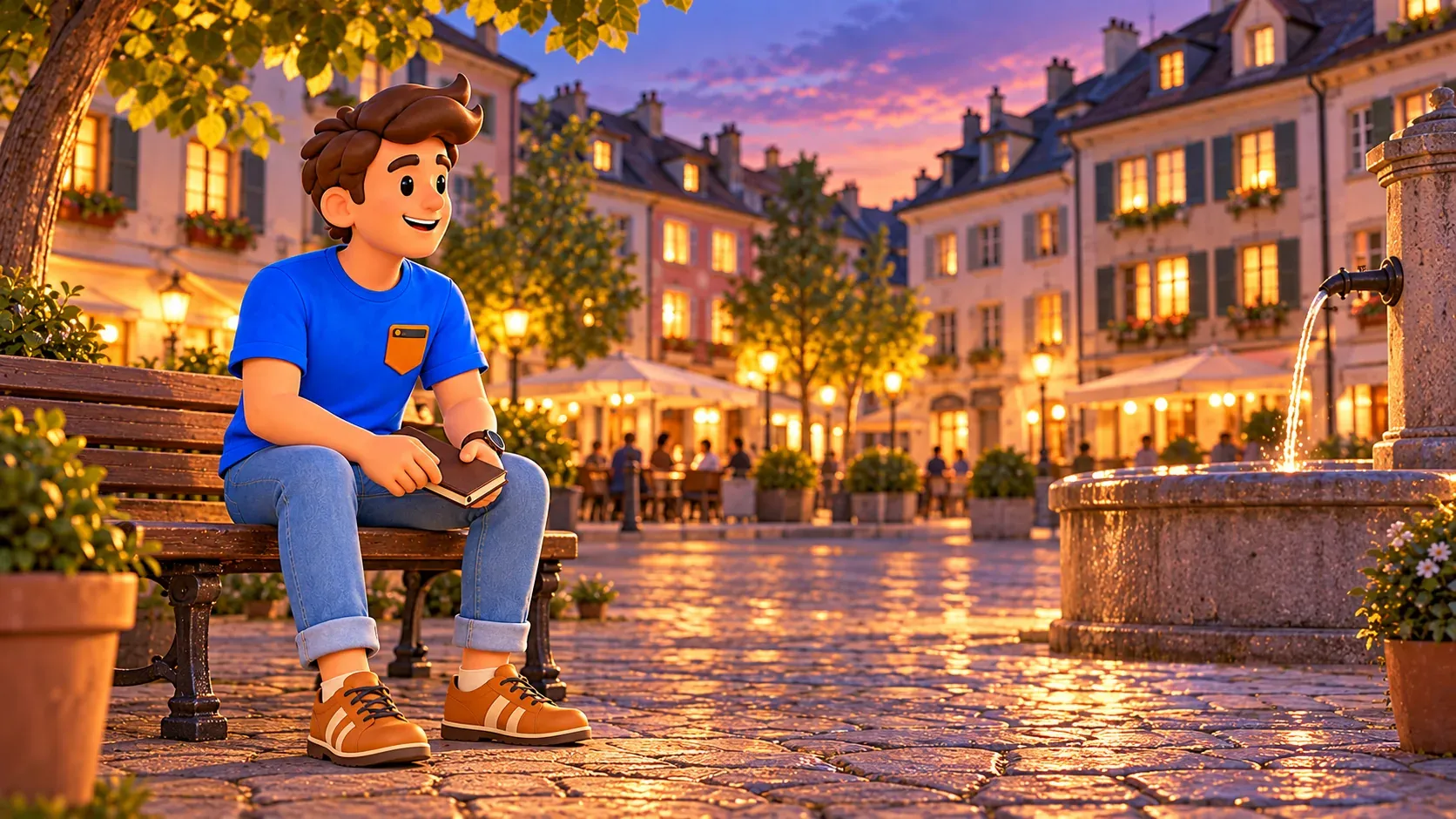
Reach Münsterhof through the old town without depending on a Weinplatz passage in the construction area. After narrow connections, the square offers a different scale. Its layout was renewed in 2015–2016, removing the former parking role. View façades as the frame of a shared space rather than a queue of separate stops requiring entry.
Choose a permitted position near an edge from which part of the square is visible as a whole. Compare lit and quieter surfaces. A shop window, doorway and architectural light serve different purposes. Brightness does not automatically indicate greater historical importance. Evening shows contemporary use alongside old-town form without requiring every inscription to be read.
Events may occupy the square, so silence and an unobstructed view are not guaranteed. If its centre is in use, follow the open edge or shorten the pause. Give food separate time. A table by the square is not automatically included, and waiting for service can change the walk's duration and expected return time considerably.
Münsterbrücke: back to water and another bank
From Münsterhof, reach Münsterbrücke and cross east. The present bridge belongs to construction in the 1830s to Alois Negrelli's design. For this walk, its value is connecting two parts of the centre. Compare the view before and after crossing: familiar elements change their relative positions without requiring a distant additional sight.
Photography can absorb attention here, but remain on ordinary pedestrian surfaces. Do not climb barriers or occupy a narrow passage with bags or a tripod. A phone can record one broad view and one reflection detail. A slight change of angle from a suitable position often helps more than trying to get as close to the river as possible.
Major landmarks around the bridge may differ from an older photograph. Grossmünster, for example, has restoration work in 2026–2027. Do not promise yourself an entirely unobstructed and uniformly illuminated façade. Building work also changes silhouettes. If it complicates a broad photograph, concentrate on water, the bridge line or part of the row of houses.
Finish at Bellevue without stretching the evening
Use RoadMe to distribute the whole trip around interests and pace, including evening walking and dinner. Choose a finishing point beforehand, leaving food and the journey back as separate parts of the day.
Continue along Limmatquai towards Bellevue. Extending into a distant lakeside walk is unnecessary: the transition from river to wider water already makes a natural ending. At the transport interchange, use designated crossings again. Check the current journey to your accommodation, especially if dinner or a long pause has shifted the original plan.
With limited energy, agree on the finish before setting out. Someone interested in photographs may want longer pauses than a companion seeking a simple walk. Choose one shared stop, then keep the rest flexible. There is no need to make every person produce the same image or remain at the railing for the same length of time. A clear meeting point is more useful than repeated searching along a bank.
If rain begins, decide whether it still suits you rather than treating wet paving as a photographic requirement. Reflected shop light on a street can be interesting, but the walking surface deserves attention too. A short break does not require occupying a residential entrance. Choose a permitted place that leaves doorways and movement clear, then resume or finish according to your own comfort.
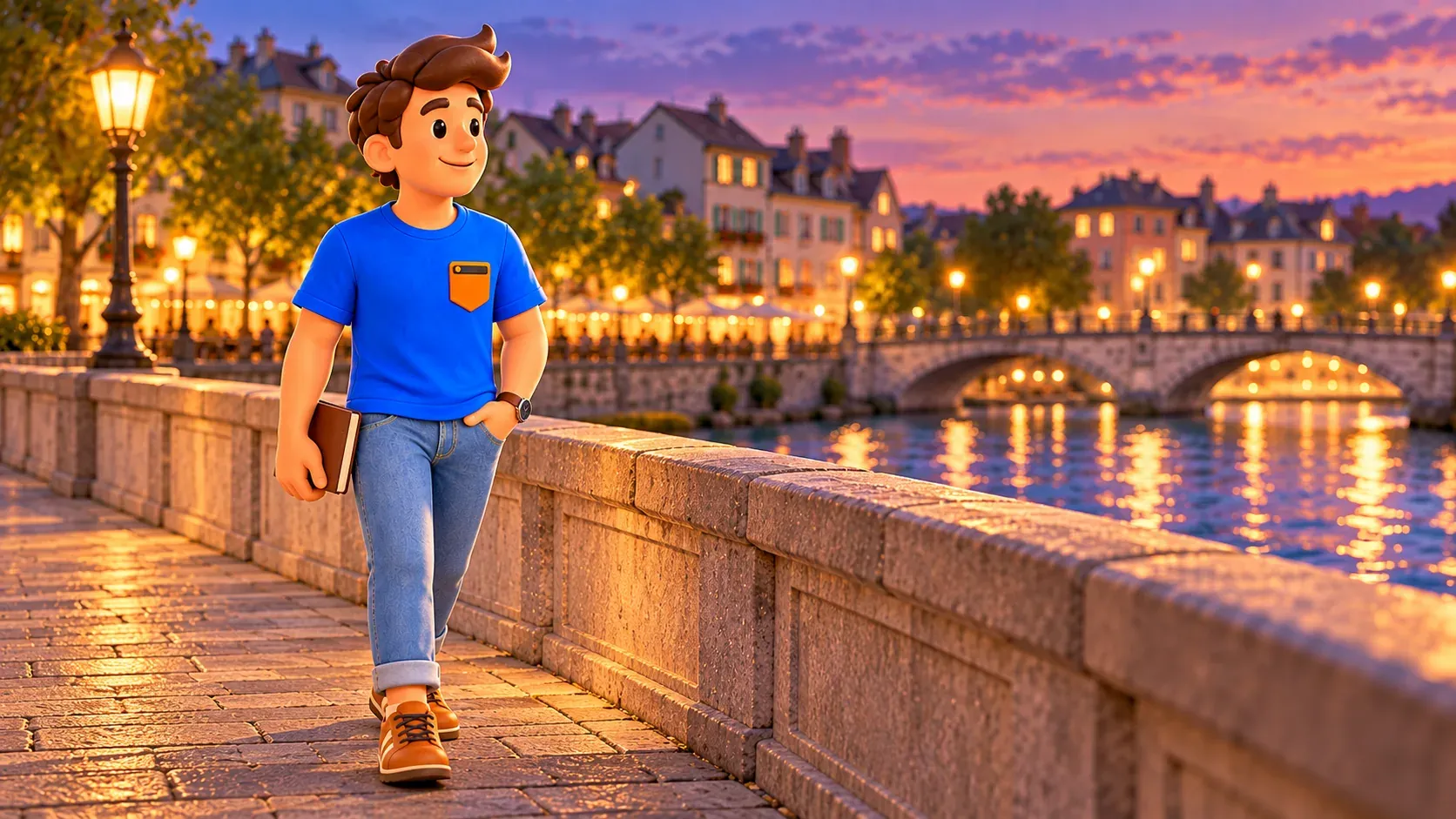
For a shorter version, retain Limmatquai, one crossing and Münsterhof, without Lindenhof or a long meal. Assess weather and surfaces; the entire itinerary is not confirmed as uniformly step-free. Ninety minutes to two hours is a planning allowance for observation, not an obligation to maintain a particular pace. A good Limmat evening can be remembered through a few changing views: along the water, from a bridge, across a square and from another bank.


