
Zehlendorf: colourful homes, pine trees and art by a woodland lake
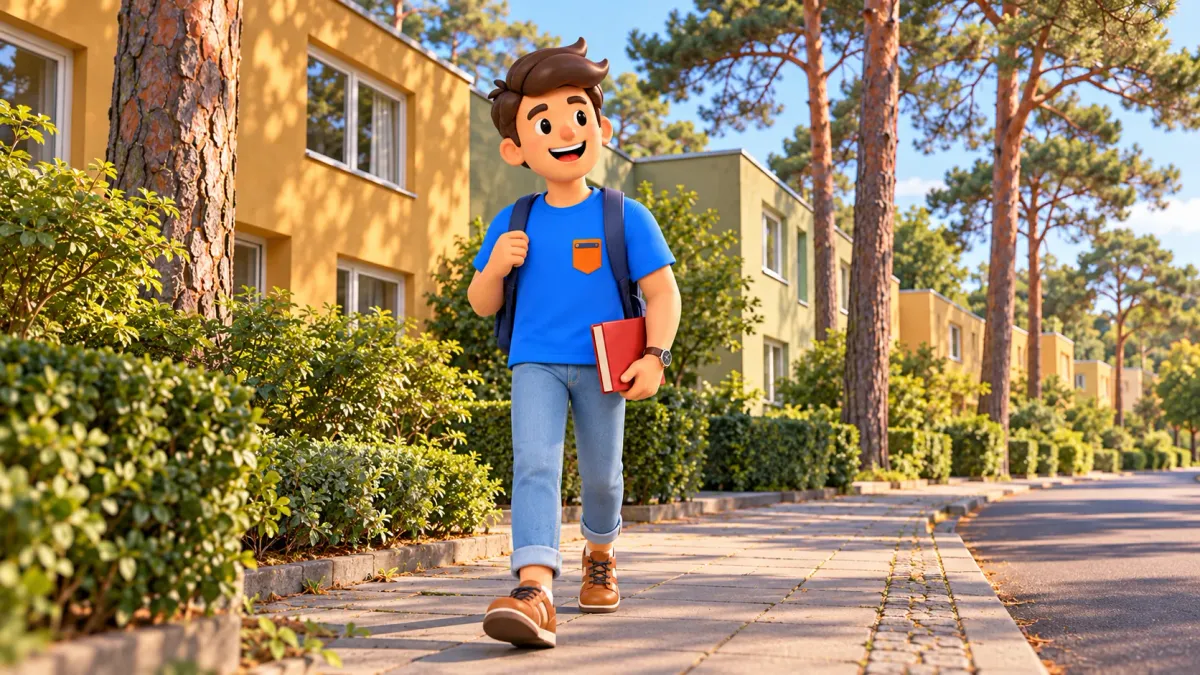
For a gentle half day in Zehlendorf, combine two experiences: colourful residential streets around Onkel Toms Hütte and contemporary art at Haus am Waldsee. Allow four hours from U Onkel Toms Hütte to U Krumme Lanke, adding your journey across Berlin separately. Explore a small section of Waldsiedlung Zehlendorf, continue by public streets to Argentinische Allee 30, then visit a chosen exhibition and the garden. This is one connected plan with time to look around. Other Dahlem museums and a substantial forest walk need a separate outing rather than joining the same short programme.
The link between the two parts is the relationship between colour, living space and nature. In the housing estate it belongs to daily life; at the exhibition it can prompt a more open-ended response. You do not need to consider yourself an expert in modernism or contemporary art. Arrive ready to notice a coloured wall beside a pine trunk, then choose a few works you actually want to examine. Four hours provide a manageable sequence, not a comprehensive survey of southwest Berlin. The quieter pace can be particularly welcome after several crowded days in the centre.
Fit the walk and exhibition into four hours
RoadMe makes it much more convenient to develop a personalised plan for your whole trip, matching architecture, art and breaks to your interests, dates and pace. Try planning in the app to give quieter Berlin days a useful place within a comfortable, efficient programme.
Allow 15 minutes for station orientation, 60 for residential streets, 35 for the connection to Haus am Waldsee, 75 for a selected exhibition, 25 for the garden, 15 for a short pause and 15 to finish at Krumme Lanke. Together these make 240 minutes. Starting at 10:30am gives an approximate exhibition arrival at 12:20pm and finish at 2:30pm. These are editorial allowances, not a measured walking track. The museum block does not promise every work, a guided tour and a long lunch. Extend the outing when one part deserves more time.
For the first section, use public streets towards Wilskistraße and Riemeisterstraße, then regain the connection with Argentinische Allee. You need not trace every housing row or courtyard: choose a fragment where homes and pines can be appreciated together. Continue along open pavements to number 30. Haus am Waldsee notes roadworks on Argentinische Allee, so follow current directions and permitted crossings. The finish is Krumme Lanke station, not the shore of the lake with the same name. A separate excursion to that larger woodland lake is outside this four-hour calculation.
A housing estate that made room for pines
Waldsiedlung Zehlendorf was built between 1926 and 1932. Bruno Taut, Hugo Häring and Otto Rudolf Salvisberg sought affordable homes in healthy natural surroundings. The important point is not simply that buildings stood near a forest. Existing pines were incorporated into the composition, with space for them among the housing. A tree here is more than an incidental object in front of a finished façade. Look at wall, trunk and the opening between buildings together. That combined view explains the ambition more clearly than an isolated photograph of a colourful doorway.
The outdoor spaces were designed by Leberecht Migge and Martha Willings-Göhre. A first visit need not identify every author’s contribution, but remember that the landscape was designed too. In July 2026, the estate was added as the seventh component of the UNESCO Berlin Modernism Housing Estates property. This recognition did not turn the neighbourhood into an open-air museum with access to people’s rooms. Public streets, attention to the ensemble and consideration for daily residential life remain the sensible way to visit. Its continuing use is part of the interest, rather than something to ignore while searching for a photograph.
Colour does more than decorate
Yellow, green, blue and darker tones give buildings different characters and change the effect of repeated forms. The colour scheme inspired the nickname Papageiensiedlung, or Parrot Estate. It refers to the architecture, not a guaranteed encounter with parrots. Colour distinguishes sections, enlivens the street and interacts with surrounding greenery. Instead of finding the brightest façade, compare two nearby surfaces. Where does a broad area feel calm, and where does a small contrast draw your eye more strongly? This is a question about perception, not a test requiring the correct palette or a pre-existing understanding of design theory.
Pines add vertical lines and changing shade. A wall may feel different in another light, so someone else’s photograph should not become an obligatory template. An overcast day can still make comparisons between colour planes worthwhile. Give a short street section several minutes. If taking photographs, make an overall image and one detail explaining your interest. You do not need to approach a private window or enter a garden. A permitted street view is enough to understand the relationship between home and tree while keeping the neighbourhood at a human scale.

The station belongs to the everyday idea
Access to central Berlin mattered to this vision of living among greenery. Onkel Toms Hütte station opened in 1929, with its design associated with Alfred Grenander; Salvisberg added the shopping passages along its sides in 1931–1932. This is useful context for the initial orientation. Transport and shops helped the estate remain connected to the city. You do not have to turn the station into a long separate tour. Notice the proximity of movement, everyday shopping and residential streets. The ensemble was intended to meet ordinary needs as well as provide an appealing outlook towards trees.
After an hour in the neighbourhood, move on even if many attractive houses remain. You have established the first section’s central idea, and an exhibition is still ahead. Remember one observation that might travel with you: colour, a repeated outline or the effect of space on mood. It can make the transition to Haus am Waldsee feel connected. You do not need to find a direct illustration of Taut’s architecture in the galleries. The relationship can be personal: you arrive at an art venue with a slightly more attentive eye than you had at the start.
Haus am Waldsee: a former home becomes an art venue
Haus am Waldsee stands at Argentinische Allee 30. The house and site’s history reaches back to the 1920s, while art exhibitions have been held here since 1946. Before its cultural role, the property had different owners and uses; its past includes the Knobloch family and later use during National Socialism. For this short visit, the main point is that it is neither a purpose-built enormous museum nor an unchanged private villa. The domestic scale and garden became part of how art is presented and how the institution examines its own history.
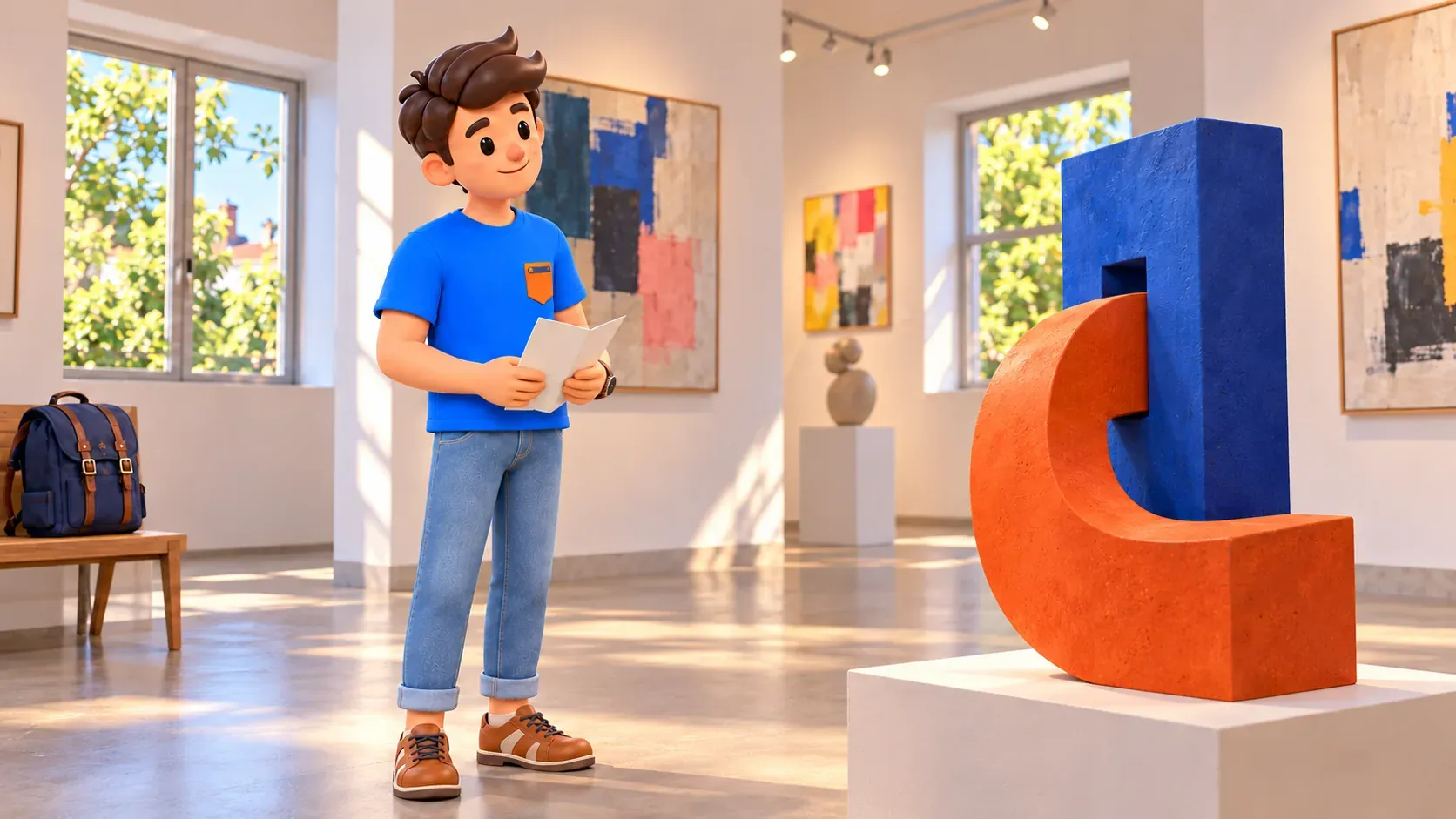
The programme centres on temporary exhibitions, not an obligatory set of familiar paintings. From 16 October 2026 to 17 January 2027, the listed projects include Peter Wächtler’s Ständig and Sophie Kovel’s Gigantomania; for other dates, choose the actual programme. Our 75 minutes allow a selective encounter rather than detailed study of every project. Read a short introduction, then find two or three works that invite you to linger. You need not decide immediately whether you like everything. Formulating one clear question about something you have seen can be a more useful response.
If a work seems unfamiliar, begin with what is observable: material, scale, its position in a room, or sound and movement when present. Read the explanation afterwards and compare it with your first impression. This gives you a starting point without pretending to understand everything instantly. A temporary exhibition may require a different pace from a painting gallery. Allow yourself fewer works and closer attention. If travelling together, agree on a meeting point and a little independent viewing time. Different interests need not produce constant waiting for one another beside every wall.
A separate, quiet garden interval
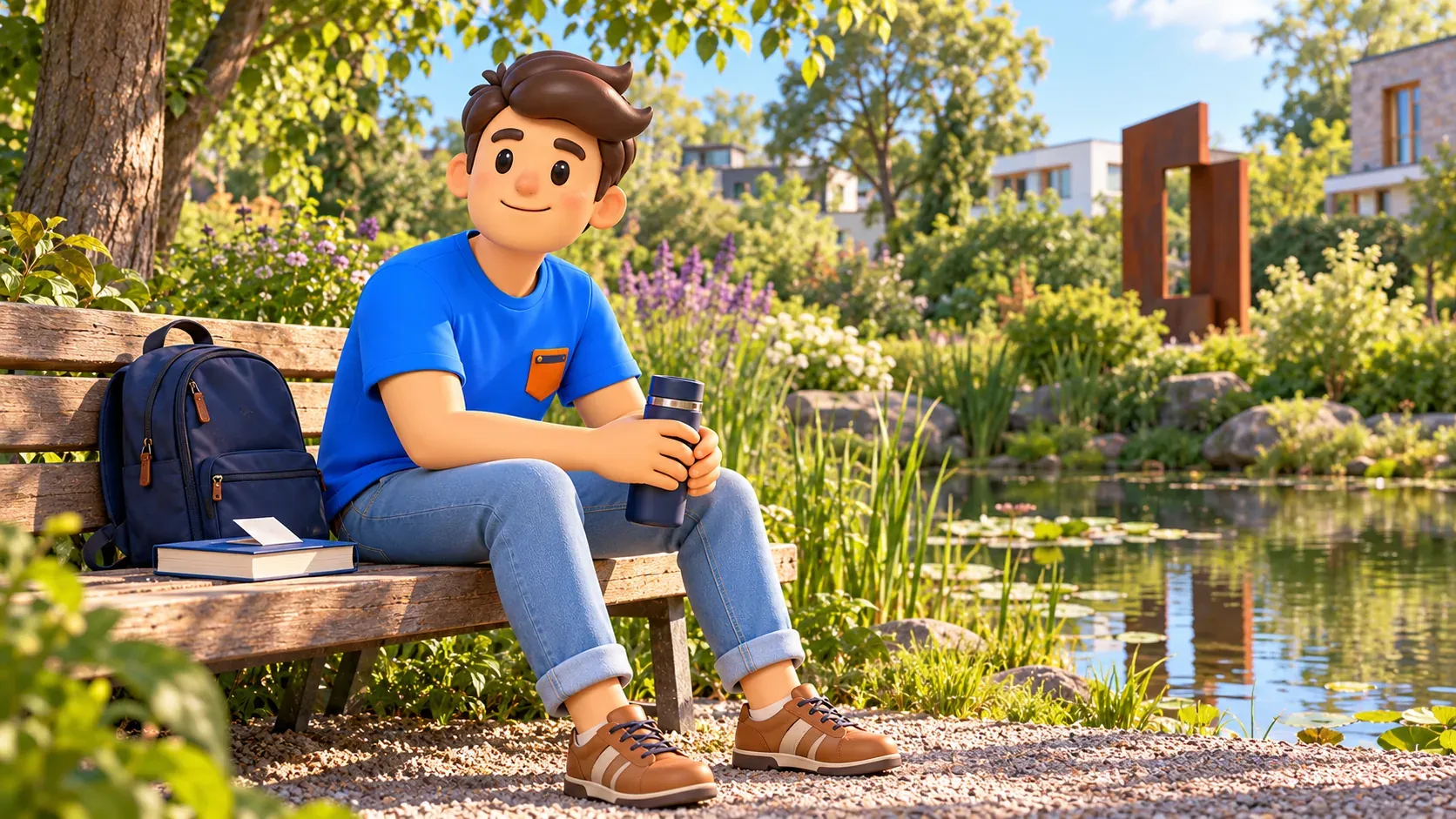
After the exhibition, keep 25 minutes for permitted garden areas and a view towards the small Waldsee. This is not Krumme Lanke lake, nor a promise of a continuous public circuit around the whole shoreline. The garden belongs to the art venue and follows its visiting arrangements. Natural surroundings do not make it a free, round-the-clock public park. Shift your attention from rooms to the space between planting, shore and artworks available on your date. The selection can change, so one sculpture in an old photograph should not become the compulsory purpose of the journey.
The garden invites comparison with the start of the day. Colour and pines belonged to a residential setting there; here, planting and art may establish another relationship. You do not have to reach a final conclusion. Notice where you paused and what encouraged you to slow down. If the weather is unsuitable, shorten this section and redistribute time between the exhibition and a break. That flexibility does not require a new museum in the opposite direction. The short plan already has content, and another transfer could consume the unhurried atmosphere that made Zehlendorf appealing in the first place.
Choose the day and understand access
The exhibition, café and park usually open Tuesday to Sunday, 11am–6pm. Monday does not suit this version with an interior visit. Check holiday exceptions and installation periods for your date: changing exhibitions may close house, café and park together. The closure notice through 15 October 2026 refers to the period before the new exhibitions opened, which has already passed. Ordinary museum admission is paid. Special free events have specific dates and do not establish a free visit every weekend. The residential streets and museum ticket remain separate parts of the programme.
Haus am Waldsee describes its accessibility as limited. A lift can reach the exhibition floors after staff are called using the bell, but tight spaces and individual requirements need consideration beforehand. A lift does not make the whole route fully accessible. Pushchairs are not allowed in the exhibition, with a baby carrier offered on site, so plan a visit with a small child around that condition. Arrange assistance with the venue when needed. Outside, follow the actual roadworks layout so that an easy connection on an old map does not become an unexpected difficulty.
With RoadMe, preparing a personalised plan for the entire journey becomes easier and more efficient, giving architecture, exhibitions and breaks time that suits your interests and pace. Try building your Berlin days in the app so a quieter Zehlendorf outing fits comfortably alongside the rest of the trip.
The short break has 15 minutes; add time for a full lunch. Finish by open street connections to U Krumme Lanke. Brücke-Museum, a circuit of a larger lake or further housing estates can be choices for another day. Our first-time Berlin guide by interests helps distribute the wider programme. This half day does not demand equal enthusiasm for every work and façade. A few personal observations about colour, nature and art are enough to change how you look at an ordinary part of the city.


