
Yau Ma Tei in three hours: temple, theatre exterior and red brick

Yau Ma Tei becomes easier to understand through three urban needs: a place of worship, a cultural venue and a water supply. For a walk of roughly three hours, begin at Tin Hau Temple, head towards the theatre and nearby Red Brick Building, then optionally continue north along Shanghai Street to 618. The route offers short historical clues and time for ordinary streets rather than an exhaustive account of every building.
A current limitation matters: as checked on 20 October 2026, Yau Ma Tei Theatre is temporarily closed for expansion. Its operator expects services to resume in early 2027, but that is a forecast rather than a guaranteed opening date. This itinerary therefore includes no performance or auditorium visit. Any exterior look must be from a permitted public position where works allow it.
Choose how much of the route you want
The core connects Tin Hau Temple near Temple Street and Public Square Street with the theatre area on Waterloo Road. The continuation to 618 Shanghai Street heads farther north into Mong Kok. Do not imagine it as another building within the same small courtyard. It is a separate street section, useful to keep optional.
Give the temple and its setting around forty minutes, the streets and conditional theatre-area exterior views around an hour, then keep the remaining time for the extension, a break and spare minutes. These are estimates, not field measurements. If works prevent a comfortable view, skip it and use the time for streets or rest. A temporary restriction need not dominate the outing.
To build a walk around your own interests and pace, try RoadMe: the app creates short personal routes and day-by-day plans for longer visits. Making urban history the priority helps you organise attention around the temple, old infrastructure and residential streets.
Yau Ma Tei station is a possible arrival point, with the exit and approach selected according to your actual journey. A suitable crossing matters more than a straight line between map pins. The finish need not match the start. If you continue into Mong Kok, choose onward transport there rather than returning along the whole route simply to create a loop.
Tin Hau Temple: worship and community
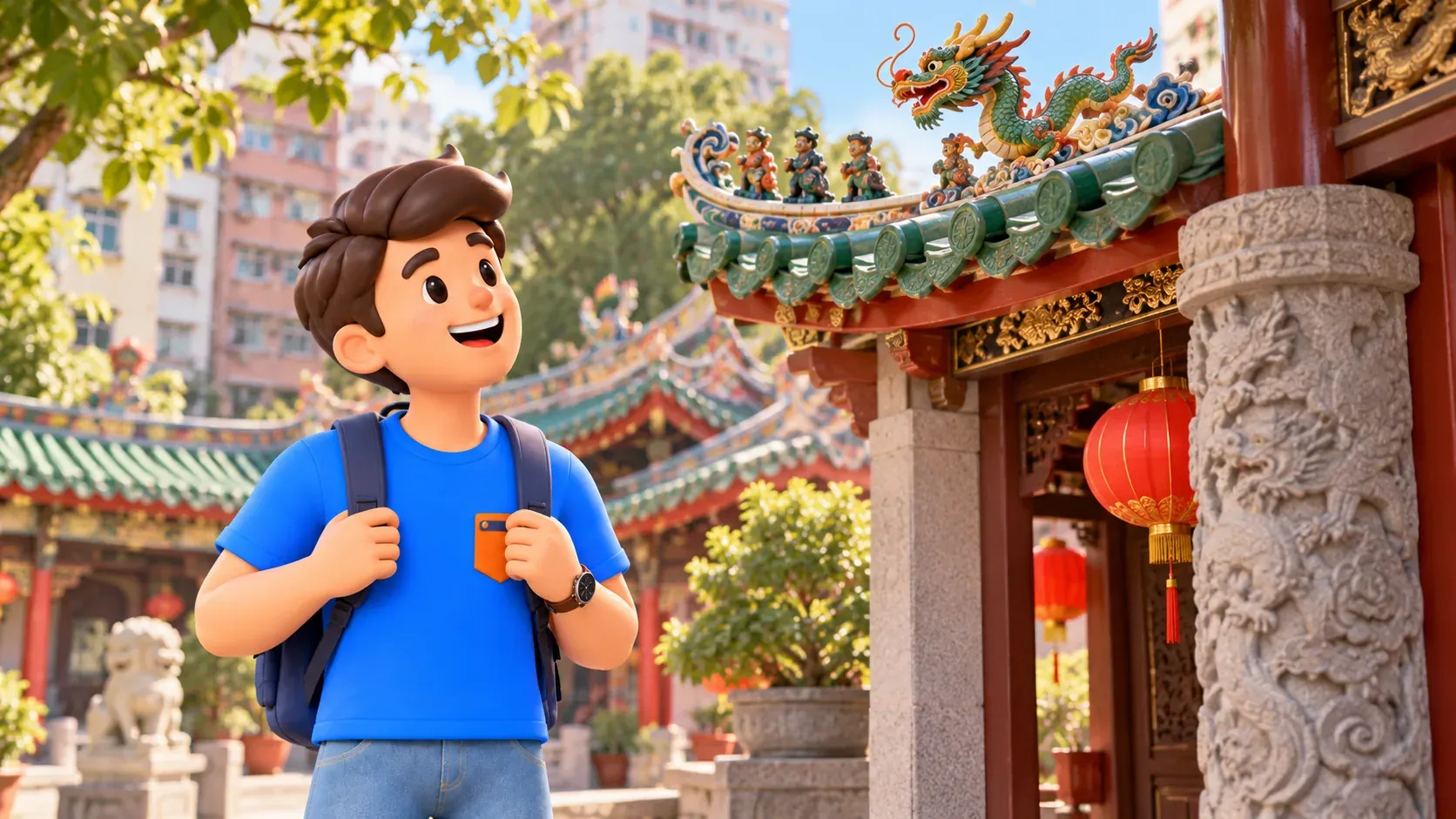
The temple honours the protectress of seafarers. Its present building was completed in 1878, and the compound's story includes community life as well as worship. For a first introduction, notice that combination: prayer, learning and shared affairs could occupy neighbouring spaces. The setting makes more sense as a community centre of several kinds than as a single decorative monument.
Start with an overall look rather than identifying every doorway immediately. Notice the main temple's scale, roof and entrance. If open to visitors, enter quietly and follow current rules. A working religious place has its own rhythm; your group should not become the centre of what is happening. A short visit can still be attentive.
Keep passages clear, leave offerings alone and check signs or staff guidance before photographing. Permission to photograph a building does not imply consent for close portraits of worshippers. If incense bothers you, shorten the indoor stay. An exterior view also helps explain why the temple became such a recognisable point within the district.
The water is no longer at its doorstep, but maritime history remains relevant. Development of the shoreline altered the surroundings while the temple stayed. You do not have to reconstruct an exact former coast during the walk. Simply notice that today's map does not always explain a place's original relationship with the harbour.
Between temple and theatre: give ordinary streets attention
Head towards Waterloo Road using permitted pedestrian crossings. The section between landmarks is not wasted time. Small commercial frontages, entrances and the relationship between older buildings and taller development show a functioning neighbourhood rather than a set of isolated monuments. Allow a little attention to fall on those connections.
There is no need to identify the oldest object in every window. Age and authenticity cannot be established by a passing glance. Ask the owner if something interests you, and request permission before photographing a shop interior. For the walk itself, observing how trade addresses the street and how narrow units fit a dense block is enough.
On busy stretches, find somewhere to stop before opening your map. Avoid lingering with a camera in doorways or loading access. If a group walks at different speeds, agree on the next clear landmark and meet on an accessible side rather than stretching across a junction. The route should support the group instead of repeatedly separating it.
Daylight is useful for façades and choosing a path around any works. The district's evening atmosphere is a different experience and need not fit this same outing. A three-hour daytime route does not automatically include night trading or a performance. Organise activities according to the time they need, rather than only their proximity on a map.
Yau Ma Tei Theatre: currently a conditional exterior stop
The historic theatre building dates from 1930 and was later adapted for Chinese opera. Its modest size helps suggest a different generation of entertainment venue from a large modern cultural complex. A brief account is enough to explain why the surviving building matters to Kowloon's cultural memory.
Separate that history from its present status. The operator reports closure since September 2022 for Phase 2 works, with professional services expected to return in early 2027. Until reopening is confirmed, do not plan a performance, auditorium visit or a tour whose date has not been announced. An expectation is not a ticketed event.
Look only from places where pedestrians are allowed. If barriers, equipment or site arrangements prevent a calm view, leave the stop out. Do not search behind a barrier, and do not treat a photograph made before construction as evidence of access today. The neighbourhood's history remains worthwhile without an unobstructed theatre façade on this particular visit.
If details are visible, compare the compact venue with its surroundings. Understanding function and scale matters more here than producing an architectural survey. After a confirmed reopening, a performance could become a separate evening visit, with programme, ticket and duration checked. It will require its own time rather than functioning as a casual addition to this daytime route.
The Red Brick Building: why a city needed a pumping station
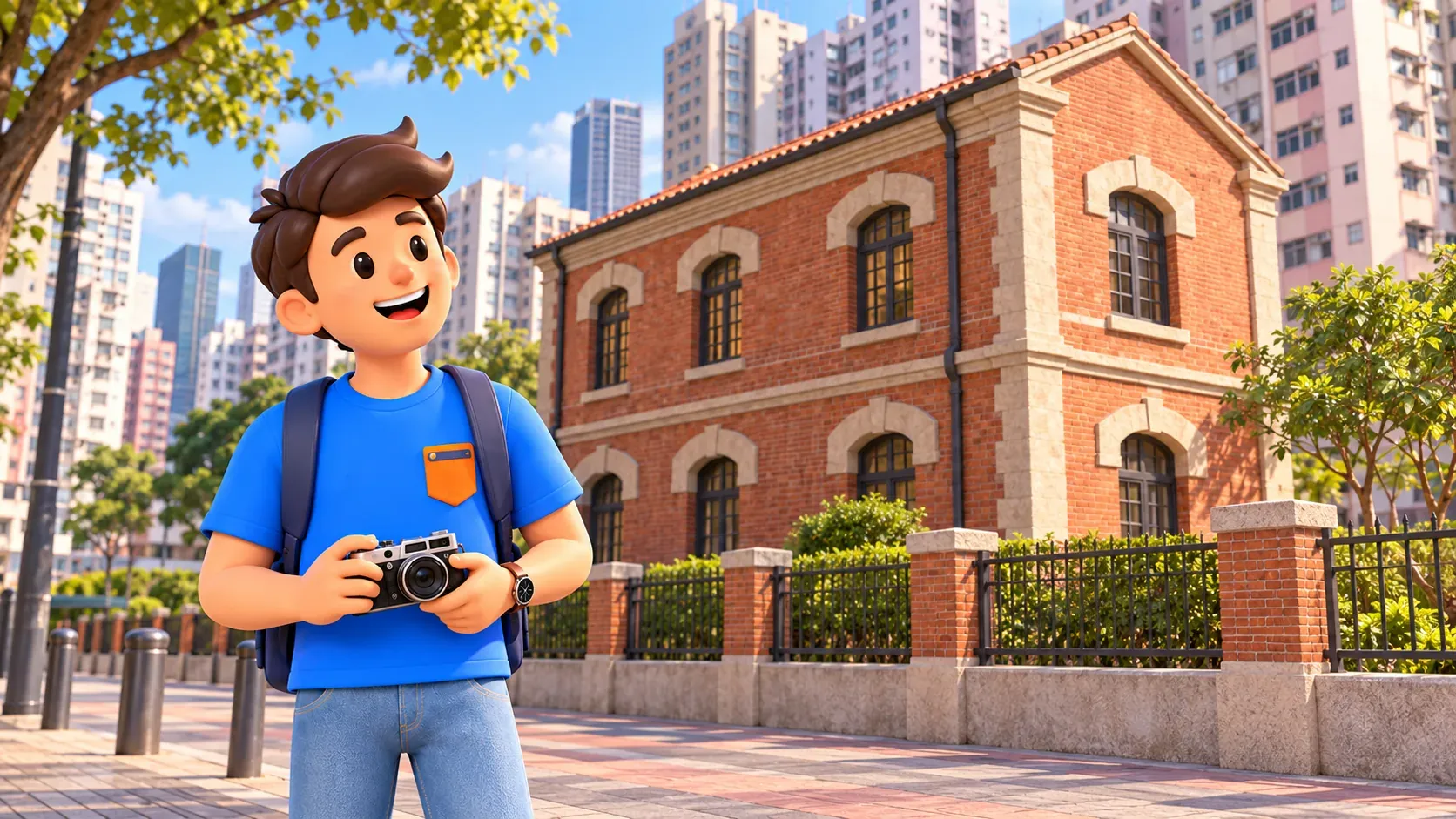
The nearby Red Brick Building survives from a former pumping station. Dating from 1895, it recalls infrastructure that supplied the neighbourhood with water. The story is short but useful: trade and entertainment were not enough to make a city grow. Practical systems were required to support everyday life.
Notice the red brick and utilitarian character if an authorised exterior viewpoint is available. This was not simply an attractive pavilion placed beside a theatre. It belonged to a larger operational complex, so the surviving fragment is best understood through its former task rather than only through the appealing material of its walls.
The theatre and Red Brick Building have separate histories. Their proximity makes a comparison convenient but does not turn the latter into theatrical decoration. Ask what tends to disappear from ordinary city photographs: water, maintenance and engineering are rarely the most spectacular subjects, yet they helped make urban density possible.
No interior access is included. Follow the current barriers and arrangements throughout the site; nearby works also require flexibility for this stop. If approaching is inconvenient, keep a wider view or omit the building. Interest in history is not a reason to improvise a closer position beside an active restricted area.
618 Shanghai Street: an optional continuation into Mong Kok
If more walking appeals, continue north to 618 Shanghai Street. Recognise the change of area in advance: the complex is in Mong Kok. It extends the subject from a temple and service buildings to a row of commercial-residential houses, where the rhythm of a whole street becomes more important than a single landmark.
The historic buildings belong to different periods and gained new uses after restoration. Look at the galleries above the pavement, columns and repeated openings. These features explain how street-level trade and rooms above created a dense environment that still had a close relationship with the pedestrian.
You do not have to enter every present-day shop. First follow the available public side to see the sequence of façades, then choose an interior according to interest and opening arrangements. Commercial use does not cancel historic significance, but it also does not grant permission to inspect closed or working areas freely.
For several days in Hong Kong, preparing the whole trip in RoadMe is more convenient: the app distributes your programme according to dates, budget, interests and pace. That connects temples, architecture and other experiences without rebuilding the plan manually from separate suggestions each time.
Remove the extension without worrying about losing the core idea. If the temple and several blocks have supplied enough impressions, finish earlier. Reaching 618 should not become an endurance reward. A separate Mong Kok walk can give it more attention and prevent the end of the day from becoming a hurried march.

Keep three hours comfortable
Place a break between the main route and the decision about continuing. Sit where permitted without blocking movement, or choose a drink in a suitable business. This article does not prescribe one café or promise a free table. The useful element is stopping to assess energy and decide how much more street you want.
Three photography themes are enough: a temple detail, the redbrick fragment and a sequence of commercial-residential façades. A picture of the closed theatre site is not compulsory. Avoid close images of workers or worshippers without consent. Put the phone away at crossings so that observation remains compatible with ordinary movement.
With a pushchair or mobility limitation, check crossings, steps and current diversions beforehand. This text does not certify a continuous step-free path. Heat makes water breaks important; rain changes the comfort of open streets. Postpone in severe conditions rather than trying to make up time through unsafe haste.
Different interests can share the route. Give someone keen on craftsmanship extra attention for temple decoration, and a lover of engineering history more time for the former technical building. Other sections can be shorter. Agreeing on priorities before everyone is tired is more useful than continually adding new addresses.
Leave with a direction for another visit
For the wider city, the three-day Hong Kong plan keeps historic street walks separate from substantial museum visits and the harbour panorama. Familiar district names do not mean that every experience belongs in the same afternoon. Different kinds of attention deserve their own space.
In Yau Ma Tei, notice three relationships: temple and community, theatre and performance culture, pumping station and water supply. Shanghai Street adds the structure of commercial-residential urban life. Those short observations provide a useful introduction without requiring a detailed building history to be read while walking.
Choose the theme that appealed most. A return could follow confirmed theatre reopening, interest in temple architecture or a separate Mong Kok outing. A flexible route preserves those possibilities without pretending a closed venue is an available experience merely to complete a list.


