
Yas Bay in two hours: art and an evening waterfront walk
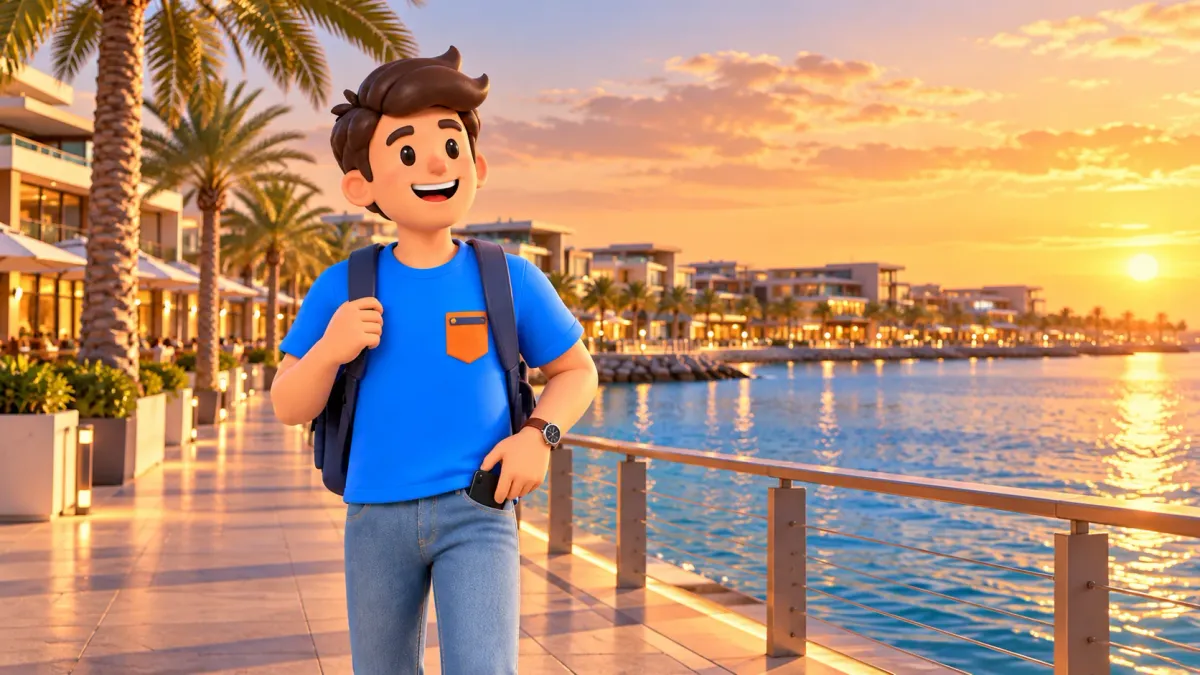
Yas Bay works well when you want a little movement and something interesting to look at, without another major attraction booking. A compact walk can connect Etihad Arena's exterior, the nearby mural The Humans, The Emerging Man sculpture and a selected stretch of promenade. The finish is a pause beside the water rather than a race to the end of the waterfront.
Allow roughly two hours for this selective outing, including time to look and sit down. That is an editorial planning estimate, not a measured tour. Yas Bay's full waterfront is larger than the small section proposed here. A meal, performance or boat activity would be a separate commitment.
Choose a waterfront evening with one clear purpose
The simplest purpose is to compare three ways of giving a shoreline character: a large public building, images on a wall and a sculpture that uses the water itself. You can enjoy each without becoming an art specialist. Their differences give the walk a thread beyond collecting photographs.
Before setting out, check current visitor arrangements and whether a major arena event affects access or transport. Use public paths and the entrances actually available; the route includes no arena interior, private terrace or beach club. If an event changes the practical order, keep the same small selection and shorten the promenade.
For a more convenient way to fit this evening into a complete trip, try RoadMe: the app creates a personal itinerary around your interests, dates, pace and budget. It helps balance a waterfront walk with the bigger experiences you want on the other days.
Decide on your finish as well as your start. An agreed pickup area or return connection keeps the last part easy, especially after dark. The aim is not to cover the whole destination but to have enough room to notice its art and changing waterfront atmosphere.
Begin outside Etihad Arena
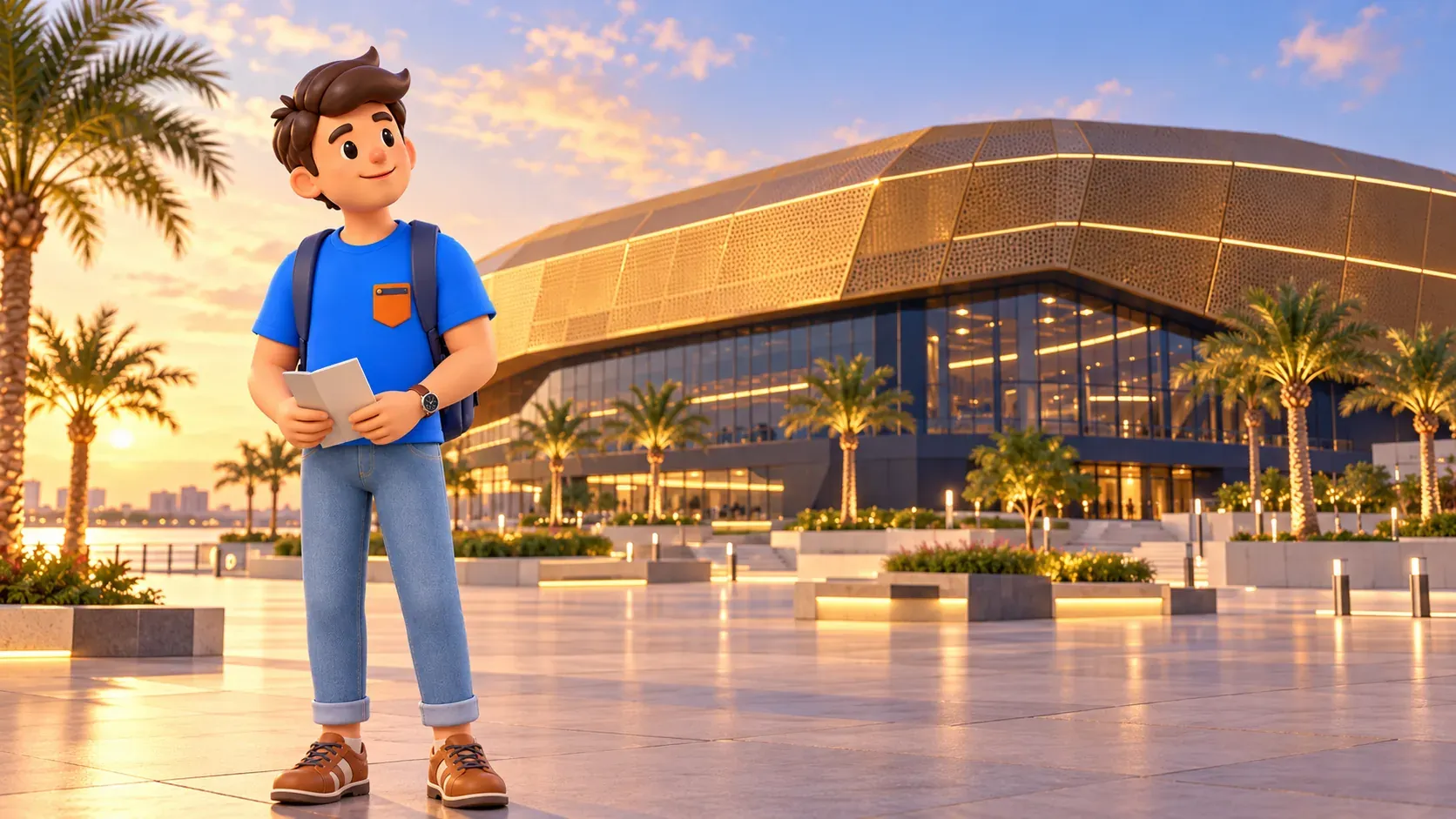
The arena is a useful visual anchor for the first part of the outing. Designed by HOK, it is a multipurpose building whose interior can change for different event formats. You are seeing the exterior here, but that flexibility helps explain why such a broad building gathers a varied public around it.
Look first at the overall mass, then at the way its outer skin meets glazing and the space at ground level. The facade is part of the building's response to Abu Dhabi's climate. From outside, the interesting relationship is between a large enclosed venue and the open waterfront beside it.
A concert hall or sports venue can easily seem relevant only to ticket holders. On this walk, consider the space around it: arrival areas, paths, planting and views toward the bay. They show how an event building becomes an everyday urban landmark even when your plans do not involve a performance.
Give this first look around fifteen minutes as an initial allowance. Find a comfortable public viewpoint instead of circling every service edge. One broad view and one facade detail are enough to establish its character before you turn your attention to art on a different scale.
Let The Humans slow your eye
Nearby, The Humans offers a very different kind of encounter. Fatima Mohiuddin, known as Fatspatrol, created the mural for Miral in 2021. Black-and-white human profiles form a long composition in which individual differences belong to a larger rhythm. Its ordinary wall support is part of the interest.
Start with the whole visible sequence from a suitable public position. Then choose a smaller section and notice how a profile is separated from its neighbour. The line may read as one person at close range and as a pattern from farther away. Moving your attention is enough; you do not need to inspect every part.
The mural adds a human scale after the arena's large volume. Instead of asking only which landmark is most striking, compare how your eye behaves at each stop. A building invites you to understand a whole object; a long wall lets you follow a sequence over time.
Take a short look rather than trying to reproduce the entire work in one photograph. If you enjoy drawing or visual design, a remembered relationship between line, white space and repetition may be more useful than a complete record. The rest of the outing will change the setting again.
Continue to The Emerging Man by the water
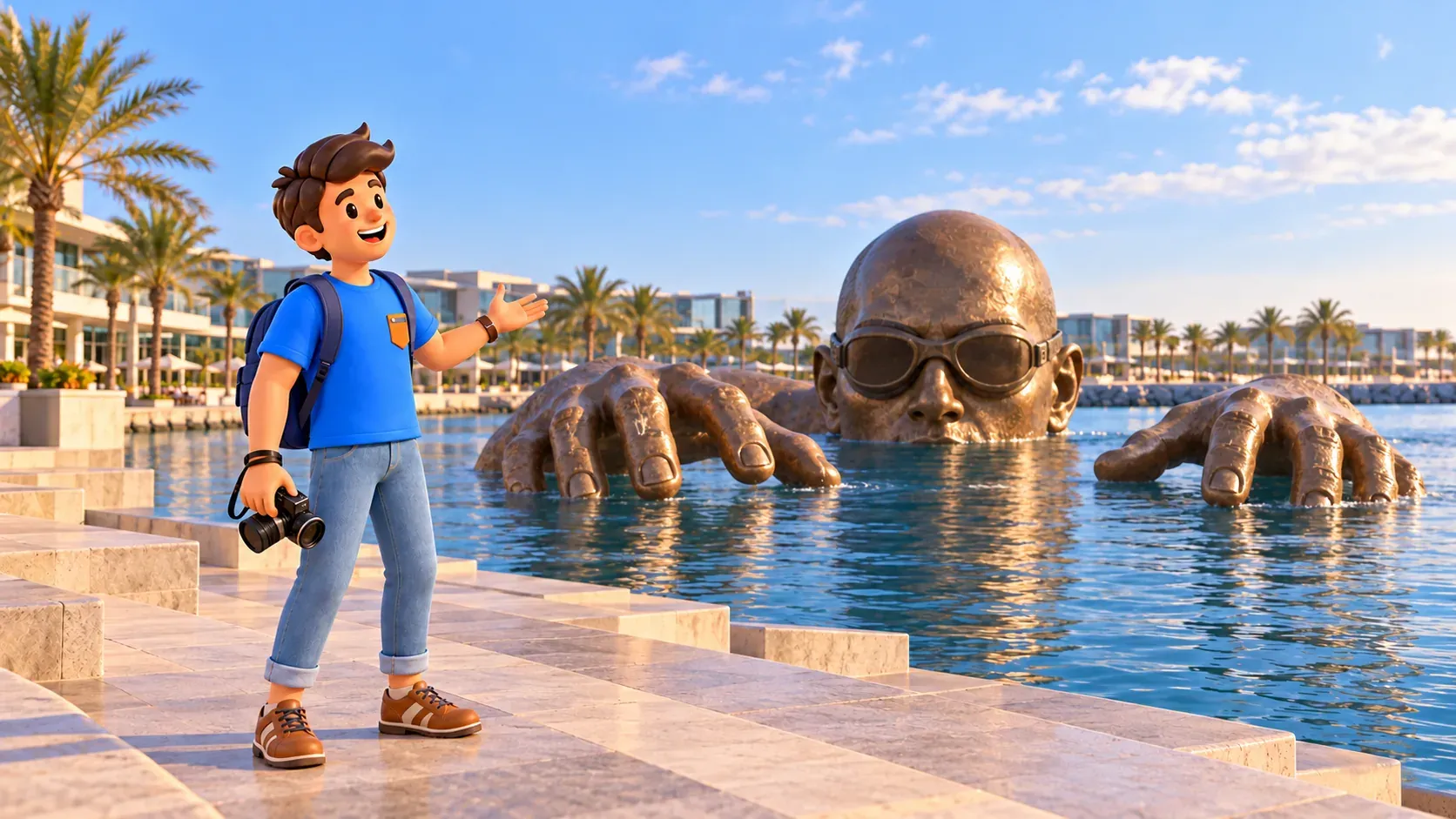
The Emerging Man, also known as The Giant, presents a monumental head and two hands rising from the water. The rest of the body stays imagined beneath the surface. That missing portion is what makes the work more than a large portrait placed beside a promenade.
At a comfortable viewing position, compare the visible fragments and mentally reconstruct their relationship. How far apart do the hands and head seem? What happens when the water interrupts the form? You are looking at a composition that depends on its real environment, not simply an object with a scenic background.
The project also has an engineering story. Its concrete construction was developed for a salty marine setting, where durability matters alongside appearance. You do not need a technical explanation of every component to appreciate that an apparently playful idea requires material decisions suited to the coast.
Let the water remain part of the view and stay on the dry public shore. A comparison of scale works well from a sensible distance, without approaching an edge for a dramatic pose. Allow a little time to see the sculpture after your first photograph; the imagined body often becomes clearer once you stop concentrating on the camera.
Choose a short stretch of promenade
After the three cultural stops, follow the public waterfront for the amount of walking your group still wants. The destination's long promenade does not have to become a distance target. Choose a turning point before you begin this section so that returning does not consume the pause you wanted.
Keep the bay on one side as your visual thread and look at how the urban edge changes. A broad open view, a line of palms and a restaurant frontage create different kinds of space within a short distance. You can notice these shifts without adding more named attractions.
Near sunset, colour and reflection may become the main interest. Later, artificial lights change the balance between buildings and water. Weather and the date affect the light, so treat sunset as a possible setting rather than a guaranteed spectacle at a fixed hour.
If you have already spent a full day in a theme park, shorten this part. A few minutes of walking followed by a seated waterfront pause may be exactly the right finish. The art stops still provide a complete small outing, even when energy for further movement has gone.
Leave space for a real pause
Find an available public seat or choose a current dining venue if you want to buy something. Those are different decisions: a restaurant table comes with its own availability and spending. You do not need to make a meal the condition for enjoying the waterfront.
Use the break to look across the water rather than immediately organise the next attraction. Compare the arena's mass, the mural's line and the sculpture's altered scale. Three concrete memories can give the evening more shape than a much longer list of places passed at speed.
If this is your favourite kind of evening, let RoadMe build more of your trip around it. The app makes a complete personalised plan easier to use, combining your interest in art and waterfronts with the right pace, budget and time to rest.
Keep the agreed return in mind without watching the clock continuously. A gentle outing works best when the final connection has already been considered. If you decide to stay for dinner, treat that as an extension and revise the return deliberately rather than letting it happen by accident.

Make photographs support the walk
Try one view that shows a work in its setting and one detail that explains why it interested you. At the arena, that might be the facade against the public space. By the sculpture, it might be the interruption of a reflected shape at the waterline.
Include other visitors respectfully and avoid turning a narrow part of the path into a private portrait area. A phone is enough; the comparison between views matters more than equipment. If someone in your group prefers simply looking, agree on a short photographic pause and keep moving together afterwards.
With children, a simple question can replace a long explanation: what is missing from the giant, or how do separate faces become one pattern? Let them choose one observation of their own. The route does not need to become a lesson, a sculpture hunt or another competitive activity after a busy day.
Before you leave, let each person name one unexpected detail rather than rank the stops. It might be a shadow, a profile or a reflection. That small exchange helps the outing remain personal and gives quieter observations a place alongside the most obvious landmark photographs.
Finish while the evening still feels easy
Return toward your agreed connection once the chosen promenade section and pause are complete. A nearby theme park, shopping centre or different waterfront may look tempting, but adding one turns this into another kind of outing. Yas Bay can be enough for the evening.
The value of the route is its change of scale: a flexible event building, individual profiles on a wall, a giant imagined beneath the bay and finally your own seat by the water. Two hours give those relationships room to become memories, while leaving the rest of the trip open.


