
Around DuSable Bridge: Wrigley and Tribune in 90 Minutes
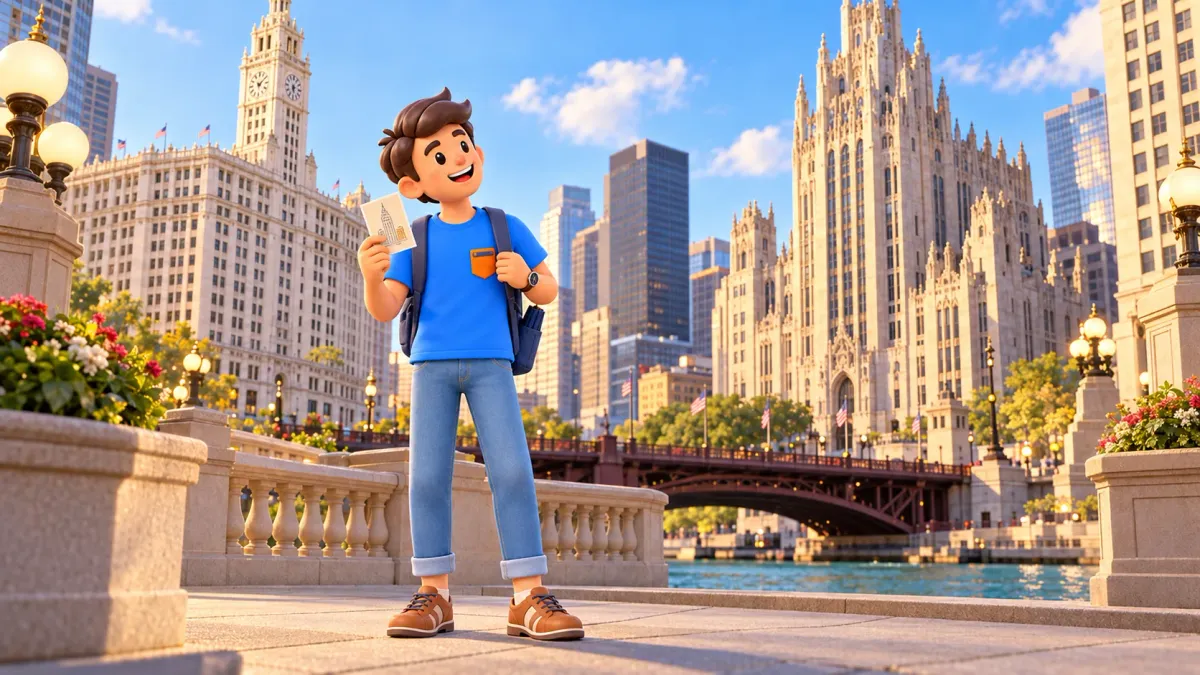
You can spend ninety minutes around the Michigan Avenue crossing without turning the visit into a hurried tour of downtown Chicago. The distances are short, but the changes in scale are striking: a marker underfoot recalls a vanished fort, a working bridge carries you across the river, and two towers make very different statements about how a building should be noticed.
This walk starts on the southern side of DuSable Bridge at Michigan Avenue and Wacker Drive. After looking for the traces of Fort Dearborn, cross north at the upper street level, study the Wrigley Building on the western side of the avenue, then use a signal-controlled crossing to reach Tribune Tower on the eastern side. Finish there. The programme is an outdoor visit, with no required lobby, courtyard, museum or transport journey between its four anchors.
Give one small part of Chicago ninety minutes
The route works best when you treat the junction as a place to understand rather than an entrance to a much longer sightseeing list. Keep the river crossing, the two facades and the historic trace as the whole programme. You can continue along Michigan Avenue afterwards, but that belongs to the next part of your day. Here, the reward comes from giving a few nearby details more attention.
To fit this walk into your whole Chicago visit, try RoadMe: the app develops a personal route and day-by-day trip plan around your interests, dates and preferred pace. That helps connect a short architecture walk with the rest of your journey instead of arranging each recommendation list separately.
- Fort Dearborn traces: around fifteen minutes near the southern bridge approach.
- DuSable Bridge: around twenty minutes for the approach, crossing and changing river views.
- Wrigley Building: around twenty minutes for the silhouette, clock and facade.
- Tribune Tower: around twenty minutes for the overall form and selected exterior details.
- Keep fifteen minutes for street crossings, movement and small delays.
These are planning estimates, not measured walking times or required minimum stays. They leave no allowance for a full interior visit or a sit-down meal. Check your onward journey from the Tribune Tower area before starting, especially if you have another booking.
Fort Dearborn: begin with something that has disappeared
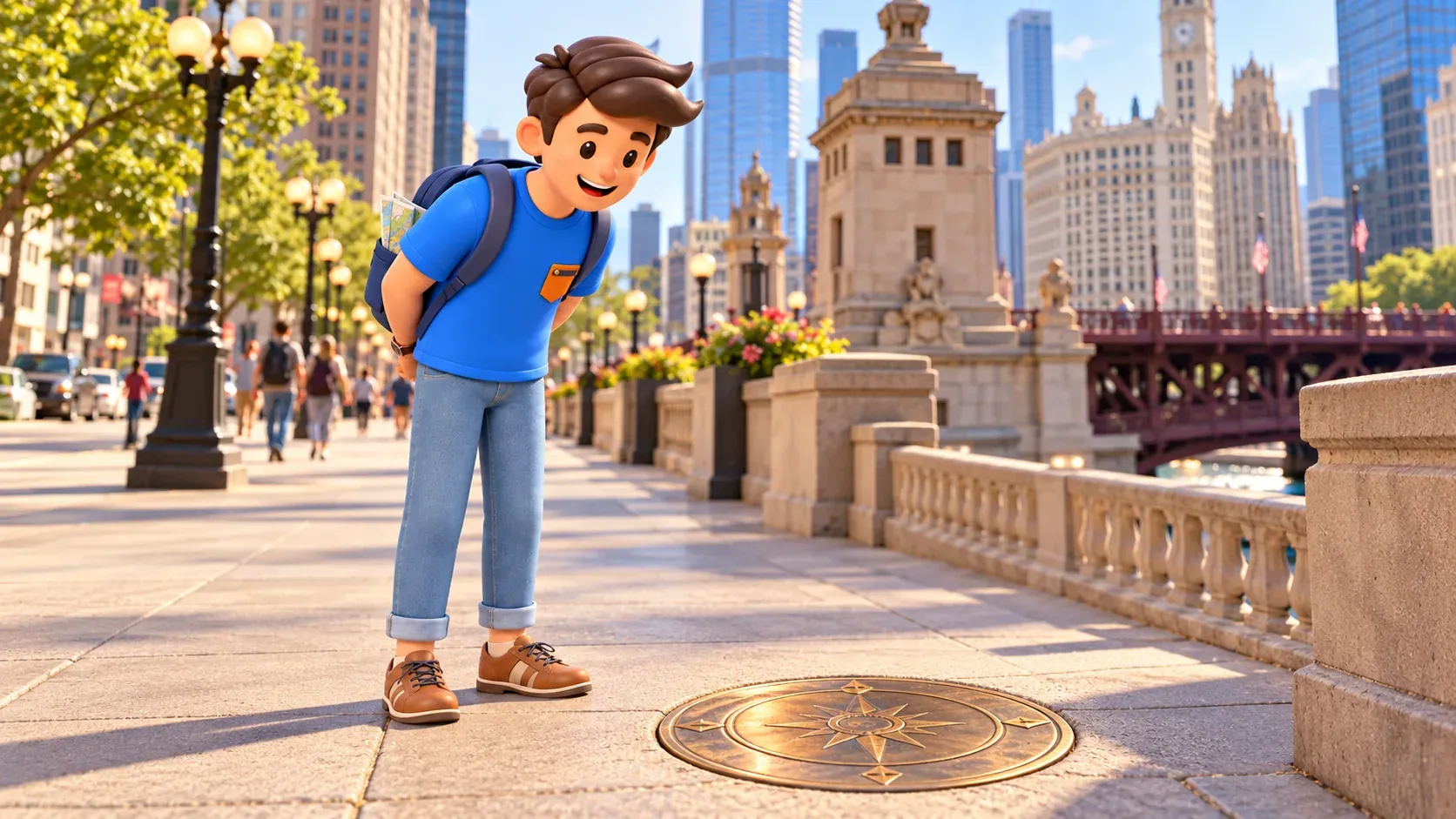
Start at the intersection of Michigan Avenue and Wacker Drive, south of the river. Look for the Fort Dearborn site markings in this immediate area. Bronze markers set into the pavement indicate parts of the former fort's outline. There are different commemorative elements around the junction, so read what the marker you actually find identifies rather than assuming every plaque tells exactly the same story.
The original Fort Dearborn was built in 1803 on the southern bank of the Chicago River. A later fort occupied the same site, but the buildings themselves have gone. What you are visiting is a historic location remembered within a modern street scene. Do not expect a surviving stockade, a reconstructed enclosure or a fort interior. That absence is precisely what makes this first stop different from the towers across the water.
Stand somewhere clear of the pedestrian flow and compare the small marker with the scale of the junction around it. The useful question is how a place can remain historically significant when its original structures are no longer visible. Roads, buildings and the river crossing now dominate the view. A short explanation of the former site gives those surroundings another layer without requiring an imagined reconstruction of every wall.
Keep this first stop focused. If a marking is obscured by works or a crowded pavement, do not search indefinitely or step into the road to follow an outline. You can still understand the relationship between the former fort site on the south and the modern avenue crossing. The walk has three more anchors, and a brief historical introduction is enough to make the move towards the bridge meaningful.
DuSable Bridge: let the crossing change the scene
Continue to the southern approach of DuSable Bridge, the Michigan Avenue crossing. This is not the bridge carrying DuSable Lake Shore Drive farther east. Stay on the upper street-level pedestrian route and use an open sidewalk to cross north. There is no need to descend to the Riverwalk or to find a way through lower vehicle levels. Keeping the route on one level makes its sequence easier to follow.
Before crossing, take in the river and the bridgehouses as a whole. The bridge opened in 1920, connecting Michigan Avenue across the water. Its practical role is still visible: people and traffic move through an elaborate piece of city architecture. The bridgehouses help frame that movement. Look at them as part of the crossing's public appearance rather than as small objects to ignore beneath the taller buildings.
Move along the pedestrian sidewalk without blocking it for photographs. From a suitable position, compare the view along the river with the view back towards the southern approach. The same buildings sit within a different foreground as you advance. By the time you reach the north side, the bridge has become part of the scene behind you. That change sets up the closer study of Wrigley and Tribune.
A bridge lift may temporarily interrupt passage. Follow barriers and staff directions, and wait in a permitted place if necessary. An opening is not part of the promised programme, so do not build the ninety minutes around seeing one. If a delay uses your margin, shorten the later observation stops. The route remains worthwhile without giving every anchor an identical amount of time.
Wrigley Building: read the light facade from a distance
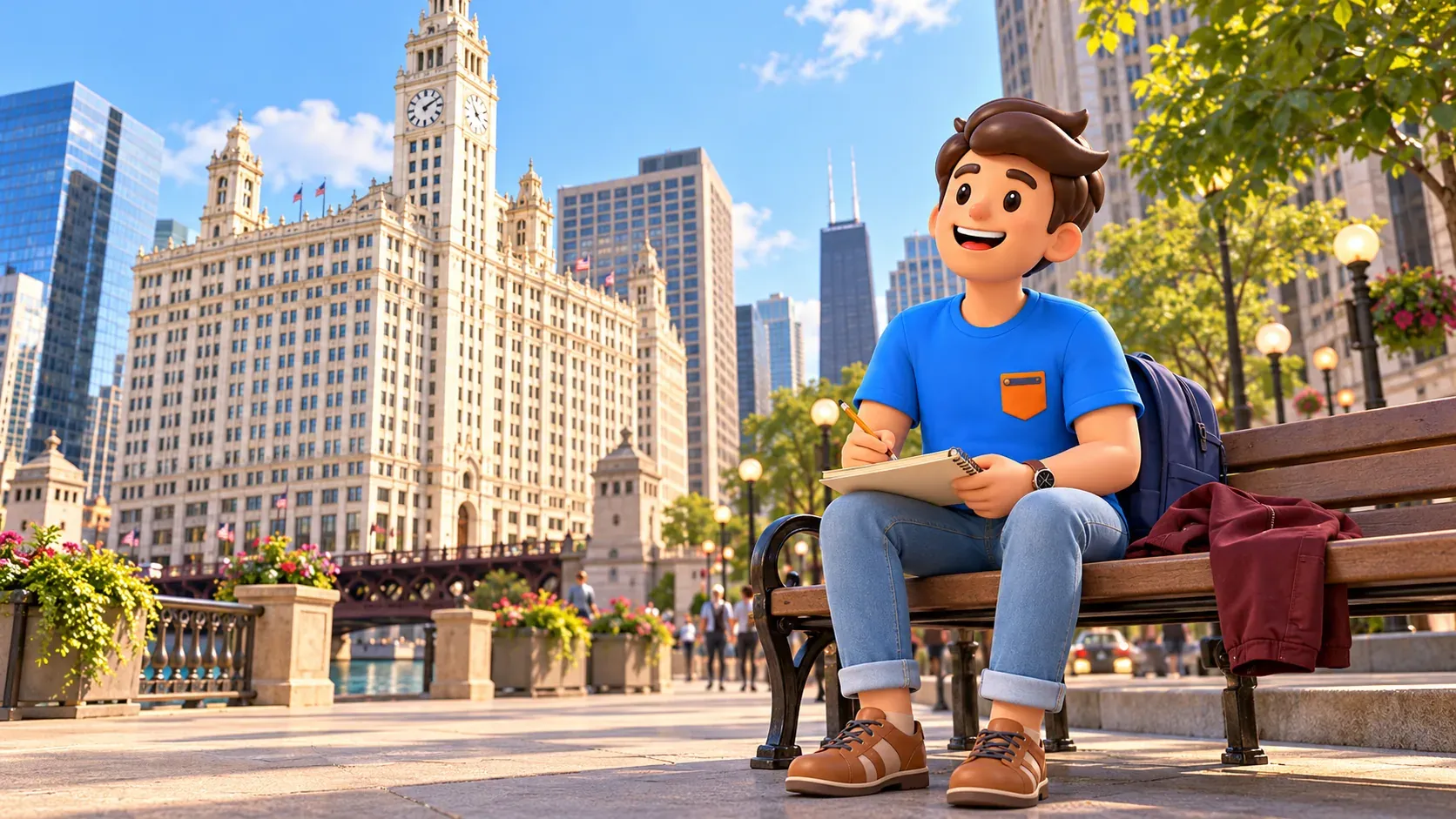
On the northern side, continue to the Wrigley Building on the western side of Michigan Avenue. Begin with enough distance to see the clock tower and its relationship to the lower parts of the complex. The clock provides an immediate point of orientation, while the light facade helps the building stand apart from its surroundings. Resist the urge to move straight to the entrance before you have looked at the whole.
William Wrigley Jr. commissioned a headquarters for his chewing-gum business here as the avenue north of the river was being transformed. Designed by Graham, Anderson, Probst & White, the complex uses glazed terra cotta across its facade. Its brightness is not simply one flat white surface: the cladding changes through different shades as the building rises. That material choice offers a useful detail to notice after the initial silhouette.
From the public pavement, shift your attention between the overall tower and a smaller area of the facade. Look for the way daylight picks out edges, windows and ornament. Choose one detail that explains why this facade stays memorable in a crowded city view.
This stop does not depend on entering the lobby or walking through a courtyard. Treat any private or controlled area according to the access arrangements you find, and keep the main visit outside. If you take a photograph, include enough of the setting to remember where the building stands beside the river. A close-up and a wider view answer different questions; a large collection of almost identical pictures rarely does.
Cross the avenue before comparing the second tower
Continue on public sidewalks and use an available signal-controlled crossing to reach the eastern side of Michigan Avenue. Tribune Tower lies a short distance north of the river on that side. Follow the actual pedestrian signals and open pavement rather than choosing a direct diagonal between the buildings.
Once you are safely across, look back at Wrigley before moving closer to Tribune. You now have a comparison rather than two unrelated stops. Ask what first drew your attention at Wrigley: the pale surface, the clock, the silhouette or its position. Keep that answer in mind as you approach the next building. The difference will be clearer if you carry one observation forward instead of starting another complete checklist.
Tribune Tower: compare a different way of making an impression
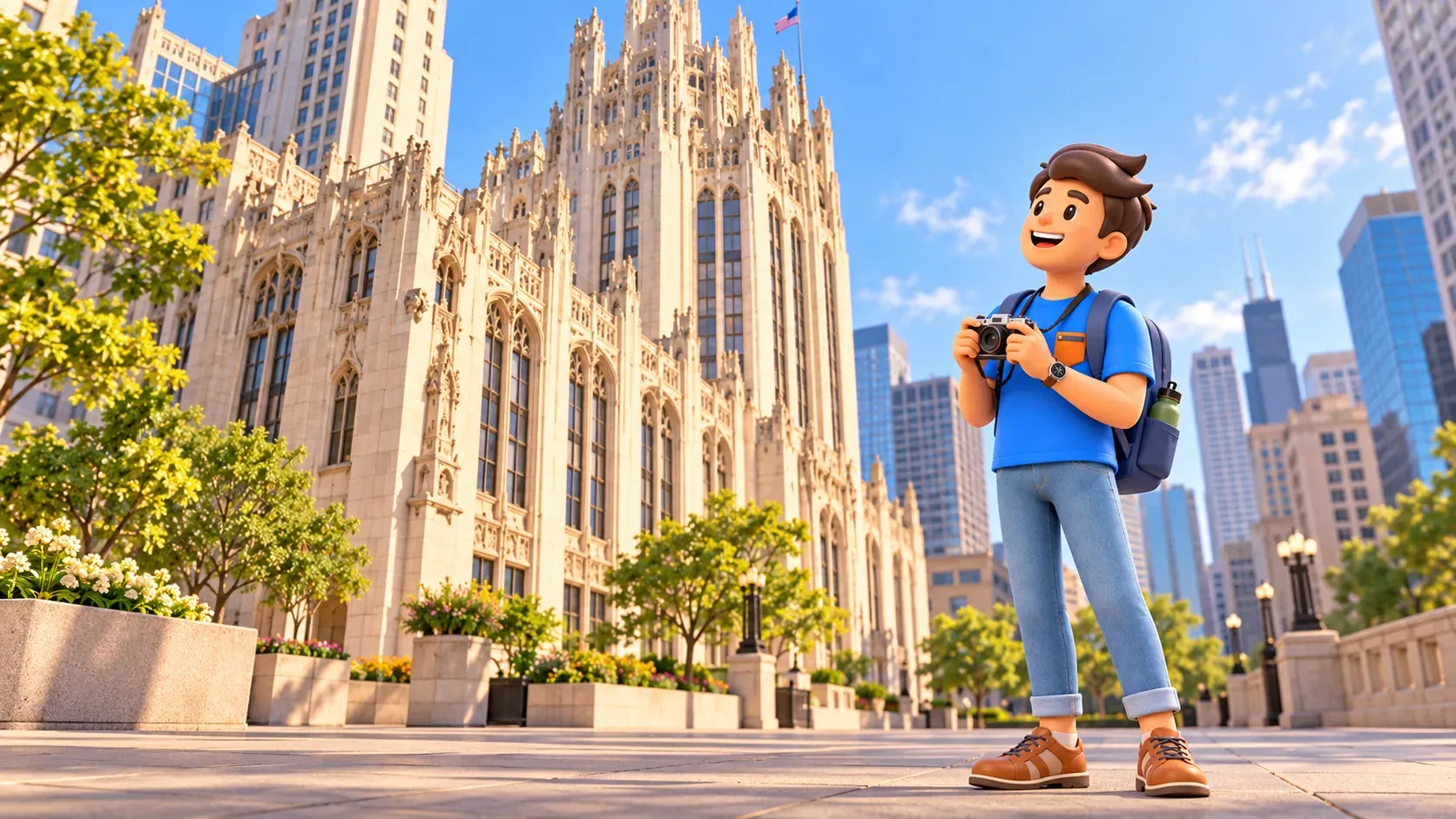
At Tribune Tower, start with the form above you, then bring your attention down towards the street. The tower's Gothic Revival appearance gives it a different character from Wrigley. Pointed details and a strongly articulated upper section invite a closer look at the outline. Find a comfortable public position where looking upwards does not obstruct other people, and let the contrast between the two towers become the subject of the stop.
The Chicago Tribune held an international design competition for its new headquarters in 1922. The winning design by Howells & Hood became the tower completed in 1925. Its appearance was therefore part of a deliberate public statement by a newspaper, rather than an accidental collection of decorative details. You can understand that ambition from the exterior without recreating the entire competition or listing the alternative designs.
At street level, look for selected fragments incorporated into the exterior stonework. Tribune correspondents helped bring building fragments from different places into this collection. Read the labels that are accessible during your visit and choose a few examples rather than trying to inspect everything. The shift from a tall skyline form to small pieces near the pavement is a useful final change of scale after the fort markings and bridge.
The programme finishes with exterior viewing. Do not expect a public newspaper-office visit, access to the crown or entry to residential areas simply because the tower is famous. You already have enough to compare: the way each building addresses the avenue, the materials visible close up and the impression created from farther away. An interior is a separate possibility only when its actual arrangements allow it.
Finish with a comparison you can remember
Before leaving, choose one contrast to carry away: the vanished fort and standing towers, Wrigley's bright facade and Tribune's Gothic outline, or the large river view and small details underfoot. If time ran short, missing a few labels does not undo the walk. Keep your attention on what you actually saw and leave space for the next part of Chicago rather than adding another major attraction at the finish.
RoadMe helps turn these preferences into a complete personal trip plan, with a route shaped around your pace and interests. Try it to place this compact walk, longer visits and the rest of Chicago across your available days.
If the river crossings interested you most, the two-hour Chicago River bridges walk offers a separate westward programme. Give it its own time rather than attaching the whole route to these ninety minutes. This small area already makes a complete visit when its different buildings and historical traces begin to explain one another.


