
Visiting the World Trade Center: Memorial, Museum or Observatory?
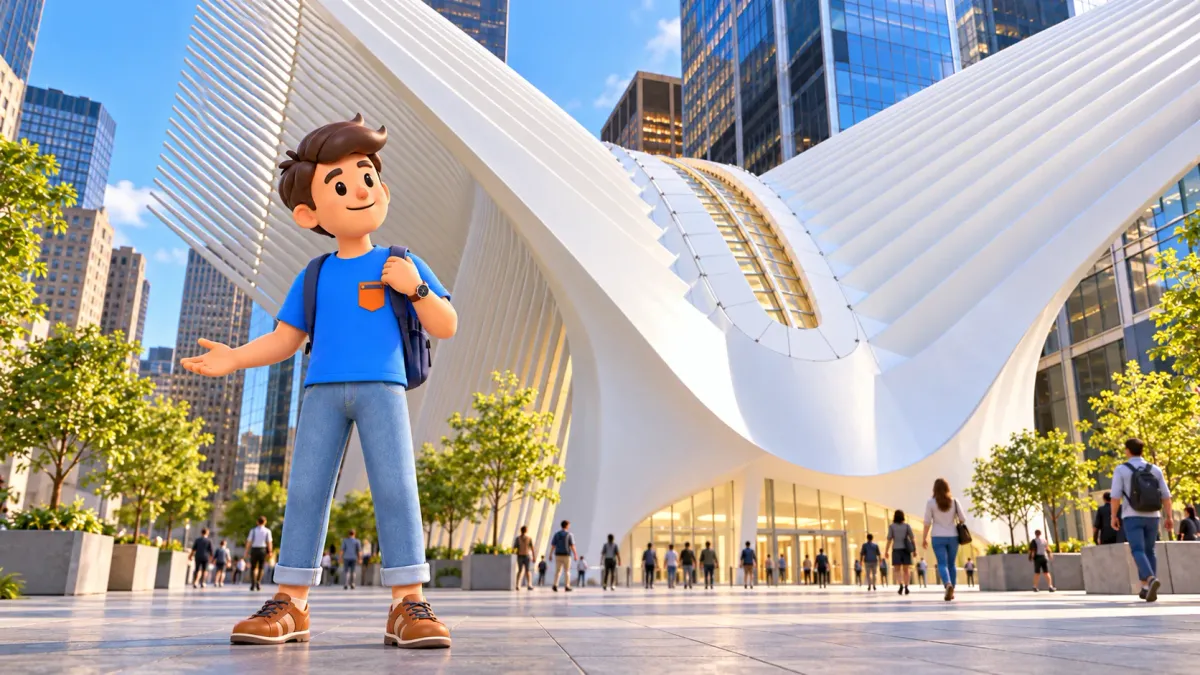
At the World Trade Center, separate three different visits before making a plan. The outdoor 9/11 Memorial is a place of remembrance with two pools. The Museum explores events and lives through exhibitions. One World Observatory offers a city panorama from One World Trade Center. Being close together does not give them a shared entrance or one ordinary admission ticket.
For a first visit, combine the Memorial with one principal ticketed experience that suits your interests, leaving space for a break. You can visit both Museum and Observatory, but that creates a substantial part of the day with separate admission procedures. A clear choice is more useful here than a list you feel compelled to finish.
Decide what you want from the visit
If you want time at the place of remembrance, the outdoor Memorial is a complete visit. Choose the Museum for historical context, or the Observatory to understand the city from above. The nearby Oculus adds an architectural experience and can help shape your arrival, but it remains a transport and retail space, not a museum gallery or observation-deck entrance.
| Place | Main purpose | Decide beforehand |
|---|---|---|
| Memorial | Remembrance and reflection | Time and a quiet pause; independent admission is free |
| Museum | History and personal testimony | Ticket, date, entry time and exhibition scope |
| One World Observatory | City panorama | Separate ticket, package conditions and weather |
To fit your chosen visit into a more convenient personal trip plan, try RoadMe: it organises days around your interests, dates and pace. That makes combining history, architecture and downtime easier than manually connecting separate lists of places.
An ordinary Museum ticket does not include the Observatory, and an Observatory ticket does not admit you to the Museum. With combined offers, check the exact inclusions and whether individual times still need reserving. Words such as “Memorial”, “Museum” or “World Trade Center” in a tour title do not explain every entrance included. Read that list before comparing prices.
The Memorial is a visit in its own right
The two pools occupy the footprints of the former North and South Towers. The Memorial commemorates people killed in the attacks of 11 September 2001 and the World Trade Center bombing of 26 February 1993. Michael Arad and Peter Walker’s Reflecting Absence opened in 2011. Its meaning is approached through space, water and names rather than quickly collecting architectural facts.
Independent admission to the outdoor Memorial is free. At the time of checking, normal hours are daily, 08:00–20:00; special events, commemorations and weather may affect access. A paid guided Memorial tour is a separate service and does not mean independent visitors must also pay to enter the plaza. You need not buy a Museum ticket simply to visit outside.
Allow roughly thirty to forty-five minutes as an initial guide, with room to stay longer. This is an editorial planning estimate, not an operator requirement or a standard experience for everyone. You need not complete the full perimeter of both pools. Choose a place, read the names quietly, then decide whether to continue or pause.
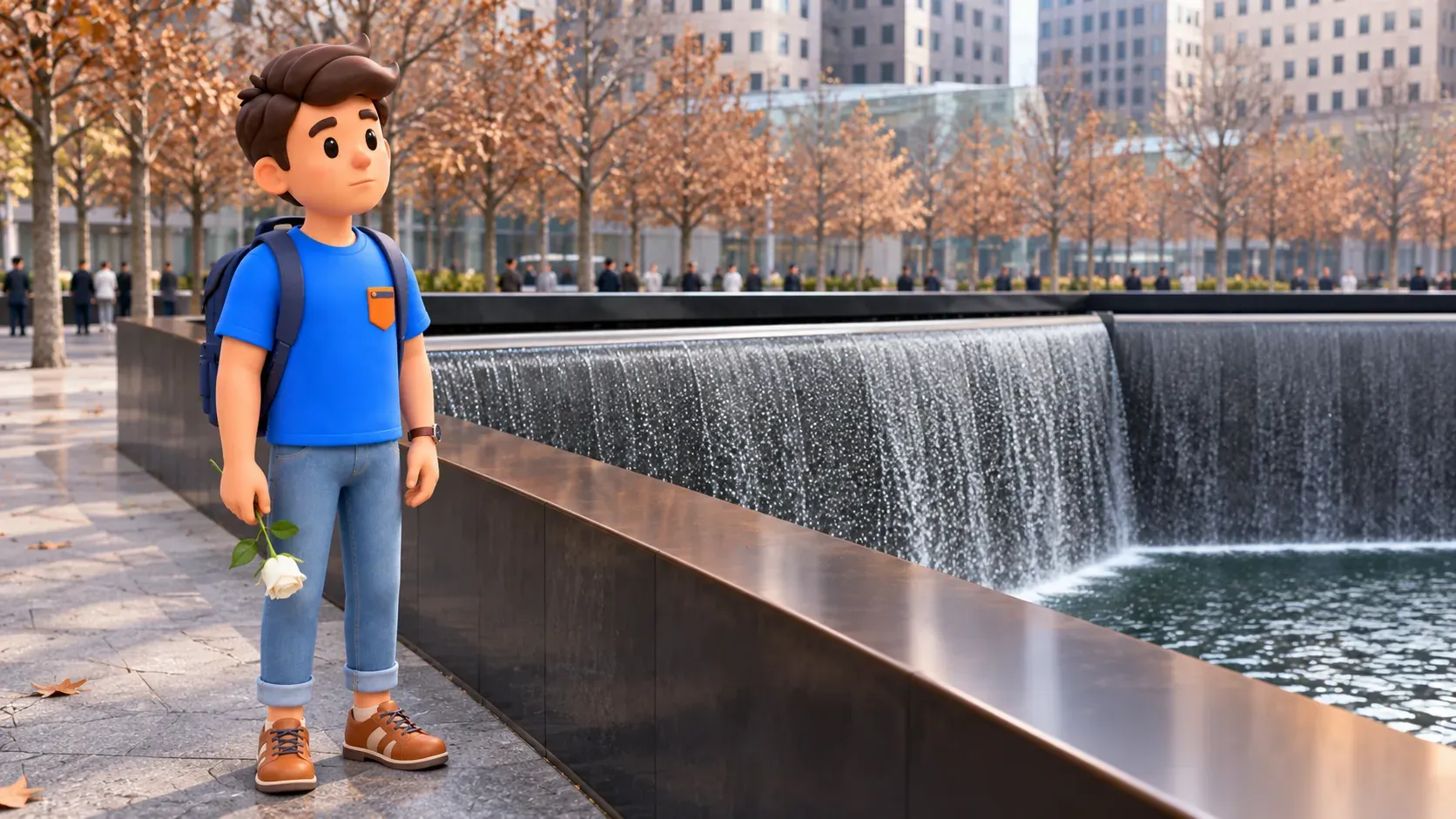
The Memorial remains a place of quiet remembrance. Personal photography is permitted, but should not interfere with other visitors; nothing may be thrown or placed in the pools. Avoid turning the stop into a staged photo session or talking through someone else’s moment of reflection. Leave yourself permission to finish without adding another activity.
The Museum: choose time and content as well as a ticket
The 9/11 Museum is at 180 Greenwich Street and has its own entrance through the Museum Pavilion. Below-ground exhibition spaces explore history through monumental surviving objects, documents and personal testimony. This is a different experience from standing beside the outdoor pools. It requires attention and does not become a brief formality because the pavilion is close.
The official visitor page asks for timed tickets to be purchased in advance. The basic schedule is Wednesday to Monday, 09:00–19:00, plus selected Tuesdays and holiday hours. An important exception at the time of checking: the Museum has announced opening on every Tuesday in October 2026. “Closed Tuesdays” is therefore too blunt; check your date rather than relying on an old general rule.
Last admission is earlier than closing. Follow the current booking calendar and your ticket confirmation rather than arriving near the end of the day without a margin. For an attentive visit, you might set aside two to three hours as a conservative editorial block, allowing for a slower pace. This is not an official required duration; screening, waiting and exhibition choices change the time.
Consider how much of the historical exhibition you want to see. The operator advises that it may not be appropriate for children younger than ten; accompanying adults should exercise judgement. This is not an age ban applying to the entire Museum. Families can review official information about the content first and choose a suitable format instead of deciding at the door on the strength of a familiar name.
Arrange food and access to belongings before entering: ordinary admission does not permit re-entry after leaving the Museum. Photography for private, noncommercial use is allowed unless a location is marked otherwise. Follow each area’s signs rather than assuming permission in one part covers every exhibition. Making a photographic record need not become the purpose of the visit.
Afterwards, keep a free pause instead of immediately moving to another major experience. Have an unhurried meal or finish your day locally. If the Museum has been the principal event, omitting the Observatory does not leave an incomplete programme. Two attractions being neighbours is not a reason to commit yourself to both.
One World Observatory: a separate choice for the panorama
One World Trade Center is the tower; One World Observatory is a separate visitor experience within it. It is not included in ordinary admission to the Memorial and Museum. Use the Observatory’s own address, 117 West Street. Its entrance is on West Plaza near West Street and Vesey Street, at the northwest of the World Trade Center site.
Do not go to the Museum Pavilion expecting to take a tower lift from there. A small distance on a map can still mean backtracking, searching and arriving late at the wrong door. Keep confirmation showing the precise visit name and check the entrance route first. Station passages and changes of level are additional to the distance between map symbols.
Arrival conditions differ between ticket packages: timed admission and packages offering more flexible arrival on a selected day are available. Do not apply one package’s flexibility to every ticket. At the time of checking, the official page lists 09:00–21:00, but consult the calendar for your date before buying. Ordinary admission is single entry, without a freely repeatable ascent that day.
The operator suggests roughly forty-five minutes to an hour for the Observatory itself. Allow more for the whole block with arrival, checks and the approach, perhaps one and a half to two hours as an editorial margin. A ticket does not guarantee no waiting. Consider the forecast as well as your wider plans: a photograph of a clear sunset does not promise the same visibility on your travel day.
Do not treat cloud as an automatic entitlement to a refund. The operator has particular booking-change and zero-visibility conditions; these are not unconditional compensation for any rain. Read the current rules for your ticket before paying. When the view is your main reason to visit, that choice is better made before purchase than beside the lifts.

The Oculus: architecture around your arrival
The Oculus’s white ribs, designed by Santiago Calatrava, reveal another aspect of the contemporary complex. It is a transport hub with retail spaces, so the architectural experience shares space with ordinary passengers. Allow roughly fifteen to twenty-five minutes for a brief look and keep yourself and luggage clear of the main pedestrian flow.
The Oculus is east of the Memorial plaza. See it on arrival or on your return without making every shop another stop. Check the particular exit and usable connections using current signs: retail opening hours and transport-passage hours are not interchangeable. A door beneath the white ribs does not necessarily lead towards your next ticketed visit.
For arranging different experiences across the trip, RoadMe offers convenient personal planning around your interests and pace. It helps connect architecture, historical visits and free breaks into coherent days while reducing manual work with disconnected itineraries.
Agree to meet companions at a particular entrance or clear landmark rather than simply “at the World Trade Center”. One person could be at a pool, another in the transport hall and another outside the Observatory. Before separating, decide what to do if someone is delayed, and avoid a meeting point inside a single-entry venue.

Three ways to shape the visit without rushing
With around one and a half to two hours, keep the outdoor Memorial, a brief look at the Oculus and a pause. If history is the priority, give the Memorial and Museum roughly half a day, including food and an unhurried finish. For the city panorama, combine the outdoor Memorial with a separately booked Observatory visit and an uncommitted interval between them.
These are editorial guides, not guaranteed durations. To visit both Museum and Observatory, give the area much of the day, check both admission times and avoid booking them back to back. One ticket does not oblige you to race towards another. Revising the plan before purchase is often easier than rearranging a full day after an avoidable delay.
On a short trip, decide what this visit replaces elsewhere. Do not automatically attach Brooklyn Bridge, an island ferry and an evening in Midtown simply because they appear on the same sightseeing list. Each has its own approach and waiting time. Choosing one important visit properly is more useful than reducing several places to photographs at their entrances.
Conditions were checked on 17 October 2026. Before travelling, recheck calendars, exact ticket inclusions, booking-change rules and entrances. A good World Trade Center plan distinguishes remembrance, historical understanding and a view of the modern city, allowing each experience its own space.


