
Why Las Vegas Became a City of Wedding Chapels

A small chapel can be one of the most recognizable buildings in Las Vegas. A pointed roof, a roadside sign and a few hearts communicate a story before you reach the door. Yet the city’s wedding identity did not appear simply because the signs were memorable.
It grew through a combination of accessible arrangements, a visitor economy, specialized services and an image that travelled far beyond Nevada. Little Church of the West, A Little White Wedding Chapel and Chapel of the Flowers offer three ways to read that history without planning a wedding yourself.
Look at the city’s wedding culture, not only the cliché
The familiar image is often one of impulse: arrive, marry, celebrate. That is part of the city’s storytelling, but it can hide the work behind a ceremony and the seriousness of the occasion for the people involved. A short event can still require preparation, care and a whole set of services.
RoadMe makes exploring an interest like this more convenient by developing a personal route or whole trip around your time, interests and pace. Let the app build a coherent plan so a look at chapel architecture fits naturally with the other Las Vegas experiences you want.
For a traveler, the useful question is why the chapel became such a successful form. It is small enough to feel intimate, recognizable enough to advertise from the street and connected to a destination where a celebration can continue elsewhere. Those qualities offer an architectural and cultural lens rather than a legal instruction.
The three examples are also separate venues, not a compact walking circuit. Choose one to notice during a broader outing. You do not need to visit every chapel, and seeing a historic exterior never implies access to someone else’s ceremony.
Convenience helped create a destination
The Clark County Clerk’s historical account connects the rise of Las Vegas weddings with Nevada’s simpler marriage arrangements in the 1930s and the growth of dedicated chapels. This is historical context, not a statement that a present-day visitor can ignore formalities or obtain recognition everywhere without additional steps.
The broader connection with tourism is easy to understand. A destination already receiving visitors can provide places to stay, eat and celebrate around a ceremony. The wedding becomes part of a trip rather than an event whose every element must be assembled at home.
That does not mean every couple wanted the same thing. Some might value privacy, others a small setting, a familiar visual style or an unusual memory. The chapel form can accommodate different expectations while remaining recognizable to people who have never entered one.
As you look at an exterior, think about how it introduces itself. A name, a sign and a front door reduce a complex service to a clear invitation. The building is part venue and part public message, even though what happens inside belongs to particular people.
Little Church of the West: a small building in a changing city
Little Church of the West dates to 1942 and was originally associated with the Last Frontier Hotel. Its timber form evokes an old western town church. The appearance is a deliberate design reference, not proof that the building survived from a nineteenth-century mining settlement.
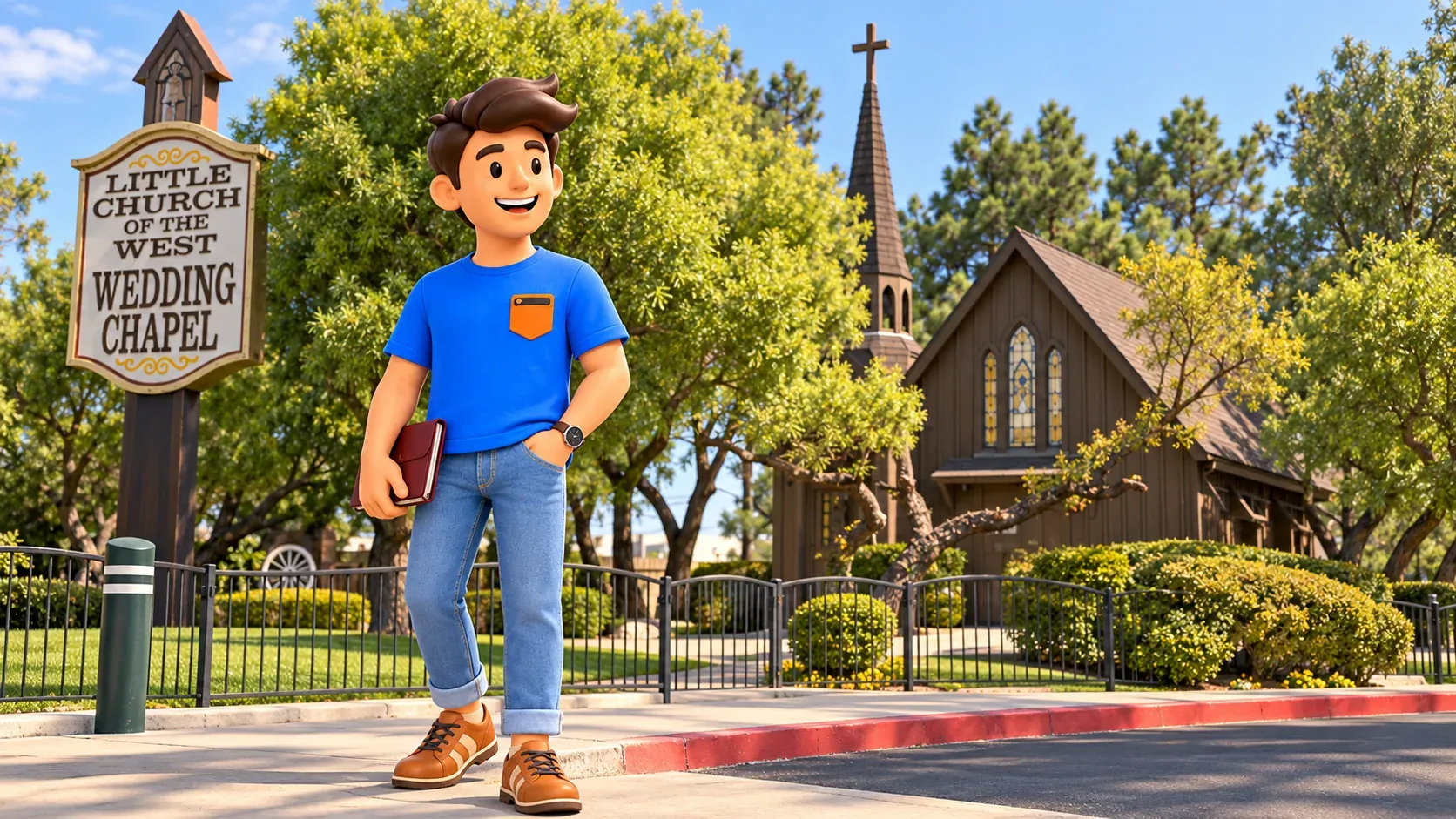
Look at the steep roof, narrow tower and pointed window. They make the building easy to recognize as a chapel while keeping it at a personal scale. Trees and a boundary create a different rhythm from the large resort frontage that many visitors associate with the Strip.
The operator’s history records several moves, including the relocation to its present site in 1996. That adds another layer to the story: a small structure can survive while its larger surroundings change. A familiar shape may retain a connection with earlier Las Vegas without remaining on its original plot.
For an observer, that is a useful question to carry elsewhere in the city. What survived physically, and what changed around it? Do not assume that a historic date means the current view reproduces the original setting or that every interior detail has remained untouched.
It is still a working wedding venue. If you want anything beyond a view from an appropriate public area, ask the operator about current arrangements. A place can be historically interesting and still need privacy, clear entrances and time reserved for the people it serves.
A Little White Wedding Chapel: a memorable sign and an adaptable idea
A Little White Wedding Chapel traces its history to 1951. The white exterior, heart imagery and roadside identity make it easy to connect with the popular image of a Las Vegas wedding. Yet its story is not only about a romantic facade.
The operator links its drive-up window to a 1991 encounter in which Charolette Richards noticed a couple having difficulty leaving their car. In that account, an adjustment for access became a distinctive ceremony format. The familiar drive-through image therefore has a practical story behind its novelty.
That is worth considering without turning it into a general guarantee of accessibility. A historical origin story does not establish what every current space can accommodate. Any couple with specific needs should discuss the actual arrangement directly with the venue.
For a visitor interested in design, notice how signs work at a different scale from the building. The chapel can be intimate, while its name and symbols must speak to the street. Hearts, lettering and a pointed roof provide a compact visual language for a service with a much larger reputation.
Do not read an old photograph’s opening-hours sign as a promise of current availability. Venue services, ceremonial access and casual observation are different things. A picture can preserve the look of a place while carrying information that has since changed.
Chapel of the Flowers: the organized side of the romantic image
Chapel of the Flowers was established in 1960, according to its own fact sheet. It offers another recognizable chapel setting and a reminder that Las Vegas wedding culture includes planned, coordinated occasions as well as the popular image of spontaneity.
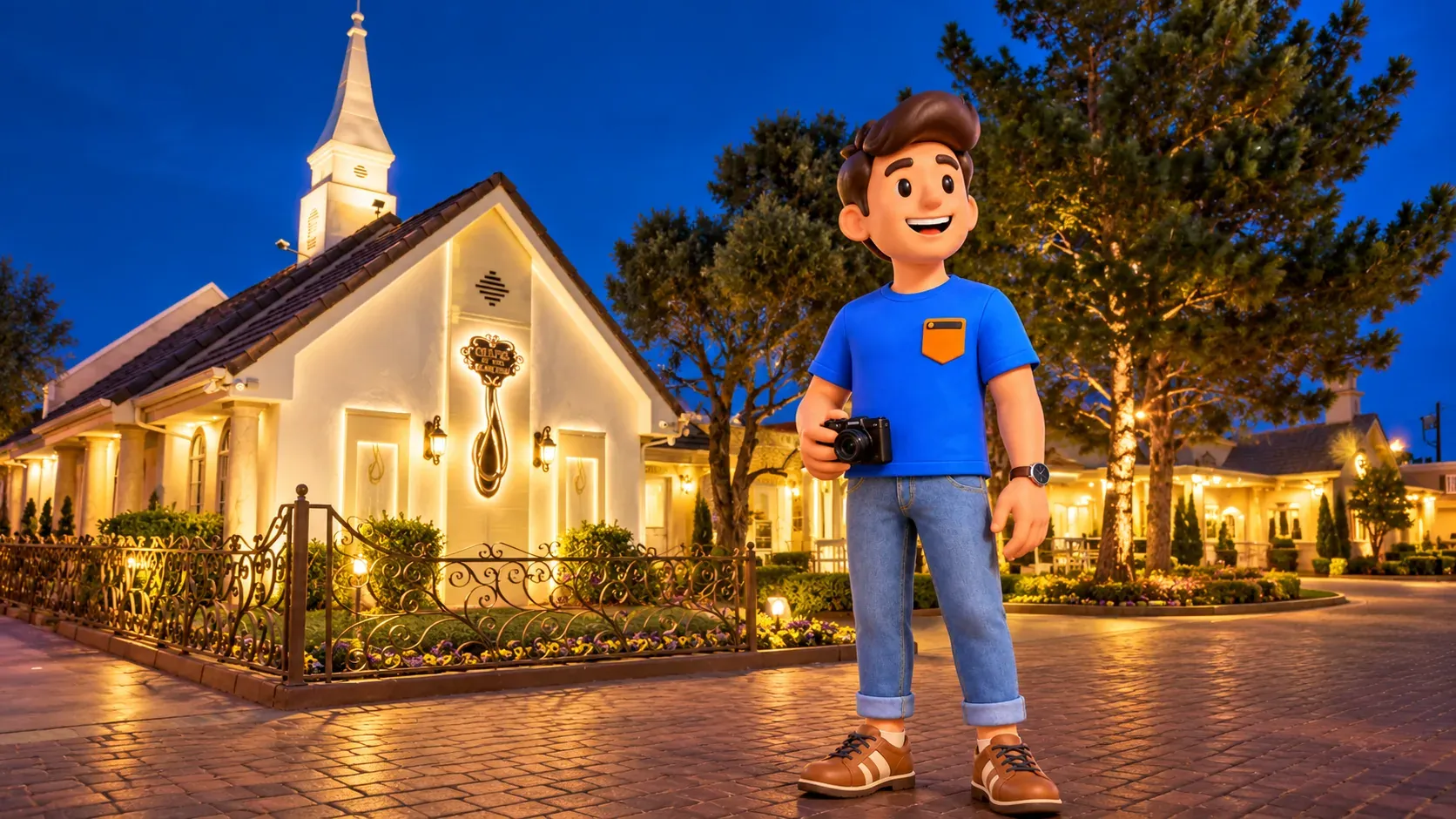
Look at the relationship between the entrance, landscaping, roof and lighting. These elements can make an approach feel like a transition from the street into a ceremony setting. This is a way to observe architecture, not a claim that every part of the grounds is open for sightseeing.
The word chapel may suggest one small room, but a wedding venue also depends on organization beyond the visible facade. Photography, scheduling, preparation and the movement of guests can all shape an occasion. A polished exterior is only the most public part of that work.
That perspective avoids reducing the city’s weddings to a joke about speed. For the participants, a short ceremony may be carefully chosen and deeply meaningful. A visitor can appreciate the visual style while recognizing that the place is part of someone’s actual life.
How an image travels beyond Nevada
The Clark County Clerk’s anniversary account dates a widely cited use of the title “Wedding Capital of the World” to a London newspaper in 1953. The phrase shows how a local activity could become an international identity, recognizable even to people who had never visited the city.
Celebrity stories also helped make Las Vegas weddings visible. However, a famous Las Vegas wedding should not automatically be attached to whichever chapel you are standing beside. In particular, Elvis and Priscilla Presley’s 1967 wedding took place at the Aladdin, not at one of the three chapels discussed here.
Separating location from reputation makes the subject more interesting. A city can become associated with a style through many venues, images and stories. No single chapel needs to contain every famous episode for its own history to be worth noticing.
The same distinction applies to themed ceremonies. A performance reference, a playful visual style and the real people celebrating are different layers. Observing the public image does not give a visitor the right to interrupt the private occasion behind it.
Bring curiosity and leave room for privacy
For a cultural visit, look from appropriate public areas, keep entrances clear and avoid photographing couples or guests without permission. If staff offer a visit opportunity, follow their instructions. If a ceremony is under way, the best choice may simply be to continue your day.
With RoadMe, it is easier and more effective to shape a whole personal trip around your interests, available time and rhythm. Let the app plan the broader experience so a chapel’s story has its place alongside architecture, food, entertainment and rest.

The illustrations are artistic interpretations, and the notebook-and-coffee scene is conceptual rather than a named venue. They invite you to notice forms and themes, not to treat the grounds as a public photo set. This article’s purpose is cultural understanding; actual wedding planning requires current information from the responsible office and provider.
Afterwards, a heart-shaped sign or small steeple may communicate more than a familiar cliché. You can see an industry, a design language and a series of personal occasions sharing the same city. That is why Las Vegas’s chapels remain such a revealing part of its landscape.


