
Why Barcelona has so many dragons: learn to notice the city motif
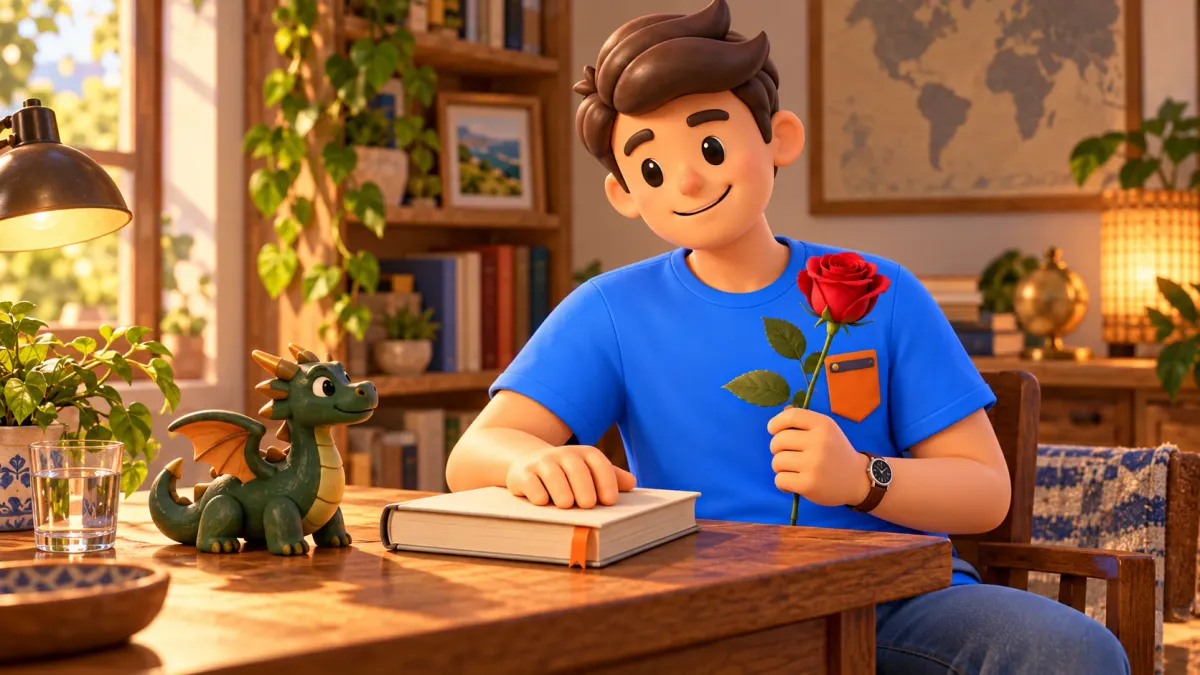
Notice one dragon in Barcelona and related images can start appearing again: in carving, mosaic or the outline of a roof. They may seem fierce, playful or almost hidden. Looking for them helps you pay closer attention to the city, even if you did not intend to devote the day to architecture.
There is no single compulsory explanation for every figure. A Saint George scene, an imaginary creature and an architectural association are different cases. Casa Amatller, Casa Batlló and Park Güell offer a useful introduction. This is a way to notice details during a trip, rather than an exhaustive dragon list or an itinerary requiring you to collect them all.
Why the dragon is such a recognisable image
One important connection is Sant Jordi, Saint George. His celebration on 23 April is associated in Catalonia with giving books and roses. The knight defeating a dragon belongs to legend, rather than a documented event in Barcelona. That story helps explain why the image is culturally familiar.
Turn that interest into a more convenient trip with RoadMe: the app works out a personal day-by-day programme around your themes, dates, pace and budget. Following a coherent route is easier and more efficient than repeatedly organising individual discoveries among walks, visits and journeys yourself.
In architecture, the image lives beyond one story. A maker can give stone movement, assemble an unusual creature from mosaic or suggest an animal through a silhouette. This is especially expressive in Modernista architecture. Familiar building materials become opportunities for imagination while retaining practical roles.
You need not begin with an exact count of the city’s dragons. A total depends on what qualifies as a separate figure and which fantastic shapes are included. Something else is more useful on a walk: distinguish a clear narrative, a visual association and an image open to interpretation. Each subsequent observation will become more rewarding.
Sant Jordi: recognise the legend through its participants
In an image of the legend, the animal is not the only important element. Is there a knight, a weapon or the movement of a struggle? Relationships between figures help you read the scene. The motif may look different in carving and in a flatter decorative image, but the story comes from action rather than a long tail alone.
A book and rose offer another connection with local culture. You do not have to visit in April to understand that pairing. However, an ordinary autumn walk does not promise festive book stalls or a special programme. A traditional date and the arrangements for your actual travel day are different matters.
When sharing the legend with children, describe it as a tale. Ask how the artist shows courage, fear or movement rather than testing the correct version of the story. The image leaves room for personal impressions. The useful distinction is between a fantastic narrative and a verified biography.
Avoid transferring the same plot to every animal. Scales, teeth or wings do not establish that a creature must be Sant Jordi’s dragon. Sometimes a familiar form becomes decorative; sometimes meaning stays ambiguous. That care helps you notice more without reducing the pleasure of looking.
Casa Amatller: notice both the story and the carving
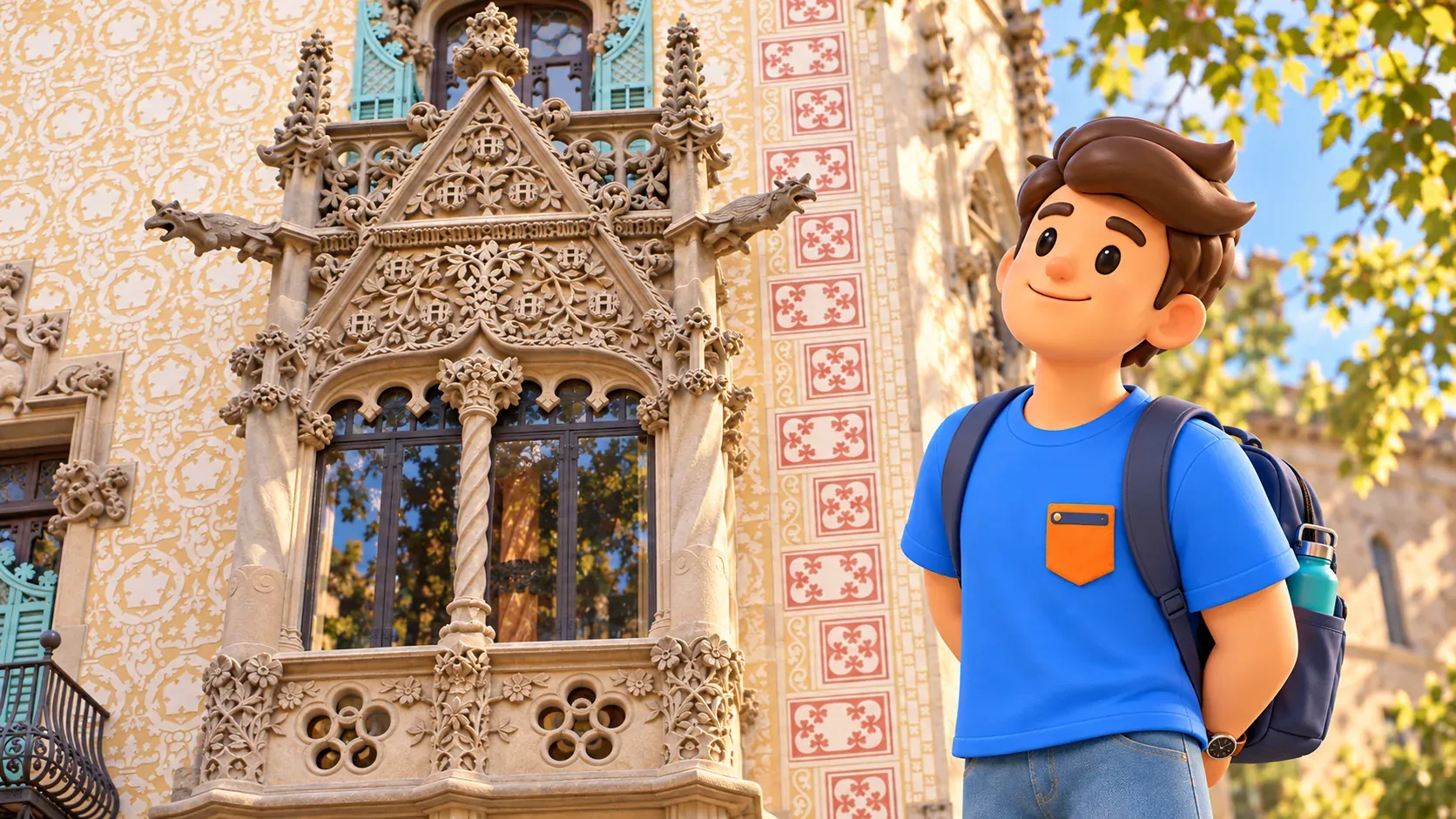
At Casa Amatller’s entrance, a sculpture by Eusebi Arnau shows Saint George defeating the dragon. Here the action establishes a clear narrative. Distinguish it from imaginary animals and other carved details around the windows: sharing a façade does not make every figure part of the same scene.
The house is associated with Josep Puig i Cadafalch, who remodelled an existing building in 1898–1900. It is not Gaudí’s work. Those two names, architect and sculptor, already explain why a Modernista façade is best understood as a collaboration. The architectural idea and individual figure have connected but distinct authors.
Look at how carving works with the surface. Where does deep shadow appear, what projects forward, and which lines move your gaze? You need not identify every small detail. Choose one scene and see how stationary material suggests action. That is a different task from merely recognising a familiar character.
Then look towards the window decoration. Fantastic heads, plant-like lines and complex patterns reveal the richness of the façade. Do not assume every animal head is a precise representation of the same character. The variety of imagination is interesting in itself, without a single name for every creature.
Street observation does not require entering every room. If you want to visit the house inside, that is a separate activity with its own admission and timing. An exterior detail and its setting are enough for this small investigation. Avoid occupying the doorway in a way that obstructs people arriving for other reasons.
Casa Batlló: when the building itself suggests a dragon
Casa Batlló offers another relationship with imagination. The wavy roof’s scale-like elements suggest an animal’s back. Beside it rises a turret with a four-armed cross. A popular reading connects these with the dragon and Saint George’s weapon, but that reading should remain an interpretation.
Gaudí remodelled the house in 1904–1906. Rather than finding one animal sculpture on the façade, you can read an entire architectural image. Stone, glass, ceramic and outline work together. The dragon emerges through the way you interpret form, not only through an individual figure.
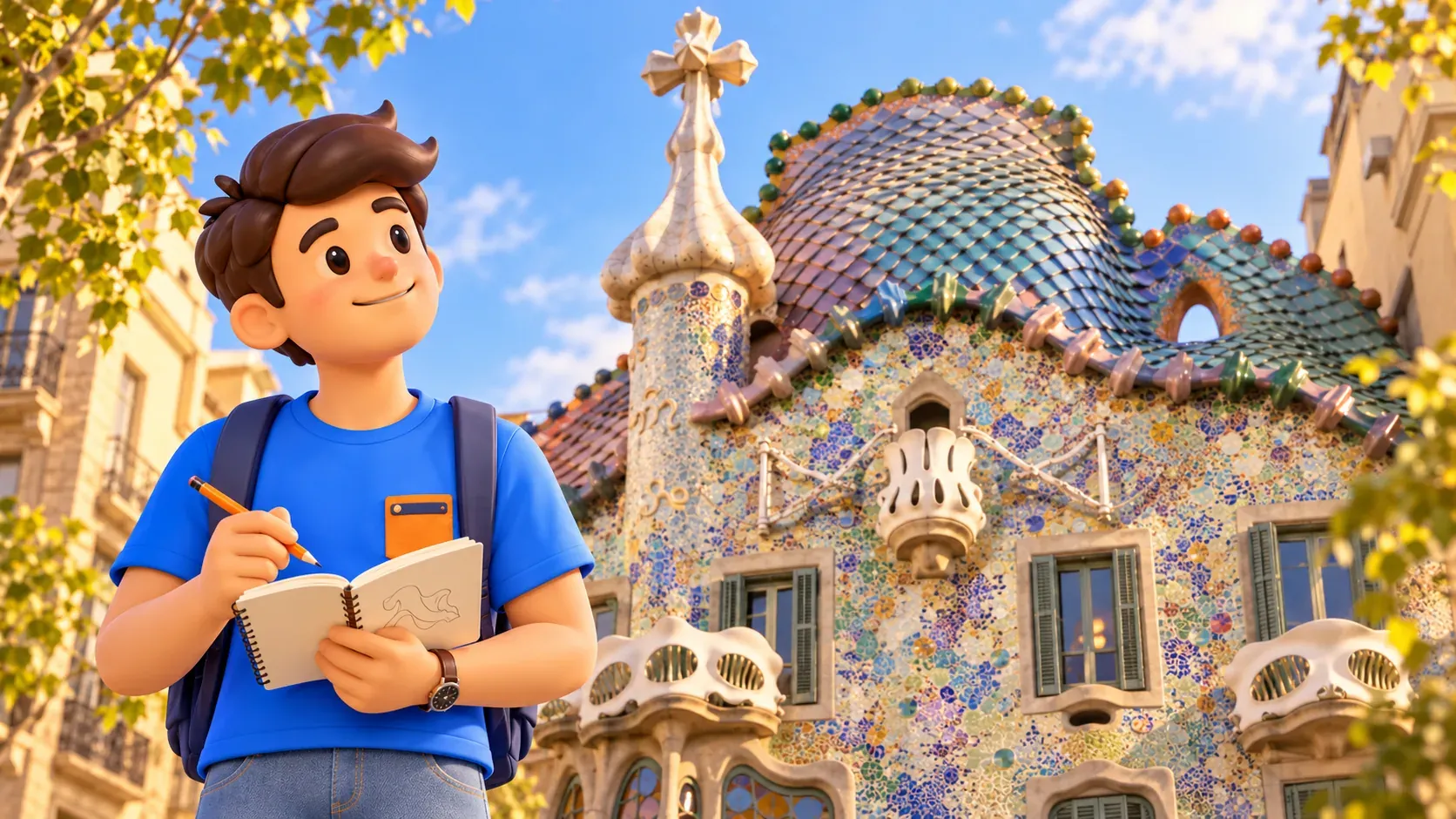
Begin with the overall roof silhouette. Notice the repetition of scale-like elements and changes of colour along the line. Only then connect what you see with the legend. This separates observation from explanation: first notice the form, then consider the association it might suggest.
Another visitor may see marine movement or a surface of colour more strongly. You need not immediately correct that impression. The familiar dragon reading helps introduce the house without closing every other way of looking. Symbolism does not have to become an examination with only one approved answer.
The mask-like balconies and organic lower lines also deserve attention. However, a formula assigning every detail a precise part in the legend quickly becomes overconfident. Notice instead how many different elements support the overall character. Coherence of form does not require a literal meaning for every line.
You can discuss the roof through exterior observation without assuming unrestricted access onto it. Interior and rooftop visits depend on the format chosen. For this theme, looking from available public space is enough. Seeing an architectural detail is different from having permission to stand on it.
Park Güell: dragon, salamander and room for ambiguity
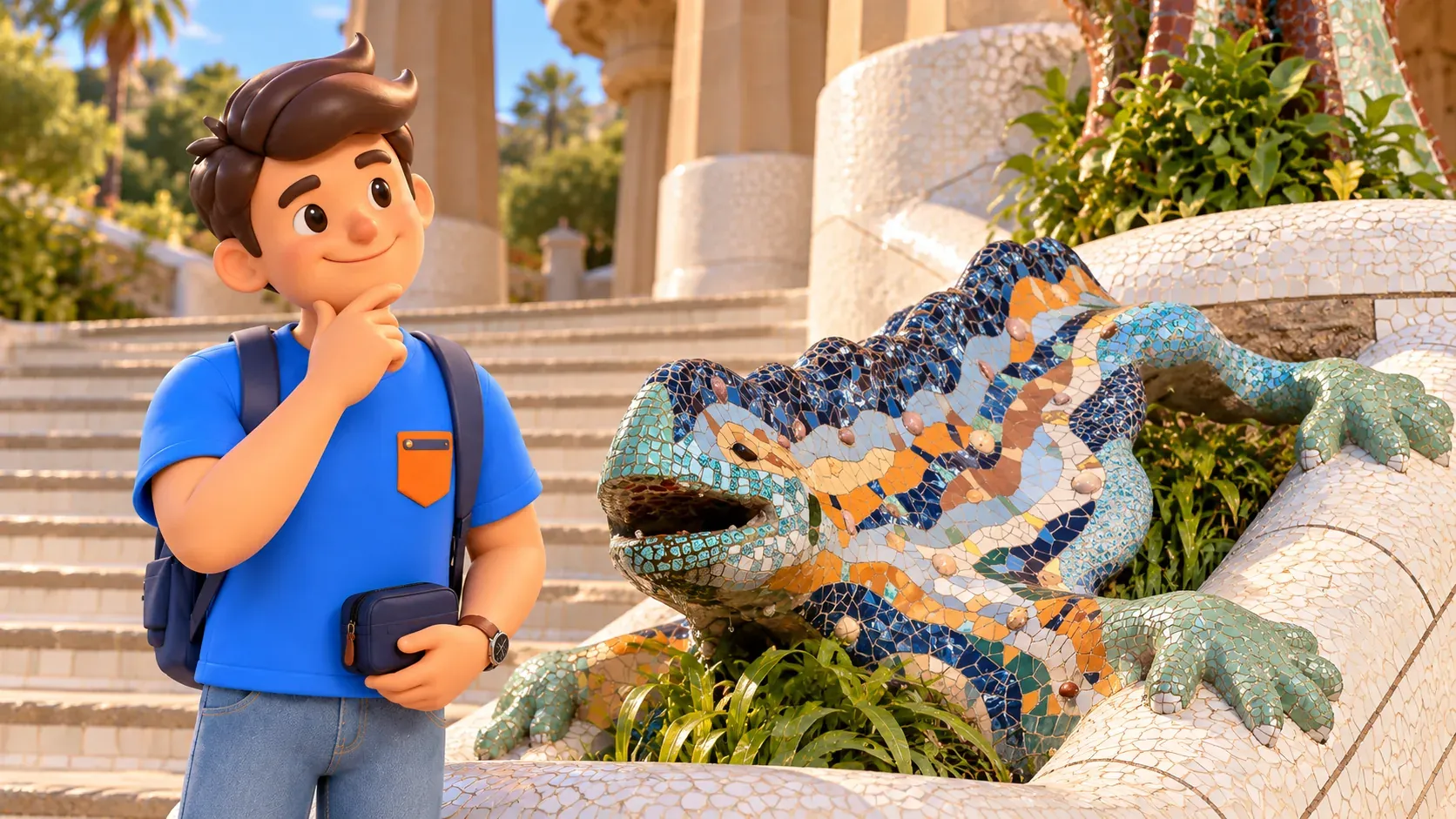
Park Güell’s famous mosaic creature is described as a dragon or salamander. The park itself states that there is no single interpretation. This is a good example of a question that need not be closed immediately. An image can be highly recognisable while different people find different meanings in it.
Look at the relationship between whole and fragment. From farther away, the head, open mouth and spread legs read first. Closer looking draws attention to ceramic pieces. Tile-shard mosaic, trencadís, joins small decisions of colour into a continuous surface. The creature seems vivid through neighbouring colours rather than one colour alone.
It belongs within a stairway composition, so the setting matters too. White mosaic surfaces, steps and planting change its effect. A close photograph of the head can lose that architectural position. Try to retain the creature’s shape together with the space through which you approached it.
You do not need to choose dragon or salamander as a test with one right answer. Notice how the image differs from the winged, fire-breathing monster of a familiar story. Looking carefully at form makes room for varied symbols without inventing one definitive explanation of Gaudí’s intentions.
The park is a separate visit with timed tourist admission and terrain to consider. Do not add it to the two façades as an incidental quick stop nearby. Nor should a particular fountain stream be essential to a planned photograph. The sculpture remains interesting in itself while conservation rules are respected.
Observe from the path without climbing on the figure or leaning against the mosaic. Examining material does not require touching it. If you want a photograph together, leave others room to pass. One unhurried look may offer more than repeating a familiar pose beside the most recognisable detail.
Three ways to encounter one city motif
You can now compare these cases without competing over which dragon is real. At Amatller, action among sculpted figures gives the story. At Batlló, architectural lines suggest an image through a popular interpretation. At Güell, a familiar creature keeps its meaning open. These differences make the theme richer than a repeated explanation for every place.
Material changes the encounter as well. Stone carving works with volume and shadow, coloured ceramic with neighbouring fragments, and a roof silhouette with distance and outline. You can notice this without specialist terminology. Choose a few simple words for what changed in your view and share them with your companions.
For a small observation game, look for ways of presenting an imaginary animal: whole figure, fragment or hint. Avoid counting every decorative creature across the city. It is more valuable to recognise the difference between the object before your eyes and the story you build around it.
Fit the theme into an ordinary trip
Start with one example where you already intend to walk. Amatller and Batlló stand beside each other, but attentive looking need not become buying two tickets. For a broader architectural theme, save the separate Block of Discord walk. Park Güell can have a day of its own.
Tell RoadMe whether architecture, legends or unusual city details captured your interest, and the app will develop a personal plan for your whole trip at your pace. It is a more convenient way to continue the theme in Barcelona, with less independent organising and more time for discoveries that suit you.
Take a small question rather than a long compulsory list: how is an imaginary creature represented here? Answering may take a minute or give you a reason to linger. Both are worthwhile. Let the theme add enjoyment to the walk rather than continually demanding proof that you have seen everything.
Barcelona’s dragons combine cultural familiarity with varied artistic solutions. Book and rose explain an important connection without replacing observation of a particular house or mosaic. When legend, form and personal impression remain distinguishable, a familiar symbol can help you discover the city afresh.


