
Where to see the Berlin Wall: three different walking plans

If your time for the Berlin Wall is limited, choose what you want to understand first. For the border system and people’s lives, allow two hours at Bernauer Straße. For art after the border opened and a riverside walk, choose 90 minutes at the East Side Gallery. For a famous crossing with a museum visit, allow two and a half hours at Checkpoint Charlie. These are three separate alternatives, not one short route across Berlin. Travel from your neighbourhood and between alternatives is additional. One well-chosen visit can give a worthwhile introduction without a race through three names.
At each place, “the Wall” means something slightly different. Bernauer Straße explains the space of border installations and their consequences for residents. The East Side Gallery combines a surviving section with artistic expression created after the border opened. Checkpoint Charlie offers a historic control location, a reconstructed guard booth and a separate museum. Distinguishing those layers prevents expecting colourful paintings to explain every part of the border system, or taking a replica for an intact working checkpoint. Choose by interest, give one subject proper attention and leave another for a different day if it deserves more time.
Choose one main question for the walk
RoadMe makes it much more convenient to develop a personalised plan for your whole trip around your interests, dates and pace, distributing history, art and museums across suitable days. Try planning Berlin in the app so your walks form a comfortable programme and use your travel time more efficiently.
For a first visit focused on how the border divided everyday city life, begin with Bernauer Straße. After several history visits, the East Side Gallery offers a more visual experience with time beside the water. If a particular Cold War address interests you and you want to connect it with museum objects, consider Checkpoint Charlie and the Mauermuseum. None must be the most authentic experience for every traveller. Each answers a different question through a different way of looking. Choosing the right one is more useful than ranking all three on a single scale of excitement.
The timings below are editorial allowances, not measured walking tracks. They include approaches, chosen stops and short pauses where specified, not every display and available guided programme. Match your date to each institution’s calendar. Street access does not mean a museum is open late; a free site does not automatically include a paid tour. To combine two alternatives, add actual transfer and rest time rather than simply adding their minutes as if every location stood on the next corner. Their separation matters to the rhythm of the day as much as the duration of an individual visit.
Bernauer Straße: understand a border system
This is a useful first choice for historical understanding. The memorial explains more than one concrete surface: it shows space that divided a street and people’s lives. Outdoor traces, interpretation and personal accounts can be considered together. Houses on one side belonged to East Berlin while the adjacent pavement lay in the West. That everyday address scale explains division differently from a large political map. Approach with a question about people: what changed in leaving home, meeting others, moving around and making decisions about their lives? A specific street relationship can turn an abstract border into something understandable.
Do not read the whole visible setting as an untouched scene from a particular year. The memorial combines historical remains, later markings and reconstructions that help explain lost space. An enclosed border strip is not a public route simply because you can see it clearly. Stay on permitted paths and distinguish retained material, a reconstructed element and an explanatory device. This does not diminish the visit. It clarifies how a contemporary memorial makes the past legible without claiming that every object has remained unchanged. Look at the relationship between things, not only the age of an individual fragment.
Two hours from Nordbahnhof to U Bernauer Straße
From S Nordbahnhof, allow 15 minutes for approach and orientation, 20 for a selected introduction in the visitor centre at Bernauer Straße 119, 45 for the outdoor core, 20 for part of the documentation centre exhibition at number 111 and 20 to finish at U Bernauer Straße. That makes 120 minutes, for example 10am–noon. The indoor facilities are across the street from parts of the memorial grounds, so use ordinary crossings. This is a concise introduction, not the entire approximately 1.4-kilometre site with every panel, all films and a comprehensive visit to the observation tower.
For the outside block, select one part explaining the border’s organisation and one personal account. Inside the documentation centre, connect a subject with what you noticed outdoors. The tower and substantial extra sections need their own time; do not treat them as compulsory additions inside the 20-minute museum allowance. Exhibition admission is free. The visitor and documentation centres usually open Tuesday–Sunday, 10am–6pm; the outdoor exhibition opens daily, 8am–10pm. For a normal Monday, choose another day for the indoor version, apart from specifically announced special openings. Check public-holiday exceptions separately rather than assuming the weekly pattern always applies.
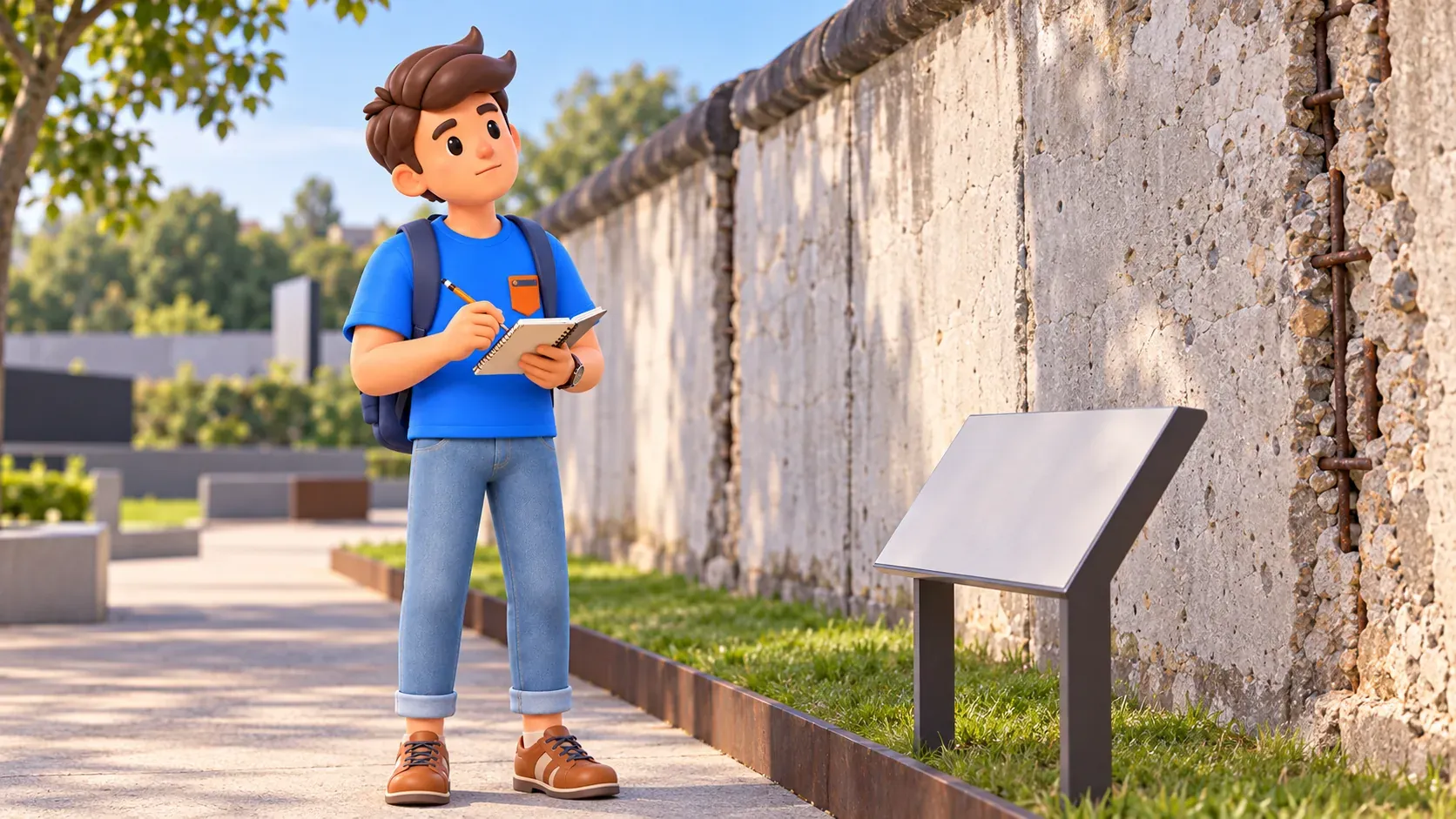
East Side Gallery: see what followed the opening
The sequence matters here. The border’s opening on 9 November 1989 and the gallery’s creation in 1990 are related but distinct moments. The paintings do not demonstrate everyday freedom to paint on the eastern side of an operating border before it opened. This section belonged to the inner wall facing East Berlin. The nearby Spree also formed part of a specific border geography rather than a neutral strip between equally accessible banks. Keeping that distinction in mind prevents mistaking today’s open walk for a precise picture of how the space worked during division.
The approximately 1.3-kilometre gallery developed as an artistic project after the division ended. Its subsequent history includes conservation and repainting of many works, so not every visible painted layer survives unchanged from 1990. Choose a few images you want to examine and read available context instead of collecting a photograph at every famous composition. Do not add your name to a historic artistic surface or confuse engagement with the past with permission to leave a new mark. A photograph can follow a considered look rather than becoming the only purpose of walking beside the concrete.
Ninety minutes from Ostbahnhof to Warschauer Straße
From S Ostbahnhof, give 15 minutes to the approach towards the Stralauer Platz end, 45 to selected paintings and movement along the wall, 15 to a pause in available public space towards the river and 15 to finish at S/U Warschauer Straße. Together these make 90 minutes. You can gain an overall impression, but not analyse every work, cross Oberbaumbrücke, have lunch and enter another museum as well. If a painting draws your attention, extend the walk while keeping a clear distinction between the main visit and further stops in the surrounding area.
The outdoor gallery is free and open around the clock, although daylight helps with details. The information centre at Mühlenstraße 73 has separate hours, usually 10am–5pm, closing on Fridays from November; check holiday closures for your date. This version does not depend on entering it. Upper public paths and the lower riverbank level differ in accessibility, so do not promise equally easy access to every waterside spot. In poor weather, shorten the river pause rather than relying on a convenient unplanned interior to provide a guaranteed replacement for the outdoor programme.

Checkpoint Charlie: separate the location and museum
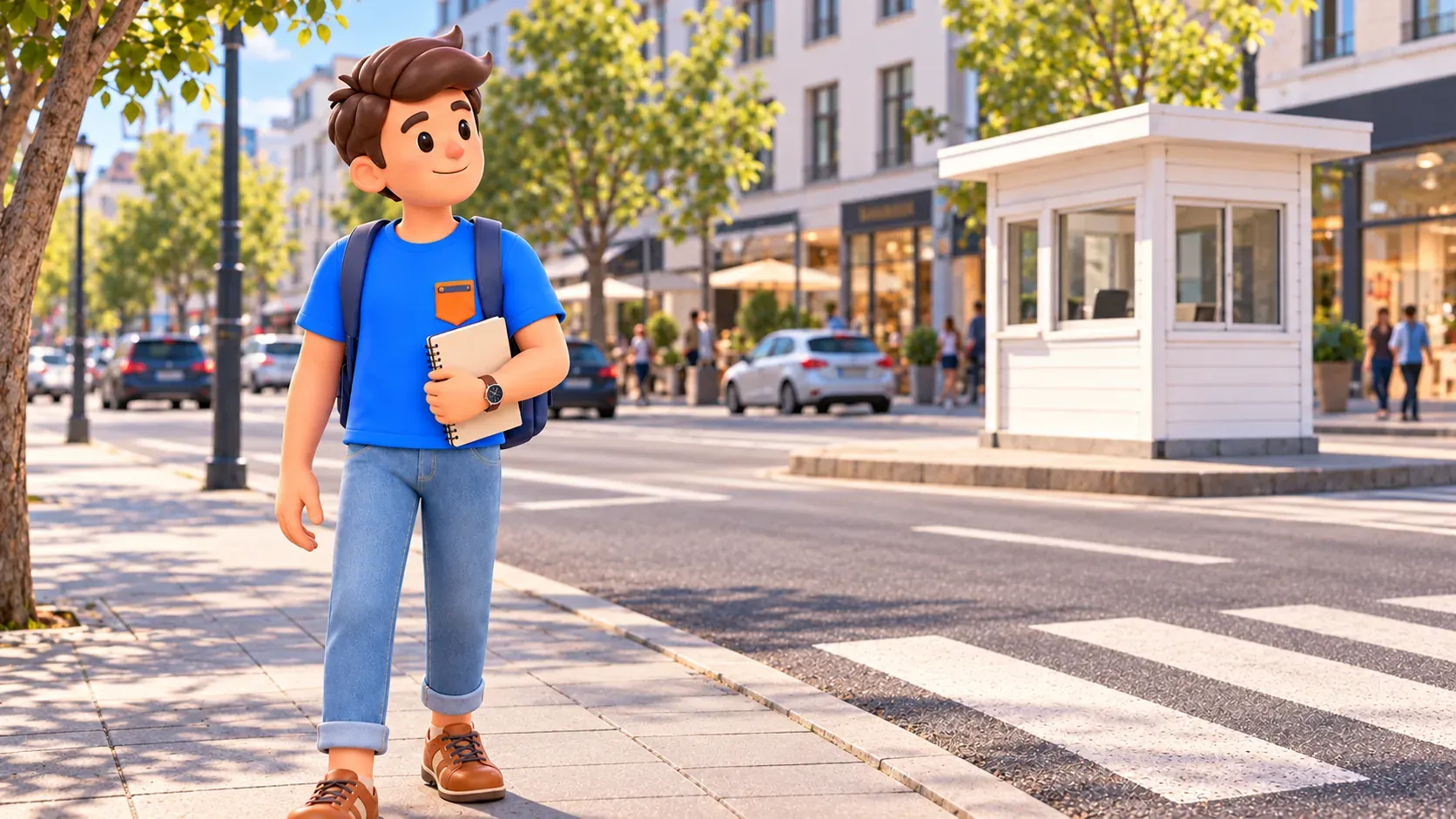
At Friedrichstraße and Zimmerstraße, the former crossing and its Cold War role are the starting point. The American–Soviet tank confrontation of October 1961 took place here. Today’s street does not preserve an entire functioning checkpoint from that time. The small booth is a copy of an early version. The later original control building removed in 1990 was different in appearance and is in the Allied Museum collection. Do not describe the present booth as the unchanged structure taken off the street when border controls ended. Different phases of a historical site can be represented by different surviving objects.
The stop is more useful when you expect an ordinary street with historical significance rather than a complete border installation. Observe its layout from the pavement and stay out of traffic for photographs. There is no functioning official crossing to stamp a tourist passport. For objects and accounts connected with escape, add a separate visit to the Mauermuseum–Museum Haus am Checkpoint Charlie at Friedrichstraße 43–45. The street, this paid museum and other institutions about the Wall are not one service with a universal ticket and shared hours. Choose the institution you mean before deciding your admission arrangements.
Two and a half hours with the Mauermuseum
Begin and finish at U Kochstraße/Checkpoint Charlie. Allow 10 minutes for approach, 20 outside the former crossing, 90 for selected Mauermuseum displays, 15 for a pause and 15 to return. That makes 150 minutes, for example 10am–12:30pm. The museum allowance is an editorial estimate for a chosen introduction, not a guarantee of reading every panel. Its new official website lists daily opening from 10am to 8pm throughout the year. Do not use old 9am–10pm listings from earlier guides; consult the current institution when setting a particular date and visit time.
Choose one object and one documented account to connect the historical location with human decisions. An escape device should not reduce the story to admiration for technical ingenuity: risk and people’s circumstances stand behind it. Museum admission is paid; seeing the street does not require that ticket. If you prefer no interior, a 20-minute exterior stop remains possible, but it is a different brief format rather than the two-and-a-half-hour version described here. Nearby panoramas and displays require another choice instead of entering unnoticed within the same museum allowance. Give the selected experience enough time.
What to leave for another day
After Bernauer Straße, the East Side Gallery can offer another perspective on the consequences of opening the border. After the gallery, the memorial can shift attention from vivid images to the organisation of division. Checkpoint Charlie suits an interest in a specific Cold War address with a museum continuation. These are different reasons to return, not compulsory stages of a single correct visit. On a short trip, one selected alternative is worthwhile. Our first-time Berlin guide by interests helps distribute further subjects across the stay without making every afternoon another transfer.
With RoadMe, preparing a personalised plan for the entire journey becomes easier and more efficient, distributing historical visits, art and rest around your interests and pace. Try building your Berlin days in the app so your chosen Wall experience fits comfortably with the rest of the trip.
A useful result is understanding what you saw: a memorial interpretation of the border system, a section’s artistic life after opening, or a historic crossing with a separate museum account. Distinguish location, surviving material, reconstruction and today’s interpretation. Several thoughtful stops can give a clearer impression than a long list of concrete fragments without context. Continue exploring the city’s history gradually, keeping people within the story and allowing other interests a place in the journey rather than turning every spare hour into another compulsory Wall destination.


