
West Kowloon in half a day: one museum and the waterfront

West Kowloon works well as a half-day built around one museum and a waterfront walk. Choose M+ or the Hong Kong Palace Museum, give your selected galleries the main share of attention, then step into the Art Park. The change of scale is the reward: from individual objects and images to buildings, greenery and the harbour. Visiting both major museums in succession is unnecessary.
Allow roughly four to five hours including approaches and a pause. That estimate covers a selected part of one museum, not a thorough exploration of the entire institution. If an exhibition absorbs you, stay longer and shorten the outdoor section. One clear experience is usually more memorable than moving quickly through two large buildings and retaining very little.
Choose the museum that will anchor the day
M+ suits an interest in modern and contemporary visual culture: art, design, architecture and moving image. Your attention may settle on an object, a screen or a spatial idea as readily as a painting. Choose it if you are curious about how the visible world of recent generations has been shaped, and how Hong Kong connects with international cultural exchange.
The Palace Museum is a stronger fit for Chinese art, historical objects and court culture. Its collaboration with Beijing's Palace Museum provides an important connection, but this is a distinct institution in Hong Kong, not a palace transported here. You can approach the displays through materials, craftsmanship and use without trying to learn the complete sequence of Chinese dynasties before arriving.
For a museum half-day shaped around your interests, try RoadMe: the app develops a personal route around your preferences and pace, and a trip plan around your dates and budget. It makes it easier to give a favourite subject proper time and connect it with a walk, rather than squeezing two museums into one short visit.
In a mixed group, choose a shared point of curiosity rather than the “most important” museum in the abstract. Everyday design may engage someone who rarely visits exhibitions; an historical object may attract a person interested in materials and skilled making. Check the current programme before buying. An institution's name indicates a direction, not a guarantee that a particular work will be displayed on your date.
If one companion strongly wants to see a specific exhibition, let that preference help shape the day. Others can choose a shorter selection within the accessible galleries. A shared outing does not require everyone to study every object equally. Agree on a time and an accessible meeting place beforehand, so that practical decisions are not postponed until someone is already tired.
Build the route around the museum entrance
Your starting point is the chosen museum's entrance, not an imaginary centre of the whole cultural district. M+ is at 38 Museum Drive; the Palace Museum is at 8 Museum Drive. Choose your transport approach to the building you actually intend to enter. Kowloon, Austin and Hong Kong West Kowloon are different station names, not interchangeable exits from one station.
Several rail approaches connect through the district and Elements. Select the precise link using current signs and access information. The space between a station and a museum still takes time to cross. If your ticket specifies an entry time, allow for that approach and admission checks. Nearness on an overview map does not mean stepping directly from a train into your selected gallery.
A practical sequence is museum first, a short pause, then the waterfront. This gives the indoor visit your freshest attention and lets open space change the mood afterwards. Reverse the order if your admission time requires it, but keep the preliminary walk compact. A long tour of the district before the museum can consume the energy you wanted for the exhibition itself.
Check the date, ticket inclusions and access to the exhibition that interests you. Free entry to some public spaces at M+ is not the same as free access to every gallery. Read a Palace Museum ticket according to the galleries and exhibitions it includes too. An open lobby or a museum shop cannot establish the conditions for the entire programme.
At the check on 20 October 2026, M+ normally closed on Mondays and the Palace Museum on Tuesdays, with holiday and special-date arrangements affecting the pattern. M+ had separately announced closure on 31 October 2026 and opening on 2 November. That is a useful reason to check your exact date instead of relying solely on a normal weekday rule.
At M+, follow one thread through a large museum
M+ can broaden your idea of what belongs in a museum. Images, design and architecture share the wider field of visual culture. For a shorter visit, choose a question: how does an image describe a city, how does form affect an everyday object, or how does a screen direct attention? A personal question can connect different displays without requiring you to see everything.
Do not begin with an obligation to move through every room at the same speed. Select one main exhibition or an available thematic group and allow yourself to linger with a few works. Moving image requires viewing time: entering a room with a screen does not mean you have seen the work. If a presentation is long, decide whether it deserves a substantial part of your visit.
The building by Herzog & de Meuron is part of the experience. Its large volumes and harbour setting show how a contemporary museum enters an urban landscape. Exterior architecture and the programme inside remain distinct reasons to come. You can appreciate a silhouette without entering a particular paid gallery, but that is not the same as seeing its exhibition or gaining access to every interior space.
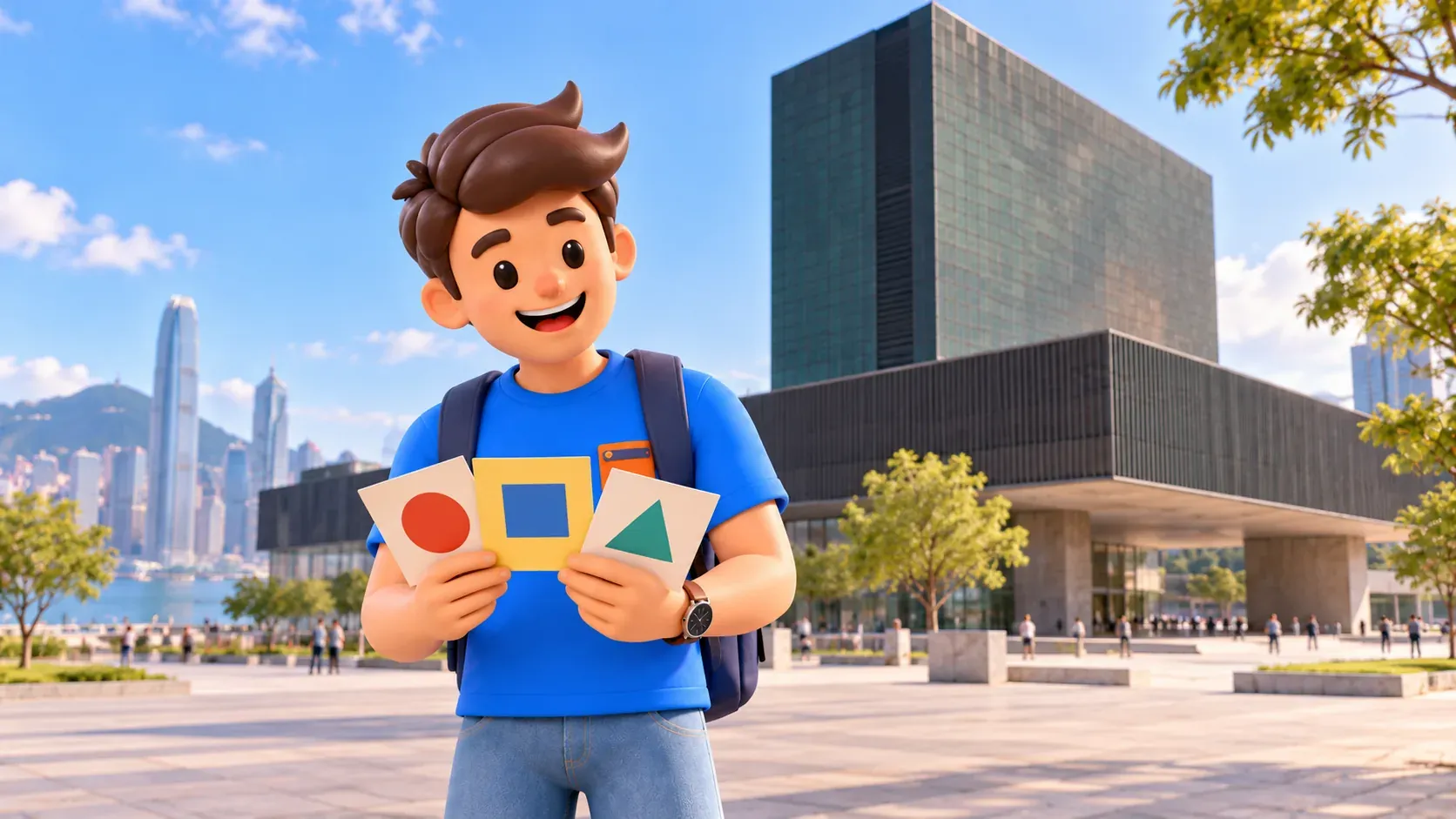
After several works, choose one you could describe without a photograph. Recall its material, scale and effect on your attention. You do not have to produce a professional judgement. A museum visit gains substance when it leaves you with a question or observation of your own, rather than only proof that you stood beside a famous building.
With children, start from something visible: shape, colour, size or a recognisable object. Do not promise that every work is interactive or assume everything can be touched. Current explanations and rules determine the permitted interaction. Sometimes two carefully considered objects and a short outdoor walk give a family more than attempting the full adult programme.
At the Palace Museum, begin with the object
At the Palace Museum, a small object can lead into a much larger historical setting. Ceramics, a painted image or another item in the current exhibition can reveal craftsmanship, use and ideas from its period. Displays change, so do not organise the outing around a promised masterpiece without checking the actual programme. Choose a material or question that interests you instead.
Read one label more closely, then look at the object again. Its purpose or technique may change your understanding more than the next ten cases would. An object from court culture can be understood as more than luxury: it also represents labour, rules of use and the transmission of skills. That approach gives depth without turning a half-day into a survey of all Chinese history.
Rocco Yim's architecture engages with spatial principles associated with a palace ensemble, interpreting them in a contemporary building. It is not a literal copy of the Forbidden City. Notice how movement between spaces and levels establishes a sequence for visitors. A brief architectural observation connects the museum's contents with the way you move through the institution around them.
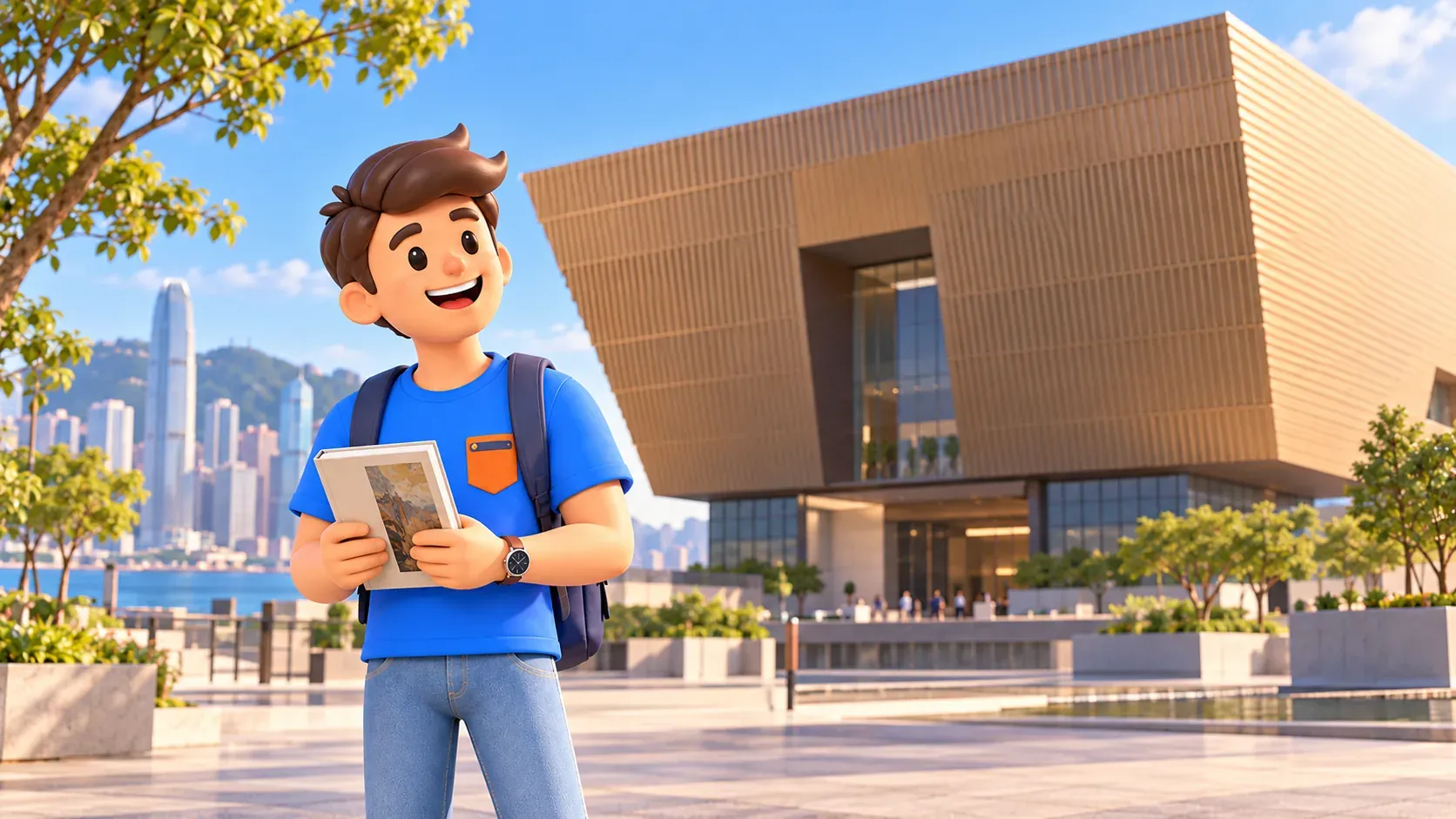
For limited time, select one main gallery group and one possible addition. The second remains a choice according to energy, not an obligation created by a purchased ticket. What is available is not necessarily what you should see in one visit. If you want to explore much of the museum thoughtfully, give it a longer day and keep the waterfront as a brief conclusion.
The Art Park: change from a display case to the harbour
After the museum, follow open paths into the Art Park and towards the water. There is no need to search for another exhibition immediately. Lawns, trees and the arrangement of cultural buildings create a different scale: from the detail of an object to an entire shore. Leave around forty-five minutes to an hour if weather and energy suit a relaxed finish; this is a planning estimate.
By the water, locate the opposite shore, then compare its dense development with the green space around you. After the galleries, that simple change can be more useful than adding dozens of new facts. Walk a short section, choose an available bench or stop for a photograph. You do not have to circle every part of the park to understand its relationship with the harbour.
To balance art, history and rest across a trip, plan in RoadMe: the app creates a personal itinerary around your interests, pace, dates and budget. A museum gets a proper place in the day, while time beside the water becomes part of the plan rather than whatever happens to remain.
Do not expect the park always to be quiet or empty. Events, weekends and ordinary city life affect its atmosphere. If something is taking place nearby, check its conditions separately: a public park does not mean free admission to every event area. Choose the open section that suits your finish and keep circulation routes clear.
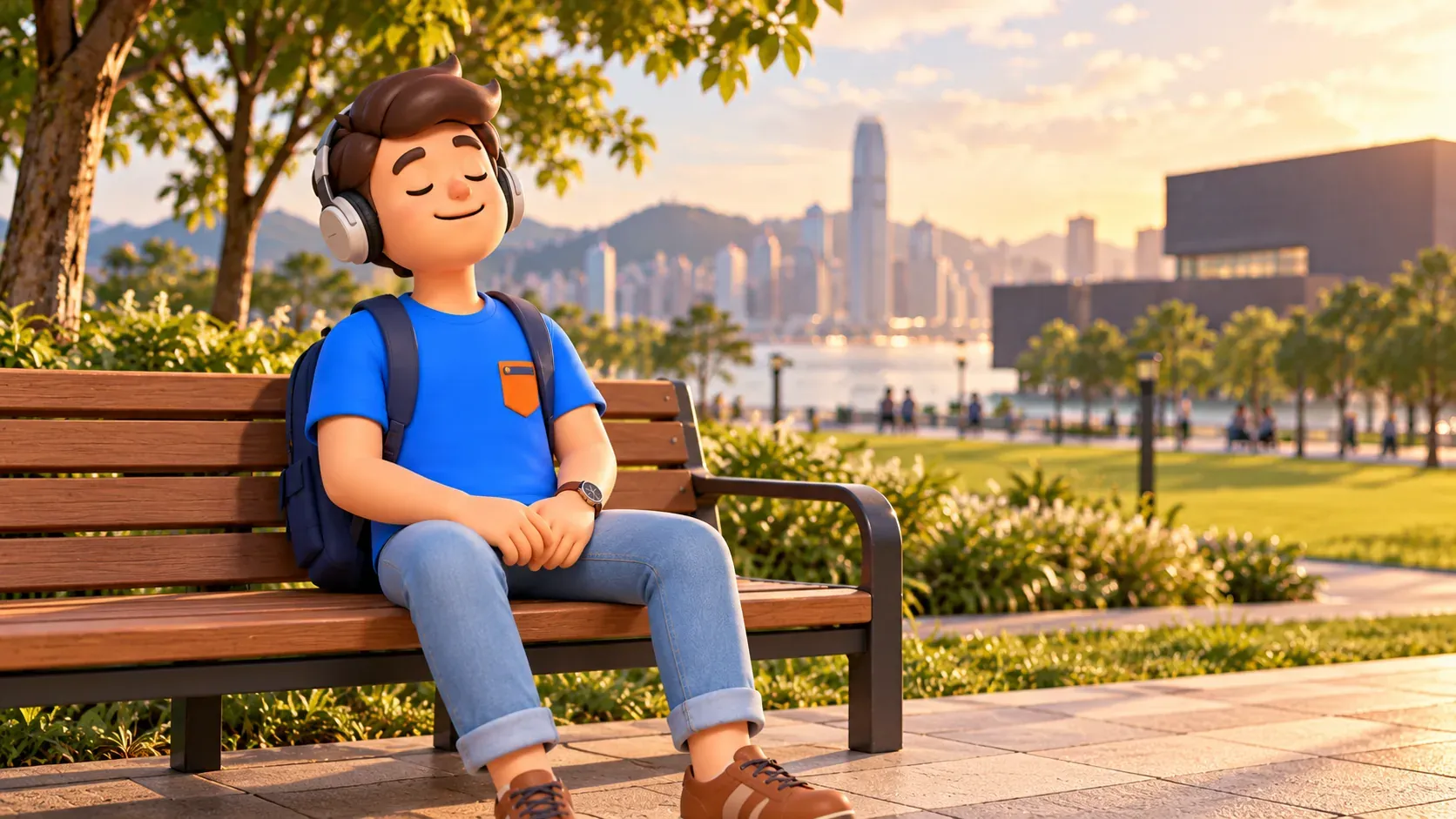
Before leaving, ask each companion to recall one museum object or work and one outdoor detail. One may remember a material's surface, another a building's outline, another the water between the shores. Those different answers connect the two parts of the day without requiring another tour, and can suggest which kind of art you would like to explore next.
Freespace and an evening extension
Freespace is the Art Park's performing arts centre, opened in 2019, associated with theatre, dance, music and work across disciplines. For this route, noticing its exterior as part of the cultural district is enough. Walking past does not automatically produce a performance: you need a suitable current programme, timing and, where required, a separate ticket.
If you already have an evening event in mind, it changes the scale of the outing. Leave room for food and rest between the museum and the start, rather than filling the interval with a second large museum. A half-day becomes a longer cultural day, which should be a deliberate choice. Gallery fatigue and waiting for a performance are different demands.
In rain, shorten the open-air section if appropriate, but do not assume a museum is an operating shelter under every weather warning. Check venue announcements in severe conditions. If a step-free route matters, examine the precise approach, museum facilities and connection to your chosen park section. Accessibility in one building does not establish the whole route.
Finish near a useful transport connection rather than returning across the district for the sake of a neat diagram. For the remaining days, use the three-day Hong Kong plan. West Kowloon is more likely to stay with you through one museum and a generous waterfront pause than through an attempt to finish every cultural address at once.


