
West End Before the Show: a Short Walk around Covent Garden’s Theatres
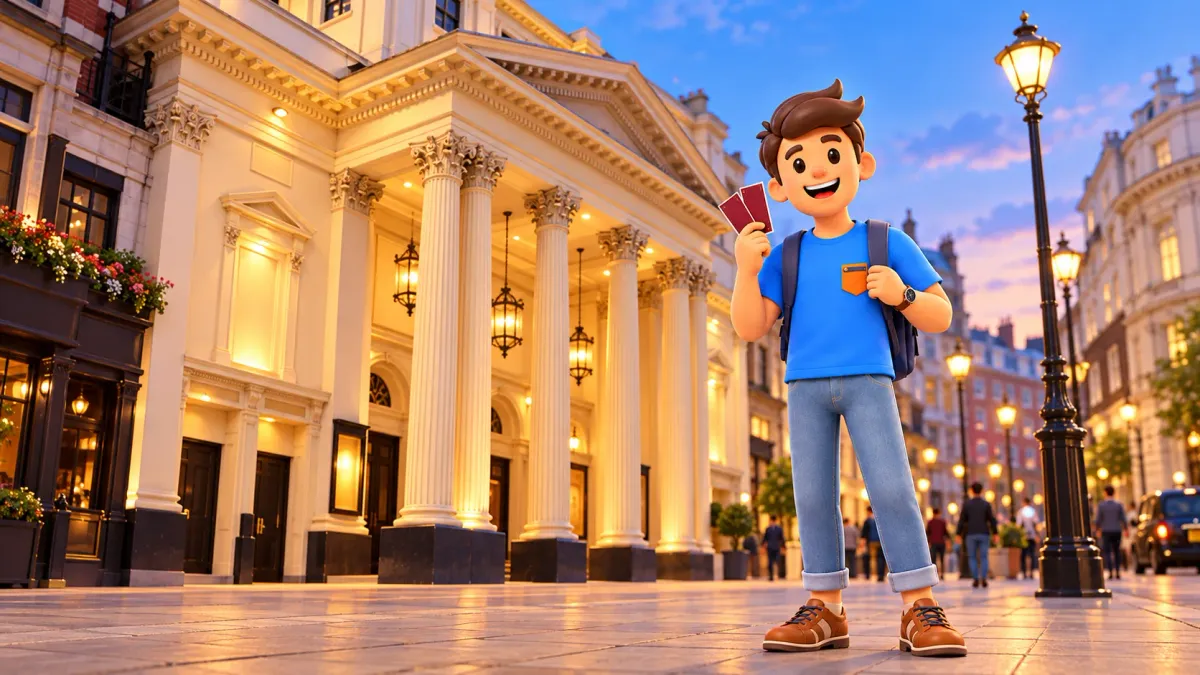
Before a West End performance, choose a short walk around the theatre you have actually booked. A manageable example links Covent Garden’s Piazza and Market Building with the exteriors of Theatre Royal Drury Lane and the Lyceum Theatre. Allow about ninety minutes for the walk, including a quick snack, then add a separate arrival allowance for your performance. The evening’s fixed point is your theatre entrance, not the last sightseeing stop.
This compact route suits a show in the Covent Garden and Wellington Street cluster. It is not a circuit of every West End theatre. If your ticket is for another part of Theatreland, check the extra journey or choose a shorter walk beside that venue. A full dinner, backstage tour and the performance itself sit outside the ninety minutes. The pleasure is having time to enjoy the streets before settling into your seat.
Work backwards from your ticket
Read the theatre name, street address, performance date, start time and any arrival instructions before deciding when to begin. Two buildings close together are still different venues, and a familiar show title is not a substitute for an address. Our example starts at Covent Garden Underground station, continues down James Street to the Piazza, then reaches Drury Lane via Russell Street and Catherine Street before finishing at the Lyceum on Wellington Street.
Try RoadMe to make organising your whole London day or trip more convenient around your interests. The app develops a personal plan from your dates, pace and budget, giving a short theatre-district walk, proper meal, longer visits and time to rest a comfortable place across the journey.
Allow roughly one to one and a half kilometres, including movement around the Piazza and market. This is a planning estimate, not a measured track. Divide the ninety minutes into fifteen at the Piazza, ten around the market, ten at each theatre exterior, twenty for connections, fifteen for a quick snack and ten as flexibility. It is a looking-and-pausing plan, rather than ninety minutes of continuous walking.
Add a separate thirty to forty-five minutes for arriving and settling in, or more if your actual ticket, access arrangements or theatre guidance requires it. This is an editorial planning allowance, not a rule shared by all venues. For an illustrative seven-thirty performance with an appropriate six-forty-five arrival, begin the walk around five-fifteen. These example times do not establish the schedule of a real production on your date.
Covent Garden: a public stage
From the station, walk south along James Street towards the Piazza. Let the change from a busy street to the market setting register before continuing. Look at how people gather, move around the building and stop at the edges of an open performance space. Theatre in this district has a street presence as well as an indoor one, which makes the Piazza an enjoyable introduction to an evening show.
Covent Garden’s performance history reaches back beyond today’s productions. Samuel Pepys recorded a marionette show featuring Punch on the Piazza in 1662. The connection adds a small historical layer to an ordinary pause: entertaining an audience here is a long tradition. It does not mean a particular act will be performing when you arrive, or that a street show can be fitted exactly into your remaining minutes.
If something is happening, watch from a place that leaves the walking route clear. You can enjoy a few minutes without committing the whole timetable to an unpredictable performance. Weather, programme and local conditions affect what is present. When the gathering is large, stay at a comfortable edge and keep your group together. The aim is to enter the evening’s atmosphere while retaining enough time for the performance you have chosen.
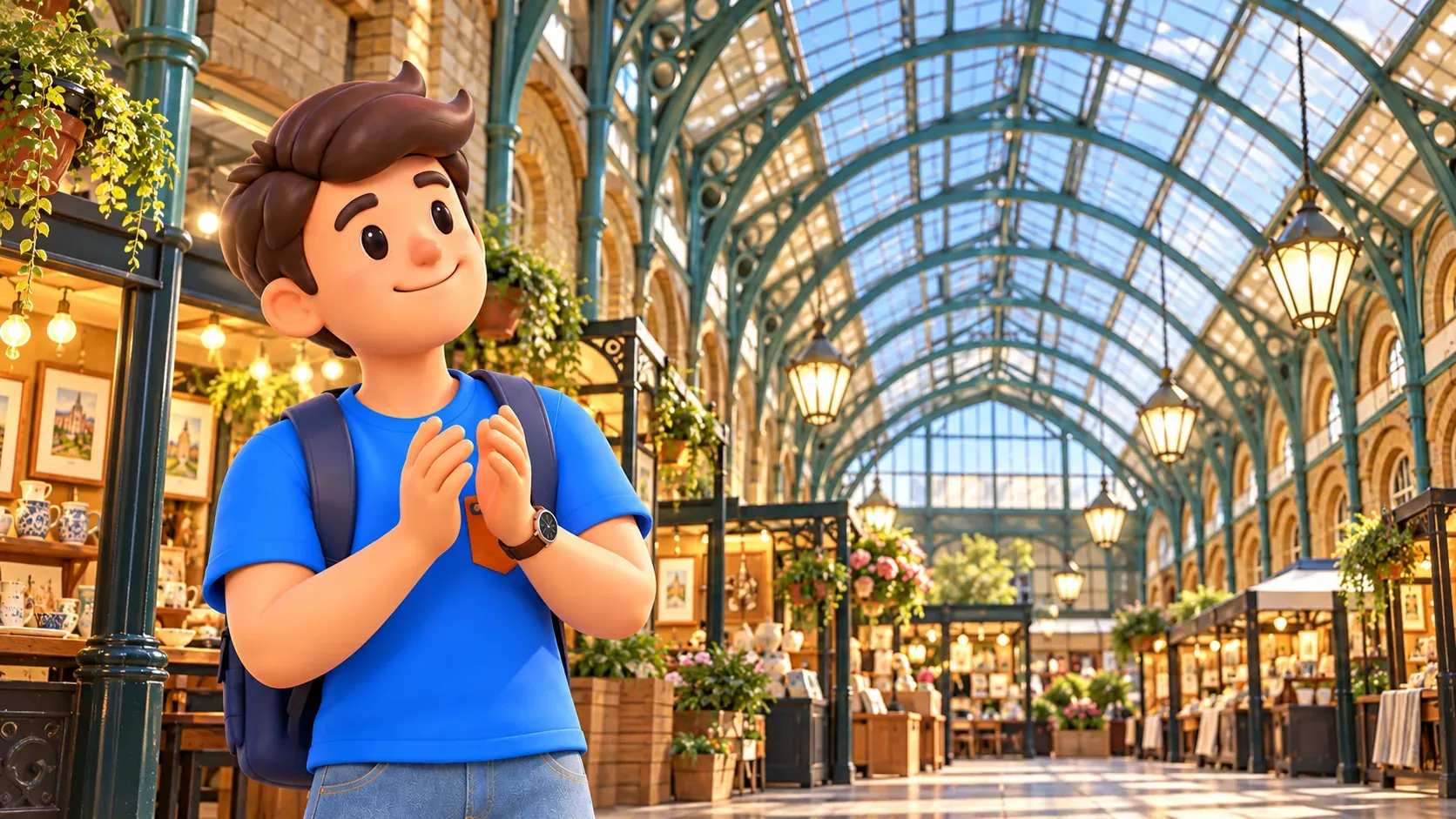
The Piazza and Market Building are public places to walk around; that does not make every stall, shop or café open throughout the evening. In the late afternoon, use what is available rather than expecting a market scene from a daytime photograph. Seasonal decorations also change. A clear view of the building, a short look at the crowd and the sounds of the neighbourhood are enough for this opening stop.
A brief look around the market
Make the market section a short architectural and browsing pause. Notice the covered spaces, ironwork and the way passages connect the Piazza to smaller streets. The Apple Market now offers handmade goods on most days, with antiques and collectables on Mondays. It is not the wholesale fruit-and-vegetable market that older associations with Covent Garden might suggest. Different neighbouring markets have their own traders and hours.
Keep shopping light if you want to preserve the ninety-minute outline. A purchase can require more time than the first look at a stall suggests, and extra bags may become inconvenient at the theatre. There is no requirement to buy a souvenir to make the stop meaningful. Looking closely at a material, a display or how the market works can be a satisfying use of ten minutes.
For a more general introduction to the area, our Trafalgar Square to Covent Garden walk belongs on a separate, more flexible part of the day. Here, avoid automatically adding Trafalgar Square, Soho and every nearby lane. The short plan is organised around a theatre deadline. If you notice somewhere you want to explore properly, keep that curiosity for another outing instead of turning this one into a rush.
Theatre Royal Drury Lane: a long story
Leave the Piazza towards Russell Street and continue east, using the current crossing around Bow Street. Reach the Catherine Street side of Theatre Royal Drury Lane and look from an appropriate public pavement. Despite the familiar Drury Lane name, the theatre’s Catherine Street location matters when finding the right building. An exterior pause fits the walk; entry to a performance, tour or hospitality experience follows separate arrangements.
The first of four theatres on this site opened in 1663. The present fourth building, designed by Benjamin Dean Wyatt, opened in 1812. That distinction is worth remembering: the age of the theatre site and the age of the building in front of you are different things. A brief look at the frontage becomes more interesting when you understand that performance has repeatedly returned to a place through rebuilding and change.
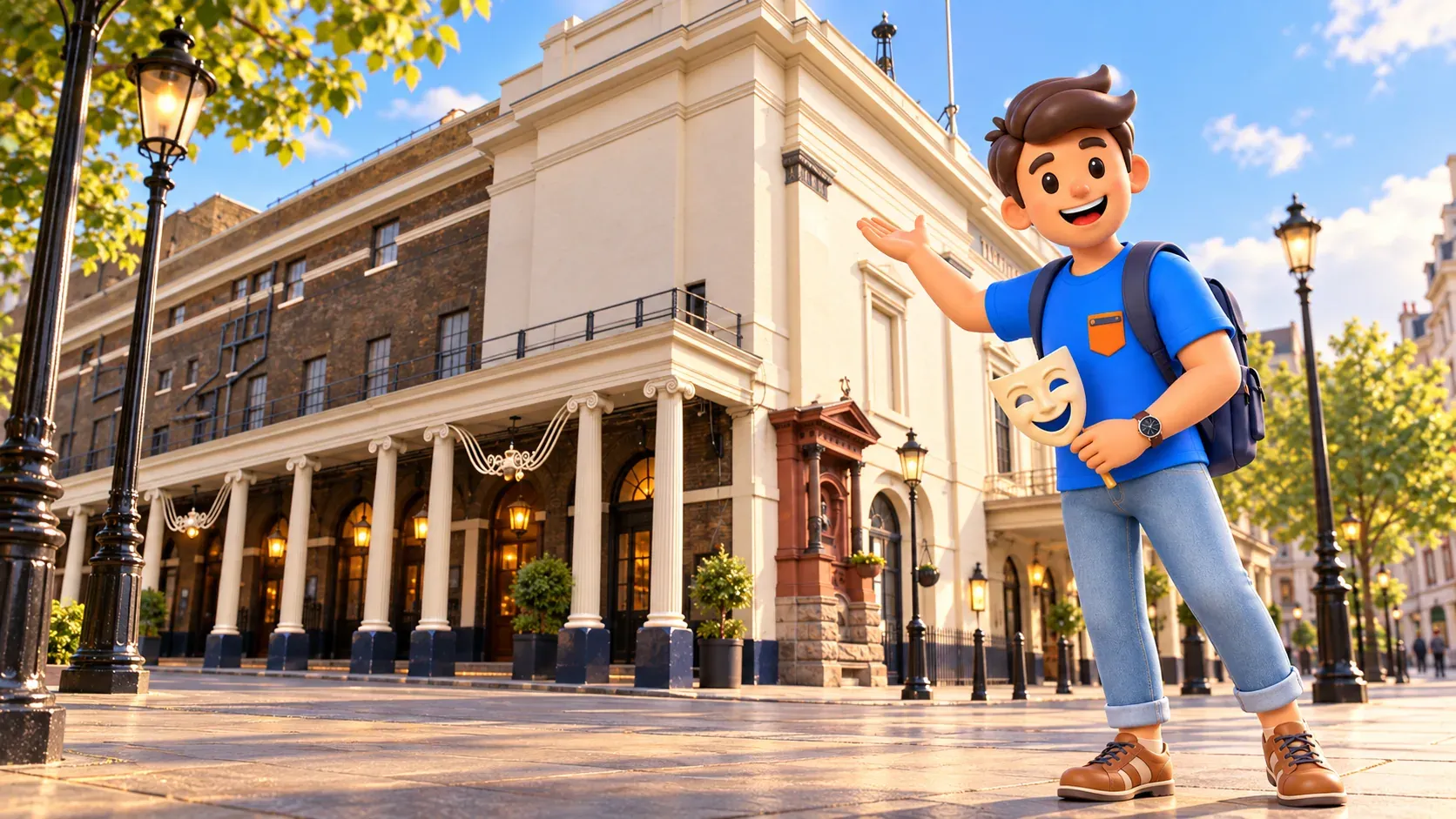
Look at the entrance, columns and the relationship between the theatre and the surrounding streets. You do not need to reconstruct every historic production to appreciate its role in the district. Current posters describe a current programme, not a permanent identity. An old photograph advertising a different musical is therefore useful for architecture, but cannot tell you what is playing now or which tickets will be available this evening.
A guided theatre tour is a separate visit requiring its own booking and time. It is not something to insert into this ten-minute stop, and a working theatre does not guarantee unrestricted access backstage. If your performance is here, finish the walk at this venue when the arrival deadline approaches. There is no benefit in continuing to another theatre merely to complete a sequence written for someone with a different ticket.
Walk towards Wellington Street
For the full example, continue south on Catherine Street, turn west along Tavistock Street and then south on Wellington Street towards the Lyceum. Follow public pavements and designated crossings. Distances are modest, but people arriving for performances, restaurant activity and ordinary traffic make the connections part of the timing. Do not treat a short distance on a map as proof that a crowded junction can always be crossed immediately.
This is a sensible point for the quick snack if you have not already paused. Choose something straightforward and include ordering time. A fifteen-minute stop is not a full pre-theatre dinner. If you want a restaurant meal, arrange it earlier or extend the evening’s preparation, making clear when you need to leave. A table reservation near a theatre still leaves the walk to the actual entrance and the admission process to allow for.
Check the remaining time before ordering rather than after the food arrives. When the window is becoming short, finish the stroll and head to your venue. Cutting a small optional stop preserves the best part of the evening: arriving comfortable enough to pay attention. This can be particularly useful with children or after a long day, when another burst of sightseeing may add less enjoyment than a few quiet minutes.
The Lyceum: know the actual entrance
The Lyceum Theatre stands at 21 Wellington Street, just off the Strand. Its columned portico makes a distinct final exterior. The building’s story includes different periods and uses, including its life as a ballroom, before returning to major theatre productions. The Lion King has been associated with the venue since 1999. For this walk, the important practical point remains the address on your own booking.

At the time of checking, the Lyceum stated that its doors open ninety minutes before a performance. Opening time is not a requirement that every visitor arrive ninety minutes early, and it does not describe the policy of every London theatre. Check the instructions for your chosen event. The venue’s bars are for performance ticket holders, so an exterior sightseeing stop does not imply a free look through the auditorium or private hospitality areas.
Leave time for possible bag checks and finding your seat. Travel light where practical: the Lyceum asks visitors to avoid suitcases, rucksacks and large bags. Storage arrangements need their own confirmation and should not be assumed simply because you have a ticket. If access support matters, make the arrangements with the theatre beforehand. A short public street route is not a guarantee that every interior level or seat has the same access.
Let the performance be the finish
Confirm that you have the actual tickets rather than only the purchase confirmation, and follow the delivery instructions from your booking provider. Save what you need in an accessible form before leaving for the evening. Do not rely on solving an email problem while walking between stops. Late admission varies by production and may involve waiting for a suitable break; the route should never depend on being let straight in after the start.
With RoadMe, it is easier to turn your preferred balance of culture, walking, food and rest into a complete personal trip. Let the app organise your days around your interests and pace, so the theatre evening has a comfortable place within the whole London journey.
If your show is at a different venue, allow the additional journey or finish the example earlier. Once the admission window arrives, stop sightseeing and enjoy the transition indoors. Switch off your phone as the theatre directs and follow its photography rules. The walk has already done its work: the public Piazza, market and two different theatre exteriors have given the streets context, while the performance itself remains the evening’s main experience.


