
Four centuries of care: the Yamaki pine in Washington, DC
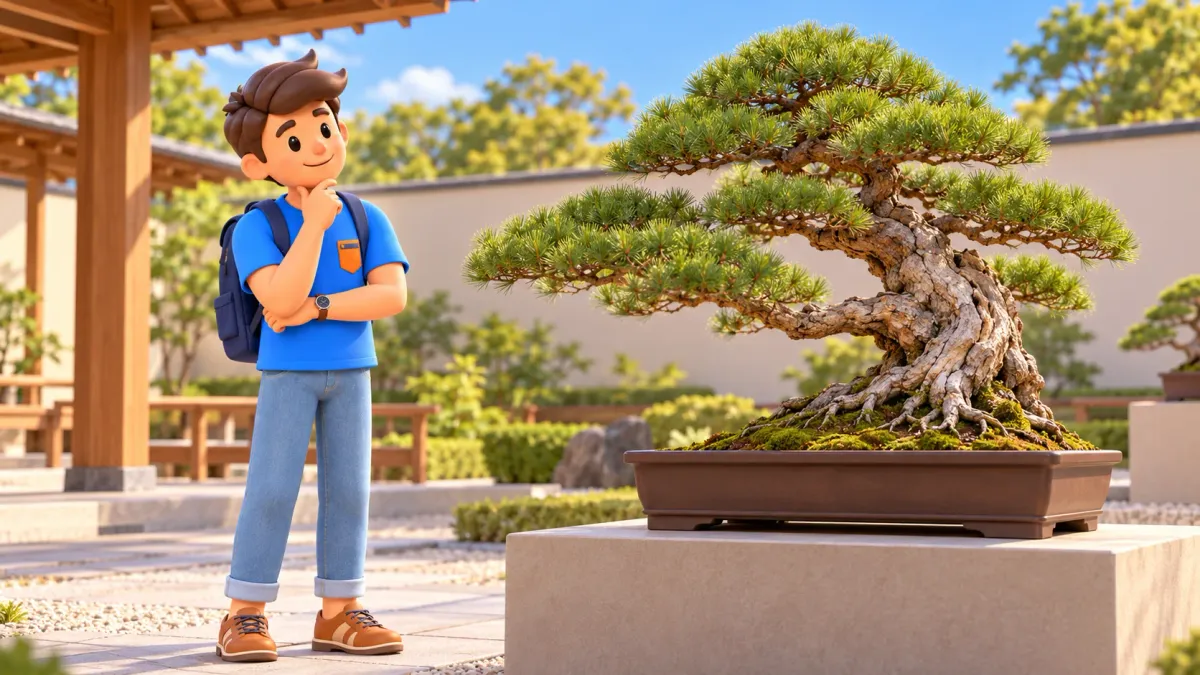
At Washington’s National Bonsai & Penjing Museum, one pine has a history far larger than its size. The Yamaki pine has been trained as bonsai since 1625. It survived the bombing of Hiroshima, became a gift to the United States and now connects family memory with the work of museum caretakers.
It is worth considering even without a particular interest in botany. Instead of asking which tree is tallest, you might ask how many people must care for a living thing for it to continue across centuries. That story can make a small visit more attentive without requiring a complete circuit of the National Arboretum.
Four centuries describes cultivation first
The official collection wording is “in training since 1625.” It records cultivation and shaping as bonsai from that date. The four-hundredth anniversary was marked in 2025. This is more reliable than using the date alone to claim an exact biological trunk age or the year a seed germinated.
This is a Japanese white pine associated with the name Miyajima. For a first encounter, the contrast between small scale and long time matters more than memorising a botanical name. You are looking at a living tree maintained through care. It is not a frozen model of a larger tree and did not stop developing when its composition began.
RoadMe makes it easier to turn an interest in stories like this into a personal trip combining museums, nature and a comfortable pace. Try the app to develop an itinerary around what you enjoy, with time for attentive stops.
The date 1625 expresses continuity of care rather than a competition for age. There is no need to call it the world’s oldest tree or oldest bonsai. Its value does not depend on unsupported records. The particular history preserved by the collection is already enough.
The Yamaki family and care passed onwards
Before moving to the United States, the pine belonged to the Yamaki family in Japan across several generations. Bonsai master Masaru Yamaki was its donor. Preserving such a tree involves repeated work rather than one impressive gesture: observing, maintaining health, making decisions and passing knowledge to another person.
This changes a familiar idea of a museum object. Even a stone sculpture needs appropriate conditions, but a living bonsai cannot simply be stored and forgotten for several years. Its story continues through regular attention. The tree therefore represents a long human relationship as well as a long timespan.
Do not imagine every curve was permanently determined by one person. A long life involves change and successive decisions. Bonsai has an artistic composition, but its material remains a living organism. That distinction encourages respectful looking rather than treating the form as an ordinary movable possession.
Compare the length of your own trip with the duration of that care. You may spend only a short time beside the display, while people whose lives ended long ago helped sustain it. No grand language is required. The perspective simply gives a quiet moment in front of the collection more substance.
Hiroshima: a survival story told carefully
The pine survived the 1945 atomic bombing of Hiroshima. In the family history published by the National Bonsai Foundation, a high wall protected the nursery’s trees. The Yamaki family survived too. This is a particular account of place and circumstances, rather than evidence that bonsai is invulnerable to destruction.
Do not turn it into a claim about special immunity to radiation or the ability of such trees generally to withstand an atomic explosion unharmed. The documented story concerns this pine under particular conditions. Accuracy and restraint do not diminish its significance.
The name Peace Tree is often used for it. Its history can invite reflection on resilience and human connection without drawing easy lessons from a difficult past. There is no need to add imagined details of catastrophe or make a living object into the setting for an exaggerated photograph.
With a child, choose an explanation appropriate to their age. It may be enough to say that the pine and people survived something terrible and the tree later became a gift of friendship. A longer historical conversation can happen separately if wanted. The visit need not become a lecture or a test.
A 1976 gift whose fuller story emerged later
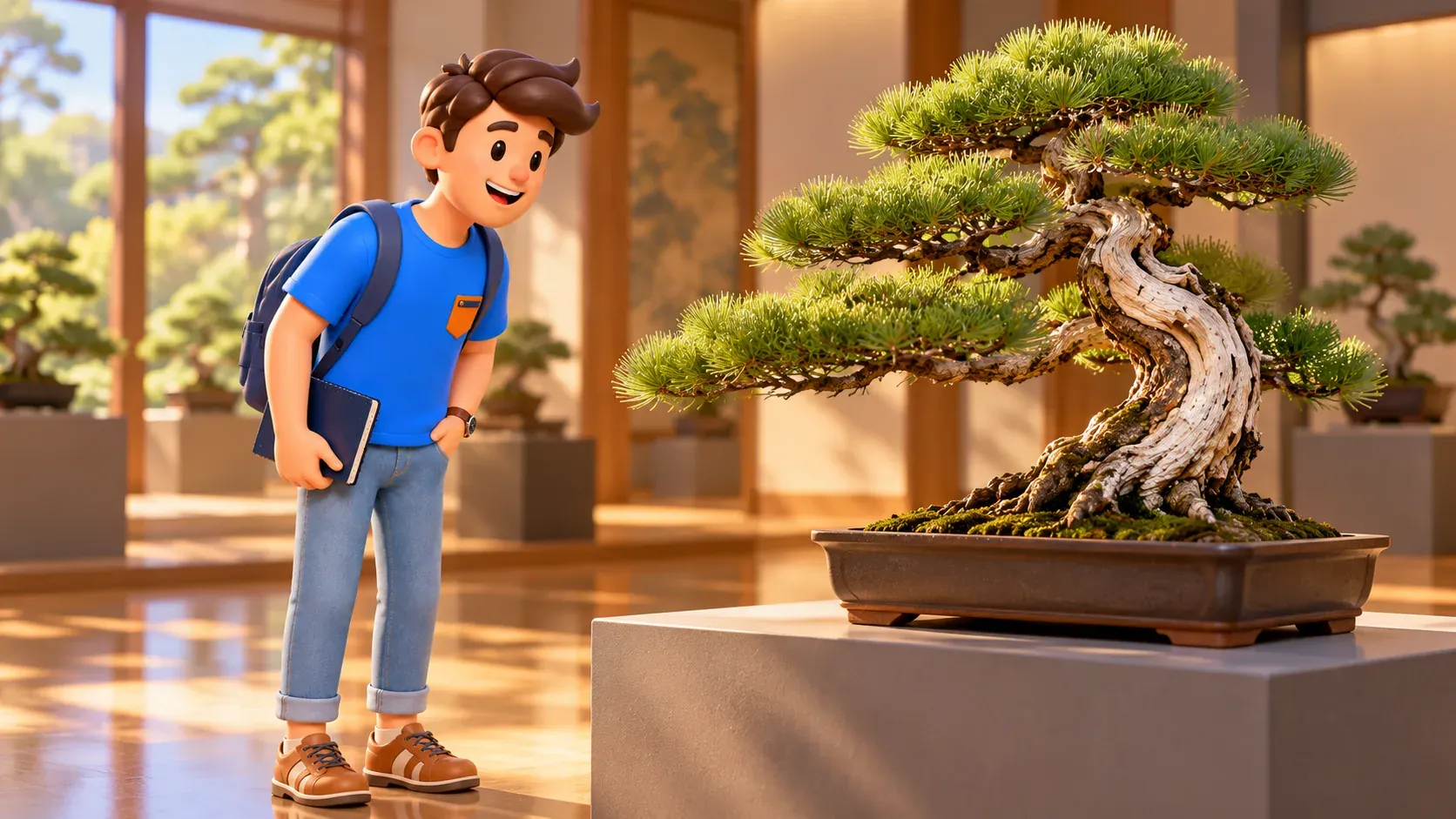
In 1976, Masaru Yamaki donated the pine as part of Japan’s gift for the United States bicentennial. It joined the collection from which the National Bonsai & Penjing Museum developed. Keep the purpose of the gift clear: friendship and the sharing of a valued tree, rather than a specimen sent specifically as a Hiroshima exhibit.
Museum staff learned the 1945 connection later. In 2001, Masaru’s grandsons Shigeru and Akira visited, looking for their grandfather’s tree and sharing the family history. The next generation added something to the museum record that a visitor could never have learned simply by examining the trunk.
This shows how knowledge about a collection can change. The tree was already present, while an important part of its past was not yet part of the story known to staff. Family memory and museum research complemented one another. An object, or a living specimen, can be familiar in appearance long before its history is understood.
There is no need to recreate the meeting as a fictional scene with exact dialogue. The essential facts are enough: donor, 1976 gift, the grandsons’ 2001 visit and the Hiroshima connection. They tell a strong story without invented emotions or literary embellishment.
Look at the living composition as well as the history
Begin with the whole tree rather than its age label. Notice the relationship between trunk, canopy and shallow container. Then read the story and return to the overall view. The same small form may feel different after you understand what it represents.
Choose three simple observations: direction of the trunk, arrangement of needles and space between branches. You are not trying to judge bonsai as an expert. You are noticing relationships that create an image. A gap or outline can contribute as much as the most prominent part of the canopy.
Bark and the base may also attract attention, but do not touch the tree, container or soil. Do not adjust a branch for a picture or imitate staff work. A small living museum object does not become interactive simply because it seems close.
Editorial illustrations suggest the subject rather than document the exact present appearance of a specimen. Position, form and availability of living collections can change. Do not compare every branch with a drawing as a compulsory standard. The interest is in seeing the actual tree and recognising that its story continues now.
The museum and the whole Arboretum have different arrangements
The National Bonsai & Penjing Museum is within the United States National Arboretum. It is a separate collection inside a large property, not another museum next to the National Mall. Getting to the grounds and from an operating entrance to the collection requires its own time allowance.
Ordinary admission to the museum and Arboretum is free without tickets. At preparation, standard museum hours are 10 am to 4 pm, shorter than the wider grounds’ hours. The museum closes on federal holidays from November through February, and unplanned changes can occur. Check current museum status rather than only the outer gate closing time.
In winter, the Japanese and North American pavilions close, with selections from the collections displayed in the Chinese Pavilion. That does not promise every tree, including the Yamaki pine, on every date. If this is your main reason for coming, confirm the actual display and arrangements with the museum beforehand.
A plan based on “the grounds are open, so the collection must be open” can fail. Different calendars matter particularly when you have a short visiting window. Give the museum the main part of the relevant time instead of hoping to arrive in the final minutes after an extensive landscape outing.
Keep one tree from becoming a race through collections
If the Yamaki pine is your main purpose, begin by checking its availability and look calmly at nearby open displays. Decide afterwards whether another green-space walk appeals. Completing every collection is not necessary for one tree’s story to become memorable.
For a broader outing, our National Arboretum half-day plan helps select different experiences rather than cover the entire landscape. Do not add a distant collection merely because it falls inside the same property boundary.
RoadMe helps develop a personalised route or whole trip around your group’s interests and comfortable pace. In the app, it is more convenient to connect this thoughtful museum stop with other Washington days and proper time to rest.
Plan food and breaks in suitable permitted places outside the museum displays. Food, drinks, smoking, bicycles and pets other than service animals are not allowed in the museum complex. Supervise children and ask directly about any particular access needs. This article does not establish a verified step-free connection throughout the site.
What remains after meeting one pine
Washington is easily remembered through large monuments, but a small tree offers another scale of attention. Its history is neither carved in stone nor completed at a dedication ceremony. It continues in a living organism and in the work of the people caring for it today.
You need not leave knowing the whole art of bonsai. Distinguishing cultivation history from biological age, remembering the Yamaki family and recognising sustained care are sufficient. That precision makes the account stronger than a record claim or sensational headline.
The pine matters for more than surviving the past. It shows how the past is carried forwards through a gift, a family visit, museum work and an attentive observer. No extra kilometres are required: sometimes one carefully chosen stop gives a city day a different meaning.


