
Around the White House in 90 Minutes: Public Views, Houses and Art

Ninety minutes around the White House can reveal a compact part of Washington through public views, historic houses and contrasting façades. Use Lafayette Square and its northern surroundings as the first reference, then consider Decatur House, the Blair House area, the Renwick exterior and the Eisenhower Executive Office Building from positions that are currently open to pedestrians.
For an October 2026 visit, the access restrictions are part of the route itself. This programme focuses on the permitted public edge of the neighbourhood and does not depend on entering the White House, walking through the entire park or visiting the Renwick’s interior. The ninety-minute estimate includes selected stops and pauses, with the actual line determined by current signs.
Plan around the public routes that are open
Access update, checked 22 October 2026: the National Park Service’s October notice closes specified White House sidewalks, the Pennsylvania Avenue section between 15th and 17th Streets and much of Lafayette Park through 31 October. The northern third of the park beside H Street remains open under that notice. A limited northern-sidewalk approach from 17th Street serves the Renwick area; follow the posted boundaries.
For a short visit shaped around your interests, try RoadMe: the app builds a personalised route around your time and preferred pace, making Washington much more convenient to organise. Use the programme together with current public-access signs to give the neighbourhood a sensible place in your trip.
Begin along the permitted northern edge rather than treating the White House fence as a guaranteed viewpoint. Continue only where a public passage is signed open. The useful idea is a series of exterior observations, not a fixed circuit that must be completed regardless of a barrier. If a view is unavailable, give the next accessible façade more time.
| Part of the walk | Focus | Keep in mind |
|---|---|---|
| H Street and permitted Lafayette edge | The White House neighbourhood’s setting | Views may be distant or partial. |
| Historic-house area | Decatur House and the role of Blair House | Observe only from open public positions. |
| Renwick and office-building surroundings | Art architecture and government scale | The Renwick interior is temporarily closed. |
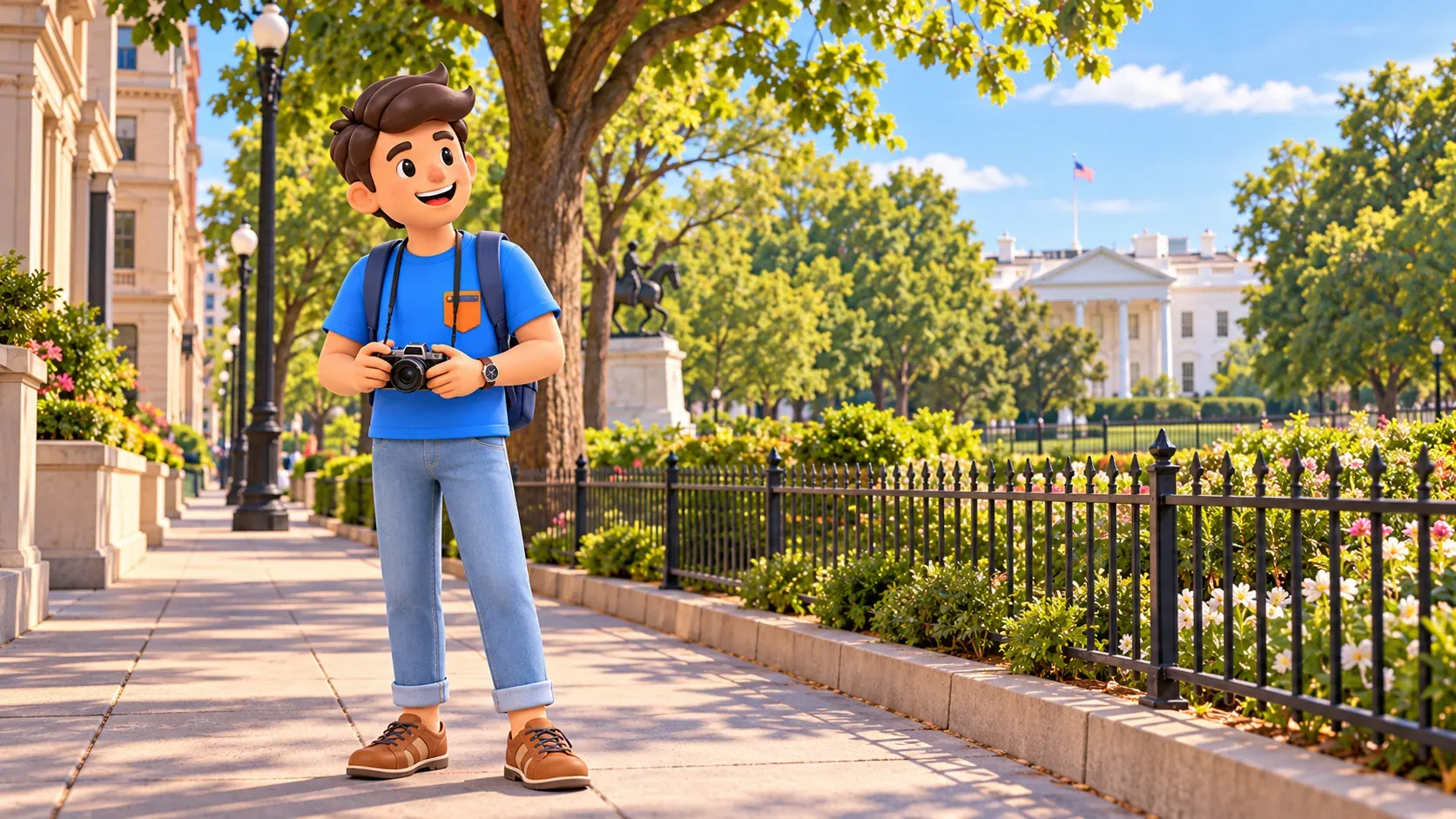
Start with the White House and Lafayette setting
The White House is both a presidential home and a working part of the government complex. That combination helps explain why the surroundings cannot be treated like an unrestricted museum forecourt. The point of this walk is to understand its place in the city from the areas visitors can actually use.
From the permitted public edge, look at the relationship between the residential scale of the White House and the larger institutional buildings nearby, wherever the view allows it. Trees, fencing, distance and current boundaries affect what you can see. A partial view can still provide a useful sense of setting without requiring you to search for an unavailable close approach.
Lafayette Square adds a layer of public memory. Its monuments connect the neighbourhood with figures from American history and with foreign supporters of the American Revolution. During the October restrictions, do not plan a full interior park circuit to inspect every statue. The open northern part can be a reference point for understanding the wider ensemble.
Give this first part around twenty to twenty-five minutes if the available views interest you. If you find yourself spending that time simply looking for a better opening, move on instead. A neighbourhood walk works best when the architecture and context you can genuinely appreciate determine the pace.
Use the houses to change the scale
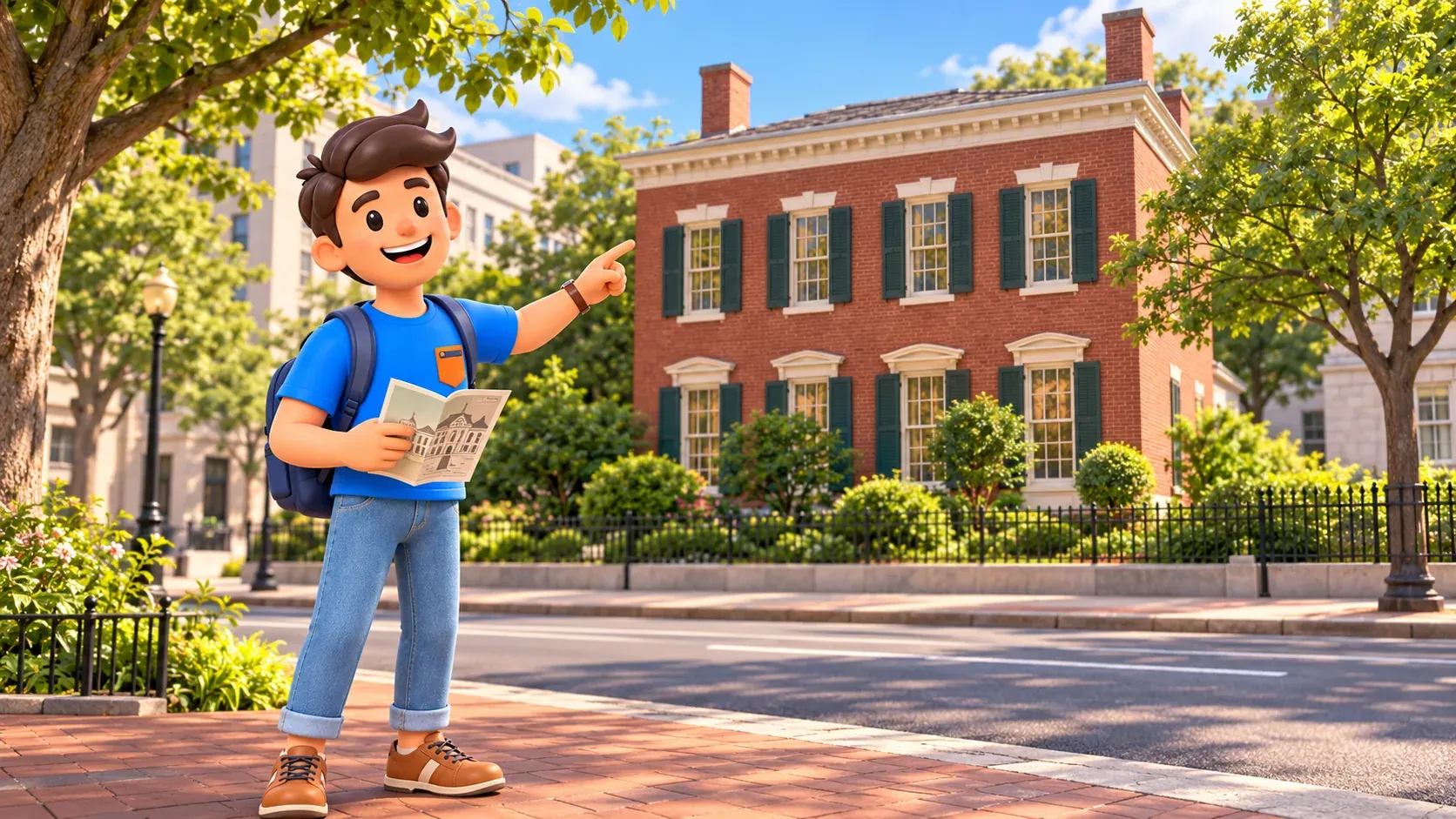
Decatur House introduces a domestic scale beside the government quarter. Designed by Benjamin Henry Latrobe and built in the early nineteenth century, it gives a tangible reminder that the area developed through private lives as well as national institutions. A brief look at the exterior can make that history visible without requiring a house visit.
From an open public position, notice the proportions of the façade, the repeated openings and its relationship to the street. Compare that compact composition with the monumental buildings in the wider district. The change of scale is the useful observation; a ninety-minute walk does not need a complete account of every owner and every room.
Blair House tells another story. It has served as the president’s official guest residence since the government acquired it in 1942. Its significance therefore comes partly from hospitality and diplomacy, rather than from the public monumental role of a memorial. The building’s function is enough context for a first exterior encounter.
The current closures can limit how closely you approach or how clearly you see parts of this area. Do not treat a house’s address as proof of a through-route on the pavement in front. Use the open positions available, keep to the posted boundaries and be willing to make Blair House a contextual reference rather than a close-up stop.
Look at the Renwick as an exterior art landmark
The Renwick Gallery gives the neighbourhood an artistic thread. Part of the Smithsonian American Art Museum, it presents craft and decorative art. Its exterior can contribute to a short architecture walk even when a gallery visit is not part of the programme. Look at the building as a public presentation of art within a strongly governmental setting.
As checked on 22 October 2026, the Renwick is temporarily closed while preparing an exhibition scheduled to open on 13 November. Do not include an indoor visit in this ninety-minute programme. A later museum trip can be planned separately once the current arrangements are confirmed.
Approach only through the public section available from 17th Street and any other routes clearly signed open on the day. An access allowance towards a building does not mean that the whole adjacent Pennsylvania Avenue block is open. If the exterior viewpoint is limited, preserve the short nature of the walk and continue to a permitted position nearby.
Compare the Eisenhower Executive Office Building
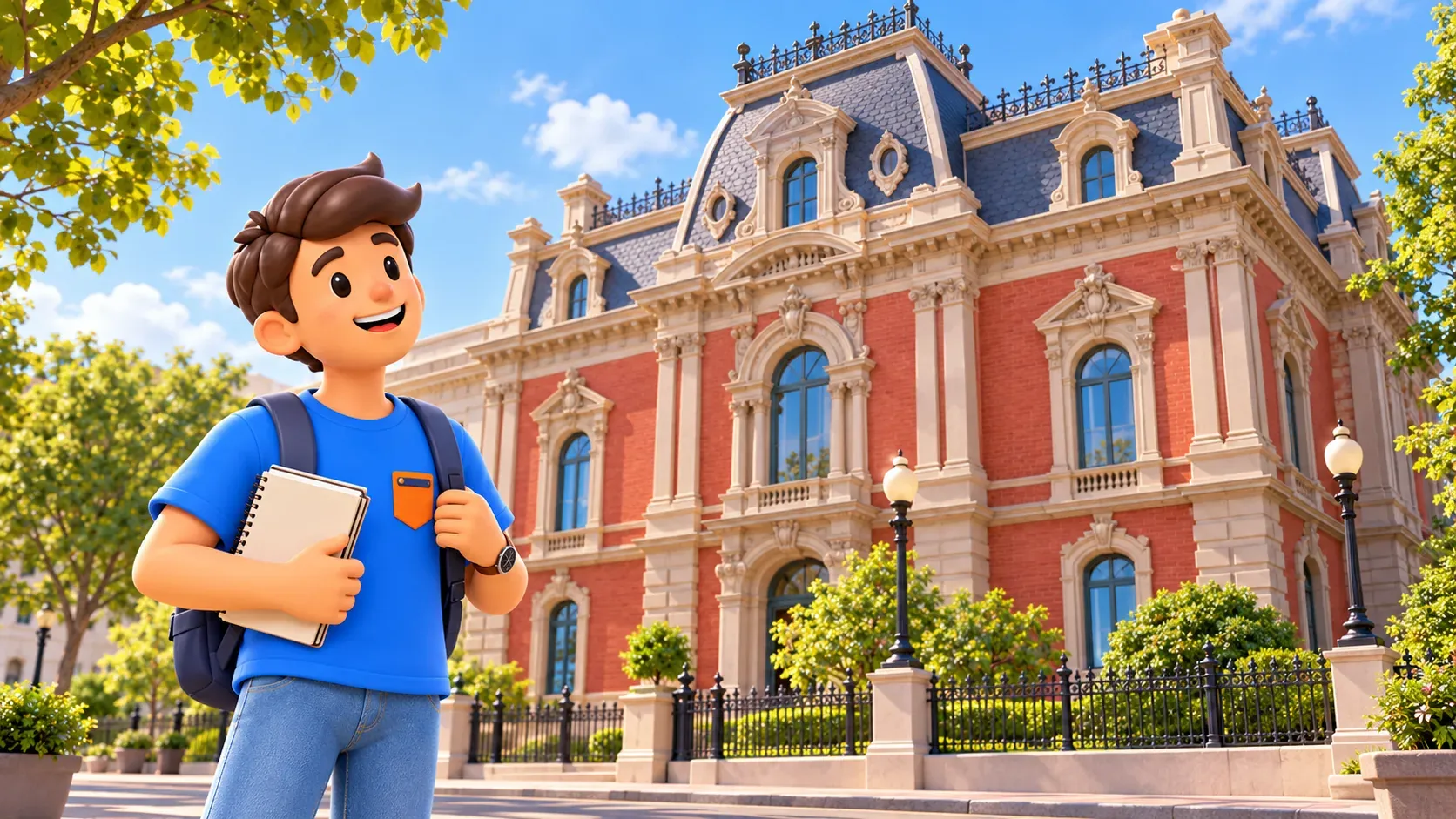
The Eisenhower Executive Office Building provides a dramatic change in scale. Built between 1871 and 1888 for the State, War and Navy departments, it is a major example of French Second Empire architecture. That background helps explain its more elaborate massing and its contrast with the White House’s familiar appearance.
From the public routes that remain open, look at the rhythm of the façade, the upper outline and the relationship between repeated details and the larger block. You do not need to identify every ornament. Comparing the impression of a large office building with the houses and art gallery gives the short route its architectural variety.
This is an exterior observation, not an invitation to enter a working government building. Keep the route within current public passages and follow any directions on site. The nearby parks and sidewalks have their own restrictions, so do not assume that a route is available simply because the building can be seen from it on an older map.
Give each stop one clear question
For the White House setting, consider the relationship between home and institution. At the historic houses, notice domestic scale and the street. At the Renwick, look for the character of a building associated with art. At the office building, observe how size and repetition create a different kind of presence. Those questions give the outing a thread without requiring extensive preparation.
Begin with the whole view before choosing a detail. A window, a doorway or a sculptural element becomes more interesting when you have noticed its place in the façade. Then compare it with the next building. This simple sequence keeps the walk useful for someone who enjoys architecture without necessarily knowing its technical vocabulary.
If you take photographs, choose a few considered images from permitted positions and leave the passage clear. You can also put the camera away for one stop and see what you remember afterwards. A short visit often becomes more distinctive when it contains an observation of your own, rather than only the familiar image you expected to find.
At the end, choose one contrast you would like to remember: a small house beside a government complex, an art building within an official neighbourhood, or the difference between a familiar distant image and the streets around it. That personal observation is a useful result of ninety minutes, even when a particular close viewpoint was not available.
Keep the ninety-minute scale
Allow time for walking between the chosen public viewpoints and for a short rest. The route becomes longer if access requires a diversion, so reduce a stop rather than trying to make up every minute. A limited view is a reason to simplify the programme, not to search indefinitely for a way around a closure.
Do not add the whole National Mall or a distant museum to the same window. This outing is complete as a small part of central Washington, and it can sit before lunch, after another visit or within a longer day. Any interior, including a future Renwick visit, needs a separate allocation of time.
For the wider day, RoadMe can work out a complete personalised itinerary based on your interests and preferred pace, bringing the White House neighbourhood and the rest of Washington together more conveniently. It helps turn a short exterior walk into a considered part of your own travel plan.
Before starting, check the latest access notices, weather and the journey to your next activity. Restrictions described for October 2026 should not be assumed to continue unchanged later, and an announced exhibition opening should be confirmed before planning entry. For a broader choice of themes, use the guide to choosing a first Washington route by interest. The neighbourhood’s value is its combination of a presidential setting, lived history, art and government architecture, seen at a manageable scale.


