
Pennsylvania Avenue in Two Hours: A Tower, Memorials and City Views

A short walk along the central part of Pennsylvania Avenue offers a different Washington from the broad memorial landscape farther west. A historic clock tower, a naval memorial and the National Archives bring architecture, public remembrance and the country’s written record into one compact area. Two hours can be enough to understand the relationship between them if the basic programme stays outdoors.
Begin around the Old Post Office exterior, continue towards the United States Navy Memorial and finish near the National Archives. Use a few selected viewpoints rather than treating the route as a succession of full visits. The suggested duration is a planning estimate, with walking, crossings and pauses included; a tower ascent or museum visit changes the programme.
Keep the central avenue walk compact
The useful line runs from the Old Post Office area towards the Navy Memorial and the Archives, rather than covering the whole length of Pennsylvania Avenue. That distinction matters in Washington, where an avenue name can make distant places sound like immediate neighbours. Choose a clear beginning and finish, then let the street between the main stops be part of the experience.
To shape this walk around your interests, try RoadMe: the app builds a personalised route around your time and preferred pace, making Washington much more convenient to organise. It brings the nearby places into one programme while you decide whether architecture, history or a particular view matters most.
A useful two-hour allowance gives each main setting around twenty to thirty minutes, with the rest for movement and a short break. This is a way to divide your time, not a measured promise. If you want a longer look at one stop, remove an optional element instead of trying to recover the minutes by hurrying through the next.
| Setting | Basic programme | Separate decision |
|---|---|---|
| Old Post Office | Exterior, tower silhouette and street perspective | Any ascent and its current operator arrangements |
| Navy Memorial | The public plaza and memorial elements | A longer interpretation of the site |
| National Archives | Exterior and the building’s place in the quarter | An indoor museum visit |
Begin with the Old Post Office’s vertical landmark
The Old Post Office introduces the walk through its tower and historic architectural presence. Look at the building from a public position with enough distance to see the upper outline, then notice how the tower changes the street’s scale. It gives the avenue a vertical reference very different from a low memorial plaza or a broad museum façade.
For a first exterior encounter, the building’s former postal role is enough context. It belongs to a city where communication, administration and public architecture developed together. You can appreciate that history through the building’s presence without needing a full account of every later use or every change in management.
Keep the tower ascent outside the basic two hours. Access and operating arrangements have changed, so an old schedule or an earlier National Park Service description should not be treated as a current entry promise. Check the actual operator, entrance and visitor conditions for your date if the view from above is your priority.
A reserved or otherwise confirmed ascent deserves time of its own. It can replace part of the avenue walk or become a separate outing. Do not add an uncertain indoor step while leaving the rest of the programme untouched: waiting, finding the entrance and the visit itself all belong to the time you spend.
A possible western addition
The National World War I Memorial is another interest in the wider area, but it lies away from the basic eastbound progression. Consider it as a deliberate addition or alternative, not an invisible stop within the same short window. If you choose it, allow for the extra movement and reduce another part of the outing.
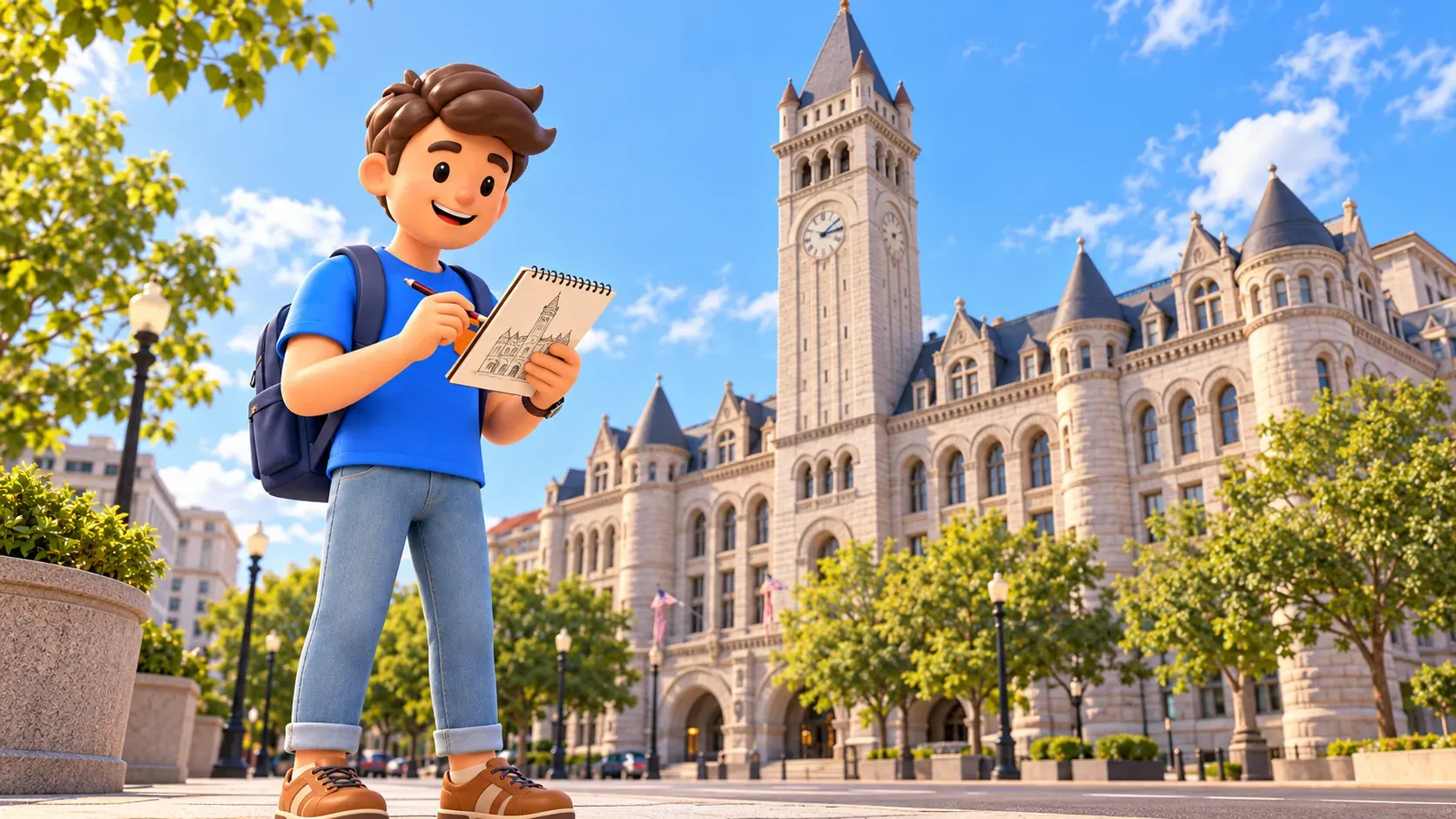
Notice the avenue between the landmarks
The walk is not only a way of getting from one named place to another. Look at the scale of the street, the building fronts and the changes in open space. A clock tower draws the eye upward; a plaza invites you to slow down; a large institutional façade gives a different sense of arrival.
Choose one simple question for the transitions: what is this building or space trying to make visible from the street? You do not need specialist architectural vocabulary to notice whether an entrance is emphasised, a monument sits apart from the pavement or repeated openings create a rhythm along a façade.
Cross at the appropriate public crossings and leave time to orient yourself. The short route works better when the street is part of your attention, rather than a space to rush across while checking the next stop on a screen. A few moments of looking can give the avenue a character that a list of attractions does not convey.
Give the Navy Memorial its own pause
The United States Navy Memorial changes the subject from a historic working building to public remembrance. Its plaza and memorial elements honour naval service, offering another way to read the capital’s spaces. Begin by looking at the whole setting before moving towards the individual details that interest you.
Notice the relationship between the ground, sculpture and surrounding buildings. A memorial placed within a city street has a different atmosphere from one set in a large park. People may be passing through, stopping briefly or making a visit with a personal connection. Give each kind of visitor room rather than treating the plaza only as a photography backdrop.
Choose one or two details and let them lead the visit. A short stop can be substantial when it has a clear focus. You do not have to turn twenty minutes into a complete history of the Navy, nor assume that a smaller outdoor setting deserves less care than a famous monumental building.
The Temperance Fountain is a small additional reference nearby if it fits the public line you are following. Its scale makes a useful contrast with the larger memorial and institutional buildings. Keep it optional: the route does not depend on finding every minor feature, and a small detour should not take away the pause you wanted at the main site.
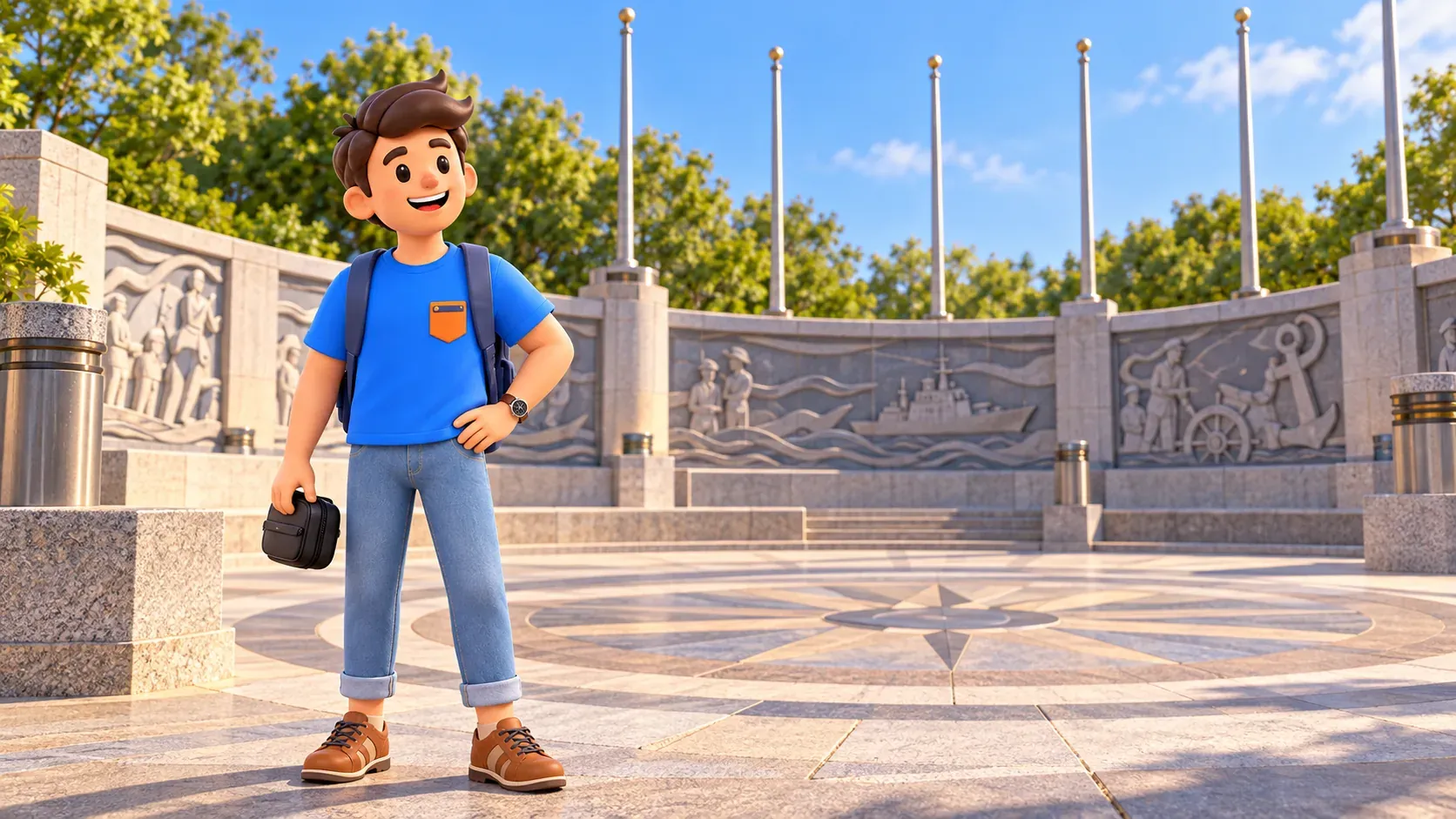
Finish at the National Archives exterior
The National Archives introduces another kind of national memory: documents and records rather than an individual commemorative monument. Its association with the country’s founding documents gives the building a clear place in a first Washington visit. For this short programme, the exterior and its institutional setting are the main experience.
Look at the broad façade and the way the building presents an entrance. Compare that scale with the clock tower at the beginning and the open plaza of the Navy Memorial. You have moved through three settings with different functions, which gives the walk a useful structure even without an interior visit.
If you want to enter the museum, make that a separate choice before beginning the route. Check the Archives’ current visitor information, entry arrangements and the entrance you need. A possible visit inside is not simply another few minutes attached to the exterior; it adds a new subject and a different pace.
You may decide that the documents are the main reason for coming. In that case, give the museum a proper part of your day and reduce the walk to one or two exterior observations nearby. The compact geography is an advantage only when it leaves enough attention for the visit you actually value.

The three main stops also suggest a simple theme to carry through the walk: the ways a capital connects people and preserves memory. A former postal building points towards communication, a naval memorial towards service and journeys, and the Archives towards the records kept for later generations. You can use that thread as an invitation to look, without needing to turn each stop into a long account of national history.
Leave a little unassigned time for the place that surprises you. You may find the tower’s outline more interesting than expected or prefer a longer interval in the memorial plaza. A compact route gains from those discoveries when its practical boundaries are clear and the next stop remains optional.
Choose a clear ending instead of another compulsory stop
The Archives area is a reasonable finish for the two-hour version. Plan how you will continue to lunch, your accommodation or the next activity, and include that journey separately. Reaching the last building does not mean you have already arrived at the next part of your day.
A longer outing can add a museum or another neighbourhood, but select one purposeful continuation. Avoid turning the short avenue walk into an unplanned attempt to reach the Capitol, White House and western memorials in the same window. Those places can form other programmes with their own time and geographic logic.
For a wider day built around your priorities, RoadMe can prepare a complete personalised itinerary based on your interests and preferred pace, bringing the avenue walk and the rest of Washington together more conveniently. It helps give a short route a sensible role within your whole trip.
Before setting out, check the weather and the public access arrangements relevant to the stops you choose. A hot or rainy period may suggest fewer viewpoints and a longer pause, while an interior reservation changes the balance of the day. Keep the programme flexible enough to remain enjoyable under the actual conditions.
If you are still choosing the main direction of your visit, see the guide to Washington routes for different interests. This small avenue programme already offers a distinct experience: a tower above the street, a memorial within the city and a building devoted to the written record, with time to notice the spaces between them.


