
Penn Quarter in Half a Day: One Art Complex and a Chinatown Walk
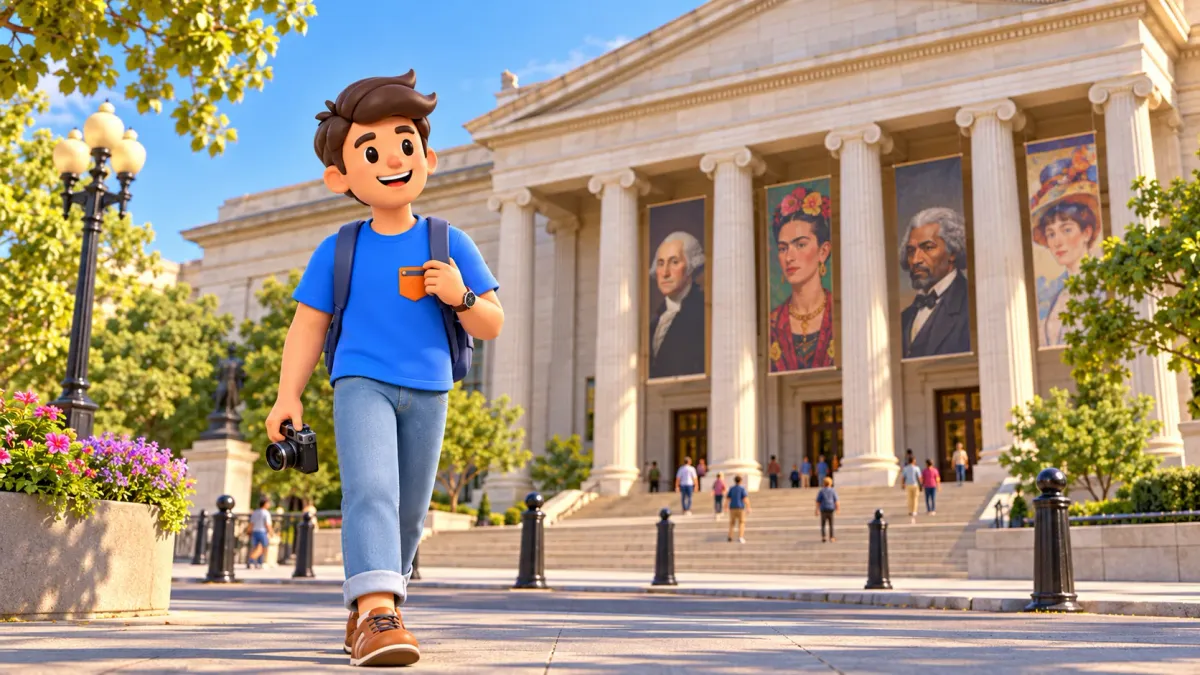
Penn Quarter is a useful choice when you want art at the centre of a Washington half day without spending the whole outing moving between distant museums. The National Portrait Gallery and Smithsonian American Art Museum share one historic complex. Add a short neighbourhood walk towards the Friendship Archway and Sixth & I, and the day moves naturally from galleries to city streets.
The important decision is to choose a selective museum experience. Two institutional names do not require two complete museum visits. Give one collection theme your strongest attention, use the courtyard if it is available, then leave enough energy for the nearby urban landmarks. The result can feel varied without becoming a museum marathon.
Plan one museum complex and a short outdoor finish
Start with the shared Portrait Gallery and American Art Museum building, continue through a small selection of galleries, then take a break before the Chinatown walk. The Friendship Archway and Sixth & I provide a distinct final chapter rather than another long collection visit. This keeps the half day coherent and geographically compact.
RoadMe can build a complete personal itinerary around your interests, dates and preferred pace, helping you choose the kind of art day that suits you. Planning the whole Washington trip in the app makes it easier to balance galleries, neighbourhoods and rest without collecting more places than you want to visit.
Allow roughly three to four hours for arrival at the complex, a selective museum visit, a pause and the local outdoor connections. This is an editorial estimate, not a measured itinerary or a claim that both museums can be fully seen in that time. Travel to Penn Quarter and a substantial meal can add more.
Check the museums’ current visitor information before choosing your start time. Opening windows, gallery access, security arrangements and special events can affect the experience. Do not use the name Smithsonian as a substitute for checking the particular building you intend to enter. This article deliberately avoids giving a universal rule for every museum in Washington.
Begin with the shared building
The National Portrait Gallery and Smithsonian American Art Museum occupy the same historic location. Understanding that fact simplifies the outing immediately: you are not planning a cross city transfer between two institutions. Take time to orient yourself at the complex and identify the galleries or theme you actually want to prioritise.
Before entering, look at the building as an urban presence. Its substantial scale offers a contrast with the surrounding commercial streets and with the smaller landmarks later in the route. The architecture is part of the visit, but it does not have to become a separate exhaustive subject before you even reach the art.
Inside, use the current floor plan rather than assuming that an older description still reflects the galleries. A collection is not a permanently fixed display of every work it owns. Exhibitions, conservation and temporary closures may affect individual rooms or artworks. The useful plan chooses a subject and remains open about the exact works available.
Agree on a meeting point if the group separates by interest. One visitor may want portraits, another a different aspect of American art. Sharing a building makes that choice easier, but it does not remove the need to agree when and where you will meet. A common pause afterwards can make different gallery experiences work within the same outing.
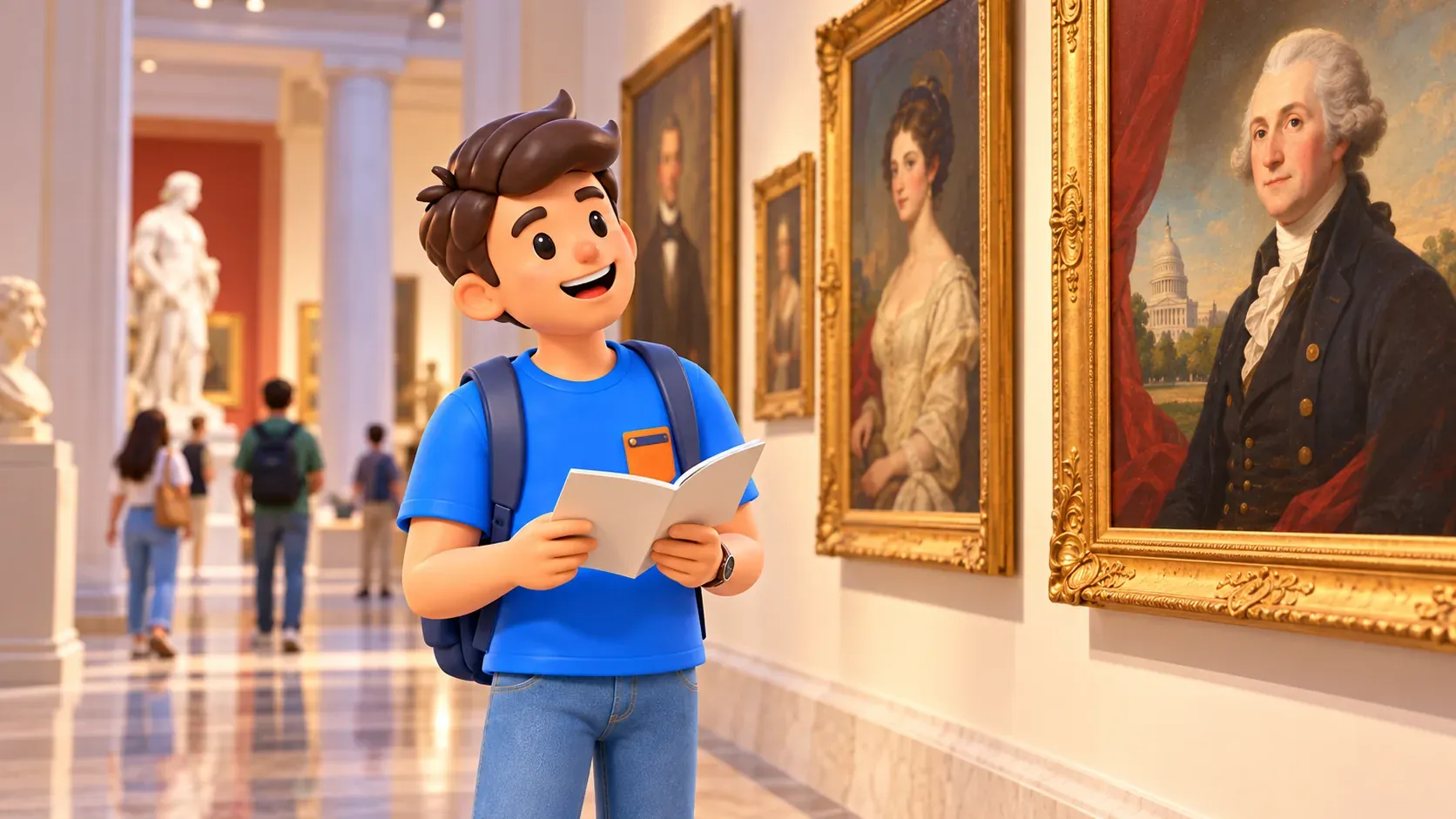
Choose a way of looking instead of trying to see everything
For a portrait focused visit, begin with the question of how a person is represented. Posture, setting, clothing and the artist’s choices can communicate public identity as well as physical appearance. Compare a small number of works with attention. Reading every label is less important than actually noticing what changes from one portrait to the next.
For a broader American art visit, choose a period, medium or visual question that interests you. You might compare approaches to landscape, look at how artists use colour, or concentrate on a few works that challenge your first impression. These are ways to structure attention, not promises that a particular exhibition or named artwork is currently on display.
Keep the selection small enough that you can look twice. First notice what draws your eye, then read the available interpretation and return to the work. That second look often gives a museum visit more value than moving immediately to the next room. You do not need specialist knowledge to make an observation and revise it.
For a mixed group, agree on one short shared gallery section and allow some independent time. This avoids requiring every person to sustain the same interest for the full visit. Children may enjoy choosing a detail or explaining which work they would place together, provided the activity respects gallery rules and other visitors.
Use the courtyard when it is available
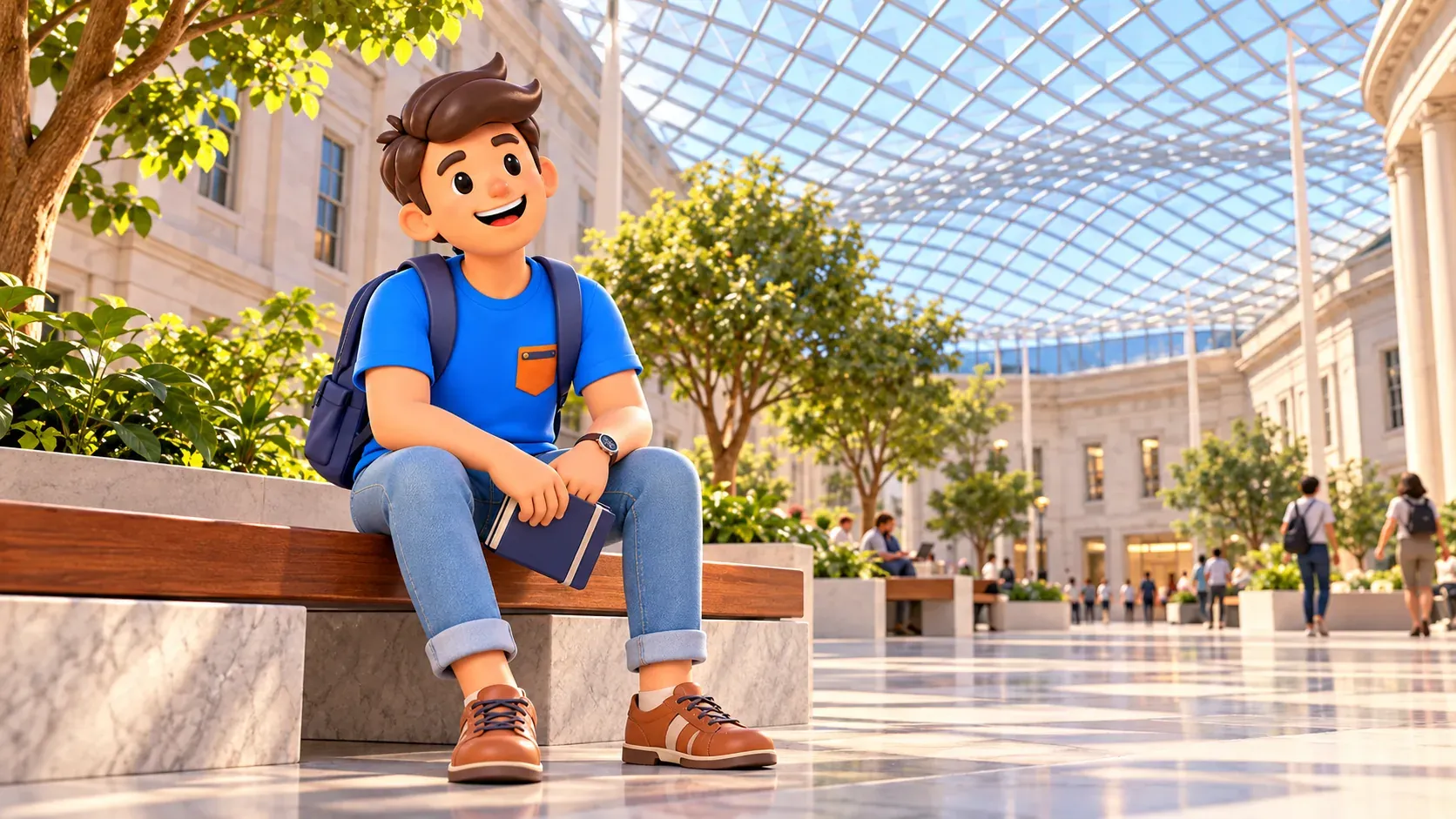
The glass enclosed Kogod Courtyard offers a change from concentrated gallery looking. If it is open, use it as a pause and an architectural contrast within the same complex. The point is not simply to collect another named attraction, but to let the group relax and decide whether to continue with art or move outside.
Availability needs checking. On 22 October 2026, the official SAAM page lists courtyard closures for that evening from 5 to 7pm and for 23 October. Events and other arrangements can also affect access on future dates. The route therefore treats the courtyard as an optional pause, not a guaranteed public sitting room every day.
If it is unavailable, keep the gallery visit selective and take your break elsewhere after leaving. Do not assume a courtyard closure means the entire museum complex is closed, or that an open museum guarantees every associated space is accessible. Those are separate conditions that should be checked in the current notice.
The transition out of the museum matters. Give yourself time to collect belongings, use available facilities where appropriate and reorient to the street. After close attention indoors, crossing a busy road can feel abrupt. A few calm minutes are a better connection than treating the final gallery as the beginning of a race to the archway.
Finish with the Friendship Archway and Sixth & I
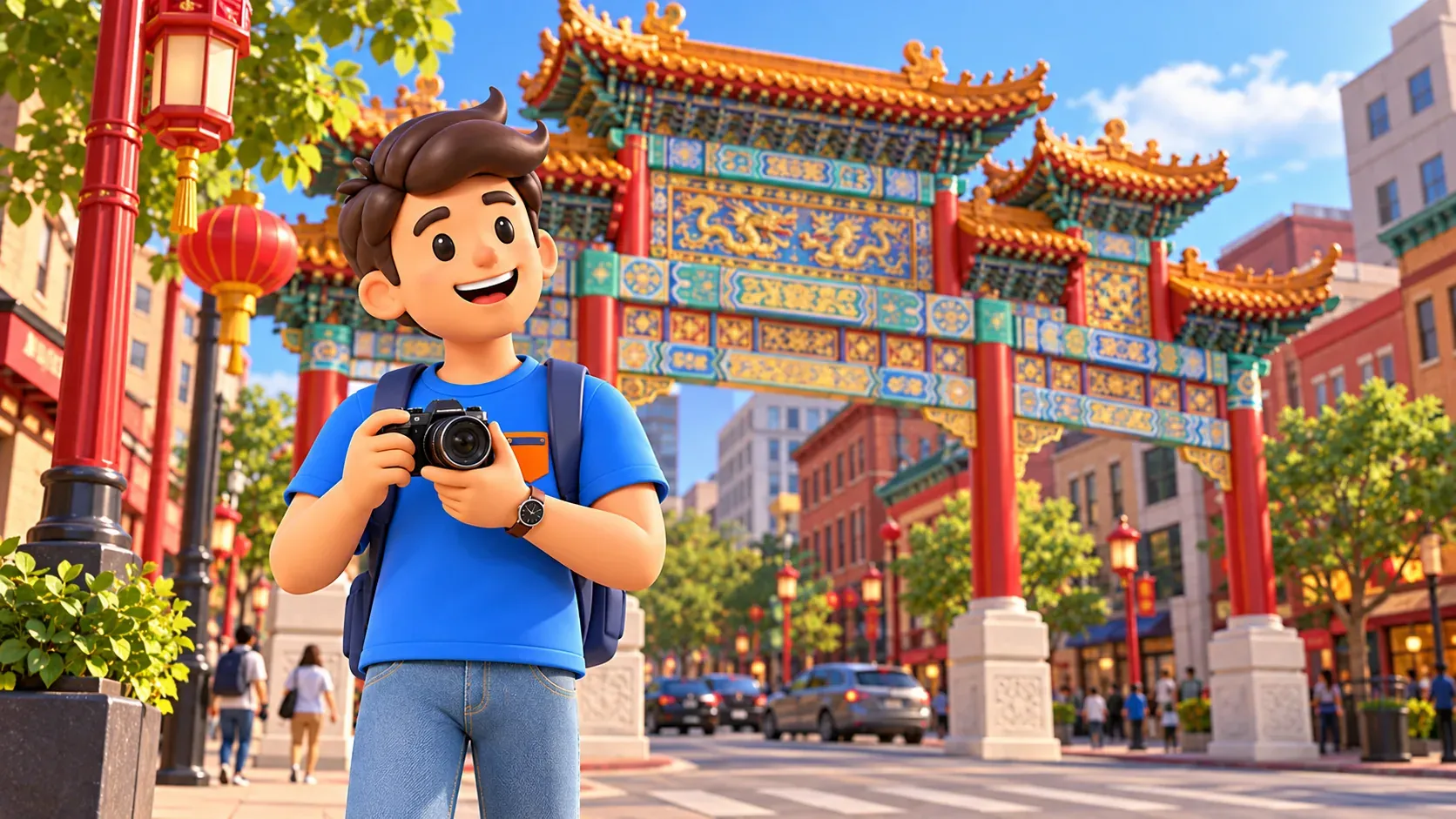
The Friendship Archway introduces a different scale and cultural story on the nearby streets. Dedicated in 1986, it marked the sister city relationship between Washington and Beijing. Its colour and ornament make it a strong contrast with the museum building, while its place over a working street keeps it connected to everyday urban movement.
Choose a safe public viewing position and observe the overall silhouette before looking for decorative details. Do not step into traffic for a symmetrical photograph or assume the space beneath an arch is pedestrian only. The best stop is one where the group can look comfortably while allowing others to use the pavement.
Chinatown is a living urban area with a history more complex than a single landmark. Avoid treating the archway as a complete explanation of the community or assuming that every nearby business represents the same cultural story. A short walk can introduce the setting while leaving room for a more focused exploration another time.
Continue towards Sixth & I as an exterior cultural and religious landmark. The basic route does not promise entry to the building or a scheduled event. If a programme there interests you, verify its date, ticket and entry requirements separately. A place with public events is not necessarily open for informal browsing whenever you pass.
These two stops are a light finish after the art rather than another hour of dense interpretation. Notice how a museum, an archway and a cultural building communicate their roles differently. That comparison gives the half day a clear thread across changing architectural forms and visitor experiences.
Adjust the balance between art and neighbourhood time
If art is the main reason for the outing, devote more of the available time to the selected galleries and keep the exterior finish brief. If your group enjoys the city more than long museum visits, choose one focused indoor section and preserve a comfortable outdoor pause. The same geography can support different kinds of half day.
Use RoadMe to turn that preference into a personal programme for the whole trip, shaped around the interests, dates and pace you choose. The app makes it more convenient to organise Washington days that work together, with the right amount of art, neighbourhood discovery and breathing space.
A meal deserves a deliberate place in the plan. A full lunch can become a substantial part of the half day, while a drink may be a shorter pause. Queues, seating and service vary, so avoid promising yourself a fixed turnaround immediately before a reservation elsewhere. Decide whether the food stop or the gallery selection should lead the rhythm.
For rain, the museum complex makes a useful main focus, but the outdoor conclusion still needs appropriate clothing and a realistic choice about comfort. Shorten it if necessary rather than assuming every cultural building nearby will provide shelter. Each institution and business has its own access conditions.
Visitors with particular mobility needs should review the museum’s current accessibility information and the exact outdoor connections. Sharing a building simplifies geography, but it does not establish that every gallery route or street crossing suits every visitor. Choose entrances and breaks according to your own requirements.
Finish with enough time for your onward connection and enough energy to remember what you enjoyed. This half day succeeds through one clear museum choice and a short urban contrast. For the broader balance of Washington’s neighbourhoods, central monuments and other museum days, consult the guide to choosing a route around your interests.


