
Washington, DC in One Day: A Landmarks Walk Without a Museum Marathon

With one day in Washington, DC, the clearest introduction is a walk from the Capitol towards the Lincoln Memorial. It follows the city’s most recognisable sequence of landmarks, gives the National Mall time to make an impression, and avoids building the whole day around museum entrances. You will see the Capitol, Washington Monument, World War II Memorial, Reflecting Pool and Lincoln Memorial in a coherent order.
Temporary access restriction, checked 22 October 2026. The Lincoln Memorial Reflecting Pool, the paths immediately beside the water and adjoining lawn strips are closed under an NPS notice until 20 November 2026 at 11:59 p.m. Follow only signed open outer paths and diversions; access along the pool edge and reflections in the water are not part of the current programme. A diversion may increase the estimated walking time.
Think of this as a full sightseeing day with pauses, rather than a brisk march between photographs. The programme is built around exterior visits, so you can spend more time looking at the city and less time trying to fit indoor attractions into narrow gaps. The estimates below are planning allowances, not measured walking times or guarantees.
The route in one view
Begin in the Capitol area and move west through the National Mall. Keep the Washington Monument as your middle-of-the-day landmark, then continue towards the World War II Memorial and Reflecting Pool. Finish at the Lincoln Memorial, where the view back towards the obelisk gives the day a satisfying conclusion. This direction keeps the principal walk moving forward.
For a day organised around your own interests, try RoadMe: the app builds a personalised route from your dates, pace and preferences, making a Washington visit much more convenient to plan. It brings the day’s places together in one travel tool, so your programme fits the time you actually have.
Allow roughly six to eight hours from the first sightseeing stop to the last if you want an unhurried day, lunch and several breaks. The exact length depends on your starting point, the paths currently available and how long you spend at the memorials. This is a several-kilometre outing, and the return journey to your accommodation is additional.
| Part of the day | Main focus | How to approach it |
|---|---|---|
| Morning | Capitol exterior | Look at the building and its setting before heading west. |
| Late morning | National Mall | Walk through the museum area with a planned pause. |
| Middle of the day | Lunch and Washington Monument | Eat before committing to the western memorials. |
| Afternoon | World War II Memorial and Reflecting Pool | Slow down as the route changes from city walk to remembrance. |
| Final stop | Lincoln Memorial | Leave time for the memorial and the view back along the axis. |
Start with the Capitol’s exterior
The Capitol works as a first stop because it gives a clear identity to the government quarter. It is the meeting place of the US Congress, and its familiar dome belongs to a building that developed over several stages. Construction began in 1793; later enlargements changed both the wings and the dome. You are looking at an evolving working institution, not simply a fixed image from a postcard.
Spend around forty-five minutes to an hour in the area if architecture and photographs interest you. Use the public pedestrian approaches available on the day, look at the proportions from more than one position, and notice how the building relates to the open space west of it. You do not need to read every architectural detail to appreciate the scale.
This route does not depend on a Capitol tour. An interior visit has its own arrangements and takes time away from the rest of the walk. If that is your main reason for coming, make the tour the day’s central commitment and shorten the outdoor programme. Avoid treating a pre-booked interior as something that can be inserted without changing the schedule.

Walk the National Mall at a realistic pace
Once you leave the Capitol area, the long open perspective becomes the main experience. The Mall is a place to understand Washington through space: government architecture behind you, museum buildings along the central stretch, and the obelisk ahead. Let the walk reveal those relationships instead of treating the space between monuments as an empty transfer.
Keep to a forward direction, but do not insist on the most exposed line simply because it looks direct on the map. Use the public paths that suit the conditions and any temporary diversions. A bench stop, a drink and a look at the surrounding buildings are all part of the outing. The purpose of a one-day programme is to make the main places enjoyable.
The museums are tempting, so make your decision before reaching them. A substantial visit to Natural History, Air and Space or an art collection can take the place of a large part of the outdoor day. If a museum is essential, choose one and accept a shorter memorial walk. Dropping into several collections for a few minutes usually makes the programme feel fragmented.
Give lunch a proper place in the day
Plan lunch before you become tired. An exterior sightseeing route still needs time for food, toilets and simply sitting down. Allow around an hour as a useful planning estimate, and identify an option that fits your actual line of travel rather than assuming that the next memorial will provide everything you need.
Use the break to reassess the afternoon. If the weather has changed or the group has already walked enough, reduce the remaining stops. If everyone is comfortable, continue to the Washington Monument and the western section. A route is working well when it leaves room to adjust the pace, rather than requiring you to recover lost minutes at every stage.
Read the Washington Monument from the ground
The Washington Monument is the day’s central visual reference. Its obelisk form contrasts with the Capitol’s dome and the Lincoln Memorial’s temple-like outline. From nearby public paths, look at the structure as a whole, then notice the changes in the colour of its stone. The differences reflect the interrupted building history and the use of stone from different quarries.
The monument honours George Washington, and its construction took place in two main phases during the nineteenth century. That small piece of context changes a quick photograph into a more attentive look: the surface records a long project, while the simple silhouette holds together the much larger urban scene around it.
For this itinerary, stay with an exterior visit and give yourself roughly twenty to thirty minutes in the surrounding area. Entering the monument is a separate activity with its own ticket arrangements. If you have reserved it, allow for the actual entry time and shorten another part of the day instead of expecting the outdoor schedule to remain unchanged.
Continue to the World War II Memorial
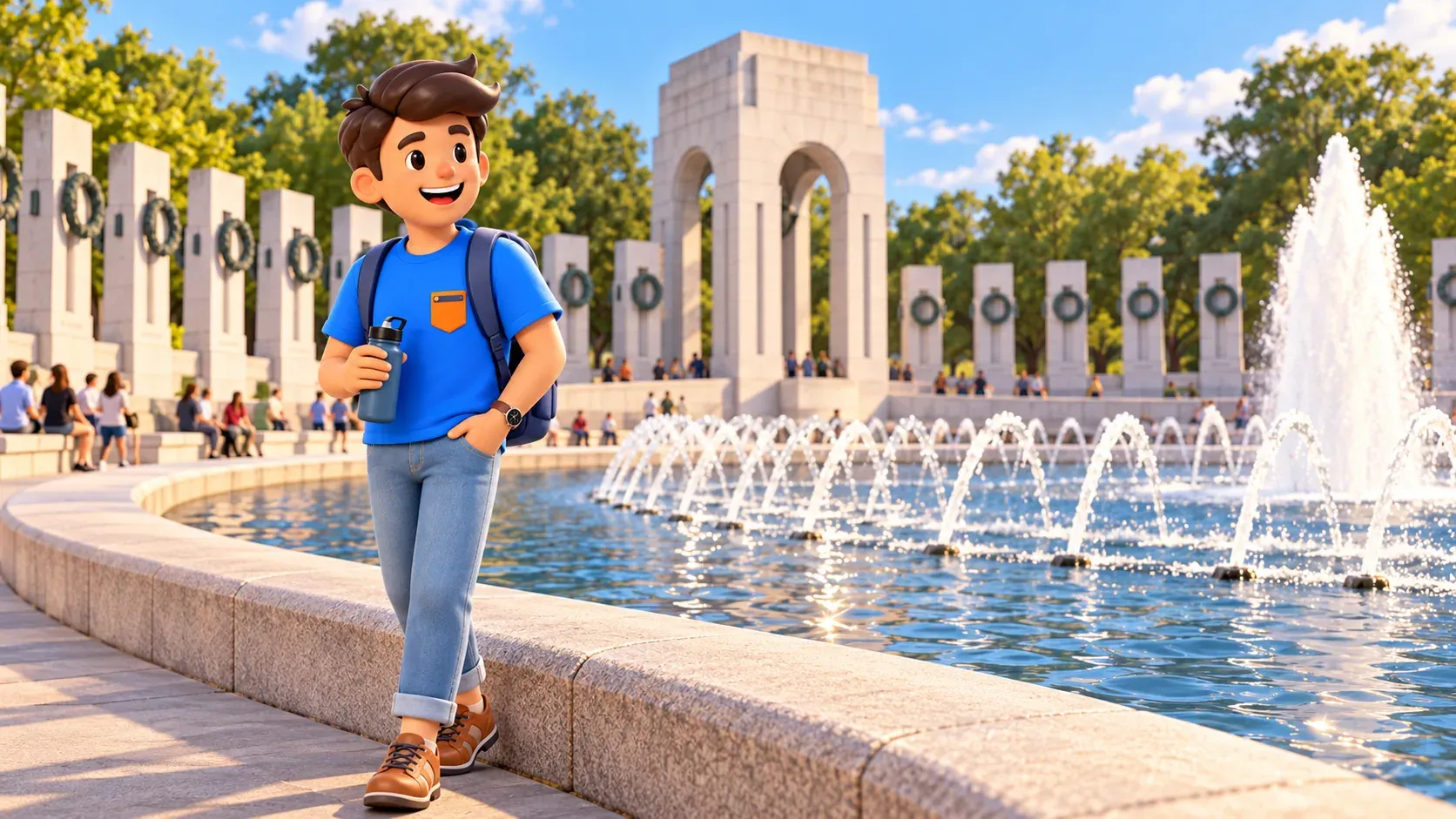
Heading west brings you to a place with a different purpose and rhythm. The World War II Memorial honours service and sacrifice, using a ring of columns, water, bronze details and inscriptions. The columns represent the US states and territories of the wartime period. The memorial was dedicated in 2004, adding another layer of remembrance to the Mall’s historic landscape.
Allow time to move through the space rather than stopping only at the first viewpoint. Notice how the individual elements form a collective setting. You do not need a long explanation of every inscription to understand that this is a place for looking, remembering and giving other visitors room.
Keep the next stage simple. The Reflecting Pool continues the western sequence towards the Lincoln Memorial. This is a good point to decide whether you still want a full final visit or a gentler finish. Water features and surrounding works can affect the scene, so treat the route as a journey through the place as you find it.
Follow the Reflecting Pool towards the Lincoln Memorial
The long view towards the Lincoln Memorial is one of the rewards of taking the route on foot. Choose a public path along the pool and leave time to stop and look back. The relationship between water, trees, the obelisk and the memorial becomes easier to notice when you are not rushing to reach the steps.
At the memorial, take in the building first, then the seated figure of Abraham Lincoln. The change from the bright open landscape to the more enclosed memorial space is part of the experience. A short pause can be more meaningful than trying to turn the stop into a complete history lesson. Respect the atmosphere and the people who have come to reflect.
Leave around forty-five minutes to an hour for the final approach, your chosen time at the memorial and a look back along the axis. You may want longer; you may prefer to sit outside. Follow the access routes and signs available on the day, and remember that the visit is not finished until you have accounted for your onward journey.

Choose an ending that matches your energy
For most first-time visitors, the Lincoln Memorial is a strong enough final stop. The Vietnam Veterans Memorial and Korean War Veterans Memorial are nearby possibilities, but choose one only if you still have time and attention to give it. Each deserves more than a hurried photograph on the way to something else.
If you want the day to fit your interests more closely, RoadMe can work out a complete personalised sightseeing plan around the time and pace you prefer. That makes organising a short Washington visit more convenient, especially when the people travelling together have different priorities.
Keep the White House, the Tidal Basin and Georgetown for another programme unless one of them is your main priority. They are worthwhile choices, but adding them all turns a clear westbound route into a much larger undertaking. With one day, deciding where to stop is as useful as deciding where to begin.
Shorten the walk before the day feels rushed
If you have only a few hours, choose either the Capitol and central Mall or the western memorial group. Starting near the Washington Monument and continuing to Lincoln preserves the main western sequence while removing the long eastern approach. Alternatively, spend your time around the Capitol and leave the memorials for a later visit.
In hot weather, move the longer outdoor sections to a cooler part of the day and build in more pauses. In rain, a museum-led programme may be a better choice than insisting on the entire walk. Outdoor access around government buildings and works on public paths can change, so follow the current signs and keep a simple alternative in mind.
Before setting out, confirm your starting point, lunch idea, final stop and return transport. Bring what you need for the conditions, and leave some time unassigned. The route’s value is the sequence it reveals: the Capitol’s institutional scale, the Mall’s openness, the obelisk as a city landmark and the western memorials as places of remembrance. Giving those experiences room is enough for one memorable Washington day.


