
Washington National Cathedral and Gardens: A Slower Half-Day Visit
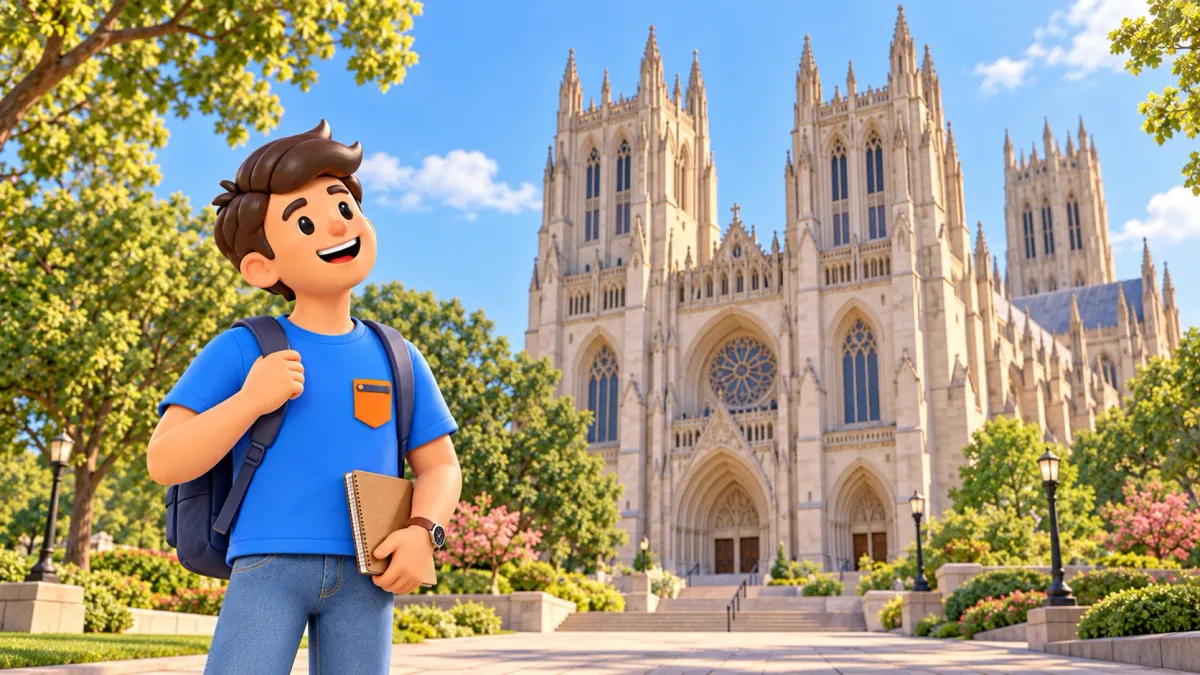
Washington National Cathedral is a destination that benefits from its own neighbourhood visit. The building, Bishop’s Garden and Olmsted Woods offer a combination of monumental architecture and quieter landscape away from the National Mall. You can shape the outing around an interior visit when sightseeing is available, or choose a primarily outdoor version through the open grounds.
Begin with the cathedral exterior, continue to Bishop’s Garden and finish with a selected walk in Olmsted Woods, with an optional exterior look towards St. Alban’s. Allow roughly three to four hours if you include a focused interior visit and a pause; a shorter outdoor version is possible. These are editorial estimates, not measured visiting times.
Choose between an interior focus and a garden focus
The useful first decision is what you want the visit to do. An architecture focused programme gives the cathedral the strongest attention. A slower landscape programme spends more time in the garden and woods. Both can include an introduction to the other parts without treating every tour, level and path as compulsory.
RoadMe can create a complete personal itinerary around your interests, dates and preferred pace, helping you decide where a cathedral and garden visit belongs in your Washington stay. Planning the trip in the app makes it more convenient to balance architecture, outdoor time and your other priorities.
Check the cathedral’s current sightseeing calendar before arranging the day. It is an active religious institution, and sightseeing hours vary around worship and other activities. A building open for prayer does not establish that tourist visits, tours or every visitor area are available at the same time.
The grounds also require attention to actual signs. On 22 October 2026, the cathedral announces that the Garth, including All Souls Memorial Garden, is temporarily closed because of central tower restoration. Bishop’s Garden and other available grounds remain the suggested alternatives. This route does not promise unrestricted access to the entire Cathedral Close.
Begin by seeing the cathedral as a whole
Construction of Washington National Cathedral began in 1907 and reached completion in 1990, eighty three years later. That long building period is a useful historical starting point: the architecture draws on an older Gothic tradition, but this is also a twentieth century project shaped over generations rather than a surviving medieval church.
Before looking for individual carvings, step back within permitted public space and observe the overall form. Towers, vertical lines and the relationship between the stone building and its setting establish the scale of the place. Choose one broad view and one closer detail rather than trying to locate every feature immediately.
The cathedral’s religious role and national significance coexist. A sightseeing visit is only one of its uses, so quiet behaviour and attention to instructions matter. Visitors can be interested in art and architecture without sharing a particular faith, while still respecting the purpose of the building and people who come for worship.
If sightseeing is available and you choose to enter, give the interior a focused block of time. Select a few themes rather than attempting every interpretive stop. The shift from the exterior’s mass to interior light, scale and materials can provide a strong experience even without an exhaustive account of every window and carving.
Special tours and access to areas such as towers, lower levels or an observation gallery depend on current arrangements. Do not assume that a general ticket guarantees every space on every date. This article leaves unusual details for a separate focused visit and makes no promise that a particular feature is always available or easy to see.
Change scale in Bishop’s Garden
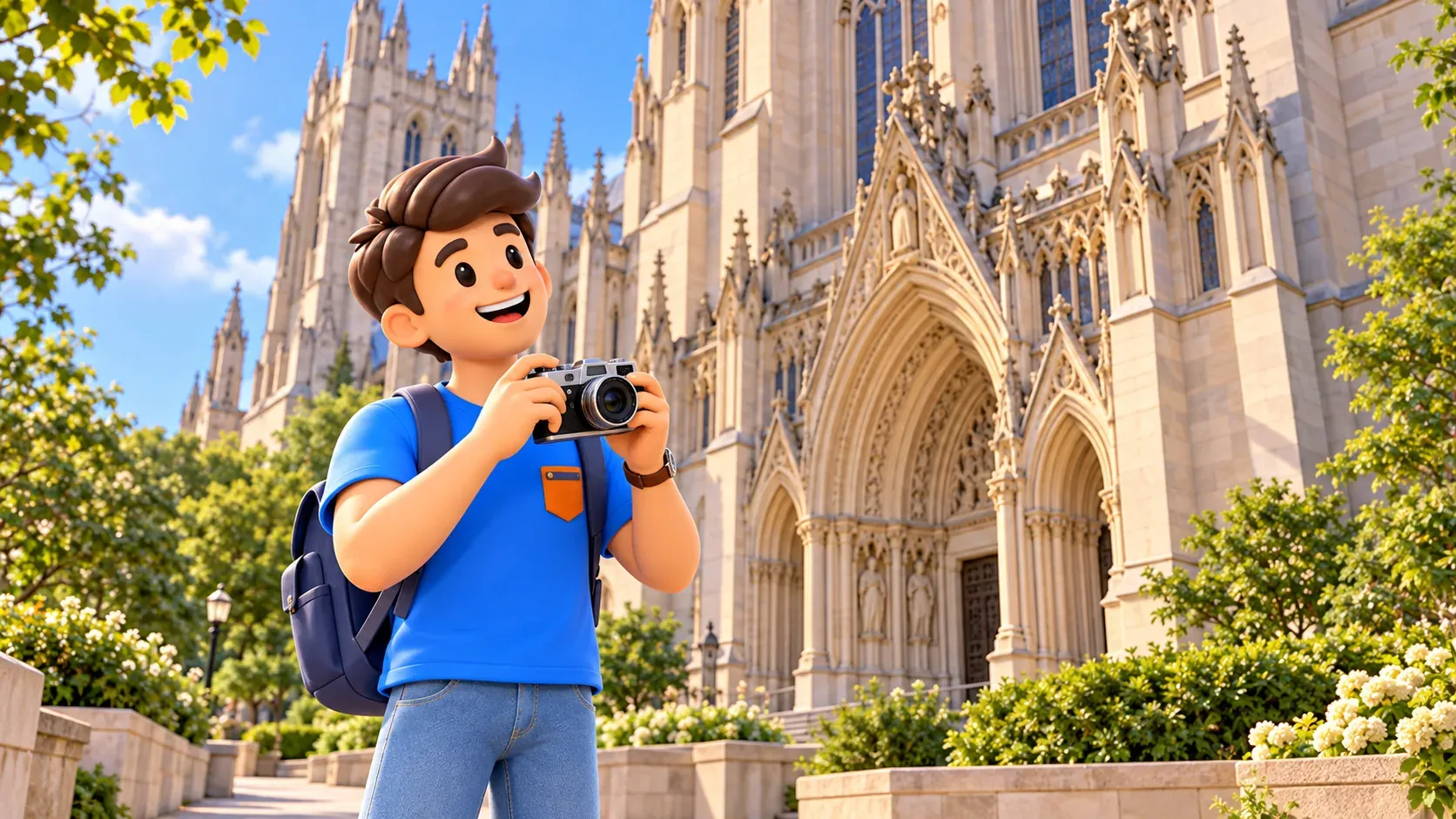
Bishop’s Garden brings the outing from monumental stonework to a more intimate designed landscape. Look at how boundaries, planting and changes of space frame the cathedral rather than treating the garden as decorative background for the building. The relationship between the two is one of the strongest reasons to give the grounds their own attention.
The wider cathedral landscape is associated with Frederick Law Olmsted Jr., and the garden’s history reflects ideas about an enclosed place beside the bishop’s home. You do not need to reconstruct every stage of the design to notice how a smaller space changes the mood after a large interior or exterior.
Choose a short sequence of available paths and look at the structure before concentrating on flowers. Planting varies with the season, while walls, entrances and the relationships between spaces can remain interesting year round. A photograph of spring or summer should not become a promise of the same appearance during an autumn visit.
All Hallows Guild welcomes visitors to the gardens and grounds throughout the year, but that does not remove temporary restrictions or the effect of weather. Follow current signs and keep to open paths. A garden open in principle does not guarantee every gate, stair or adjacent garden is available at the moment you arrive.
Give this section time to be quiet. After a concentrated cathedral visit, you may prefer to sit or look rather than continue reading. Do not add a garden tour merely to make the afternoon seem fuller. If a guided landscape experience is your priority, check its current arrangements separately and make it the centre of the outdoor part.

Use Olmsted Woods for a different kind of pause
Olmsted Woods offers a contrast with the composed garden and the cathedral’s formal presence. The woodland setting changes light, enclosure and the sense of movement. A selected public path can be enough to experience that difference; you do not need to cover the whole wooded area for it to contribute meaningfully to the visit.
The cathedral describes the woods as an oak and beech forest. Notice the relationship between trees, ground and paths rather than treating every green space as a garden bed. The landscape asks for a different kind of looking, with attention to layers, seasonal change and the way a route passes through shade.
Weather affects the experience. Wet leaves, mud, uneven surfaces or maintenance can make a section less suitable for your group. This article does not establish a step free woodland route or guarantee gentle gradients. Choose the actual path according to current conditions and turn back if the comfortable option is shorter than expected.
St. Alban’s can provide an optional exterior observation within the wider setting, but it should not become another promised interior. Religious and educational buildings in the area have their own uses and boundaries. Appreciate what is visible from permitted public space and avoid entering private or restricted grounds as a shortcut.
Respect the landscape by staying on open paths, leaving plants undisturbed and giving other visitors room. A quiet woodland stop works best without a prolonged group photo session across the route. The aim is a change of pace after the architecture, not another checklist of things to collect.

Build a realistic visit around one priority
For an interior focused version, arrange the available sightseeing period first, then use Bishop’s Garden and a brief woodland section afterwards. For an outdoor focused version, give the cathedral a thoughtful exterior introduction and spend more of the afternoon in the available landscape. Both plans should include time to arrive, orient and take a break.
A café stop is a possible addition under its own current opening arrangements. It is not a guaranteed service at every hour the grounds are accessible. Decide whether you want a drink or a full meal, because they change the schedule differently. Avoid making the return journey depend on an assumed short queue.
Use RoadMe to turn those preferences into a personal programme for the whole trip, based on the interests, dates and pace you choose. The app helps organise Washington days more conveniently, giving a quiet cathedral and garden visit room alongside museums, neighbourhoods and central landmarks.
If time is limited, remove one optional element rather than cutting every pause. A cathedral introduction and a single garden can make a complete visit. Adding the woods is valuable when it matches your interests and comfort, not simply because the name appears on the same grounds plan.
Keep the journey separate from a central Washington walking estimate. The cathedral is not an immediate neighbour of the Mall, and a visit requires its own transport plan. Do not attach it to an already full landmark day without allowing for the transfer and the attention the destination deserves.
Prepare for a visit that moves between different spaces
Bring footwear suitable for pavements, garden paths and any woodland section you choose. Carry water or a weather layer as conditions require. Check toilets, seating and accessibility information locally or through the relevant institution rather than assuming the same facilities are available throughout the grounds and buildings.
Visitors with particular mobility needs should review the exact cathedral entrance, garden approach and paths they intend to use. The terms garden and grounds do not establish an entirely accessible route. Keeping the programme selective makes it easier to choose comfortable connections and avoid unnecessary changes of level.
With a mixed interest group, agree on one shared observation in each setting: the building’s outline, a garden boundary and a change in woodland light. Brief moments like these make the outing engaging without requiring everyone to sustain the same interest in religious history, architecture or horticulture throughout the full visit.
Finish with a clear departure plan and enough time for the connection. The cathedral, Bishop’s Garden and Olmsted Woods offer a coherent Washington chapter through architecture, designed landscape and woodland quiet. For the wider choice of neighbourhoods, museums and central sights, consult the guide to choosing a route around your interests.


