
Darth Vader and a Moon rock: unexpected National Cathedral details
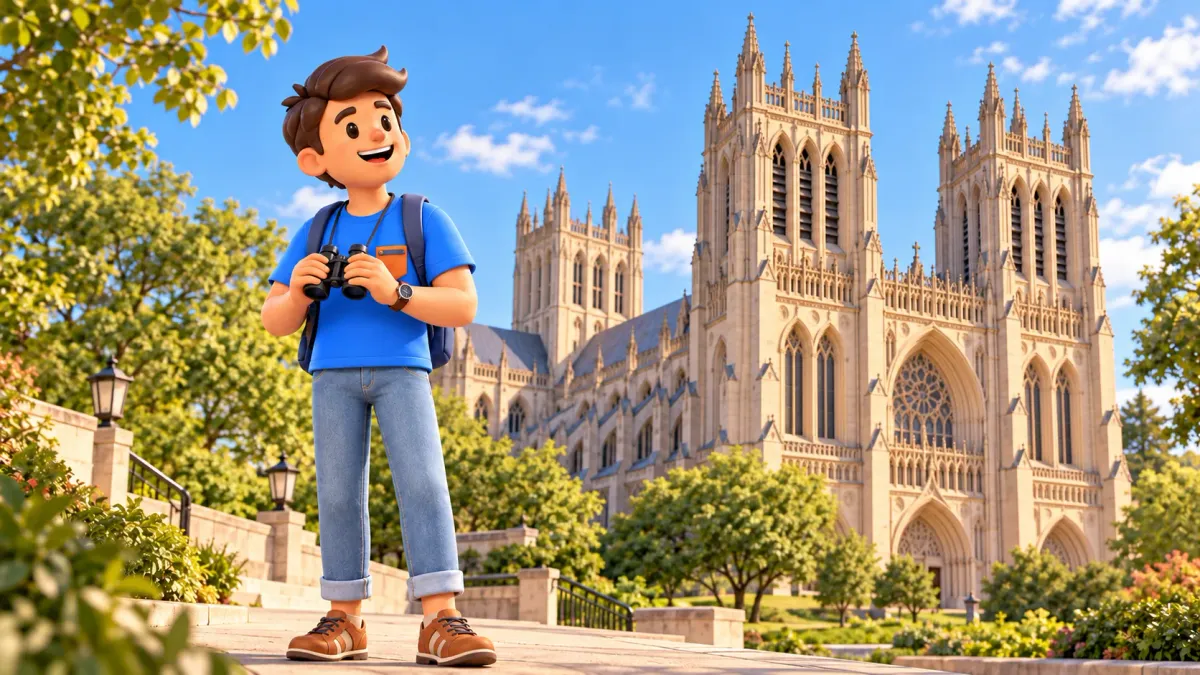
Washington National Cathedral can be admired as a large Gothic building, but two small details change the familiar view. High on a northwest tower is a stone Darth Vader. Inside, the Space Window contains a genuine fragment of lunar rock brought back by the Apollo 11 mission.
These stories do not turn the Cathedral into a theme park or require you to find every unusual feature. They offer two different looking tasks: finding a small carving within substantial exterior architecture, and noticing how material and colour connect art with space exploration indoors. Start planning by separating the outside observation from a sightseeing visit inside.
Two stories with different visiting arrangements
Darth Vader is on the outside of a northwest tower, well above eye level. The Space Window is inside on the south side of the Cathedral’s main space. One is not simply an extension of the other through an always-open door. Check the current sightseeing calendar and admission arrangements if the interior is part of your plan.
The Cathedral offers paid self-guided sightseeing and different tours. Hours vary around worship and other activities. Worship services and private prayer are free, but those are different purposes, not a way to conduct an ordinary sightseeing tour without a ticket. Choose the format that matches what you actually intend to do.
RoadMe makes it easier to turn an interest in unusual details into a personalised walk or whole trip. Try the app to work out a programme that brings the Cathedral, your other interests and time to rest together at a comfortable pace.
You can keep the visit outside, or make indoor sightseeing the centre of the day. Neither option needs to include every garden, a tower climb and several distant museums. These two stories help focus attention rather than expand the compulsory checklist.
How Darth Vader became part of a cathedral
The carving grew out of a children’s competition for Cathedral stonework designs. A recognisable film character became part of the architectural decoration; the Cathedral’s official visitor guide dates its installation to 1987. It is an example of a building using a Gothic visual language while leaving room for modern culture.
The Cathedral itself is not a medieval building transferred to America. Construction ran from 1907 to 1990. Pointed forms and stone carving refer to older architectural traditions, but the building developed during the twentieth century. A contemporary figure is therefore part of that long process, rather than a mysterious visitor from the future within ancient masonry.
Technically, Darth Vader is a grotesque rather than a gargoyle. The distinction concerns function: a gargoyle channels water away, while this figure does not contain such a drain. Everyday descriptions often mix the terms. Knowing the difference encourages you to see exterior decoration as more than a collection of amusing faces.
You do not have to know the entire film saga to appreciate the effect. The familiar helmet exists in a different material and scale from its screen appearance. Consider what keeps it recognisable after that transformation: outline, overall shape or smaller details. That can be an interesting observation even if the character is not your main interest.
Look upwards without expecting a close encounter
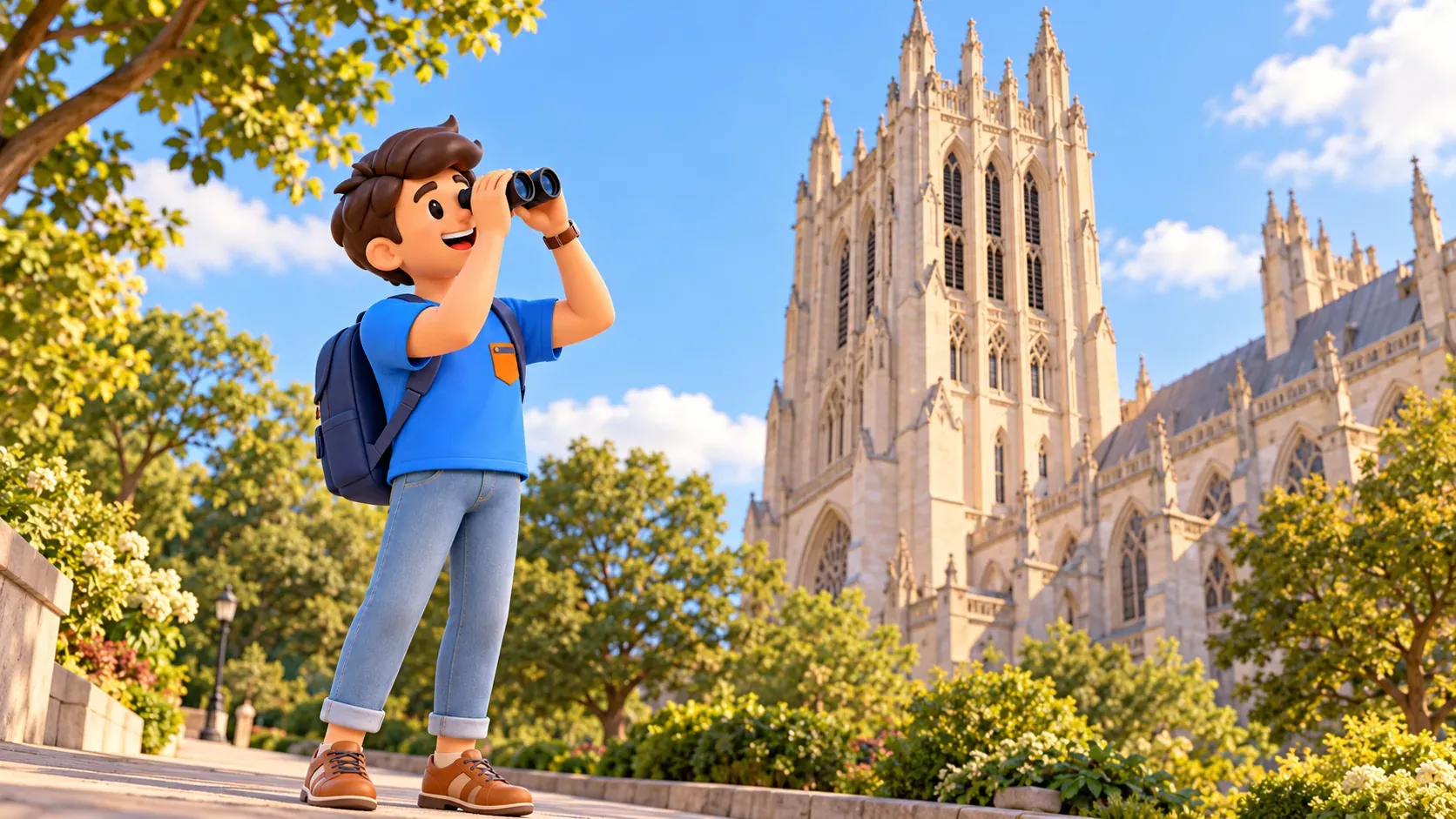
The practical issue is height. Do not expect a detailed portrait to be obvious to the naked eye as soon as you arrive. Compact binoculars or suitable optical magnification may help, but position, light and current access affect the view. The carving’s presence does not guarantee an easy close-up on every date.
Begin with the Cathedral’s current visitor plan and local signs. Orient yourself towards the northwest part from open permitted approaches. If help is available, ask a member of staff where to direct your attention. That is better than searching restricted areas for an angle remembered from an old photograph.
Do not make the search depend on circling the entire building or reaching an upper level. Special tours and climbs, when offered for your date, have separate arrangements. An ordinary interior ticket should not be treated as guaranteed close access to any exterior carving. A safe attempt from an open position is enough for this idea.
If you cannot distinguish the figure, look at other visible stone details and the tower’s overall rhythm. The stop still has value: a formal silhouette contains unexpected human choices. A small discovery should not become a compulsory victory that causes you to ignore the building around it.
The Moon fragment belongs to a window, not a display case
Inside, the Space Window offers a different story. It is connected with Apollo 11 and contains a small fragment of lunar rock. This is actual material from the Moon incorporated into an artwork, rather than a picture of a rock or a large separate specimen on a plinth.
Artist Rodney Winfield designed the window, dedicated in 1974 in the presence of Apollo 11 astronauts. Do not confuse the window’s dedication with every technical stage of installing the sample itself. For a short visit, the connection with the mission and the fragment’s authenticity provide the essential story without requiring a detailed installation chronology.
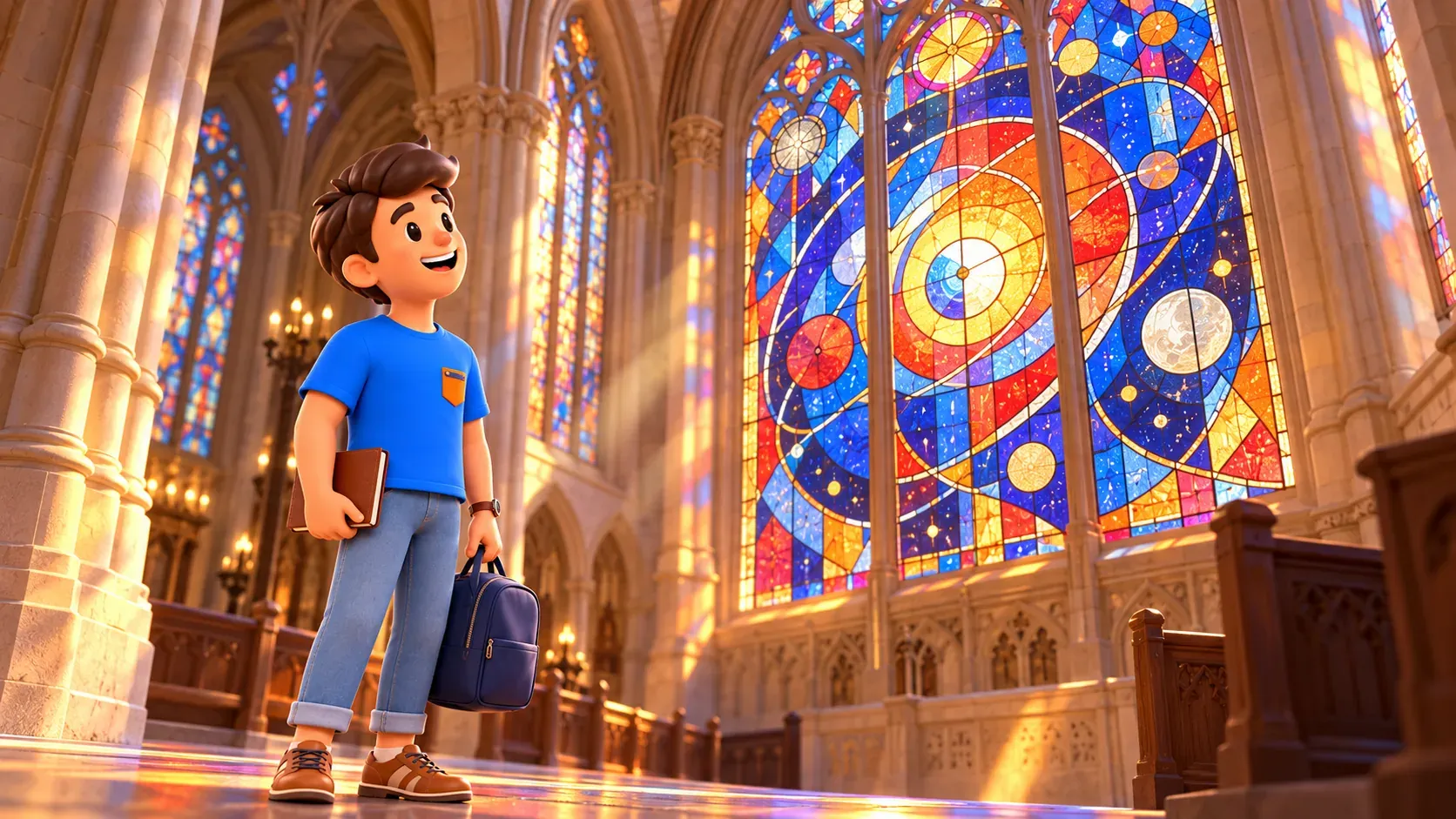
Large circles, rich blue and red areas and small light elements suggest cosmic space. It is not a literal illustration with an astronaut as the central character. Notice how scale emerges through colour and abstract form. The visitor becomes an observer facing something much larger than an individual human figure.
The fragment sits within a small circular element inside a large red circle. Do not expect a sculpture-sized rock or the ability to examine mineral details from any position. Find the composition as a whole first, then use Cathedral information to identify the small inclusion. This keeps the artwork meaningful rather than reducing it to a search for one dot.
Give the window time before reaching for the camera
If the interior is open for your chosen sightseeing visit, begin with a broad view. Notice how coloured glass changes the feeling of the surrounding stone space. Then compare the large forms with the small real fragment. That difference in scale is more interesting than the attempt to obtain the closest possible photograph.
Light inside and outside affects the impression. Do not promise yourself exactly the colours of a professional image. A phone may represent bright glass and a darker interior differently from your eyes. Look without the screen first, then decide whether to photograph it under the current rules.
The window is not an interactive exhibit: do not touch the glass or expect to hold the specimen. Its value comes from the meeting of art, mission history and setting. Small size does not make the material less significant, and attentive viewing requires no special physical action.
With a child, discuss the difference between a cosmic image and actual lunar material. One is an artistic representation; the other made a real journey back to Earth. A lengthy astronomy lecture is unnecessary. Asking why a tiny piece changes the experience of a large window can be enough.
What the two surprising details share
Darth Vader and the lunar fragment connect with different forms of modern experience: popular culture and space exploration. They should not be presented as one subject or reduced to the claim that the Cathedral contains everything. The interesting point is how a substantial building incorporates individual stories while remaining a working religious place.
Outside, you search for a small figure within a large stone arrangement. Inside, you notice real material within a large coloured composition. Both encourage seeing the whole before the detail. That makes them useful together even for someone who rarely reads a long architectural guide.
Afterwards, compare what surprised your companions more: a familiar screen character in stone or actual material from the Moon in glass. There is no correct answer. Different reactions reveal your own interests and can help choose later visits instead of following an identical list for everyone.
Gardens and a pause depend on the open areas
Some quiet time outdoors may appeal afterwards, but the gardens are not all equally available. The Garth and All Souls Memorial Garden are closed because of central tower restoration. Do not turn a general expectation of late autumn reopening into a confirmed date. Check the current notice before travelling.
The Cathedral suggests other permitted grounds, including the Bishop’s Garden on the south side. Treat that as an option under the day’s conditions rather than a promise of a complete garden circuit. Keep to open paths and respect the purpose of the place. A previous guidebook route does not authorise going around a barrier.

RoadMe helps develop a personal trip programme around your interests rather than merely adding the Cathedral to a long list. In the app, visits, travel and rest are easier to organise across the day at a pace that suits your group.
The simplest plan makes either the exterior or indoor sightseeing the main activity, adding only a short optional continuation. The Cathedral is not next door to the National Mall museums, so allow for a separate journey. Our first-visit Washington guide offers more ideas for choosing the shape of a day.
Before leaving, check the calendar, ticket format, available areas and rules for belongings and photography. Ask directly about any particular access requirements. You do not need a plan of every corridor: identify the two things you want to do and where a comfortable visit ends.
Unexpected details improve the quality of looking. The Cathedral becomes memorable not only for height and size but for people’s decisions to add new stories. A stone figure and a small lunar fragment give you a reason to look closely without turning the visit into a complete catalogue of the building.


