
Kenilworth Aquatic Gardens: A Seasonal Nature Visit in Washington
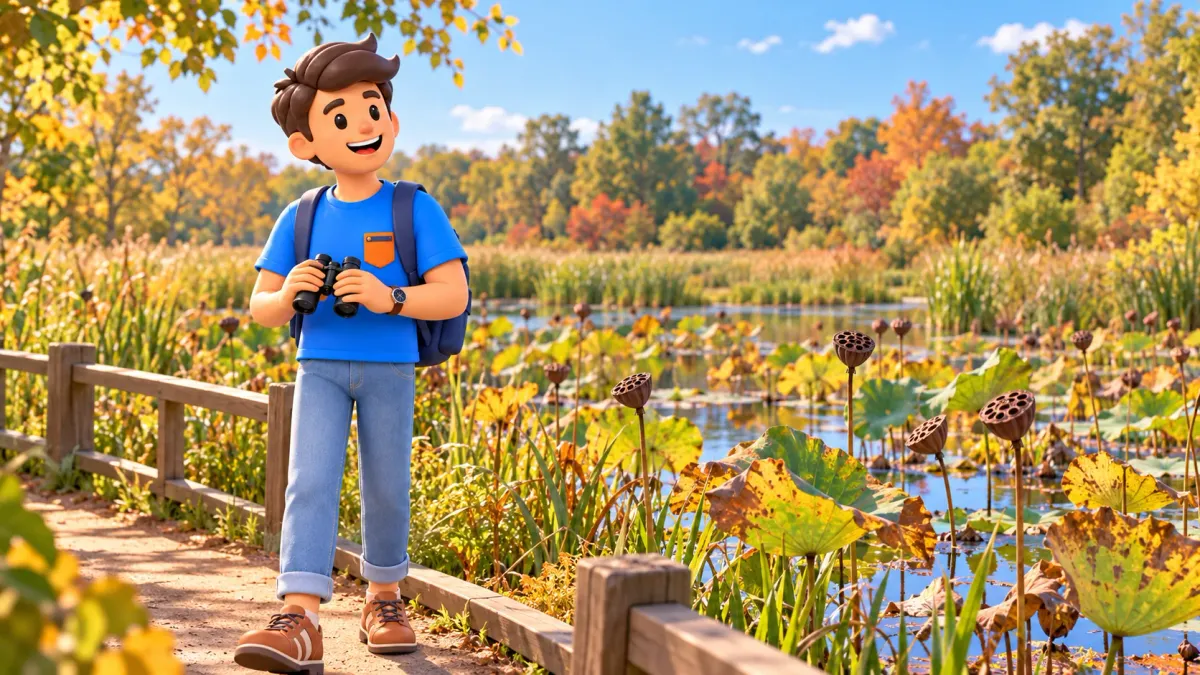
Kenilworth Aquatic Gardens offers a Washington outing built around ponds, marsh landscape and patient observation. It is a good choice when you want one natural destination rather than another sequence of city landmarks. The visit changes strongly with the season, so the most useful plan begins with what you hope to see and when you will actually arrive.
Use a simple sequence: selected ponds, the marsh boardwalk when open, then a quiet return with time to look again. Allow roughly two to three hours locally, with travel added. This is an editorial estimate for a selective visit, not a measured route or a promise to see every part of the park.
Choose a seasonal nature visit
The gardens are often associated with lotus and water lilies, but a visit should not depend on flowers that are no longer in season. The ponds and marsh offer structure, changing vegetation and the possibility of wildlife observation. Decide whether you want a summer flowering visit or a broader landscape outing before choosing the date and expectations.
RoadMe can build a complete personal itinerary around your interests, dates and preferred pace, helping you give a nature visit the right place in your Washington trip. Organising the stay in the app makes it easier to balance seasonal gardens, neighbourhoods and museums without compressing them into the same day.
The National Park Service’s conditions page, updated on 23 September 2026, explains that the lotus and water lily flowering season is finished for the year. An autumn visit should therefore expect seed pods and changing leaves rather than a summer display of abundant aquatic flowers. Other natural activity can still make the outing worthwhile.
If flowers are your main interest, plan for the appropriate summer season and consider a morning visit, then check current bloom information near the date. This article does not promise a particular peak week or exact flowering conditions in a future year. Living plants respond to weather as well as the calendar.
Begin with a selected group of ponds
The ponds provide the clearest introduction to the site. Start with a modest section and notice how water, plants and the banks form a landscape together. Look first at the whole scene, then choose a few details: a leaf shape, a seed pod or the way vegetation reflects the light. You do not need specialist knowledge to make the first observations.
The gardens have a history as well as a natural setting. Walter Shaw developed aquatic planting here, and his daughter Helen Shaw Fowler continued and expanded the enterprise. The site later became a public park. This background helps explain why the ponds should be understood as a cultivated landscape, not simply an untouched wetland beside the city.
Keep that distinction in mind as you look. A garden pond and the nearby marsh have relationships with water and vegetation, but they are not identical environments. The route moves between them so that you can notice differences rather than treating all the green and watery space as one undifferentiated scene.
Stay on established paths and leave plants undisturbed. An attractive flower or seed pod is not a reason to step into a planted area or lean beyond a safe position. The best view may be slightly farther away. Patient observation protects the landscape and often reveals more than trying to reach a perfect close photograph.
Do not assume every pond will look like a promotional image. Seasonal growth, maintenance and water conditions can vary. In autumn, the strong forms of leaves and seed heads may become the main subject. In another season, different textures or new growth may draw attention. The plan succeeds when it matches the scene that is actually present.

Continue to the marsh boardwalk when it is open
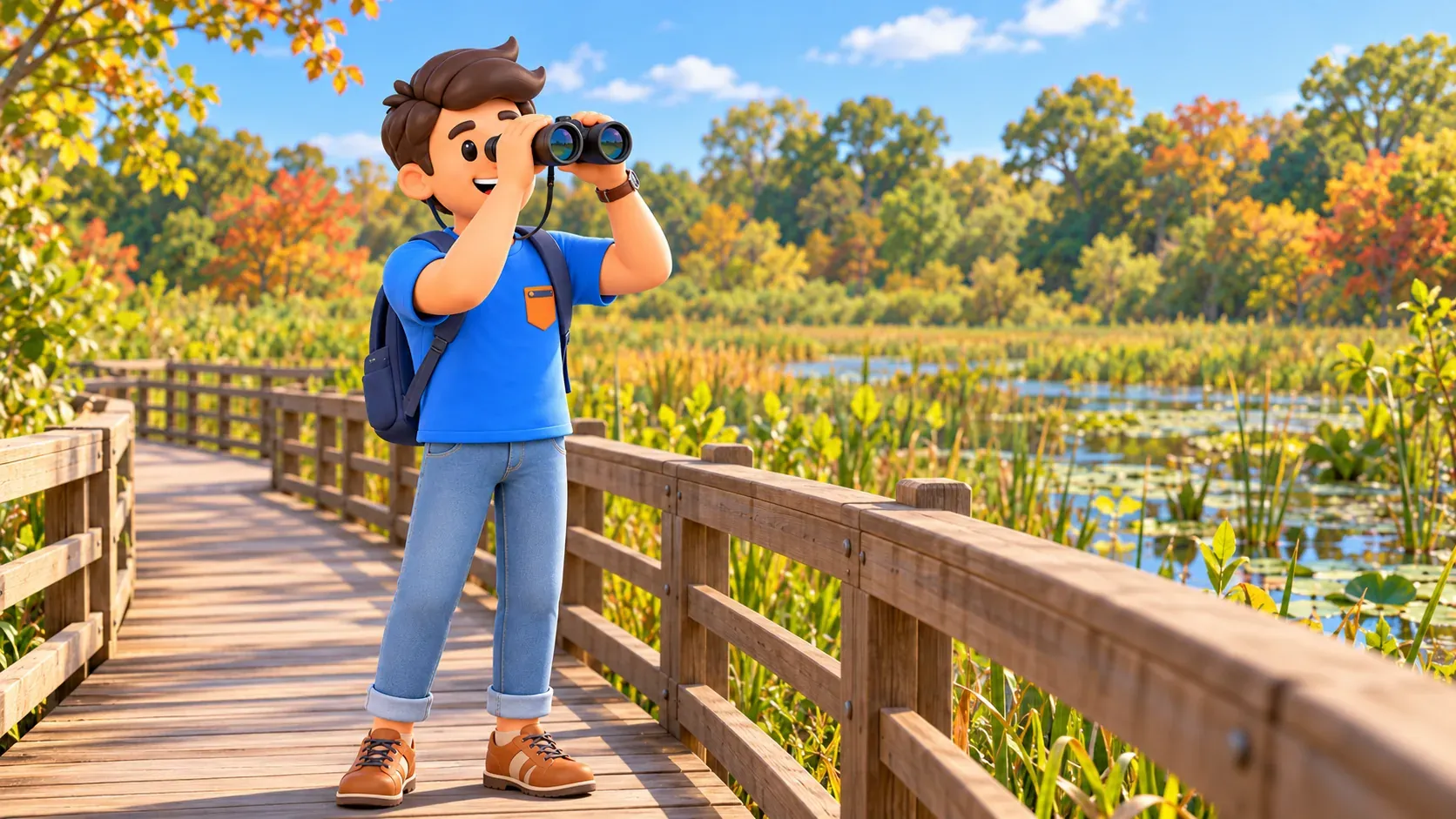
The boardwalk offers a different relationship with the wetland, taking attention beyond the cultivated ponds. Use the currently open route and follow all signs. The purpose is to observe the marsh from the visitor infrastructure provided, not to seek independent access through vegetation or move beyond a barrier for a clearer view.
Pause at a comfortable permitted position and look across layers of growth rather than expecting one obvious focal object. A marsh can appear quiet at first, then become more legible as you notice movement, sound and changes in texture. Give it a little time before deciding that nothing is happening.
Wildlife is possible, not guaranteed. Birds may be present in different seasons, and the conditions page describes autumn as a period of migratory activity. That is a reason for patient attention, not a promise that a named species will appear at a particular hour. Keep distance and allow animals to continue their normal behaviour.
If you bring binoculars, use them without blocking the shared path. A camera can help you concentrate, but it can also narrow the experience to a search for one image. Take a moment to look without a screen, then decide whether a photograph adds something. The landscape does not need to perform on demand.
Weather and maintenance can change boardwalk access or comfort. Wet surfaces, strong sun or wind may affect the decision to continue. This article does not establish a surveyed step free route or guarantee the condition of every section. Check current information and choose the part that suits your group rather than treating completion as an obligation.
Make the return a second look
The return is not simply the end of the sightseeing. After the marsh, look again at a selected pond or path section and compare what you now notice. The first view establishes a general impression; the second can reveal relationships that were less obvious. You do not have to extend the route to deepen the visit.
Choose a quiet observation task that fits the season. Compare the shapes of two seed pods, notice the edge between open water and vegetation, or listen for differences between the ponds and marsh. These small activities work for a mixed interest group without turning the outing into a test of plant names or bird identification.
Children may enjoy choosing one detail to find again on the return. Keep the task within public paths and make clear that plants and wildlife stay where they are. A nature visit does not need collecting, feeding or touching to become engaging. Short discoveries and an appropriate pause are often enough.
Leave time simply to stand or sit where it is permitted and available. A quiet return can be the most restorative part of the outing, especially after several busy city days. Do not fill every remaining minute with another path. The point is a more attentive rhythm, not the largest distance recorded.
Prepare the practical essentials before arriving
The National Park Service states that there are no vending services at the gardens. Bring your own water and plan any food needs under current park rules rather than expecting to buy supplies beside the ponds. This small preparation makes a selective two or three hour visit much more comfortable, particularly in warm weather.
Check the current park hours and allow for the exit connection. A site described as open year round still has a daily visitor window and conditions that can change. Do not interpret year round access as permission to remain after closing or as a guarantee that every boardwalk and facility is available.
Wear footwear appropriate for paths and the weather. Stay on established routes, which also helps protect vegetation and avoid unnecessary contact with ticks. Carry suitable sun or rain protection and consider how exposed sections may feel. Public toilets and seating should be checked locally rather than assumed beside every stop.
Use RoadMe to turn that preference for slower discovery into a personal plan for the whole trip, shaped around your interests, dates and pace. The app makes it more convenient to organise Washington days where nature, gardens and cultural visits have enough room instead of competing for the same rushed afternoon.
If your group has particular mobility needs, review the current access information and exact path choices before travelling. The words garden and boardwalk do not establish that every connection suits everyone. A shorter selection of comfortable open sections is a valid plan, with no need to reach every possible viewpoint.
Consider the return journey as part of the outing. Kenilworth is a separate destination rather than an immediate continuation of a central Washington landmark walk. Leave time for the transfer and avoid attaching a second distant natural site merely because both appear to be green spaces on the same city map.
Choose a realistic goal for the visit
For a flower focused summer outing, make the relevant ponds the priority and keep the rest flexible according to current conditions. For an autumn visit, approach seed pods, changing vegetation and the marsh as the subject, rather than searching for an ended season. In either case, a small number of attentive observations can create a complete experience.
If weather or fatigue intervenes, remove the optional extension rather than rushing every section. Ponds and one comfortable return can be enough. A nature visit should not become frustrating simply because a boardwalk section, a particular bird or a hoped for flower was unavailable.
Let the last pause remain simple: one sound, one plant form or one change in the water can become the detail you remember. There is no need to add another activity before leaving.
Finish with a clear departure plan and a final look at the season you actually encountered. Kenilworth adds a distinctive Washington chapter through cultivated water gardens and wetland landscape. For the wider balance of neighbourhoods, museums and central sights, consult the guide to choosing a route around your interests.


