
Historic Anacostia in Half a Day: Cedar Hill and the Big Chair

Historic Anacostia offers a Washington half day with a strong main destination: Cedar Hill, the final home of Frederick Douglass. Begin with the historic site, give its hillside setting time, then descend through the neighbourhood towards the Big Chair. The sequence connects a nationally significant life with the scale and identity of a local district.
This is a separate outing across the Anacostia, not a small addition to a walk already covering the National Mall. Allow roughly three to four hours locally for the main visit, grounds, neighbourhood connections and a pause, with travel added. The duration is an editorial estimate and depends especially on your chosen house tour and comfort on the hill.
Make Cedar Hill the anchor of the half day
The route works best when Cedar Hill receives the strongest attention rather than becoming the first of several hurried institutions. Arrange the historic site visit, then let the landscape and lower streets provide a lighter continuation. A house, its elevated setting and a neighbourhood landmark create enough variety without requiring another full museum.
RoadMe can build a complete personal itinerary around your interests, dates and preferred pace, giving a historic Anacostia visit the time it deserves. Planning the whole Washington trip in the app makes it easier to organise neighbourhood experiences and major sights into days that feel manageable.
Check the National Park Service’s current visitor arrangements before selecting the start. A house tour has its own timing and availability, while grounds and visitor facilities are separate parts of the site. Arriving near the property is not the same as being ready to begin a guided interior visit.
Plan the arrival and departure connections deliberately. This article does not promise that a direct route shown on a map will be the most comfortable approach to the hill. Consider the actual entrance, the slope and the group’s needs. Keep a margin before any later appointment elsewhere in Washington.
Begin with the home and its historical meaning
Cedar Hill preserves the final home of Frederick Douglass, the writer, speaker, abolitionist and advocate for civil rights. He purchased the property in 1877 and lived here in the later part of his life. That context places the house within a public career while reminding visitors that it was also a home with domestic relationships and routines.
Before looking for details, notice the building in its setting. A house on a hill presents itself differently from the urban façades of central Washington. The relationship between dwelling, land and city helps explain why the visit benefits from more than a quick exterior photograph followed by an immediate departure.
The house is accessible to visitors through guided tours, rather than independent wandering. Under the National Park Service’s current guidance, reservations are strongly encouraged for standard tours but are not described as universally required. Availability still matters, so do not interpret that distinction as a guarantee that arriving without a reservation will secure a place.
Choose the available tour that fits your day and allow for orientation and arrival procedures. If a tour is unavailable, decide honestly whether an exterior and grounds visit meets your interests. The route can still make sense, but it becomes a different experience and should not be presented as though you saw the interior.
During a guided visit, let the interpretation establish the relationship between the rooms and the person’s work. You do not need to arrive with a complete biography memorised. One or two questions can create a useful focus: how did a nationally influential figure use a home, and what can domestic surroundings reveal that a public monument cannot?
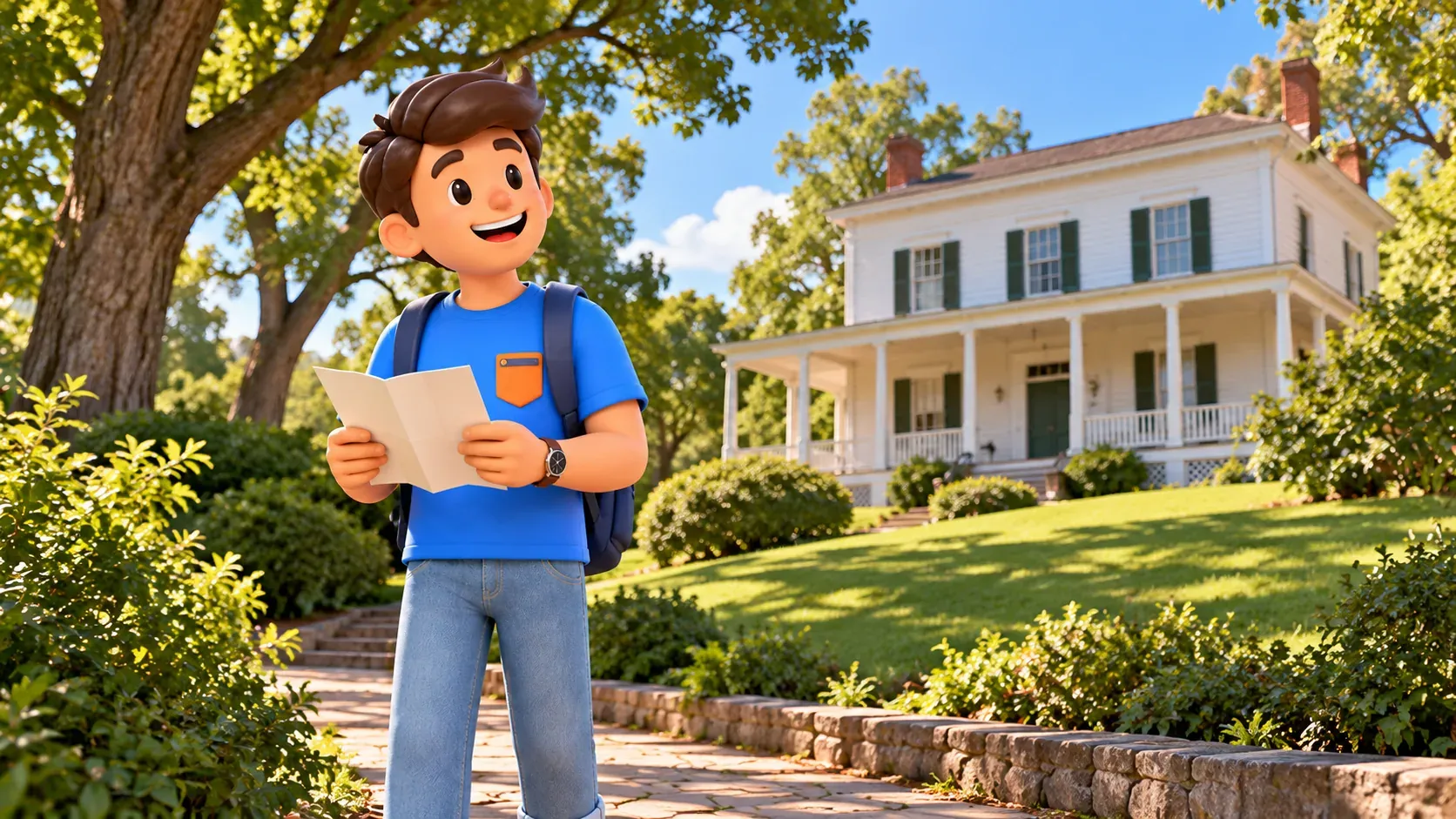
Give the grounds and hillside their own time
After the principal house experience, pause in the permitted open parts of the grounds. The setting is not merely the approach to an interior. It changes the view of the house and the relationship with the city below, allowing the visit to move from close historical attention to a wider landscape.
Use available paths and signs to choose a comfortable place to look. Views depend on weather, vegetation and the exact public position that is accessible on your date. The route does not promise a perfectly clear panorama or access to every part of the grounds. The sense of elevation remains meaningful even when conditions change the distant view.
The hill is a real practical consideration. Do not read the phrase grounds walk as a promise of easy gradients. The National Park Service describes a steep approach and particular arrangements for visitors who require assistance. If an alternative vehicle approach is needed, arrange it with staff rather than assuming you can drive freely onto the site.
Visitors with specific mobility needs should review the current accessibility guidance and contact the site before travelling. The most suitable plan may use a different approach or a more limited grounds section. Keeping one main historic visit gives the afternoon room to accommodate those choices without forcing an exhausting sequence afterwards.
This is also a natural moment for a quiet pause. A historic home can hold complex material, and a few minutes outdoors help separate the visit from the next neighbourhood chapter. Avoid using every remaining minute to extend the path distance. Looking back towards the house may be enough to give the main stop a clear ending.

Descend into the neighbourhood at an ordinary street scale
Continue towards the lower neighbourhood only after checking the public route and the group’s comfort. The transition from Cedar Hill to the streets is part of the outing’s meaning: a nationally significant site belongs to a district where people live and work. Treat the connections as more than empty space between attractions.
Notice how the scale changes after the elevated grounds. Entrances, local businesses, façades and the rhythm of a street bring attention back to everyday urban life. You do not need a named historic building at every corner. Comparing a few ordinary details can make the neighbourhood feel more specific than another long list of addresses.
Stay on public pavements, leave residential entrances available and be considerate with photography. A neighbourhood’s historical interest does not make residents part of a display. Avoid turning private homes into objects of close inspection or using someone’s steps as a better viewpoint. Respectful distance is compatible with careful observation.
Choose a break that suits your plans rather than relying on an unverified business or a fixed service time. A drink and a full meal require different allowances. Queues, seating and opening arrangements vary. If food is important to the afternoon, give it a deliberate place before a later timed commitment.
Finish with the Big Chair
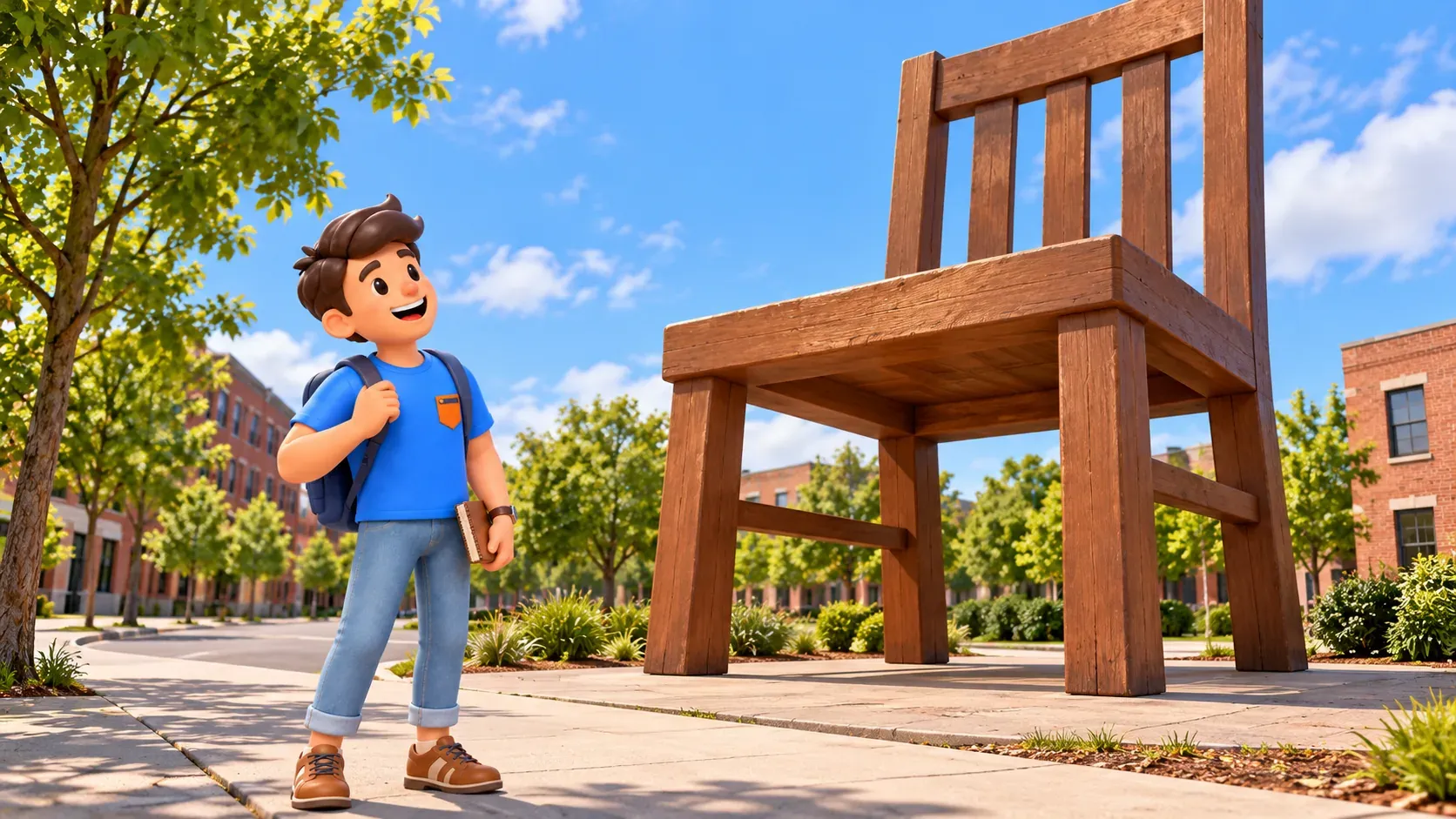
The Big Chair supplies a contrasting final landmark. Its oversized everyday form belongs to neighbourhood identity rather than to the solemn language of a national memorial. The original chair was installed in 1959, and its history is connected with local commerce. The landmark has changed physically over time, so do not describe today’s structure as an untouched original object.
Look first at the relationship between the chair and its surroundings. Its effect depends on the change of scale: a familiar domestic object becomes a conspicuous urban marker. That is quite different from Cedar Hill, where a real home acquires wider significance through the life associated with it. The comparison creates a light but coherent ending.
Observe from permitted public space and keep pedestrian movement clear. There is no need to climb, touch or turn the stop into a prolonged staged photograph to appreciate the object. A brief pause is enough, particularly if the group has already given its strongest attention to the historic site.
The landmark does not explain the whole of Anacostia. Treat it as an introduction to local identity, not a substitute for understanding the district’s residents, institutions and changing history. A half day can acknowledge that wider story while remaining honest about its selective scope.
Keep optional additions separate
The Anacostia Community Museum is a possible main experience for another plan or a deliberate extension. It is not automatically included simply because it shares the neighbourhood name. Check its location, current exhibitions and visitor arrangements, then allow a real visit and a suitable transfer. Adding it silently would change the half day described here.
Use RoadMe to turn those interests into a personal programme for the complete trip, shaped around the dates and pace you choose. The app makes it more convenient to organise Washington days that give historic homes, neighbourhoods and museums enough room rather than compressing everything into one outing.
If the house and grounds are your priority, keep the lower streets and Big Chair as a short finish. If you prefer a broader neighbourhood introduction, choose a more selective historic site visit and preserve time for the connections. The right balance depends on what you came to experience, not on making every section equally long.
Prepare for weather and effort. Carry water or an appropriate layer, and check seating and toilets locally rather than assuming they are available at every stop. The route is not a surveyed step free itinerary. Current path conditions, the steep site and the exact streets selected affect how comfortable it will be.
Before leaving, let each person choose one detail that changed their impression of Washington. A domestic room, a hillside view or an unusual street landmark can make this outing memorable in a different way from the capital’s central monuments.
Finish with a clear departure plan and enough energy to follow it. Cedar Hill, its grounds and the Big Chair create a distinct Washington chapter through historical work, landscape and neighbourhood scale. For the wider choice of museum days, central sights and other districts, see the guide to choosing a route around your interests.


