
Dupont Circle in Two Hours: Art Houses, Architecture and the Spanish Steps

Dupont Circle is a useful place to experience Washington between its great institutions. The neighbourhood combines a busy public circle, residential streets, substantial historic houses and art close to an everyday urban setting. In two hours, you can see those contrasts without making a museum reservation the organising principle of the whole day.
Start at the circle, continue towards the Anderson House and Phillips Collection area, then finish near the Spanish Steps. The basic walk stays outdoors. A collection visit, house tour or long meal is a separate addition, not something quietly included in a short description of a neighbourhood route.
Keep the two hour version outdoors
Choose three experiences: the circle as a public meeting place, the streets around the cultural houses, and the more intimate landscape of the Spanish Steps. That gives the outing a clear progression from an active centre to quieter corners. You can enjoy architecture and the character of the neighbourhood without entering every building you pass.
RoadMe can create a complete personal itinerary around your interests, dates and pace, giving a Dupont Circle walk the right place in your Washington stay. Organising the trip in the app makes it easier to balance neighbourhood time with the museums and landmarks you most want to experience.
Two hours is an editorial estimate for local walking, crossings, short observations and a modest pause. It excludes the journey to the neighbourhood and any substantial indoor visit. If your group prefers long conversations over coffee or takes photographs slowly, leave more room. The route should feel like a neighbourhood afternoon rather than a timed assignment.
Identify your arrival and departure before starting. A finish near the Spanish Steps does not mean every traveller should continue in the same direction afterwards. Check the connection to your next activity and consider returning towards the circle if that is simpler. Avoid building the afternoon around a tight reservation immediately after the walk.
Begin at Dupont Circle’s public centre
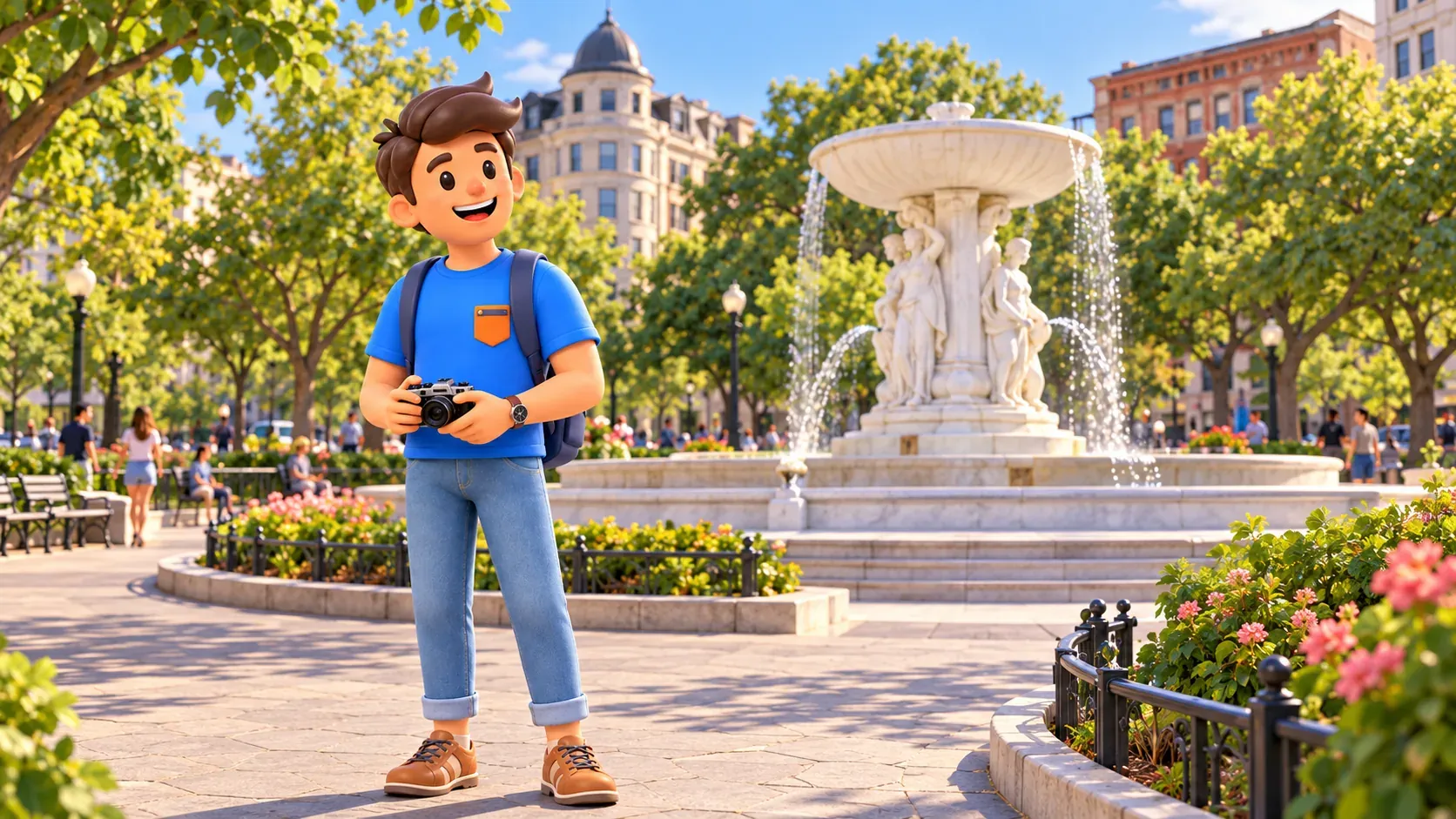
The fountain gives the circle an obvious focus, but the setting matters as much as the object. Observe how people cross, pause and use the central space, then compare it with the movement around the edges. It is a small lesson in how Washington’s planned streets and local daily life occupy the same place.
Architect Henry Bacon and sculptor Daniel Chester French created the fountain, a partnership also connected with the Lincoln Memorial. Its allegorical figures represent the sea, wind and stars. You do not need an extensive account of the design to appreciate how an artistic memorial functions within a busy neighbourhood meeting point.
Look first at the overall form, then choose one detail to examine more closely. That simple change in scale makes a short stop more rewarding. Do not depend on water running or a particular seat being available: operations, weather and local activity can change the experience on the day.
Use marked crossings and take the traffic seriously. A roundabout seen on a map can appear easy to cross in any direction, but the walking route should follow the actual public pedestrian connections. Give everyone time to regroup before moving on, particularly if the party includes children or visitors who find busy junctions tiring.
Compare Anderson House and the Phillips Collection area
From the circle, continue through the nearby streets towards the cultural houses west of the centre. The short connections are part of the experience. Notice changes in the depth of front gardens, entrances and the relationship between buildings and the pavement. The neighbourhood becomes more legible when you observe those transitions rather than only searching for a nameplate.
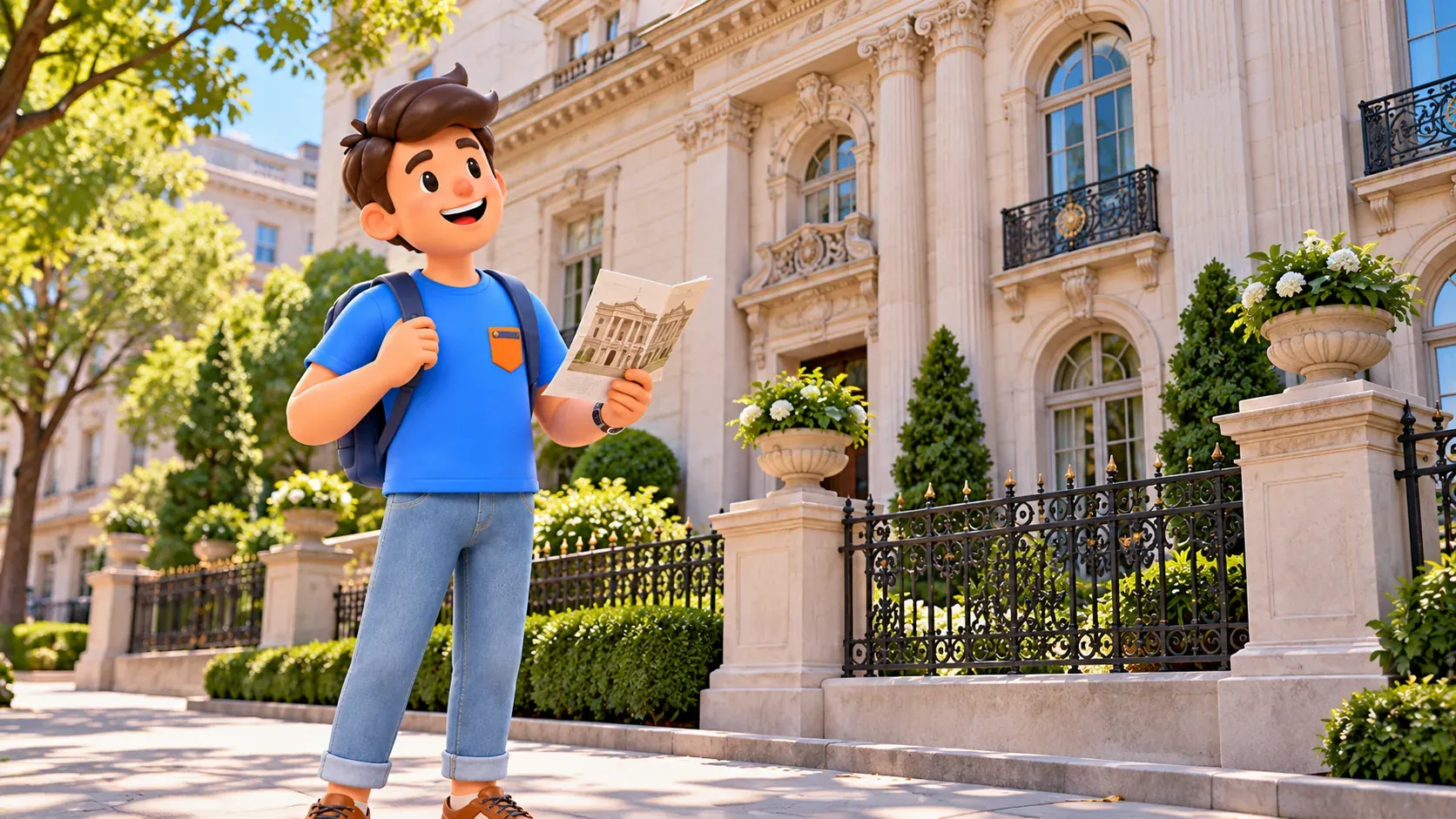
Anderson House was built in 1905 for Larz and Isabel Anderson and has been home to the Society of the Cincinnati since 1938. Even from permitted public space, its scale introduces the world of a substantial early twentieth century residence. A later institutional role gives that former home another chapter of history.
For this route, treat Anderson House as an exterior observation. Checked on 22 October 2026, its operator announces a closure of the museum and research library from 22 to 24 October for meetings, with the museum reopening on 25 October. Future visitors should recheck the current calendar; the temporary closure does not remove the surrounding neighbourhood from the walk.
A house tour on another date is a distinct, ticketed visit under current arrangements. Do not rely on older descriptions that treat admission as universally free or assume arrival guarantees the next tour. If the interior is your priority, give it its own time and shorten the outdoor programme rather than trying to fit everything into two hours.
The Phillips Collection offers a different relationship between art and a former domestic setting. Founded in 1921, the collection is associated with Duncan Phillips’s home and later additions. The exterior introduction is brief, but it helps explain why an art visit here can feel different from a vast purpose built museum on the Mall.
Going inside changes the outing. Check current admission and exhibition arrangements; the museum currently lists Mondays as closed. Choose a focused visit if art is your priority and accept a longer total programme. In the basic walk, the Phillips area remains an architectural and cultural introduction, with no promise that a collection visit is included.
Finish with the Spanish Steps
Continue towards the Spanish Steps for a smaller, more enclosed urban scene. The point of this finish is the contrast with the busy circle: a pedestrian connection, changes of level and surrounding residential fabric. Approach slowly enough to appreciate how an ordinary neighbourhood route can become a distinctive place in its own right.
The name should not encourage an expectation of Rome recreated in Washington. Look at the actual space rather than the comparison. Steps, planting, walls and neighbouring buildings define a local setting, and the best observation may be simply how they frame a view or make the transition between streets feel different.
Steps are a practical part of this stop as well as its visual identity. The route described here is not verified as step free. Visitors who need to avoid stairs should plan an appropriate street approach or omit the stair connection and appreciate the area from accessible public positions that suit their needs.
Leave passage for other people and respect nearby homes. A short pause is enough; the scene does not need to become a prolonged photo session across the full width of the steps. If there is maintenance, an event or a temporary restriction, stay on open public routes and keep the finish flexible.

Choose additions without losing the neighbourhood
The Heurich House and the Walsh–McLean House can interest visitors who enjoy historic residences, but adding every nearby name weakens a short walk. Choose an exterior detour only if it fits your remaining time and exact route. A building’s proximity on a list does not mean it lies directly between the stops you already chose.
The Walsh–McLean House serves as the Indonesian embassy. Treat it as a diplomatic building viewed from permitted public space, with no assumption of visitor admission. Embassies are working premises, and a neighbourhood architecture walk does not give access to entrances, grounds or events. Follow any current restrictions without trying to photograph through barriers.
Use RoadMe to develop these preferences into a personal plan for the whole trip, built around the interests and pace you choose. The app makes it more convenient to combine an art focused day, a gentle neighbourhood walk and your other Washington priorities without assembling everything separately.
Choose at most one substantial optional activity. A Phillips visit, an Anderson House tour and another historic house each ask for attention, not just transit time. If you want one of them, make it the main experience and let the street walk become the supporting part. That is a useful change of format rather than a failure to complete the original route.
A café break can also be the main optional addition. For some travellers, watching the neighbourhood over a drink provides more value than another interior. Give the pause a real place in the afternoon and avoid making claims about queue length or available seating. It should be a decision, not the minutes accidentally left over.
Before adding anything, ask what the walk still needs: more art, more rest or simply a comfortable finish. That small decision keeps the outing personal and prevents nearby names from taking over the afternoon.
Make the short walk comfortable
A simple rhythm is twenty to thirty minutes around the circle, roughly forty to fifty minutes for the cultural houses and street connections, then time for a break and the Spanish Steps. These are flexible estimates, not measured stages. The balance can change according to traffic crossings, weather and how long you enjoy observing the buildings.
Wear shoes suitable for pavements and changes of level. Carry water or a weather layer when appropriate, and check practical needs such as toilets locally. A residential neighbourhood does not provide guaranteed public facilities beside every landmark, and a museum café or private building should not be assumed accessible without checking conditions.
With children or a mixed interest group, choose a shared observation rather than a long historical explanation: compare two entrances, identify a change in scale or notice where the street becomes quieter. Brief discoveries and an unhurried pause allow different interests to coexist within the same short outing.
Dupont Circle works well as a distinct chapter of Washington, with public space, cultural houses and residential character in close conversation. Keep the outdoor walk compact or deliberately expand it around one chosen visit. For the wider balance of neighbourhoods, museum days and central monuments, see the guide to choosing a Washington route for your interests.


