
Victoria Peak in half a day: choose your walk

Victoria Peak deserves half a day, but there is more than one way to spend it. Some visitors want the ride and a broad harbour view; others prefer walking along Lugard Road or heading uphill to Victoria Peak Garden. Choose according to the amount of walking you want and the experience that matters most, rather than the number of viewpoints you can collect.
This guide offers three approaches: a short visit with one main viewing stop, a walk along Lugard Road, or a separate garden-focused option. You do not need to combine all three. Allow roughly three to four hours including travel, possible waiting and a pause, while recognising that neither queue lengths nor clear visibility can be guaranteed.
Choose the shape of your half-day first
If your main aim is to see the city from above while keeping energy for later plans, stay around the upper arrival area. Sky Terrace 428 and Lion's Pavilion offer different viewing settings. One main stop can be enough for a first visit. Add another only if you want to compare a different angle or foreground, rather than because its name appears on a checklist.
If the walk matters as much as the view, choose Lugard Road. Trees and the shape of the slope allow the panorama to emerge gradually, and pauses become part of the route. You can walk a selected open section and return the same way, or deliberately choose the complete signed circuit. These involve different amounts of walking; reaching Lugard Road is not the same as completing a loop.
To choose a half-day that fits your interests, try RoadMe: the app develops a personal route around your pace and a trip plan around your dates and budget. It makes planning more convenient by giving a viewpoint, a walk or a quieter landscape visit the time that suits your way of travelling.
Victoria Peak Garden is the third option, for visitors willing to climb farther in the direction of Mount Austin Road. Treat it as a distinct choice of effort, not an invisible extra after a long circuit. If walking energy is limited, avoid making both the full loop and the garden compulsory. A small distance on a map can still involve a noticeable climb.
Before leaving, finish one sentence: “I want a broad view”, “I want to walk through greenery”, or “I want a garden with some history”. That simple preference helps when you arrive. An enthusiastic plan can easily expand into a chain of stops, but you still need time and energy for the journey down and the rest of your day.
The journey up is part of the experience
The Peak Tram begins on Garden Road and climbs towards Victoria Gap. The line has operated since 1888, linking the journey to the history of developing the hillside. Today's rolling stock and stations have changed over time; an historic railway does not mean an unchanged nineteenth-century interior. The interesting transition is from dense city streets into a steep, greener landscape.
Separate the time spent travelling in the car from the complete ascent. Reaching the terminus, buying or validating a ticket, waiting and leaving the upper station all require time. A relatively short ride does not make the Peak a reliably quick appointment. Leave a margin in your half-day rather than arranging another timed activity immediately after an optimistic estimate for your descent.
The funicular is not the only way up. A bus approach can also suit visitors whose priority is the walk rather than the railway. Check the current service, stop and return arrangements with the operator. Do not choose an alternative solely because someone promises it will always be faster: traffic and waiting vary. Select transport as part of the outing you actually want.
Transport tickets and admission to a particular viewing platform are separate elements. Before buying an offer, check what it includes, which journey directions apply and what the visitor conditions are. The word “Peak” does not imply access to every attraction in the area. A public-road walk and a paid terrace can require quite different decisions about spending.
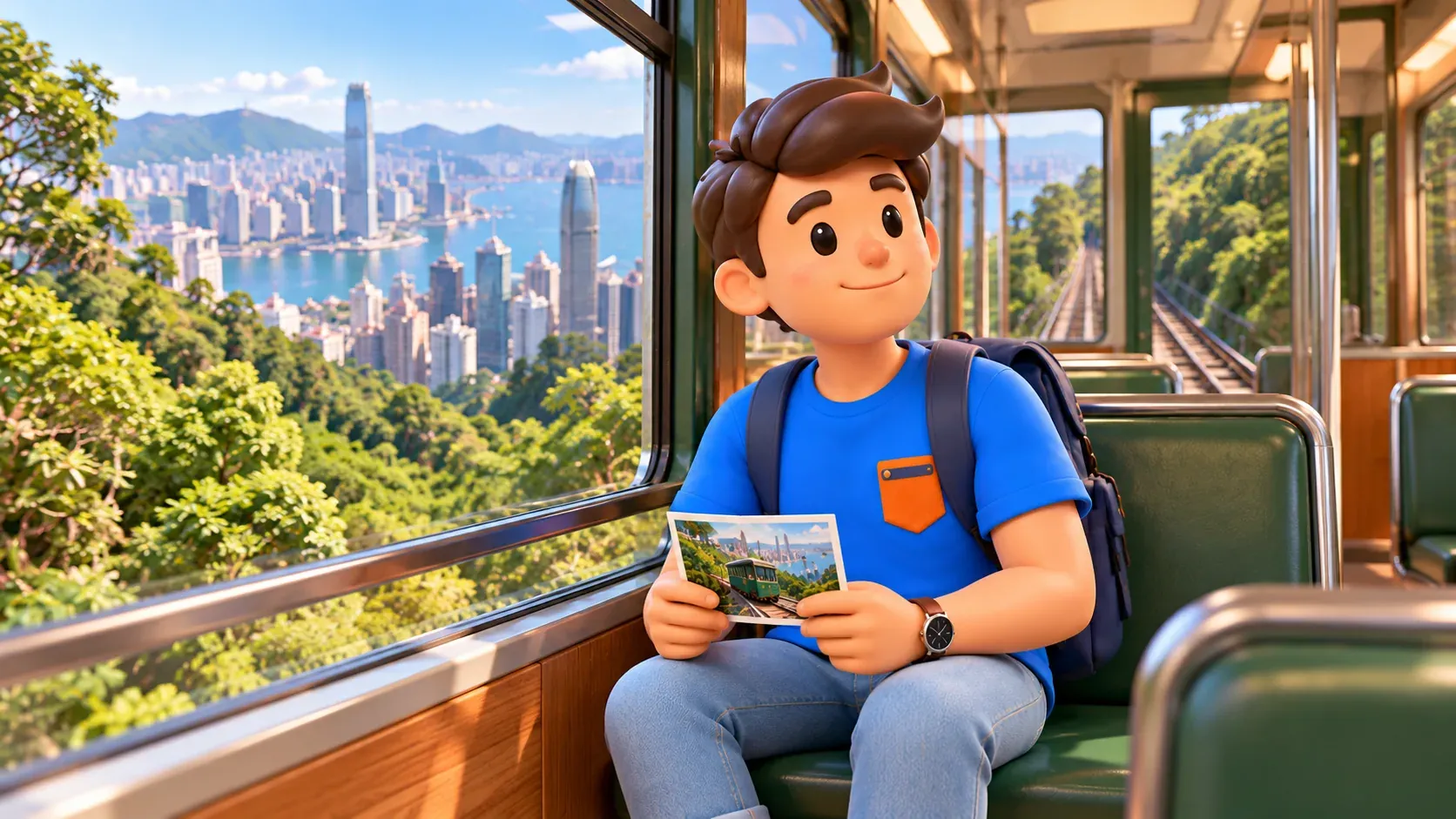
The short option: one panorama, properly seen
Sky Terrace 428 is on the roof of the Peak Tower. Its number refers to the platform's height above sea level, not the height of the building, and it does not place you on the mountain's geographical summit. It offers an organised way to view the harbour from the upper transport and visitor hub. The tower's distinctive shape belongs to the modern arrangement of this place.
This option suits visitors who prefer a clearly defined main stop and less independent route selection. Terrace entry is paid, either separately or through an appropriate package; check the current inclusions before buying. Paid admission cannot promise clear skies. Low cloud can remove distant layers regardless of how high the platform stands. Decide whether the conditions still support the experience you are seeking.
Lion's Pavilion provides a different setting, where the frame of the viewpoint matters alongside the distant city. It can be the main stop of a shorter visit instead of the terrace. Do not apply a commercial platform's opening arrangements to a neighbouring pavilion, or the reverse. If an area is closed or restricted, follow current signs and keep to permitted spaces.
Read the panorama in layers: the green slope nearby, the dense strip of buildings, then the water separating the shores. Look towards Kowloon beyond. This helps explain how the city occupies its terrain and why a view from above differs from a flat waterfront skyline. Recognising every tower is unnecessary; understanding the relationship between land and water is more useful.
After your first broad photograph, put the camera away briefly. Follow a curve of coastline, compare building heights with the slope, and notice the harbour between the built-up shores. These observations make a short visit substantial. Moving to a second platform is worthwhile when you want another perspective, not simply because you are worried that one view cannot count as a complete visit.
Lugard Road: let the panorama unfold as you walk
Lugard Road changes the experience from standing at a destination to moving around a hillside. Dating from the early twentieth century, it reveals another aspect of the Peak: engineering adapted to terrain, greenery around the foreground and a view that opens in stages. It is neither a rooftop nor a compulsory summit route. The road offers its own way of understanding the city below.
Use the signed approach near the upper visitor hub and follow current route information. For a shorter experience, select an open section leading to a suitable viewpoint and return along it. For a full circuit, establish the complete signed route and its connection with Harlech Road before setting out. Do not follow an unfamiliar downhill turn merely because it appears to point towards Central.
Allow more time for a walk with stops than for uninterrupted walking. Trees may conceal the harbour and reveal it again; that is part of the experience, not wasted time between attractions. One person may want a photograph while another needs a rest. If your group has limited energy, a shorter out-and-back retains the essential experience without requiring a complete loop.
On narrower sections, be considerate of other walkers. Take photographs where you can keep the route clear, remain inside barriers and avoid unofficial ledges. A familiar social-media image does not establish that its camera position is a permitted place to stand. The panorama can remain impressive from an ordinary public path, without making the search for a dramatic foreground the purpose of the outing.
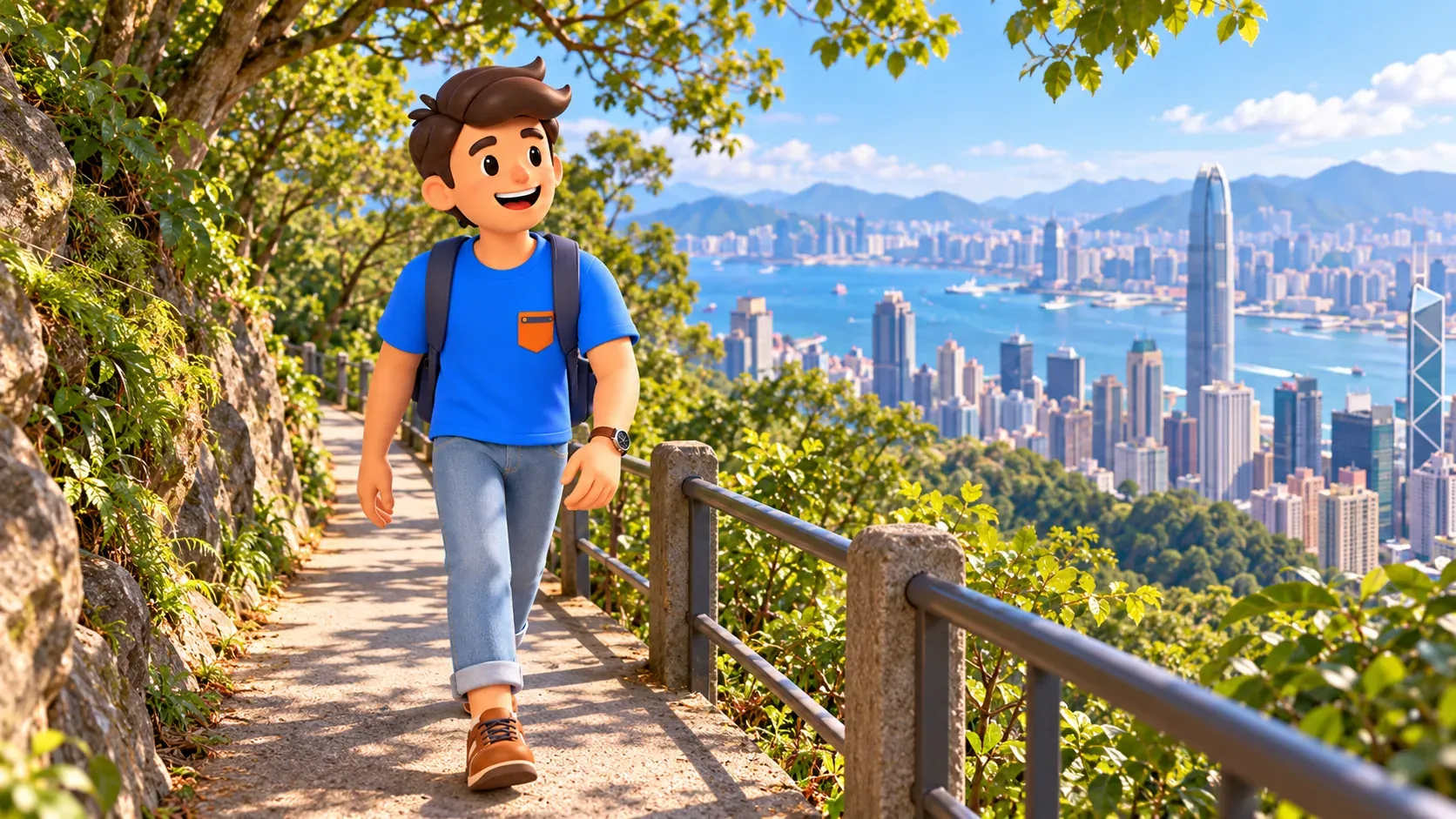
Compare a view through foliage with a more open one. The first gives you a strong foreground and a sense of the slope; the second makes the harbour's geography easier to read. Even when the direction is similar, the experiences differ. This is why the walk is more than a free repetition of a paid terrace: it has a different rhythm and a changing relationship with the landscape.
Victoria Peak Garden: a separate uphill choice
Victoria Peak Garden lies farther uphill in the direction of Mount Austin Road. Account for the additional ascent explicitly. It is not a level stop immediately beside the upper station. For someone who finds uphill walking tiring, a shorter panorama visit may be the better choice even when the map makes the garden seem close. Decide according to effort rather than straight-line distance.
The garden occupies land associated with the former governor's summer residence, Mountain Lodge. The main residence no longer survives, so do not expect a tour through an old palace. The history is conveyed through the setting, landscape and surviving traces. Imagine why this elevated place, with a different climatic feel, was attractive compared with the crowded city around the water.
Here you can focus on paths, greenery and changing directions of view instead of continuing a competition between observation points. If the garden becomes your main interest, give it its own time and reduce other stops. A long Lugard Road circuit, the garden and several terraces involve more walking and waiting than the phrase “a little stroll” suggests.
To fit the Peak comfortably into a longer stay, prepare your trip in RoadMe: the app creates a personal plan around your interests, pace, dates and budget. You can give a walking day more room and distribute museums and busier neighbourhoods across other days.
If you simply want to rest after the climb, do not add another route to make the diagram look complete. Choose an available place for a pause and a clear return plan. Visiting the garden does not oblige you to continue farther, just as a Lugard Road walk does not oblige you to climb higher afterwards. A good choice leaves energy for getting back.

Light, weather and the journey down
Daylight is useful for reading the terrain and coastline. Later, the light changes and buildings begin to illuminate: a different experience, not automatically a better one. Sunset cannot be guaranteed by choosing a particular hour. Cloud, haze and the season affect the result. If you want to stay until dusk, plan the return and avoid starting a long unfamiliar section at the end of the day.
In rain or low cloud, ask whether your selected option still makes sense. A misty walk may interest someone who enjoys greenery, but it will not provide a clear harbour panorama for a visitor whose main purpose is that view. Postpone in severe weather or when relevant official warnings affect visits. Neither a purchased ticket nor a planning app changes the conditions.
If you need a step-free journey, check the precise connection from transport to the chosen viewing area and back. Accessibility in one building does not establish the suitability of every Peak road. For families and mixed groups, the actual effort of the selected route matters more than a general “easy” description of the district.
Leave time for the descent and check current transport. Do not promise yourself a quick walk down to Central without separately selecting that route: it involves different terrain and effort. To connect this half-day with the rest of your stay, use the three-day Hong Kong plan. The Peak can remain one satisfying block rather than a test of every viewpoint at once.


