
Verona's western gates: a walk from Porta Palio to Porta San Zeno
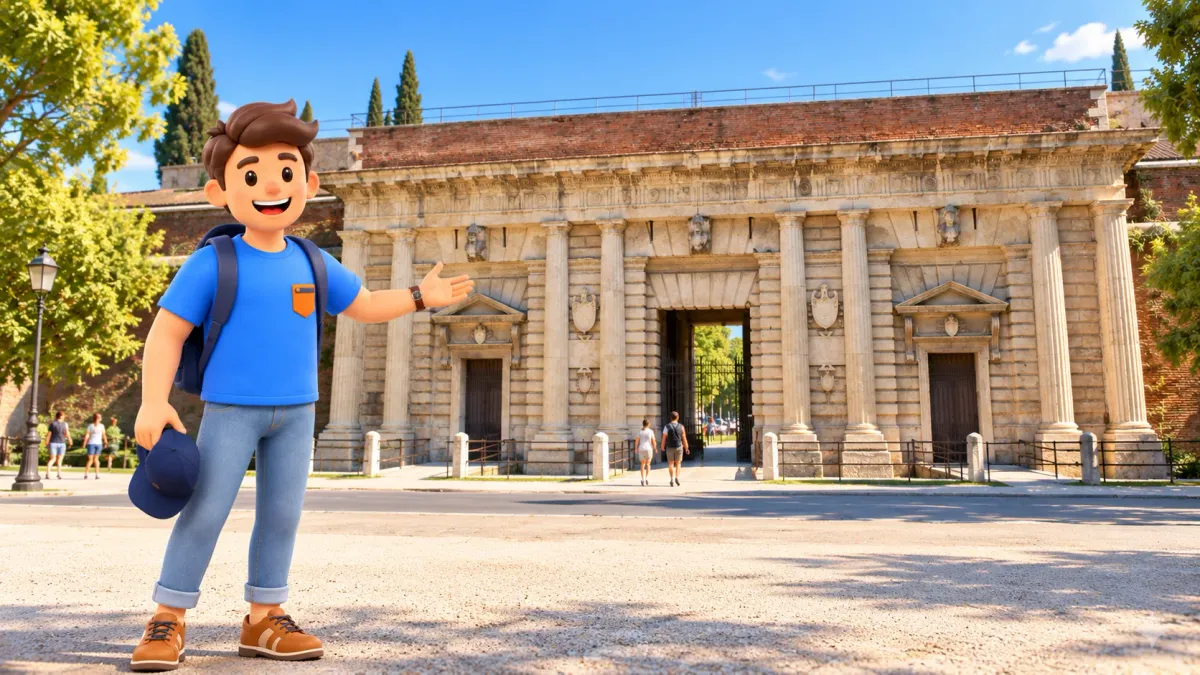
Verona's history continues well beyond its famous squares. On the western side of the centre, monumental gates recall a city that needed protection and made arrival an important architectural event. Porta Palio and Porta San Zeno offer an approachable way to explore that subject without committing to a large museum or a long list of interiors.
This walk connects the two gates through the inner part of the San Zeno quarter. Allow roughly two to two and a half hours including stops and rest. It follows the western fortification line as an urban walk, rather than promising a continuous path along the top of the walls. The basic experience is outdoors; tunnels, roofs and interiors would require a separate confirmed visit.
Choose a route that fits your day
RoadMe makes it much easier to turn an interest in historic Verona into a personalised plan for your whole trip, shaped around your interests and pace. Try combining urban history with walking while keeping enough time to rest between stops.
This route works after the Arena and central squares when you want a change of scale. Instead of concentrating on individual statues and shopfronts, you consider the city's boundary: gates, neighbouring fortifications and streets leading inwards. It is particularly rewarding if you enjoy architecture and the way cities are organised.
Two main stops are enough. Begin at Porta Palio, then walk through the quarter towards Porta San Zeno. The area near the basilica provides a place for a pause rather than another compulsory interior. Porta Nuova belongs to the wider story of the defences but is not included in this shorter plan.
As a planning estimate, allow 40–50 minutes for walking, 35–45 minutes for observing and comparing the gates, 30–40 minutes for rest and another 15 minutes of flexibility. That gives about 120–150 minutes. These are editorial allowances, not a field-timed test. Approaching from the station, returning to the centre and entering the basilica require additional time.
Start in daylight, when details are visible and crossings are easier to understand. This is not a route entirely within the pedestrianised core: traffic runs near the gates. Pavements and designated crossings matter more than getting close to every architectural feature.
Porta Palio: an entrance intended to impress
Porta Palio is a sixteenth-century work by architect and engineer Michele Sanmicheli. Defensive purpose and Renaissance architectural ambition meet in the same building. It controlled arrival while presenting the city to people approaching from outside. Consider it both part of a fortified boundary and a ceremonial façade.
The two sides differ. The outward-facing elevation is more elaborate, while the city-facing side is more restrained. Compare them if safe public access allows it. If not, do not bypass barriers simply to complete a set of viewpoints: one carefully observed side is enough for a worthwhile stop.
On the outer façade, notice the columns and the strong horizontal line above them. Proportion and mass are important here. The gate is relatively low and broad rather than a soaring tower or a storybook castle. That makes it a useful contrast with the image of a medieval gateway you may have brought with you.
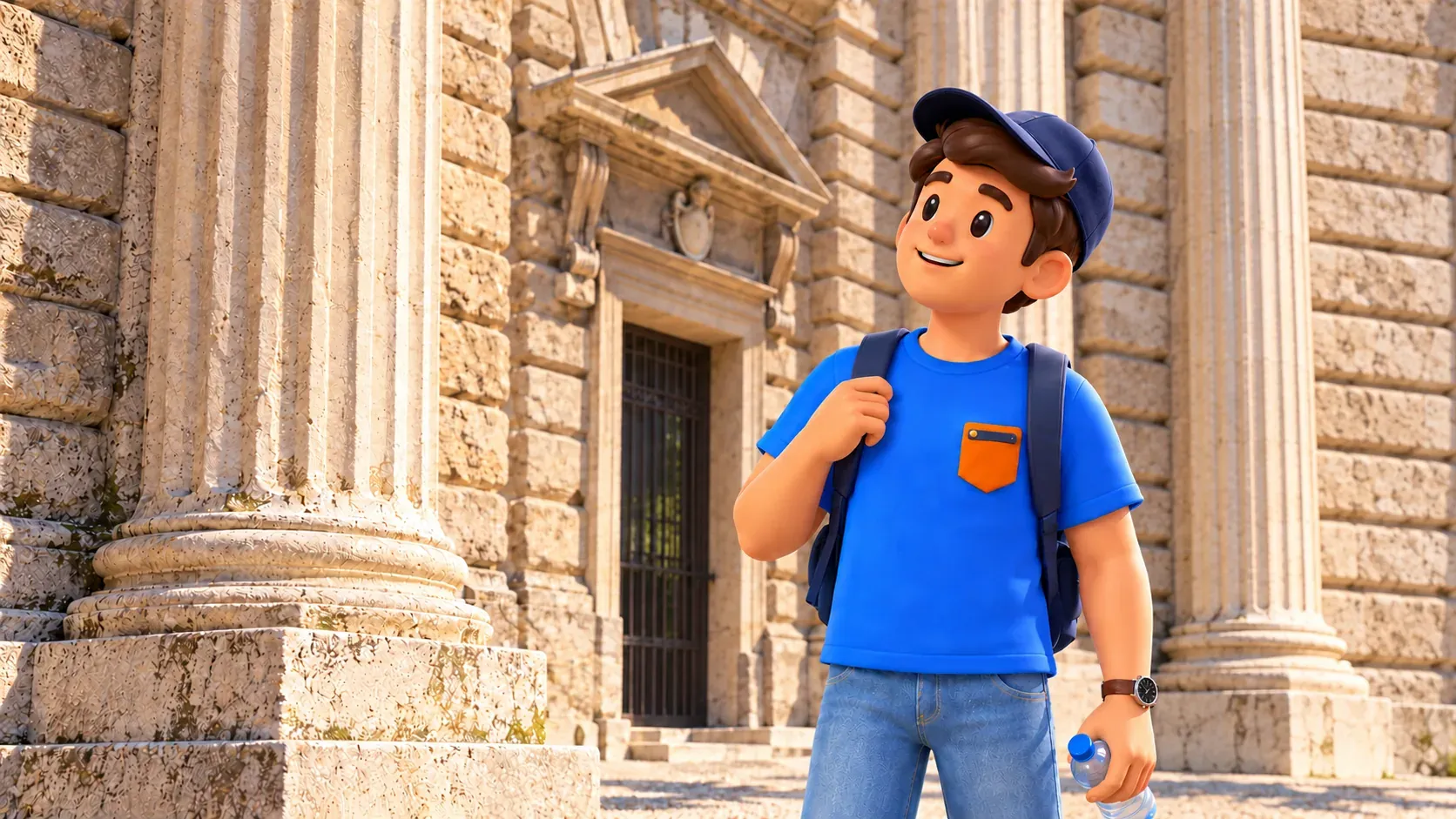
Look at how the principal passage and smaller side openings organise the surface. Then find a feature that seems decorative rather than purely defensive. This simple exercise reveals that military architecture can make an artistic statement. There is no need to invent a story for every carved detail.
The name recalls the earlier palio contests associated with this part of Verona. That brief connection is enough for this outing. A complete account of local festivals and historic race rules would distract from the main observation: protection and representation were working together at the entrance to the city.
Understand the difference between walls and visitor access
Verona's visible defences developed over several periods. It would be misleading to treat every stretch as an unchanged sixteenth-century structure because a Sanmicheli gate stands nearby. Parts were damaged, rebuilt and adapted. This walk looks at a few traces of a larger defensive belt rather than reconstructing its entire history.
Outdoor viewing is also different from entering special spaces. A roof, internal room or underground gallery does not become freely accessible because an older tourist description mentions it. Such visits need a current programme, confirmed admission and the conditions of the relevant organiser.
In June 2026, the municipality announced technical approval for restoration proposals around Porta Nuova and Porta Palio and access to underground galleries. Project approval alone does not show that all work has finished or that the whole area is closed. Use current notices and local signs when planning your visit.
If a passage is fenced off, stay with the available city streets. The route does not depend on descending into a ditch or reaching the upper defences. This keeps the walk coherent even when individual historic spaces cannot be visited.
Walk through the inner San Zeno quarter
From Porta Palio, head on the city side towards Via Saffi, then use Via Lenotti to reach Piazza Pozza. These streets provide a connected urban transition rather than a route along the wall crest. Do not look for shortcuts through closed courtyards or insist on staying immediately beside the historic masonry.
Let your attention change a little on this section. After the monumental entrance, ordinary windows, doors, small businesses and daily movement return to the foreground. The defences surrounded a living city rather than an isolated architectural display. The neighbourhood makes that distinction tangible.
You do not need to discover a major attraction at every turn. The transition provides a break from concentrated information. Walk quietly, discuss the two sides of Porta Palio or simply notice the change between a busy road and the quarter's streets.
With children, choose a straightforward observation: which doors lead into houses, and which once led into the city? Comparing scale can sustain interest without imaginary secret-tunnel adventures. Make observations from safe pedestrian areas rather than encouraging anyone to rush across a road towards a gateway.
Pause near Piazza Pozza and the basilica
The Piazza Pozza area makes a useful break. San Zeno Basilica is nearby, but entering it is not included in the timing. The church is a separate monument with its own history and admission conditions, not another gate building.
Choose a café or another suitable resting place according to seating and how you feel. If you want to sit for longer, read the menu and service arrangements first. Treat an extended lunch as a separate part of the day instead of squeezing it into a short half-hour pause.
RoadMe can help develop a personalised route or complete trip plan that combines history, architecture and rest around your interests. The app makes it much more convenient to arrange a coherent day at a suitable pace instead of repeatedly joining separate ideas together.
During the break, consider how much attention you have left for the second gate. Continue if you feel comfortable. If you would rather remain near the basilica, you can finish here and save Porta San Zeno for another day. Two stops should not become an obligation to ignore tiredness or weather.
For a separate visit to the church and its neighbourhood, see our San Zeno basilica and neighbourhood walk. Plan that as its own block with the current visitor calendar, allowing today's gate walk to retain a clear purpose.
Porta San Zeno: a different character for the same task
From the square, follow Via Porta San Zeno towards the gate of the same name, where the main route ends. Porta San Zeno was built in 1542 to Sanmicheli's design. Its shared name with the basilica reflects the quarter, but the two are separate places with different functions.
After Porta Palio's stone façade, the combination of red brick and pale stone details stands out. The city side has a more compact appearance, with a large central arched passage and small side doorways. A low tiled roof further distinguishes it from a tower-like entrance.
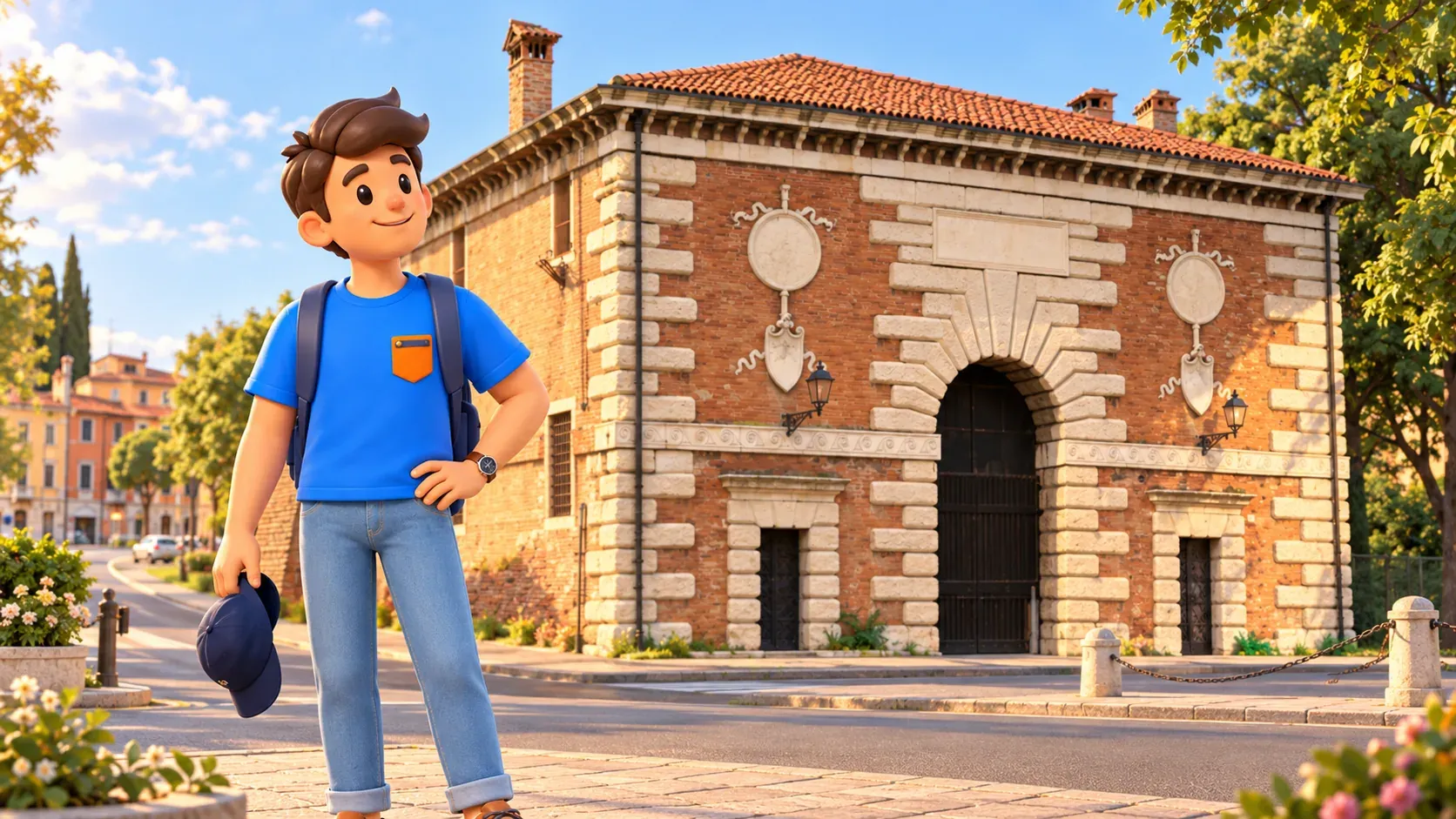
Start with the overall volume, then see how pale stone frames the openings and emphasises corners. Recall the columns and broad façade at Porta Palio. Both buildings addressed entry into a fortified city but create different impressions. The comparison makes this a second observation rather than a repetition of the first.
Do not assume you must walk through the historic central passage. Its use and pedestrian arrangements can change, so follow current signs. Viewing from the accessible side is sufficient for this route. The gate remains part of a modern street where attention to traffic takes precedence over an ideal photograph.
Finish without overloading the continuation
The main plan is complete: you have seen two different solutions to a city entrance and crossed the neighbourhood between them. Returning to Porta Palio is not required. Choose the next journey according to your accommodation or plans, allowing separately for the walk back towards the central squares.
Porta Nuova can become a subject for another day rather than a compulsory third stop. Do not confuse the actual gate with Verona Porta Nuova railway station: the shared name does not mean one location. For this walk, the station is neither the start nor the finish.
In hot weather, open stretches near roads can feel more tiring than the modest distance suggests. Carry water, choose a comfortable time and bring the break forward if needed. In rain, watch for slippery surfaces and do not expect a continuously covered route between the gates.
If mobility conditions matter, consider kerbs, pavement quality and usable crossings as well as overall distance. The basic plan does not require underground stairs or climbing fortifications, but that does not guarantee an equally convenient surface everywhere. A slightly longer, clear urban detour may be the better choice.
The route leaves room for a personal interest. You might remember two gate shapes, an architectural feature or the sense of moving between a city's boundary and a residential quarter. That is already a worthwhile way to get to know Verona.


