
Verona churches in one day: how to choose two instead of ten
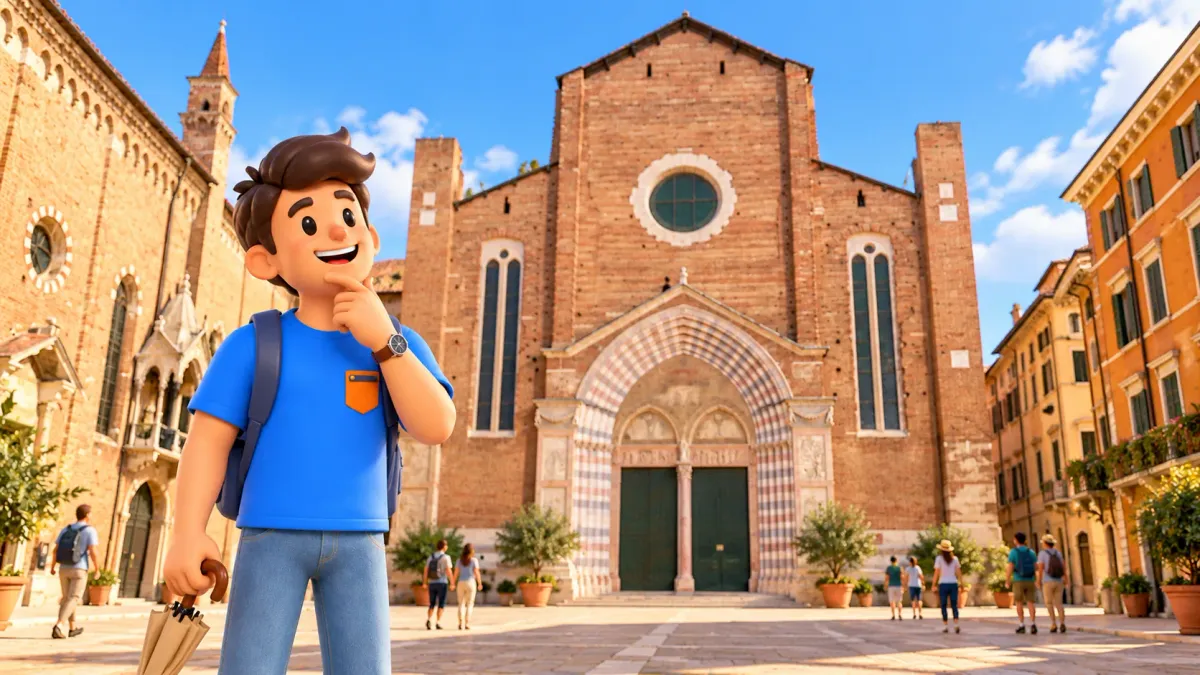
It is easy to make a list of beautiful churches in Verona and harder to decide which ones you actually want to visit. Filling a day with every possibility can leave the timetable crowded and the impressions difficult to separate. A more useful approach is to choose two different reasons for entering: the history of the Cathedral Complex, for example, followed by the Gothic space of Sant'Anastasia.
Below is a way to choose your pair, together with a manageable plan for the centre. The main option connects the Cathedral and Sant'Anastasia in roughly three to three and a half hours, including the walk and a break. San Zeno and San Fermo provide alternatives for particular interests rather than compulsory third and fourth stops.
Choose the interest before the itinerary
RoadMe makes it much easier to develop a personalised plan for your whole trip around your interests, combining art, walking and rest at a suitable pace. Try choosing the experiences that matter most rather than the largest possible number of places.
A good pair answers different questions. In one place you might want to understand a group of historic buildings; in another, experience a large interior or look for a particular artwork. When the reasons differ, the second visit contributes something new rather than repeating the first.
Ask what matters today: painting, architectural space, the city's early history or a longer neighbourhood walk. Then consider your energy and location. A famous church does not have to enter today's plan if reaching it would prevent a relaxed visit to two others.
| Your interest | A useful choice |
|---|---|
| Several connected historic buildings | Cathedral Complex: cathedral, baptistery and St Helen |
| A large Gothic interior and painting | Sant'Anastasia |
| Romanesque architecture and Mantegna | San Zeno |
| Contrasting levels within one monument | San Fermo |
Use the table to choose, rather than treating it as a checklist for one day. Pick the two lines that genuinely interest you. For the most compact outing, the first two work well: both lie in the northern part of the historic centre, with room for a short walk between them.
The main plan: Cathedral, break and Sant'Anastasia
Begin in Piazza Duomo at the Cathedral Complex, then follow the streets of the centre towards Sant'Anastasia and finish there. This is a linear outing without a required return to the start. Getting from your accommodation or the station and having a later lunch are additional journeys and activities.
Allow around 55–65 minutes for each main visit, 15–20 minutes for walking, 35–40 minutes for a break and another 20 minutes of flexibility. That gives approximately 180–210 minutes. These are editorial allowances for an unhurried visit, not a field measurement or a compulsory ticket duration.
On an ordinary weekday, late morning can work well after checking the calendar. Starting near the cathedral around 11, for example, leaves room for a break and the second church. This is an example of organising the day rather than a promise of identical opening hours throughout the year.
On Saturdays, note the cathedral's earlier end to tourist visits: the operator listed 15:30 at preparation. Sundays and religious holidays shift this pair into the afternoon, with Cathedral visits beginning at 13:30 and Sant'Anastasia at 13:00. Services and specific calendar changes can affect admission.
The Cathedral: find a focus within the complex
The Cathedral Complex is more than one large room. The baptistery of San Giovanni in Fonte and the church of St Helen accompany the cathedral and connect with the long history of Christian Verona. This format suits visitors interested in the organisation of a historic site as well as its interior decoration.
Check which sections form the currently available visitor route and choose your main interest. Some people will prefer the cathedral space; others the baptistery and earlier layers. A clear question gives the visit direction, instead of trying to examine every part equally within an hour.
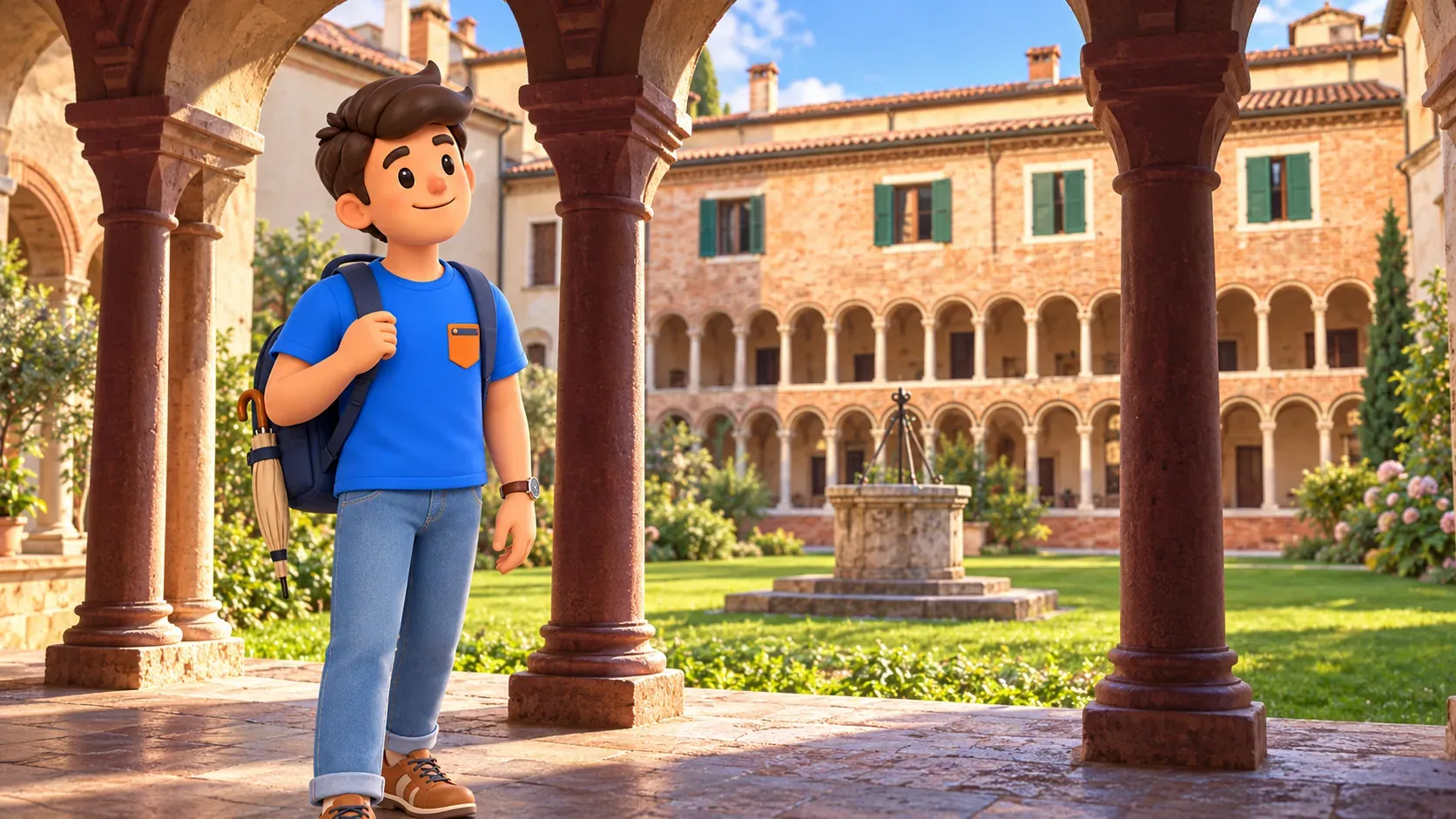
Titian's Assumption provides a specific artistic focus inside the cathedral. If painting is your main reason for visiting churches, knowing one work you want to find helps. Give yourself time to look rather than feeling obliged to read the entire list of altars.
The building's history includes reconstruction following the earthquake of 1117 and later changes. Think of it as the result of several periods rather than searching for one perfectly pure stylistic label. The age of an individual feature does not necessarily match that of the whole monument.
The Capitular Library is nearby, but proximity does not mean its museum visit is included in ordinary admission to the Cathedral Complex. The library needs its own programme check and time allowance. In the main plan here, it remains a separate possibility for another day.
Use the walk and break to restore attention
After the complex, step outside and let the experience settle. An ordinary stretch of city between two churches can be useful: daylight, shopfronts, conversation and a chance to sit. The second visit then begins with renewed attention rather than directly after the last altar of the first.
Choose a café according to its menu, seating and convenience, without turning the search for one specific venue into another excursion. If you want lunch, enlarge the allowance and compare it with Sant'Anastasia's calendar. A long meal should not consume the time you intended for the second visit.
Discuss what stayed with you: the arrangement of buildings, one painting or the change of light between spaces. This keeps the experience personal. It is more useful than immediately opening a dozen new descriptions and adding neighbouring monuments to an already settled day.
RoadMe can help build a personalised route or complete trip plan that connects your chosen churches with your other interests. The app makes it much more convenient to organise the sequence, walking sections and breaks around your own pace.
Sant'Anastasia: experience the space before the details
Sant'Anastasia offers a different approach. The Dominicans began this Gothic basilica around 1290. First, consider the space: the direction of the nave, its height and the rhythm of supports. After the multiple parts of the Cathedral Complex, this changes the character of the visit.
Find somewhere to pause without obstructing circulation. Look at the interior as a whole, then choose one artistic focus. Pisanello's celebrated Saint George and the Princess provides such a point of attention; you do not need a complete account of every chapel for a first encounter.
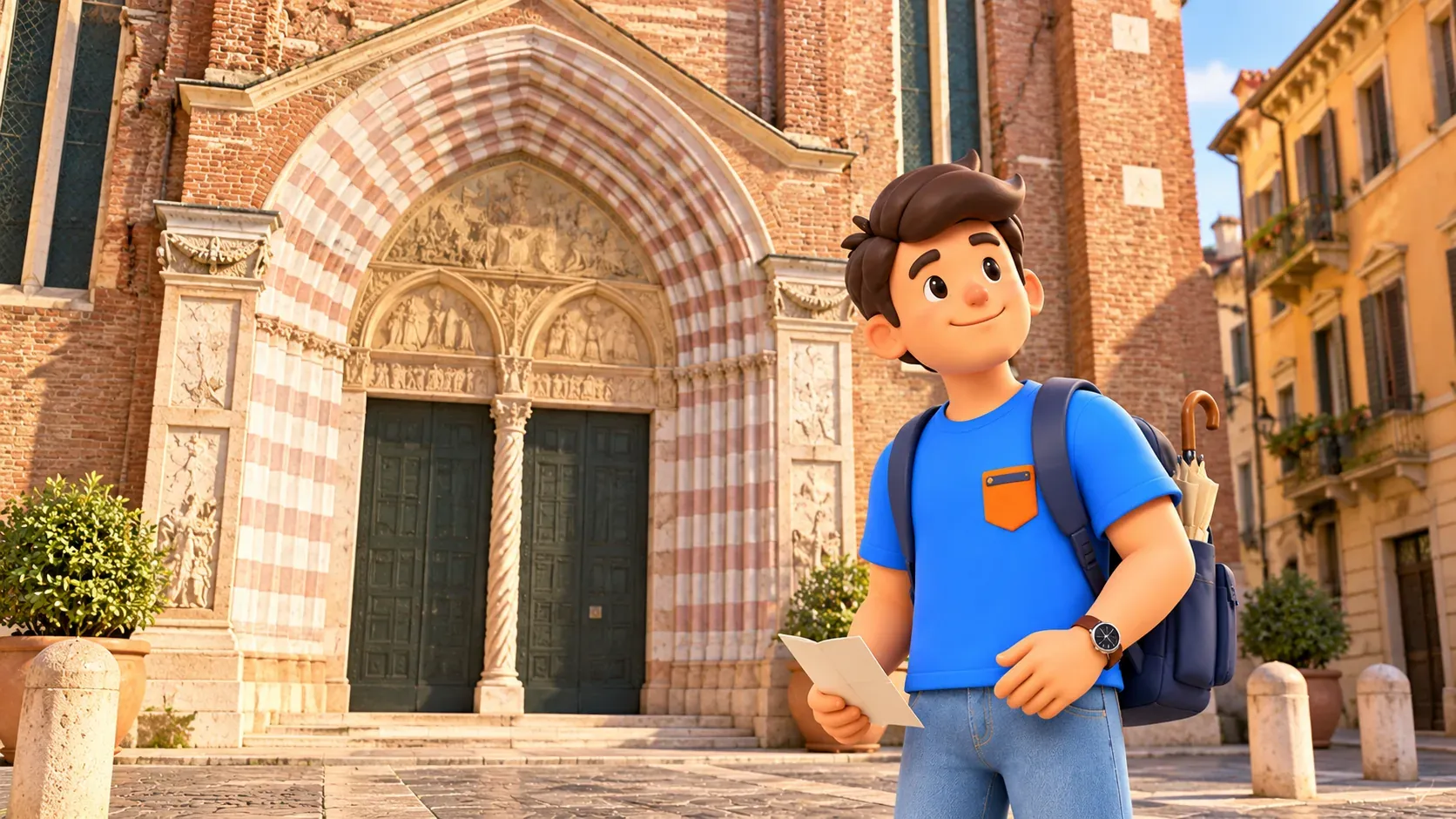
Outside, the brick façade and distinctive entrance offer an introduction to the contrast with the cathedral. The principal experience, however, comes from entering. If visits are suspended at your chosen time, the façade makes a useful brief stop rather than a full equivalent of the intended interior visit.
Maintain a quiet pace and follow the rules of a working church. Ask locally about photography, audio guides and access to particular sections. Cultural visits and services have different purposes; a place of worship does not become a conventional museum whenever its doors are open.
When San Zeno or San Fermo may suit you better
Choose San Zeno for Romanesque architecture and Mantegna. The bronze doors and expressive façade add their own points of interest. This choice works particularly well with a walk around the surrounding quarter, leaving adequate time to reach the central part of Verona afterwards.
San Zeno and Sant'Anastasia provide a strong contrast but require more walking than the compact central pair. Allow a longer part of the day rather than automatically transferring the same three-hour allowance. If you are tired, one church with more neighbourhood time may be the more enjoyable option.
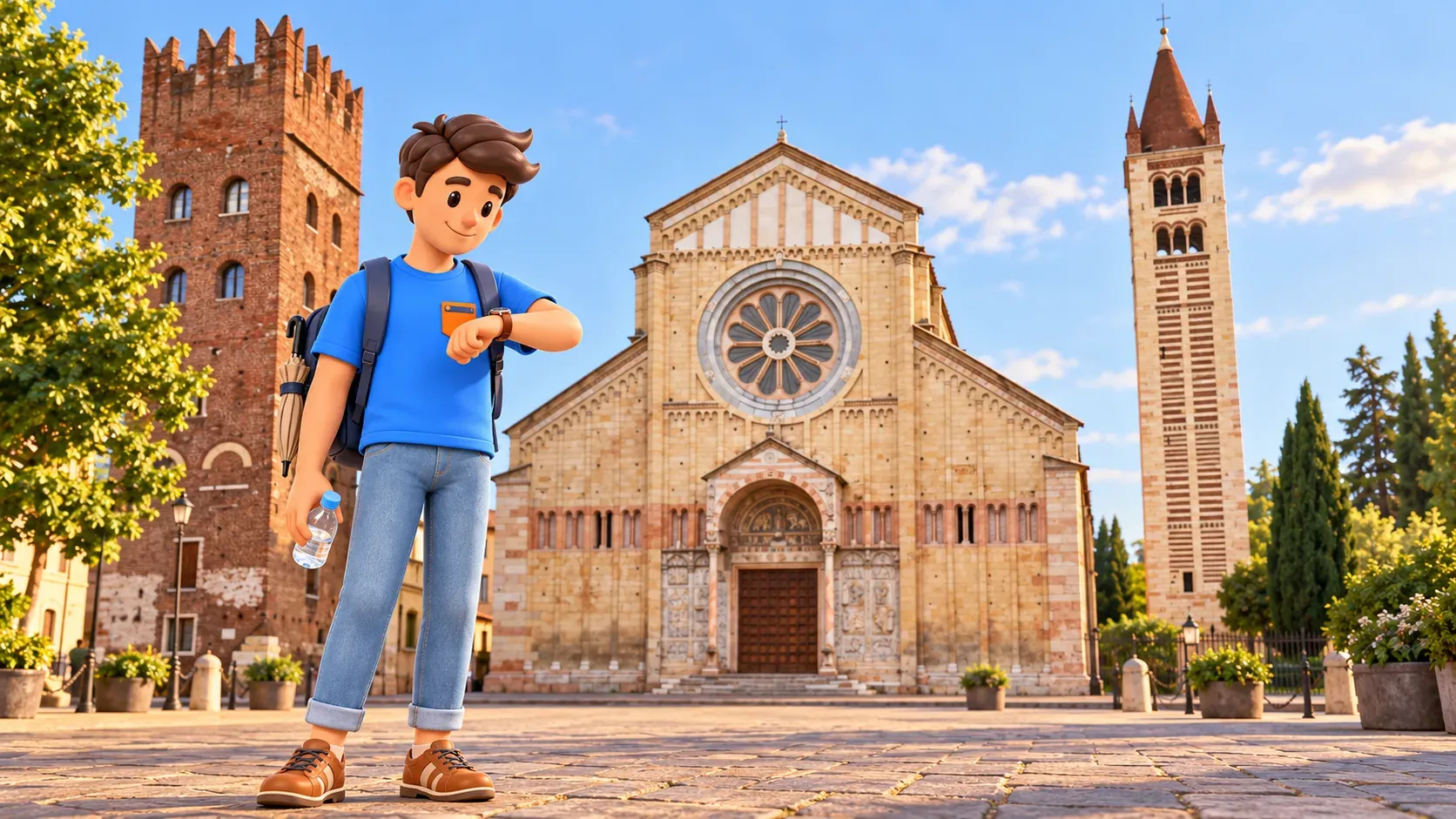
Our San Zeno basilica and neighbourhood walk helps explain the character of that area. Choose any second church according to your interest and remaining time, rather than simply increasing the number of admissions.
San Fermo offers the contrast of an upper Gothic church and a lower Romanesque space. The timber ceiling above provides a memorable feature. Choose it if you enjoy comparing different atmospheres and levels within one monument, while keeping the rest of your day manageable.
Mobility can change the choice in practical terms. The operator lists wheelchair access at the Cathedral and Sant'Anastasia, partial access at San Zeno and no wheelchair access at San Fermo because of steep stairs. Clarify the usable route and any assistance for your own requirements before travelling.
Resolve tickets and calendars before setting out
Tourist and cultural visits to these historic churches require paid admission. The operator offers individual entry and a combined option for four churches. Compare the current conditions with your chosen pair; a combined ticket does not require visiting all four on the same day.
An ordinary independent visit and an organised guided tour have different arrangements. Check which product you are choosing, how it is purchased and its validity. Fixed amounts are not included here, allowing the decision to follow the current conditions when you travel.
Check both calendars, the latest practical time to begin and any interruptions. Then add the walk and break. If the day has no comfortable margin, choose one substantial visit and leave the second monument for another occasion.
Recognise a day that has worked
A successful church itinerary is not measured by the number of entrances. Afterwards, you can recall the difference between two spaces, name one work that interested you and still feel like returning. That does not require remembering every artist and the date of each altar.
In a group, agree beforehand how deeply you want to explore. One person may enjoy painting, another the general architectural space. Two places with a break give those preferences room, especially when every stop does not become a compulsory lecture.
The remaining day can belong to the river, a café or an ordinary walk through the centre. Space between experiences helps your two chosen churches remain distinct and memorable. Verona offers enough reasons to return without fitting every one into a single visit.


