Verona’s bridges and their second lives: the history behind familiar views
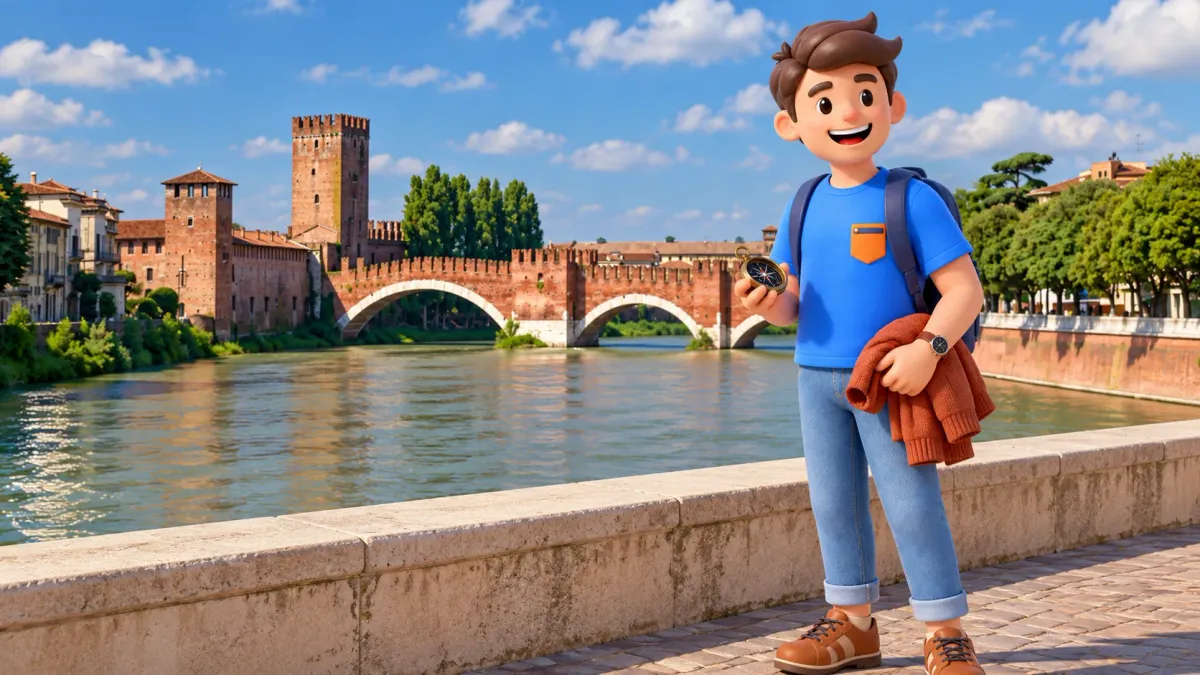
In photographs of Verona, bridges can seem the most permanent parts of the landscape. The river moves, people cross between banks, and the arches appear always to have remained in position. Yet the familiar views of Ponte Pietra and the Scaliger Bridge conceal a story of return. Both were destroyed in 1945, and their present appearance is inseparable from substantial post-war reconstruction.
Knowing this does not take history away from a walk. It adds another period: the years when important connections and recognisable forms were returned to the city. Even a short riverside stop becomes richer. You are looking at an old structure, the history of its loss and the work that allowed it to participate in Verona’s life again.
What changes when you know about reconstruction?
You need not choose between ancient and modern as though one word cancels the other. A bridge can have an early origin, repeated alterations, old material and later structural work. Recognising those different times is more useful than trying to give the entire object one age.
RoadMe makes planning a personal whole trip around your interests and pace much more convenient. Try distributing architecture, river walks and rest in the app, so the bridges’ stories become part of your own Verona.
Look at the bridge first as a silhouette, then as a route between banks. The first view helps you recognise an image; the second recalls its purpose. Restoring such an object returns more than a photographic scene. It allows people to use an important city crossing again.
You do not need to become a conservation specialist. A few questions are enough: what did the bridge connect, why does its shape differ from another, and when did it return after destruction? They provide an accessible theme without studying every masonry surface or memorising everyone involved in the works.
Ponte Pietra: several periods in one silhouette
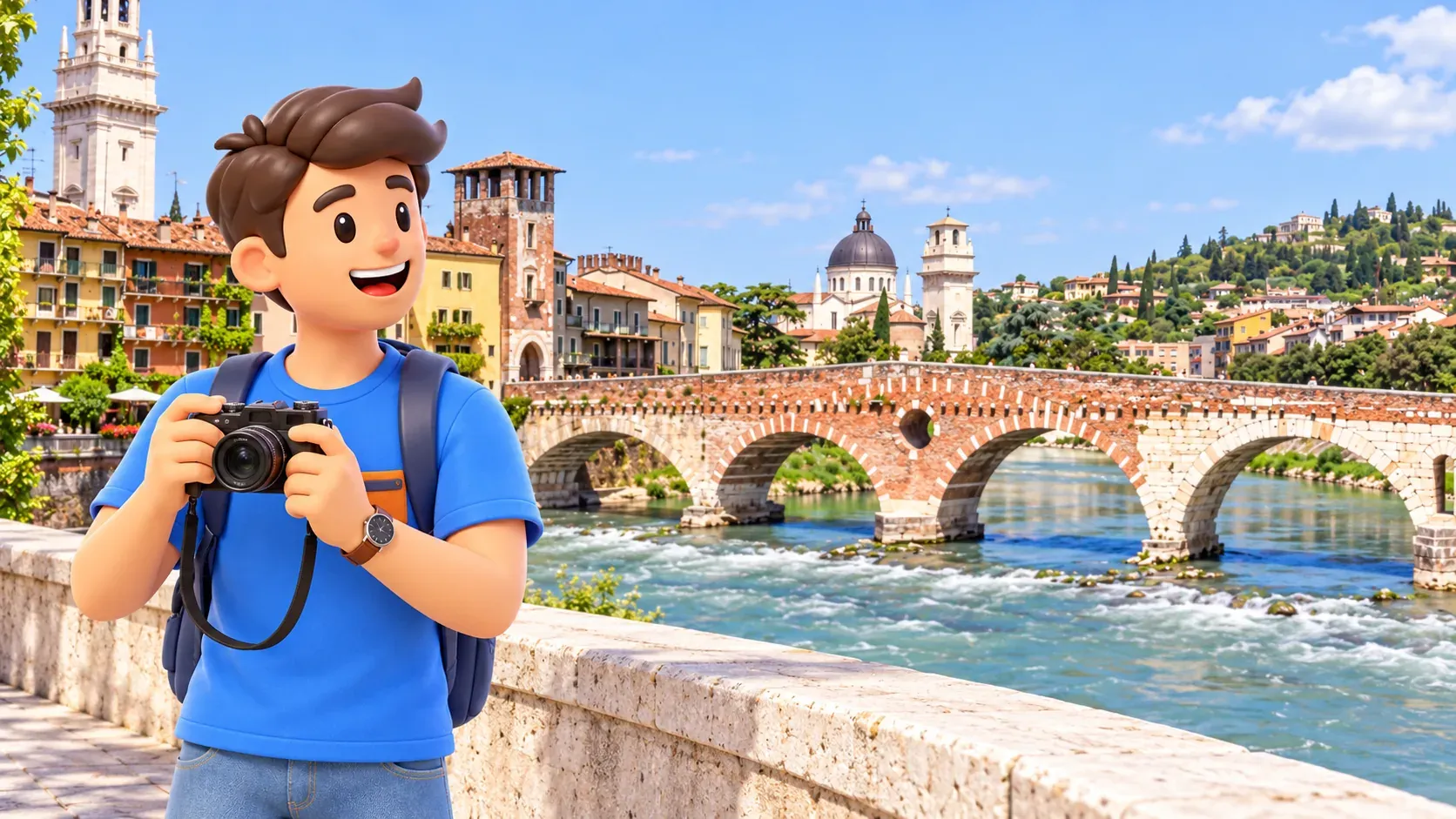
Ponte Pietra belongs to Verona’s Roman history, but its life did not end in antiquity. It was altered and restored in later centuries, including medieval and Venetian periods. Its combination of pale stone and brick speaks of long change rather than one isolated building event.
At first sight, seeing the whole matters more than assigning a date to every part. There are five arches, different materials and a setting between city buildings and the hills across the water. Do not assume every pale surface is Roman or every brick certainly medieval. Dating individual components requires documentation.
In 1945, retreating German troops blew up the bridge. Usable older elements were subsequently retrieved from the Adige and incorporated into reconstruction. The principal rebuilding took place in 1957–1959. Today’s recognisable structure therefore connects an ancient origin with post-war work.
That combination is interesting in itself. You are not seeing a wholly new image invented without precedent, but neither is this a monument unchanged for two thousand years. Material history, form and the work of reassembling surviving elements belong to different layers of one biography.
Avoid simplifying the account into every stone being lifted from the river and put back. Reconstruction does not mean absolutely everything survived and returned without additions. A more accurate thought is enough for a walk: old elements mattered to the rebuilding, while the familiar bridge you can now see resulted from considered work.
The Scaliger Bridge: fortress, crossing and return
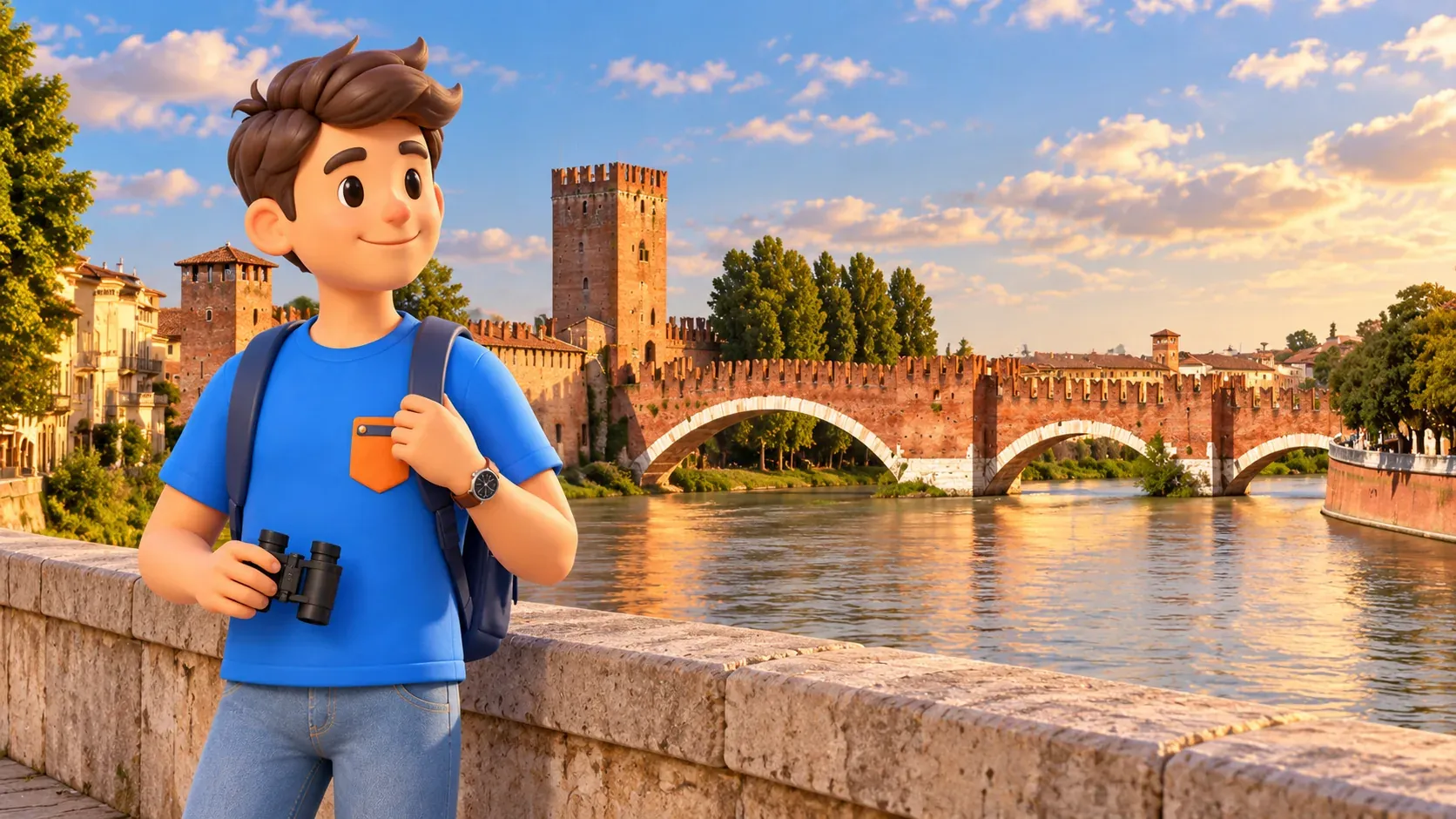
The Scaliger Bridge, also called Castelvecchio Bridge, has a different identity. Brick, battlements and three unequal spans establish its character. The largest span is towards the castle. This differs from Ponte Pietra’s silhouette and answers another historical purpose: the crossing was part of a fortified complex.
Its construction is associated with Cangrande II della Scala in the middle of the fourteenth century. The bridge gave the ruler a protected connection to the opposite bank. That function changes the view: not simply an attractive row of arches above water, but part of a system in which security and movement mattered.
This bridge was also destroyed in 1945. It was rebuilt in 1951 using stone and brick recovered from the river. Remember the different returns when comparing the two famous crossings: 1951 for the Scaliger Bridge, and the late 1950s works for Ponte Pietra.
Here too, there is no reason to imagine the whole present appearance remained untouched since medieval construction. The structure had experienced changes even before wartime destruction. Seeing the rebuilt bridge as part of city history is more interesting than testing it against an imagined standard of complete immutability.
Compare the silhouette’s breadth and the rhythm of its spans, not just its colour. A distant view helps you read the bridge as a whole; using the available pedestrian route lets you experience it as space. The castle museum remains a separate visit. Interest in a bridge does not automatically require a museum programme.
Why return a recognisable form?
Losing a bridge changes a city in two ways at once. A familiar image disappears and a connection between banks is interrupted. Reconstruction therefore concerns more than the artistic value of an individual structure. It also affects daily movement and the ways residents recognise their city.
During a visit, watch people who are simply crossing the river. Some do not photograph anything, pause by the arches or read historical information. Such ordinary use does not diminish a monument’s importance. It shows the bridge once again fulfilling an urban role.
This helps avoid a narrow view of reconstruction as creating scenery. The returned image works together with movement across it and the spaces around it. Respect for the past appears not only in retaining material, but also in allowing a place’s life to continue.
The bridges do not have to tell identical stories. At Ponte Pietra, long development from antiquity matters; at the Scaliger Bridge, the fortified residence and strikingly unequal spans are important. Their shared experience of destruction and return connects them while preserving those differences.
Looking from a bank and looking from a bridge
A position on the bank makes it easier to see the arches and their relationship to the river. On the bridge, parapets, paving, passage and views towards the city become more prominent. If time is limited, choose the experience deliberately. One short outing need not provide every angle from both banks.
Begin from an ordinary public pavement where you can observe without interrupting movement. Do not descend towards the riverbed to search for old fragments or a supposedly correct lower view. Water and approaches change, and a story about reconstruction is not an invitation to inspect piers at close range.
Keep the passage free on the bridge. Choose a photographic pause where others need not squeeze around you beside the parapet. Sitting on the barrier or leaning over it is unnecessary. Architecture can be observed without making the edge above the river a posing location.
Use your eyes rather than touch to compare materials. A different shade does not always indicate another historical period, while an identical shade does not establish a shared date. Notice the overall pattern first, then read more closely about whichever bridge has caught your interest.
One short encounter or a longer river walk
For a standalone encounter, choose one bridge. Allow roughly 40–60 minutes for an exterior view from a suitable bank position and, if the available route suits you, a short pedestrian outing. Add 30–45 minutes for a separate pause and 15–20 as a buffer: approximately 85–125 minutes, excluding travel from and back to your accommodation.
This is an editorial allowance, not a measured route or a promise that every part will suit everyone. If steps, paving or inclines matter, check the particular approach. A bridge visible across water and a convenient route to it are related but different planning questions.
Do not treat Ponte Pietra and the Scaliger Bridge as neighbouring stops a few minutes apart. There is a separate city walk between them, and your choice of bank influences it. For a longer connected experience, use our Adige walk from the Scaliger Bridge to Ponte Pietra. Avoid automatically adding it after an already full programme.
With RoadMe, an interest in bridges can become a personal whole-trip plan balancing walks, culture and rest. The app helps distribute themes across your days, turning familiar views into a journey with a rhythm that suits you.
The same outing need not include a hilltop panorama, a museum or every next bridge. Sometimes one attentive encounter leaves more than several hurried crossings. Stay with what you have actually seen and leave yourself the possibility of returning to the river on another day.
What remains beyond the photograph?
A recognisable view does not stop being historical when you learn about its reconstruction. It becomes more complex. Early construction and later changes are joined by loss, recovery of material and a decision to return form to the city. A short piece of knowledge changes the attention you give those arches.
Leaving the river, remember one difference as well as a silhouette: five arches and mixed materials at Ponte Pietra, three unequal spans and a fortified character at the Scaliger Bridge. Next time, the familiar image will carry a story of its own, and perhaps another reason to linger on the bank.