
The Venetian and Palazzo: Two Hours of Canals and Themed Spaces

The Venetian and Palazzo suit a visit in which changing your viewpoint matters more than covering distance. In roughly two hours, you can follow the indoor canal at the Grand Canal Shoppes, pause beside bridges and façades, then exchange a theatrical streetscape for the open space of the Palazzo atrium. A gondola ride is an optional addition rather than a requirement for enjoying the visit.
This route allows about two hours in and around the resorts, excluding a proper meal and extended shopping. The duration is an estimate, not a measured visit time. Count your journey from another hotel separately. If you choose a gondola, allow for selecting the experience, reaching the departure area and waiting as well as the ride itself.
Begin with a walk rather than a shopping list
The Grand Canal Shoppes may be a retail destination, but the shops are the setting for this outing. The subject is how water, painted sky, bridges and decorative façades suggest a small urban environment. You can make no purchases and still leave with a clear impression. Choose that format beforehand instead of trying to combine an architectural visit with a lengthy list of errands.
For a more convenient way to turn this idea into a personal outing, try RoadMe: the app works out an itinerary around your interests and available time. Prepare a plan for the architecture, unusual interiors or relaxed pauses you enjoy, and leave your attention free for the experience itself.
| Part of the visit | What to notice | Suggested allowance |
|---|---|---|
| Indoor canal | Water, bridges and changing viewpoints | About 40–50 minutes |
| Grand Canal Shoppes | Painted sky and decorative façades | About 20–30 minutes |
| Transition and Palazzo atrium | A different scale and the waterfall | About 30–40 minutes |
These parts overlap: the canal is inside the shopping environment, so this is not a sequence of three separate admissions or a rigid set of rooms. The table distributes attention. Leave several minutes free for finding your way and resting, particularly when this is your first visit to a large resort complex.
Decide two things before the visit: whether you want a gondola ride and whether seeing the outdoor lagoon is essential. With two negative answers, the indoor walk remains a complete route. If you choose an extra, shorten another part or increase the overall allowance. The original two hours should help your planning rather than oblige you to hurry.
Follow the indoor canal
Your first main reference is the indoor canal on Level 2 of the Grand Canal Shoppes. Follow the resort's signs: its position may not be immediately clear from the street or lobby. If you need a lift or a route without stairs, check the current map or ask staff beforehand. Adjacent spaces in a photograph do not necessarily mean a short transition without a level change.
Once beside the water, find an overall view. The canal brings a bridge, façades and people on the walkway into one composition. Then look in another direction. Even a small change of position alters the depth of the scene and the element that takes priority. What matters is the relationship between features as much as any attractive object on its own.
Gondolas add movement to that composition. A boat provides scale, reflections change and stationary façades feel different beside something moving. Watching is a valid part of an exterior view of the ride and does not oblige you to buy it. First decide whether the perspective from the water appeals or whether you prefer remaining on the pedestrian side.

Choose your stopping place by more than the reflection on a screen. Check that there is still room to pass and that an entrance, bridge approach or boarding area is not immediately behind you. A considerate position lets you stay for a few minutes. Repeatedly stepping away from a flow of people for one photograph is more tiring than finding a less constrained angle.
Take one broad photograph and one closer view, perhaps water beside the edge of a bridge or the repetition of arches. Then walk a short section without photographing it. The visit keeps its rhythm, and the pictures differ in subject. You do not have to record every bridge from both sides for the experience to count as complete.
A sky that belongs to the interior
The painted sky helps the retail space read as a staged street. Look upwards and find the moment when an apparently outdoor view becomes recognisably part of a room. This small observation explains the artistic device: the effect comes from ceiling, walls, lighting and water working together. It depends on more than one isolated landmark.
The Venetian references are assembled for recognition and atmosphere. You need not assess them as a test of exact copying. Notice the features that make the image understandable: an arcade, a balcony, a bridge or a distinctive boat form. Even without having visited Venice, you can see how repeated details support one shared theme throughout the setting.
For a little while, ignore the shop windows and look above eye level. Window lines, cornices and changes in façade colour become more apparent. Then return your attention to the pedestrian level. Two ways of looking offer different impressions of the same short section and prevent the visit from becoming only a catalogue of stores passed.
With children, suggest finding three things that make the space feel like a street and one that reveals it is indoors. This is an invitation to notice rather than a knowledge test or a race. Adults can make the same comparison. The question helps explain why a designed setting can affect the mood of an otherwise ordinary walk.
Choose the gondola experience before paying
Indoor and outdoor gondolas follow different routes. Inside, the canal, bridges and themed façades shape the experience; outside, the light, background and relationship with the boulevard change. Do not assume they are consecutive sections of one ride. Before purchasing, establish which option is available and what the particular ticket covers on your date.
The outdoor ride is seasonal and dependent on suitable weather. A view of an attractive lagoon does not confirm that boarding operates at your preferred time. The indoor experience also needs a current conditions check. For this short walk, the useful decision is whether you prefer observing from the path or adding a separate ride, rather than learning every ticket variation in advance.
A short ride duration does not equal the complete time required for the visit. Reaching the departure point, admission arrangements and possible queues add to it. If you have exactly two free hours between fixed plans, establish the actual wait before deciding. With more room in the day, the ride can fit comfortably while leaving time for Palazzo.
Do not choose a gondola solely because it appears compulsory in a travel list. One visitor values being on the water, another enjoys architecture from the path, and a third wants a coffee break. Choose the experience your group genuinely likes instead of completing each possibility in turn. A clear preference makes a compact outing easier to enjoy.
Change the scene at Palazzo
After the canal, follow the available interior signs towards Palazzo. The resorts form a large connected environment, but moving between them still requires orientation. On a first visit, identify the correct direction and level before continuing to look around. Choosing a route only by the next appealing façade can turn a short outing into a search for an exit.
At the Waterfall Atrium, the scale changes. Along the canal, individual façades and bridges guide your attention; here, height, open space and water on a vertical surface bring the view together. Spend a few minutes without immediately looking for the next attraction. Moving from one kind of interior to another already provides a new part of the visit.
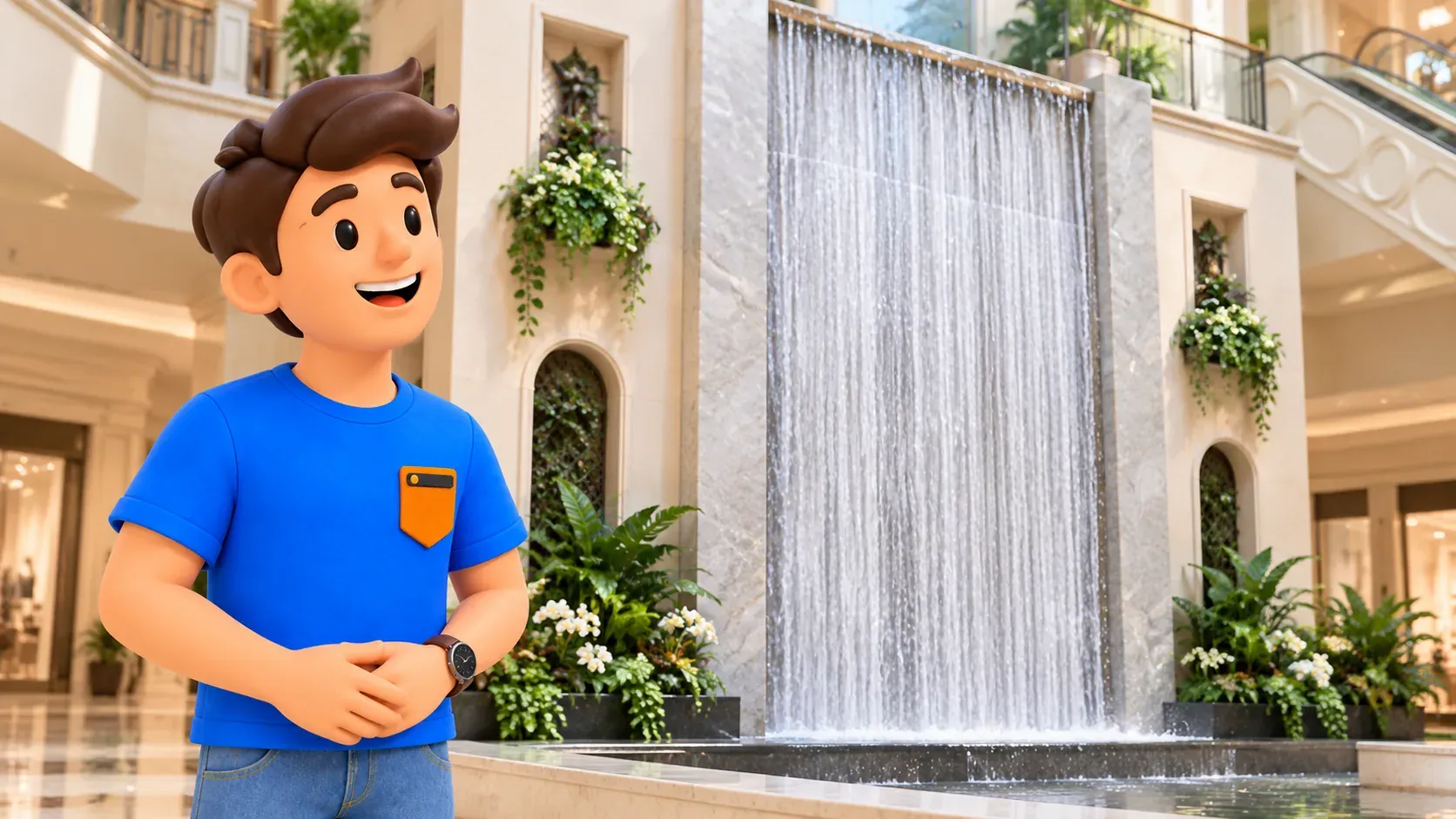
The atrium's displays can be temporary or seasonal. Avoid organising a visit solely around a decoration seen in an old photograph. Check the current programme if a particular installation matters to you. For the ordinary short route, the atrium can remain an architectural stop where you see whatever presentation is accessible on your visiting day.
If you are looking for the well-known LOVE artwork, note its authorship: the official resort page identifies Laura Kimpton and her Monumental Word Series. A page describing an artwork does not guarantee it is in its former position today. Here it remains a possible interest to confirm separately, rather than a promised final attraction.
If canals, unusual interiors or unhurried walks appeal most, RoadMe can work out a personal plan around those interests. The app makes it more convenient to connect this short visit with the following days and build a trip suited to the way you like to discover a city.
Decide whether to see the outdoor lagoon
The outdoor area is useful when you want to compare a painted sky with real daylight and see the façades from another side. The choice depends on weather, how you approach the resort and the time remaining. A short route has no obligation to finish outside. The indoor walk already includes water, architecture and a change of spaces.

If you go out, first find an accessible pedestrian position and look around. Do not expect the outdoor lagoon to feel identical to the indoor canal: background, noise and lighting are different. One overall view is enough to notice the contrast. You can then finish with a small pause instead of trying to cover every edge for another similar photograph.
A drink, gelato or another snack is a separate small choice rather than an essential route stop. Allow for waiting and choose somewhere comfortable to pause. A proper restaurant needs its own time block. That way food supports the mood of the outing instead of consuming the final minutes before you need to leave for another commitment.
Keep the visit light
Agree beforehand that you are visiting spaces rather than inspecting every store. If someone wants to shop, choose a short independent interval and a clear meeting place. Others can watch the canal or rest. Different interests are easier to combine when the shared walk does not repeatedly stop for a lengthy wait at each window.
Two hours can provide several distinct memories: a reflection near a bridge, sky above an interior and the atrium's vertical water. You do not need to photograph the whole resort. A clear limit makes the visit calmer and leaves the possibility of returning with a specific interest if one particular setting invites you to look more closely.
Before finishing, establish the route to your next destination or back to your hotel. In a large complex, an attractive final view and a convenient exit may not coincide. Leave a margin for that transition. The outing can then end with an impression you chose, rather than searching for directions in the final minutes before a fixed appointment.


