
Varvarka and Old Kitay-Gorod: A Walk Among Chambers and Churches
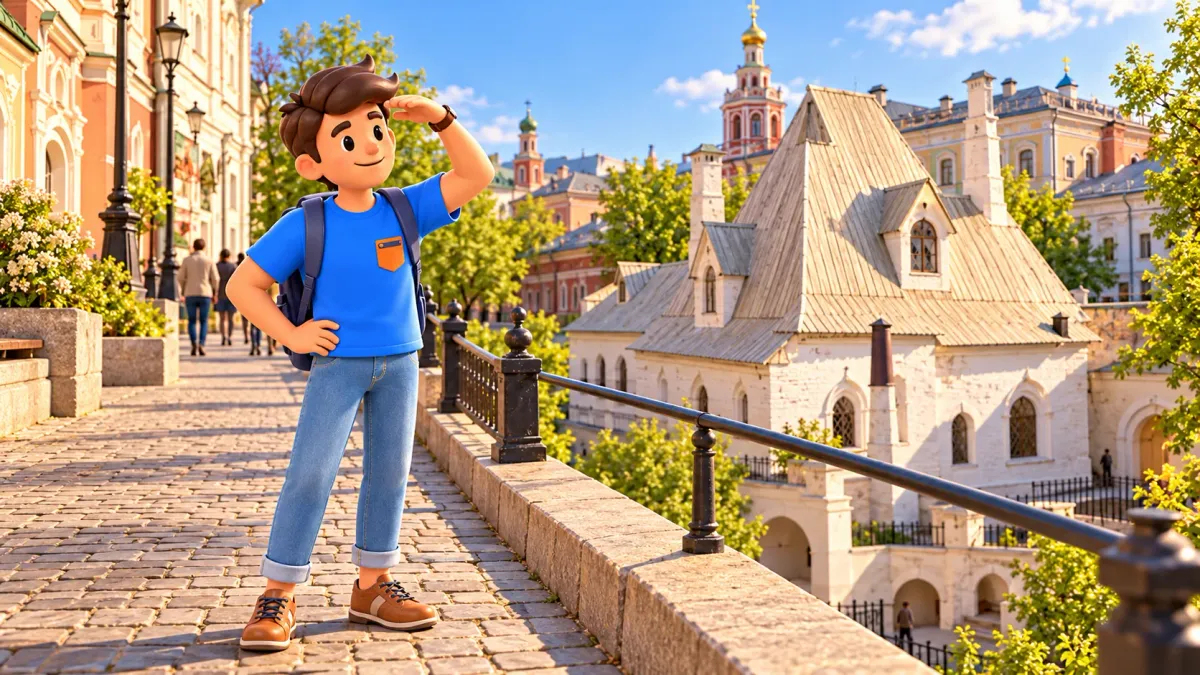
Varvarka is a good place to explore old Moscow at the scale of a street rather than a grand square. Start at its western end near Red Square, follow the Old English Court, the Cathedral of the Sign and the Romanov Chambers, then finish towards Kitay-Gorod metro. An exterior walk can fit into about two hours with pauses. Choose one museum and allow a half day instead, keeping time for a meal and an optional neighbouring lane.
The route is compact, but its interest lies in looking carefully rather than walking quickly. Chamber buildings, church silhouettes and the relationship between street level and Zaryadye create the main story. All durations below are planning estimates, not measured journeys. Museum admission, church access and event entrances must be checked separately for your date.
Choose a short walk or a half-day visit
The simplest version runs west to east along Varvarka, with three principal stops: the Old English Court, the Cathedral of the Sign and the Romanov Chambers. Add Gostiny Dvor before the main walk if you want a commercial-city contrast, or Trinity Church in Nikitniki afterwards if church architecture interests you. You do not need both extensions to have a complete outing.
To fit this walk into a trip that reflects your interests, try RoadMe: the app prepares a personal day-by-day plan around your dates, interests, pace and budget. Planning in the app is more convenient than trying to squeeze the same fixed collection of museums and streets into everyone's day.
For a museum version, choose either merchant history at the Old English Court or household life at the Romanov Chambers. Reserve roughly an hour to ninety minutes for the chosen visit as a planning allowance, then arrange the outdoor stops around it. Check actual available entry times before deciding which end of the street to start from.
Begin at Varvarka, rather than adding another Red Square tour
Reach the western end of Varvarka from your chosen central metro approach using current pedestrian navigation. The purpose today is the street itself, so a long stop on Red Square can remain a separate decision. At the first viewpoint, orient yourself: Zaryadye is on the river-facing side, and the older street continues towards Kitay-Gorod. This simple relationship is more useful than memorising every building in advance.
Notice the changes in ground level. Some old structures sit lower than the pavement, which affects both how they appear and how you approach their entrances. Do not assume that the nearest visible door is the public entrance. If you have booked a museum, save its visitor instructions, not just its map marker. Stairs, uneven surfaces and indirect approaches deserve extra consideration if anyone in the group has difficulty walking.
Give the beginning ten or fifteen unhurried minutes. Look along the street, then towards the buildings below it. That first comparison provides a visual framework for the rest of the walk without requiring a lecture before you have even reached the first stop.
The Old English Court: a merchant story in stone
The Old English Court at 4A Varvarka is the first main anchor. Its connection with English merchants gives this small building a wider geographical story: trade and travel linked Moscow with places far beyond the city. For an outdoor visit, concentrate on the low chamber form, the roof and the position relative to the modern street rather than trying to reconstruct the entire trading history on the spot.
If this is your museum choice, use the interior visit to answer one question: how did a merchant household combine work and everyday life? You do not have to inspect every object or read every label to gain a useful impression. The small scale of the building does not automatically mean a step-free or effortless visit. Ask the operator about your particular requirements instead of assuming access from photographs.
If you are continuing outside, around twenty minutes can be a comfortable looking-and-photographing allowance. Keep entrances and stairs clear and do not lean on old masonry for a better view. The building is a good reminder that Moscow's history includes domestic and commercial spaces as well as monumental architecture.

The Cathedral of the Sign: read the group, not just the facade
Continue east towards the Cathedral of the Sign, associated with the former Znamensky Monastery. Its setting beside the Romanov Chambers makes the next part of the street particularly rewarding. First look at the ensemble from a little distance. The different heights and functions help you understand that this is more than a row of unrelated attractive buildings.
The monastery was established on land connected with the Romanov family estate in the seventeenth century. That relationship is enough context for this walk: a family property and a religious institution became intertwined. Leave detailed dynastic history for a dedicated visit. On the street, compare the cathedral's larger volume with the more domestic scale of the chambers nearby.
Allow fifteen to twenty minutes outside, more if an appropriate visit is available and you wish to enter. An open religious building is not a general-purpose shelter or photo studio. Follow instructions about clothing, silence and photography, and let worship take precedence. If access is restricted, the outdoor composition still completes this stop.
The Romanov Chambers: choose one household story
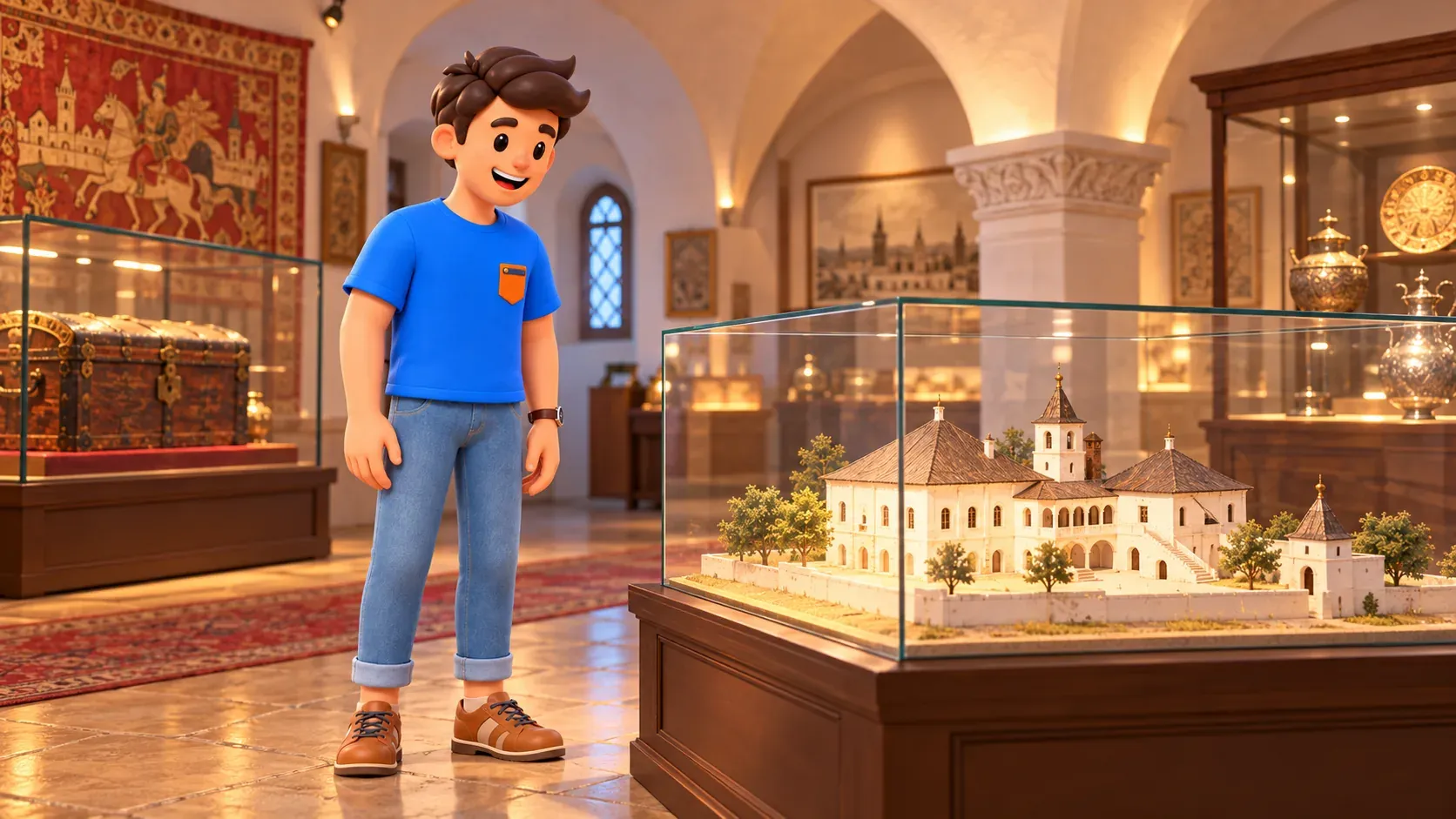
The Romanov Chambers at 10 Varvarka offer the second possible main museum. The State Historical Museum presents reconstructed interiors and objects connected with the life of Moscow's boyar elite. This is a different question from the merchant connections of the English Court: here the emphasis is on the organisation and material culture of a wealthy household.
The museum's own history explains that surviving older fabric and later restoration both contribute to what visitors see. Avoid treating every visible room as an untouched survival. This makes the visit more interesting, not less: it encourages you to distinguish historic material, reconstructed setting and the way a museum explains the past. Read the relevant labels instead of relying only on the apparent age of an object.
Check the current visitor page and tickets for the chosen date and entry arrangements. Do not assume that opening hours or booking conditions match the English Court. If you have already visited that museum, the chambers can remain an exterior stop. Two substantial museum visits are possible only by consciously expanding the day, not by pretending they fit inside a two-hour walk.
Pause before choosing a detour
After the chambers, take a seated break or stop for food before deciding on an extension. Staying in the same district is often more pleasant than chasing an additional attraction elsewhere. You can end the walk towards Kitay-Gorod, return to a favourite view on Varvarka or spend longer with the museum you selected. Each is a complete choice.
If this part of Moscow makes you want a day focused on history rather than a standard sightseeing checklist, RoadMe can build a personal trip plan around that interest and your preferred pace. It is easier to organise a coherent day in the app than to assemble unrelated saved addresses while walking.
A proper pause also clarifies whether everyone wants the same continuation. Someone who enjoyed the museum may have had enough interiors; someone interested in architecture may prefer another church exterior. Make that decision before setting off. The route is deliberately useful without requiring every branch.
Optional commercial contrast: Gostiny Dvor
Gostiny Dvor, whose main address is 4 Ilyinka, provides a contrast with the smaller chambers. It can be included at the beginning as a short exterior look, followed by a return to the Varvarka start, or saved for a separate time. Plan the street connection using an actual pedestrian route rather than cutting through buildings because they appear close on the map.
Its larger commercial scale gives you a new comparison: a trading complex rather than a single household. Looking at its long facade is enough for this article's purpose. Interior access may depend on a current exhibition, fair or other event, and an event entrance is not necessarily the nearest door. Check the organiser's instructions if you intend to attend something; do not build the base walk around an assumed open atrium.
This detour is easiest to omit when time is limited. Varvarka already offers a coherent story on its own. A short walk becomes more satisfying when one extra building adds a real interest rather than another compulsory stop.

Optional architectural ending: Trinity Church in Nikitniki
If you want another architectural contrast, continue towards Trinity Church in Nikitniki at 3 Nikitnikov Lane. Its seventeenth-century connection with the merchant Grigory Nikitnikov links church patronage back to the commercial life of the area. The red-and-white decorative language gives you something different to compare with the low white chambers on Varvarka.
This is an extension into surrounding lanes, not the next doorway on the same pavement. Leave a flexible allowance of twenty to thirty minutes for approaching, looking outside and finding the onward connection, longer if you stop frequently. Actual access and religious use determine whether an interior visit is appropriate. The route works perfectly well as an exterior observation.
Afterwards head towards Kitay-Gorod using current navigation. Do not rely on a remembered metro exit number: choose the entrance that suits your actual position. If tired, omit this branch while still on Varvarka instead of turning a short cultural walk into an exercise in completing a map.
Weather, stairs and the shape of the rest of your day
In dry weather, keep the outdoor sequence and take your time between viewpoints. In persistent rain, build the outing around the single museum you genuinely want, with short exterior stops before or after. In winter, choose daylight for architectural details and reduce standing time on exposed or slippery surfaces. A small route still needs suitable shoes and a charged phone.
Before leaving, verify the museum's actual admission information, check any religious or event visit separately and identify your finish. Do not make a restaurant reservation immediately after the estimated final stop without a little margin. Varvarka rewards a slower pace: one chamber building, one cathedral ensemble and one chosen museum can already reveal a richer old Moscow than a much longer list seen in a hurry.


