
University Las Vegas: An Art Walk Through UNLV
UNLV offers a different setting for a few hours in Las Vegas: public art, university galleries and the everyday movement of a working campus. You can make a useful first visit without attending a class or trying to explore every academic building.
This route centers on the Marjorie Barrick Museum of Art, the Flashlight sculpture and Donna Beam Fine Art Gallery. Allow roughly two to three hours for selected art visits, outdoor connections and a short pause. Lied Library and Greenspun Hall are optional architectural additions, rather than a requirement to complete the entire campus in the same time.
Choose a day when the art spaces overlap
RoadMe makes this idea much more convenient by developing a personal route around your interests, available time and preferred pace. The app can organize the wider journey too, giving university art, architecture or other Las Vegas experiences the space that fits your trip.
Tuesday to Friday provides the useful regular overlap for the two main interiors. Barrick Museum opens Tuesday to Saturday, 10 a.m. to 5 p.m., when exhibitions are on display. Donna Beam Gallery lists Monday to Friday, 9 a.m. to 5 p.m. Check holiday closures and the actual exhibition calendar before relying on either visit.
On Saturday, you may plan around Barrick and outdoor art while leaving Donna Beam’s interior out. On another day with no confirmed gallery opening, choose whether an exterior campus visit is really what you want. Keeping the format clear helps avoid arriving with expectations the schedule cannot meet.
Start with the interior that matters most and keep the rest selective. If a museum exhibition absorbs your attention, give it more time and reduce optional buildings. A campus walk becomes easier when the main interest sets the pace, instead of a fixed number of doors.
Find the museum by its name, not just the campus address
The Maryland campus uses 4505 South Maryland Parkway as a shared address for many buildings. That alone is not a precise destination for the museum entrance. Use the current campus map and the museum’s own location information, then plan your arrival and departure around the actual area you will visit.
If driving, check visitor parking and the current rules for the spaces you choose. A nearby student or staff area is not automatically available because you are visiting an exhibition. If arriving by another form of transport, choose an appropriate campus approach rather than assuming the first entrance leads directly to every attraction.
Allow the journey from your hotel its own time. This is a separate part of the city from the main tourist resort corridor, and the two-to-three-hour estimate begins with the campus visit. A meal or a long additional stop belongs outside that allowance as well.
Begin with the Marjorie Barrick Museum of Art
Barrick Museum is a free art museum with changing exhibitions and a public-facing role within the university. It provides a focused introduction to creative ideas without requiring a long list of galleries. Check the current presentation and let its subject guide how much of the visit you want to spend there.
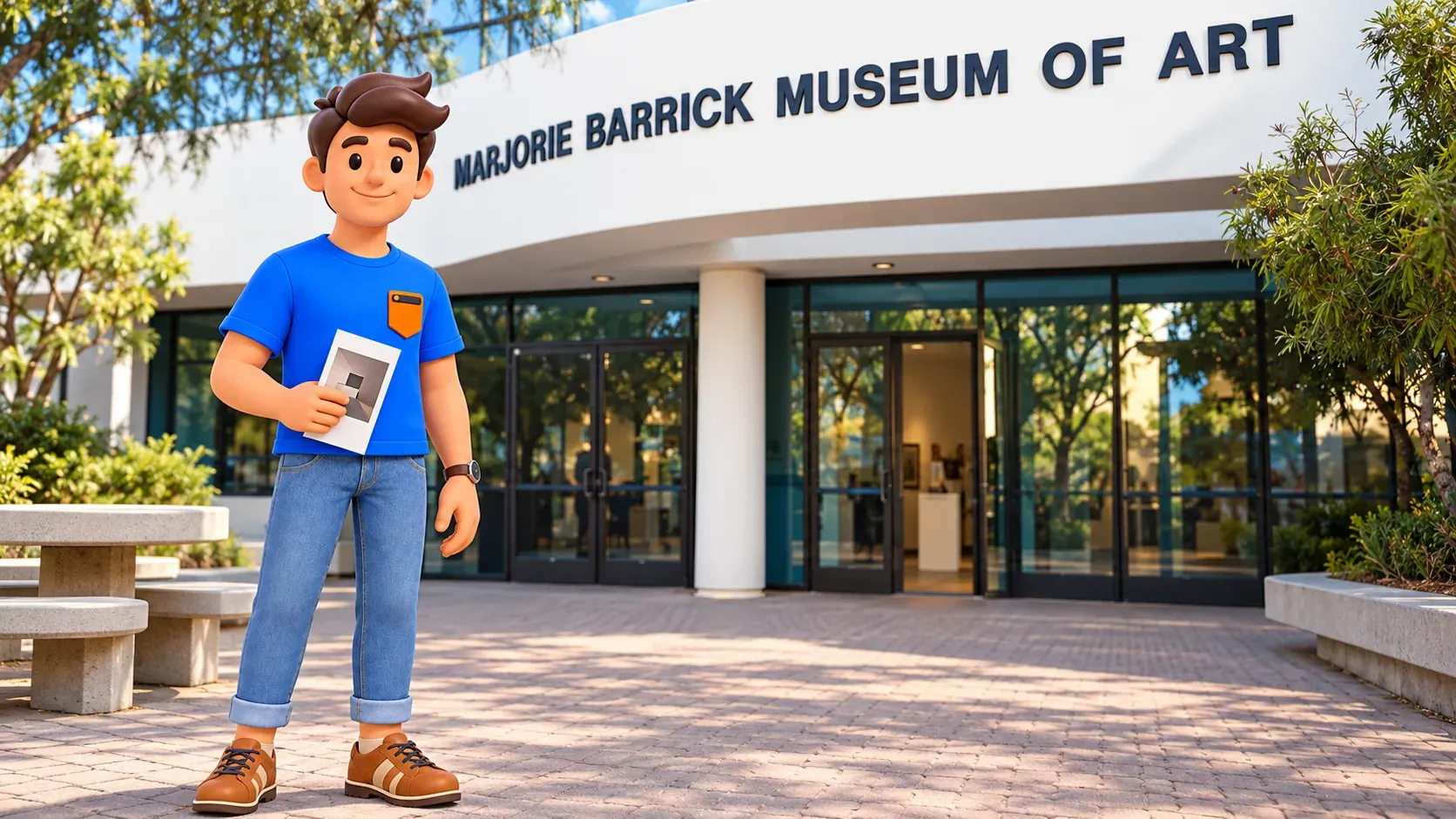
Admission is free; a voluntary contribution is optional. Do not confuse a suggested donation with a required ticket price. The more useful planning question is whether the museum is showing exhibitions on your date and how their content fits your interests.
Choose a few works to look at carefully rather than trying to record everything. Begin with what you notice, then read the accompanying text and see whether it changes your first impression. An exhibition can leave a question as well as a favorite image, and both are worthwhile results.
The museum reopened after improvement works in October 2026, so older closure information may not describe a later visit. Its current program and visitor information should take priority. Temporary installation periods and holidays still deserve a check rather than assuming an unchanging opening pattern throughout the year.
Consider Lied Library as an optional pause
If the library interests you and the route you choose makes it convenient, add an exterior view after the museum area. Its curved roof and large glass surfaces offer a different visual subject from an exhibition. You can enjoy the building without making an interior visit essential to the outing.

University Libraries welcomes visitors during regular hours, but Rebel Hours uses controlled access. External visitors need a confirmed advance appointment for those periods, and arriving without one may not result in admission. Check the actual day’s access information rather than assuming that an open building is equally open to everyone at all times.
If entering legitimately, remember that it is a working study environment. Keep conversations quiet, follow staff directions and do not treat occupied desks as a sightseeing display. An architectural impression does not require walking through every floor or photographing people studying.
Leave the library out if it adds an inconvenient detour or extra uncertainty. The main art route remains complete without it. This is a good example of a stop that can enrich a visit when it fits, but should not become a reason to rush the museum.
Meet Flashlight near the performing arts buildings
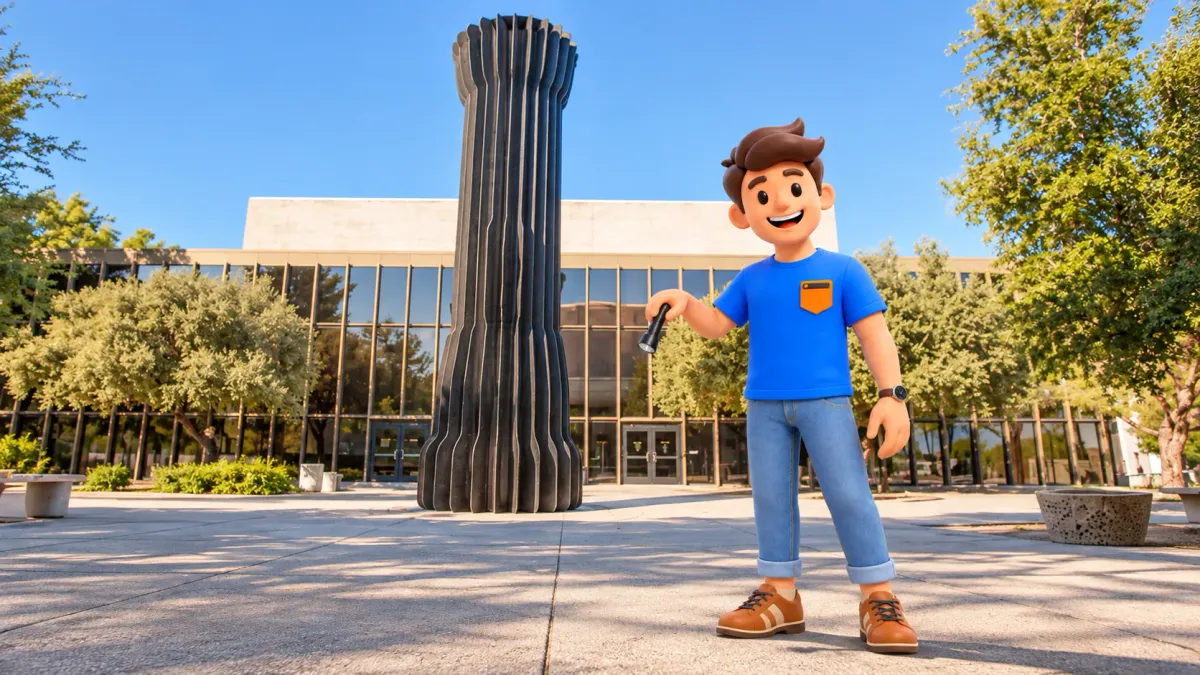
Flashlight stands between Artemus W. Ham Concert Hall and Judy Bayley Theatre. Claes Oldenburg and Coosje van Bruggen’s black steel sculpture was dedicated in 1981. Its oversized, downward-pointing everyday object gives the walk a clear outdoor landmark and a change from indoor art.
Look first at the full silhouette, then at the ribs and the way the shape widens and narrows. The scale makes something familiar less immediately familiar. You do not have to decide exactly what the work means before enjoying that shift in perception.
Its relationship with the performing arts setting offers a useful small piece of context: a flashlight is a tool associated with guiding theatergoers. Keep the historical explanation brief and return to what you can see. The sculpture’s form, surroundings and shadows can sustain a short stop without a long biography of its creators.
Stay in currently permitted public areas and do not climb or handle the sculpture. For a photograph, leave some surrounding space so its scale remains clear. There is no need to expect a theatrical beam of light or a performance; the artwork is worth seeing in ordinary daylight.
Continue with Donna Beam Fine Art Gallery
Donna Beam Fine Art Gallery is in the Alta Ham Fine Arts building, room 145. It is free and open to the public during its published gallery schedule. Its changing presentations bring another artistic voice into the same campus outing, rather than duplicating the museum automatically.
Look up the current exhibition and decide what draws you in. A university gallery may show work by different kinds of artists across its program, so an old image is not a promise of today’s display. Leave room for a different medium, subject or scale from what you just saw.
During a short visit, select one comparison with Barrick: how the work uses space, how a title shapes your reading or how materials affect the impression. This makes the two interiors feel connected while allowing each presentation to remain distinct. You do not need a common favorite or an expert verdict.
Follow the gallery’s current photography rules and staff directions. A public exhibition does not make every adjoining studio or classroom part of the visitor route. When you leave, give the academic setting its usual space rather than continuing through rooms simply because a corridor appears accessible.
RoadMe can work these interests into a personalized plan for the whole trip, balancing a quieter campus visit with your other priorities in Las Vegas. It is a more convenient way to organize time and a comfortable pace across the journey.
Add Greenspun Hall for architecture if time remains
Greenspun Hall opened in 2008 and brings an architectural contrast through its forms, materials and shade structure. If you want another exterior stop, look at how the overhead elements filter sunlight and how the building meets its surrounding public space. A short observation can be enough.

Keep this as an optional addition according to your actual route and energy. The building serves university activities; its classrooms, offices and media facilities are not automatically a tourist interior. Use permitted public approaches and leave normal entrances and campus movement clear.
Compare the architectural shade with the shade you found elsewhere rather than assuming every path has the same protection. In hot weather, a few outdoor connections can feel more demanding than their appearance on a map suggests. Carry water and choose a shorter version when conditions make that more comfortable.
Keep the campus visit manageable
The walk works best for people who enjoy a little art and a different urban atmosphere. With companions who prefer shorter interiors, agree on a few shared stops and leave room for a proper rest. You do not have to turn a university visit into a full-day project to make it worthwhile.
If you need particular access arrangements or shorter walking distances, check the chosen venues and present campus conditions before leaving. Public paths alone do not establish suitability for every individual need. Reducing optional buildings can preserve more attention for the exhibition or artwork you most wanted.
Finish with one image, object or architectural detail that stayed with you. A successful UNLV outing can be modest: a museum visit, a monumental everyday object, another gallery if its hours fit and enough time to notice the city’s university life without intruding on it.


