Underground Rome: San Clemente, Domus Aurea or Palazzo Valentini?
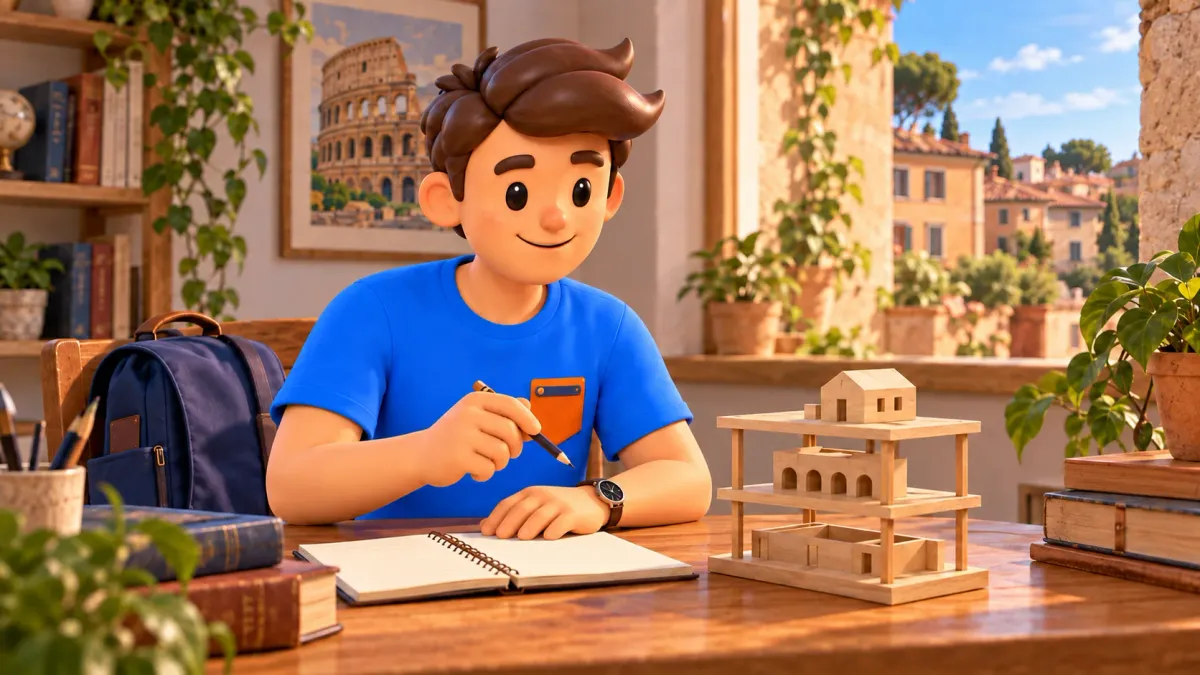
In Rome, you can walk along a modern street knowing that rooms from another city survive below pavement level nearby. Yet “underground Rome” describes very different experiences. At one site you descend between periods; at another you enter a buried section of a palace; elsewhere light and sound help explain the lost decoration of a house.
One site is enough for an introduction. San Clemente makes successive layers tangible, the Domus Aurea reveals the later life of imperial space, and the houses beneath Palazzo Valentini explore the relationship between archaeological remains and modern reconstruction. Choose the question that interests you and build the day around one confirmed visit.
Three different ways to encounter Rome below the street
Consider San Clemente if you want to experience changes of level between periods. Look at Domus Aurea options if imperial scale and surviving decoration attract you more. Choose Palazzo Valentini’s domus if fragmentary walls are difficult to interpret and a multimedia explanation appeals. None must be the best choice for everybody.
These places do not share a connecting underground passage or a universal ticket. San Clemente’s Mithraic sanctuary belongs to the same archaeological complex as the lower basilica. It is part of one choice, rather than another address across the city. Even neighbouring monuments can have different entrances, admission slots and rules.
To give the chosen underground visit a place in a personal plan for your whole trip, try RoadMe, which considers dates, interests, pace and budget. The app makes it more convenient to connect one substantial session with walks and rest during the remaining day.
Decide what would not suit you as well. Difficulty with stairs, dislike of confined spaces or a wish to stop repeatedly for photographs may influence the decision more than a site’s fame. Specific conditions matter more than a general promise of time travel. Read them before buying, rather than discovering a problem at the stairs down.
San Clemente: periods genuinely stand above one another
The present upper basilica belongs to the twelfth century. Beneath it survives an earlier fourth century church, with first century Roman buildings further below. A second century Mithraic sanctuary was later installed within one of those buildings. The age of a room and the date of its new religious use are therefore different things.
The lower church contains medieval frescoes from the eighth to eleventh centuries. Do not automatically label them fourth century paintings because that is the date of the basilica. Apply the same care to the structure: later supports and walls reveal not only the older building, but also how construction above it and conservation changed its appearance.
Choose one observation, perhaps a change in floor level or the relationship between a later support and an older space. You need not memorise every room and image. A simple question captures the purpose: what had to change so that life could continue above an existing building? Here history becomes something you understand through position as well as dates.
The rediscovery of the lower basilica followed excavations begun by Joseph Mullooly in 1857. Today the levels seem an obvious part of the complex, but understanding them also has a history. Archaeology brings spaces back into view; it does not make every suggestion about the original purpose of each room equally certain.
San Clemente remains an active church. Its official website also describes an ongoing restoration project. Do not base your visit on a promise of entirely unobstructed views of every upper church detail. Check current arrangements beforehand; work in one area does not automatically mean the entire underground complex is closed.
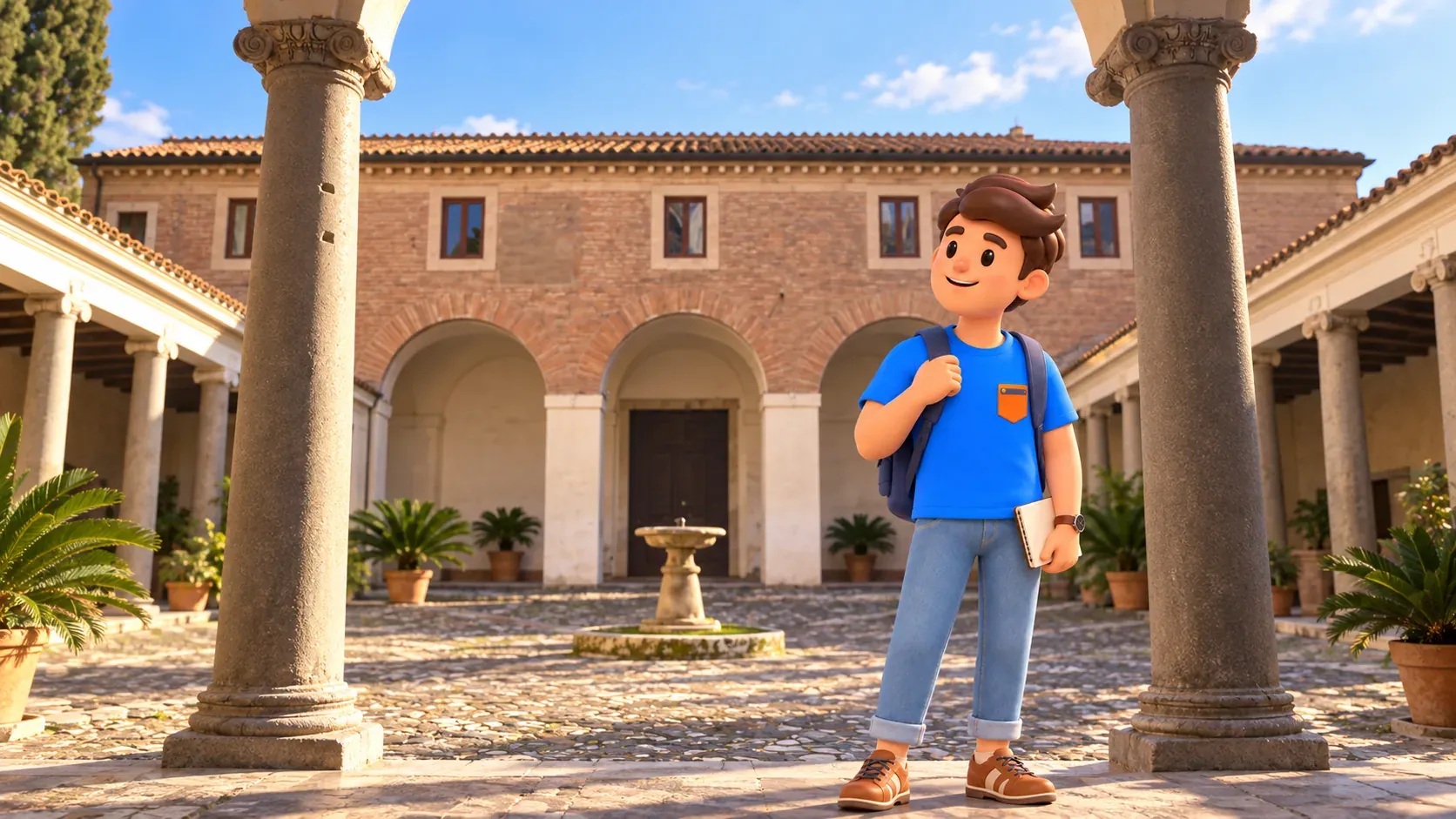
The Domus Aurea became underground later
Nero’s new residence began after the fire of AD 64. That sequence alone does not prove the emperor caused the fire. Another distinction is more useful for a visit: the palace rooms were not originally conceived as an underground labyrinth. They were subsequently filled and used as foundations for later buildings.
The parts open to visitors today are on the Oppian Hill. They are not the whole palace with its gardens and artificial lake, but surviving rooms within a particular area. Understanding the original scale can make those remains more meaningful without creating an expectation of seeing the entire imperial residence through one entrance.
Consider the proportions of a doorway and traces of decoration. Even a fragment of plaster changes a wall: it belonged to a designed interior, rather than simply being rough masonry. You need not invent the exact colour of every lost section. Distinguishing survival from imagination makes the encounter with original material more rewarding.
During the Renaissance, artists descended into rediscovered rooms that seemed like grottoes and studied their decorative motifs. The term “grotesques” is connected with that encounter. It adds another historical layer: ancient rooms influenced later art after they had ceased serving their original purpose, rather than remaining outside history once buried.
Choose the visit format carefully. The official website offers an educational guided option with virtual reality, alongside specified sessions without a guided visit. Do not assume every ticket includes the same commentary and VR. Check duration, language and inclusions for your particular product when booking, separately from general archaeological park opening hours.
Ordinary visiting days are listed as Friday, Saturday and Sunday, with closure on the first Sunday of the month. Special events have separate conditions and do not establish an ordinary evening schedule. It is cool inside, so a layer and comfortable footwear are useful. Find the entrance through the Colle Oppio park area rather than joining the Colosseum queue.
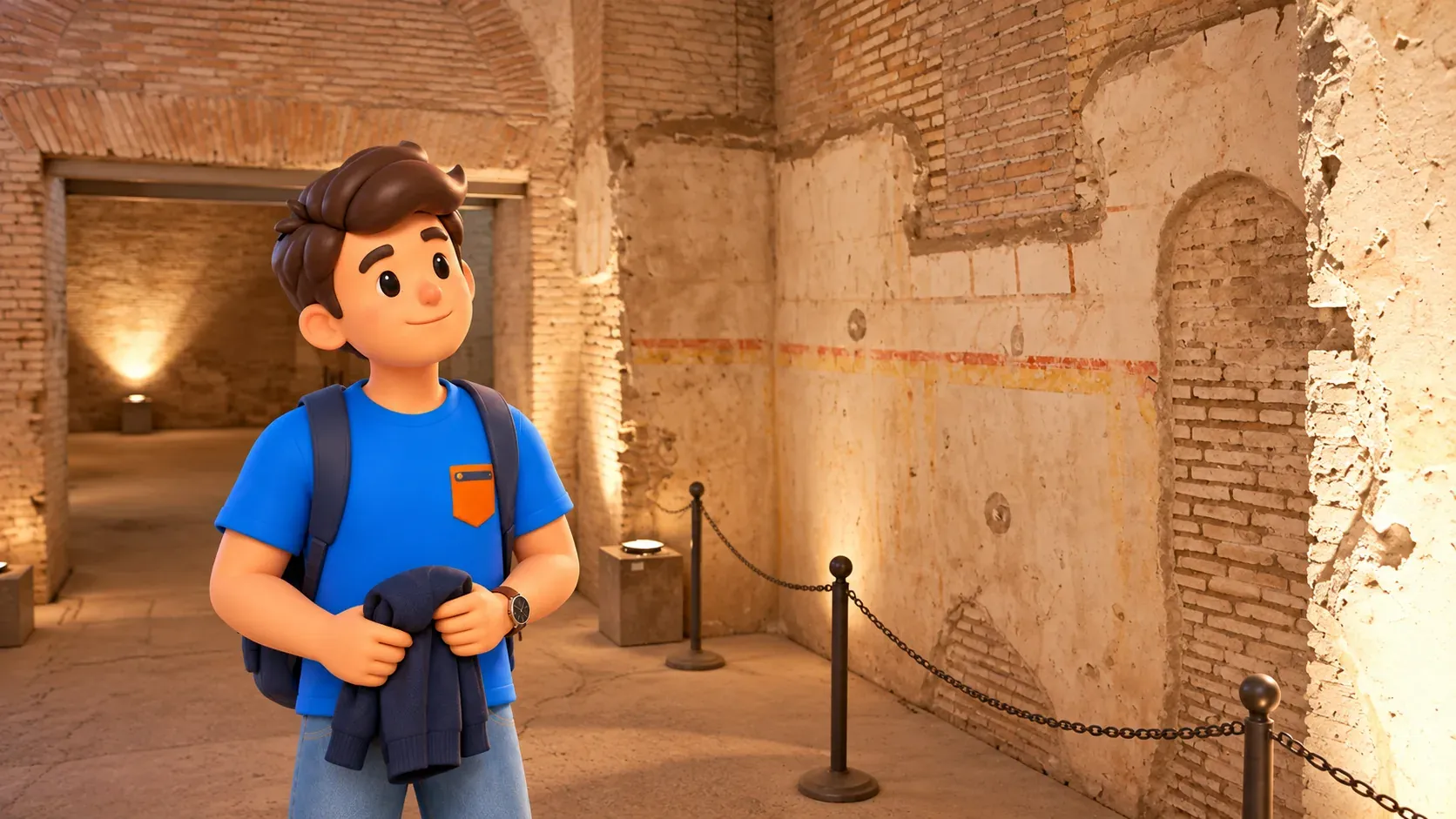
Palazzo Valentini: separate an ancient remnant from a projection
Below the later Palazzo Valentini near Trajan’s Forum, excavations since 2005 have revealed remains of Roman residences. The palace itself is not a surviving home of Emperor Trajan. Once again, distinguish buildings of different periods and avoid transferring the name of a neighbouring monument to the owner of every room uncovered nearby.
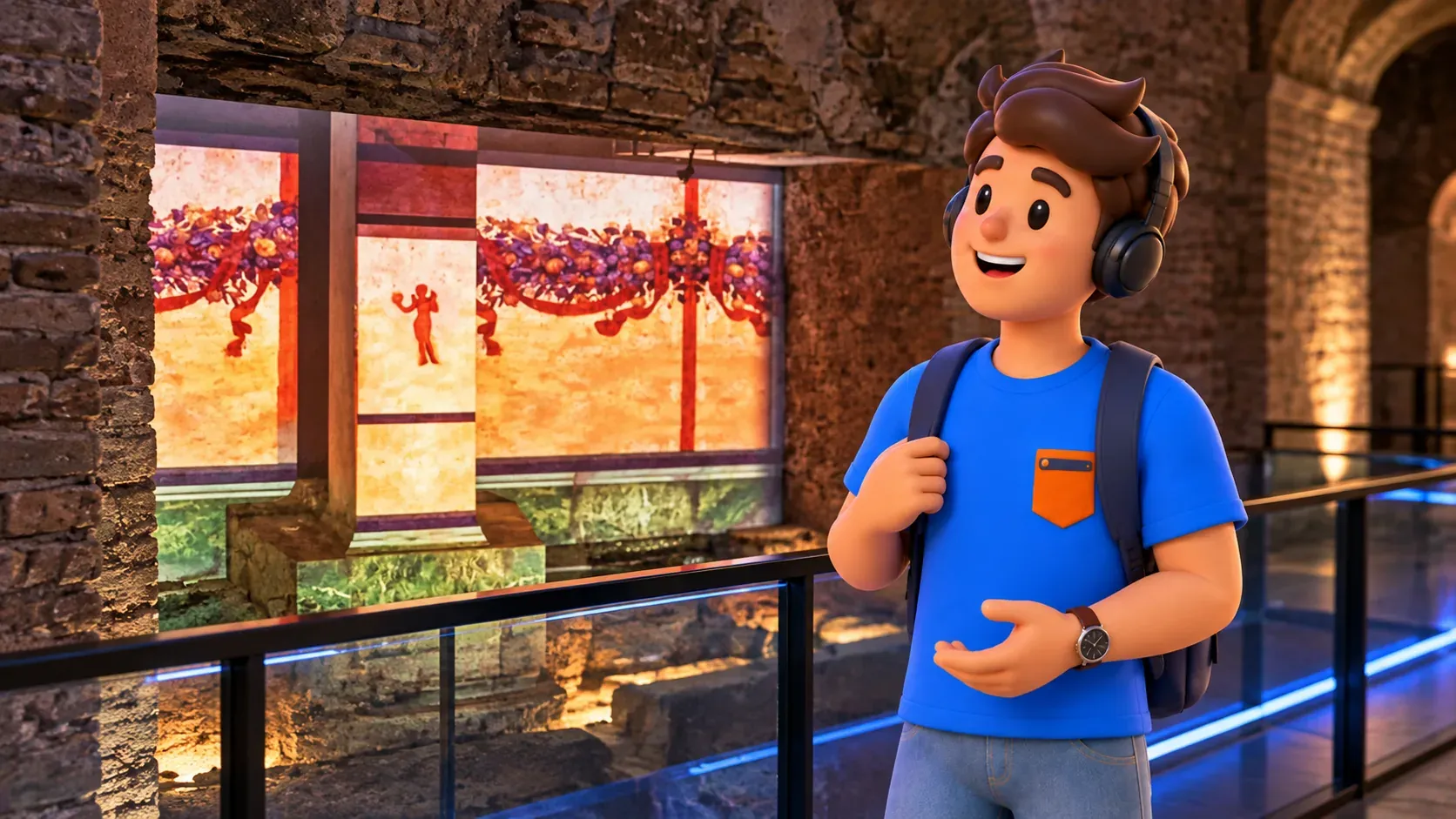
The multimedia presentation helps suggest missing walls, decoration and furnishings. Projected images support the explanation, but they do not become ancient paintings discovered completely intact. Try to distinguish three things while watching: surviving material, the modern method of displaying it, and the reconstruction of what has disappeared.
This suits visitors who enjoy receiving an explanation with a visual picture. Your independent pace is nevertheless limited by the session. Do not expect the presentation to wait while you discuss every episode. Treat the visit as a connected experience and save the longer conversation for a break outside afterwards.
The Domus route lasts one hour. The Domus + Colonna Traiana option lasts ninety minutes and has different sessions; its name should not be interpreted as a promise to climb Trajan’s Column. Select the actual product rather than expecting every ticket with a similar title to deliver the longer programme.
The complete route is available in Italian, English, French, German and Spanish. Only part is available in Russian and Japanese. If a particular language is essential, establish the coverage before buying. The language of a travel article does not prove the whole local presentation uses it, and a trip planning app does not replace the museum commentary.
Allow time for admission and returning above ground
For Palazzo Valentini, consider this straightforward example: a confirmed one hour Domus session at 11:00, arrival at the ticket desk at 10:45 as required, a finish around noon, and twenty minutes for a quiet pause outside. That gives roughly ninety-five minutes, from 10:45 to 12:20. It illustrates allocation, rather than confirming tickets for your date.
Your hotel journey, return travel and a full meal are additional. The same example cannot simply be retained for the ninety minute product: its length and available starts differ. San Clemente requires arrival ten minutes before your booked time. At the Domus Aurea, follow the conditions of your selected session rather than another company’s excursion timetable.
For a trip combining museums, walks and recovery time, prepare a personal day by day plan in RoadMe. The app considers your interests and pace, making it easier to distribute substantial visits across the stay and connect them with your other plans.
Do not immediately assign another underground session just because it is nearby. A daylight pause gives you room to discuss what you saw and decide whether you want more of the theme. One well chosen complex can explain the layered city better than three visits accompanied by constant checks of the clock.
Rules that can change the decision
San Clemente requires online booking for the excavations. Its ordinary Monday to Saturday hours are 9:00–12:30 and 14:00–18:00, with final admissions at noon and 17:30 respectively. Sundays and holidays run from noon to 18:00, with final admission at 17:30. The current calendar can qualify these arrangements for a particular day.
Photography and filming are prohibited in both the basilica and excavations. This is not merely a restriction on flash. Bulky belongings, food and drinks are also prohibited, and the excavations cannot be accessed in a wheelchair. If stairs determine whether you can visit, establish a suitable option before booking rather than relying on a general description of church access.
Palazzo Valentini’s domus entrance is at Via Foro Traiano 84. Tuesday is the ordinary closing day. Sessions valid through October 2026 give way to a winter timetable from November with an earlier finish; check holiday exceptions for your date. Visitors with mobility difficulties must arrange the visit and assistance with the operator in advance because the route uses different levels.
Each underground option needs its own purchase and access check. Do not merge Colosseum admission, entry to a church and a paid archaeological area into one imagined entitlement. Concessions depend on the particular institution’s evidenced conditions. Nearby locations and the language you speak do not establish eligibility or interchangeability of tickets.
The lasting benefit is a different understanding of an ordinary street. Earlier levels of life may survive below it, but they reached us in different ways. One site reveals successive buildings, another a buried palace, and another the help of modern interpretation. For a first encounter, choose one of those stories and give it enough attention.