
Two Hours in Ueno: Shinobazu Pond and Temple Corners

Two hours in Ueno can work without a museum queue or an attempt to cover the entire park. Stay in its southern part: the Saigo Takamori statue, Kiyomizu Kannon-do and Shinobazu Pond with Bentendo. If time and energy remain, the surviving face of the Ueno Great Buddha makes an optional finish. It is not a compulsory fourth stop.
This walk suits a free interval between other plans or a day when you want to stay outdoors. Its purpose is to notice changing levels, water and traces of the area's temple history within the modern city. Major museums, the zoo and a boat outing need their own time and are not included in these two hours.
Give the two hours a simple shape
Begin on the southern side of the park, approaching from Ueno or Keisei-Ueno stations. Look at the Saigo statue, continue to Kiyomizu Kannon-do on the higher ground, then descend toward Shinobazu Pond. At Bentendo, choose between another limited stretch beside the water and returning uphill for the Great Buddha. A complete circuit of the pond is not required.
For a personal trip that is more convenient to plan and use, try RoadMe: the app builds an itinerary around your interests, dates, pace and budget. Give a relaxed Ueno walk a place in your own day instead of adjusting your whole trip to someone else's checklist.
| Part of the walk | Time to preserve for |
|---|---|
| Southern approach and Saigo | Orientation and the statue |
| Kiyomizu Kannon-do | Architecture and the change in level |
| Shinobazu and Bentendo | The main unhurried waterside section |
| A choice of finish | A shorter shore walk or the Great Buddha |
Two hours is an editorial allowance for a limited walk with stops, not a measured journey time. Travel from your accommodation and a full meal come separately. Decide which station suits the return and keep time to reach it. The final minutes are better used for a clear exit than for squeezing in one more location.
The park and temple buildings keep different hours
Ueno Park is free to enter, while individual institutions have their own tickets and schedules. The park's official access hours are 5 a.m. to 11 p.m.; entry outside those hours is prohibited. That does not mean temple buildings stay open for the same period. Daylight is the better basis for this version than dawn or a late evening.
Services, restrictions on particular areas and other changes can affect temple access. Read notices at the entrance and check the chosen visit before leaving. Access to grounds does not promise every interior or sacred image will be available. Even if a door is closed, the building's exterior can still be part of an outdoor walk.
Ueno has slopes and steps. With a stroller or anyone who finds climbs difficult, consult a current path plan and choose a suitable approach. A short line on a map does not automatically mean an easy connection. If necessary, keep only the pond walk: that is a valid version of the outing, not a failed attempt at a mandatory route.
Start with Saigo and a small piece of city history
The Saigo Takamori statue marks a useful beginning on the southern side of the park. It was unveiled in 1898. For a short visit, that date and a look at the man with his dog are enough context; there is no need to work through all of nineteenth-century politics first. The stop shows that the park holds urban memory as well as greenery.
Notice the figure's scale and the space around it. Some monuments ask you to look upward; others can be understood almost as participants in an everyday scene. That question may be more interesting than mechanically taking another landmark photograph. If the history catches your attention, return to it later without holding the whole group here.
The statue does not have to become the start of a march toward every major museum. Today's direction is different: a short continuation through the southern park toward Kiyomizu Kannon-do and then the water. Give the northern museums their own visit and a chosen exhibition. The walk can then retain a rhythm of its own.
Kiyomizu Kannon-do: pause on the higher ground
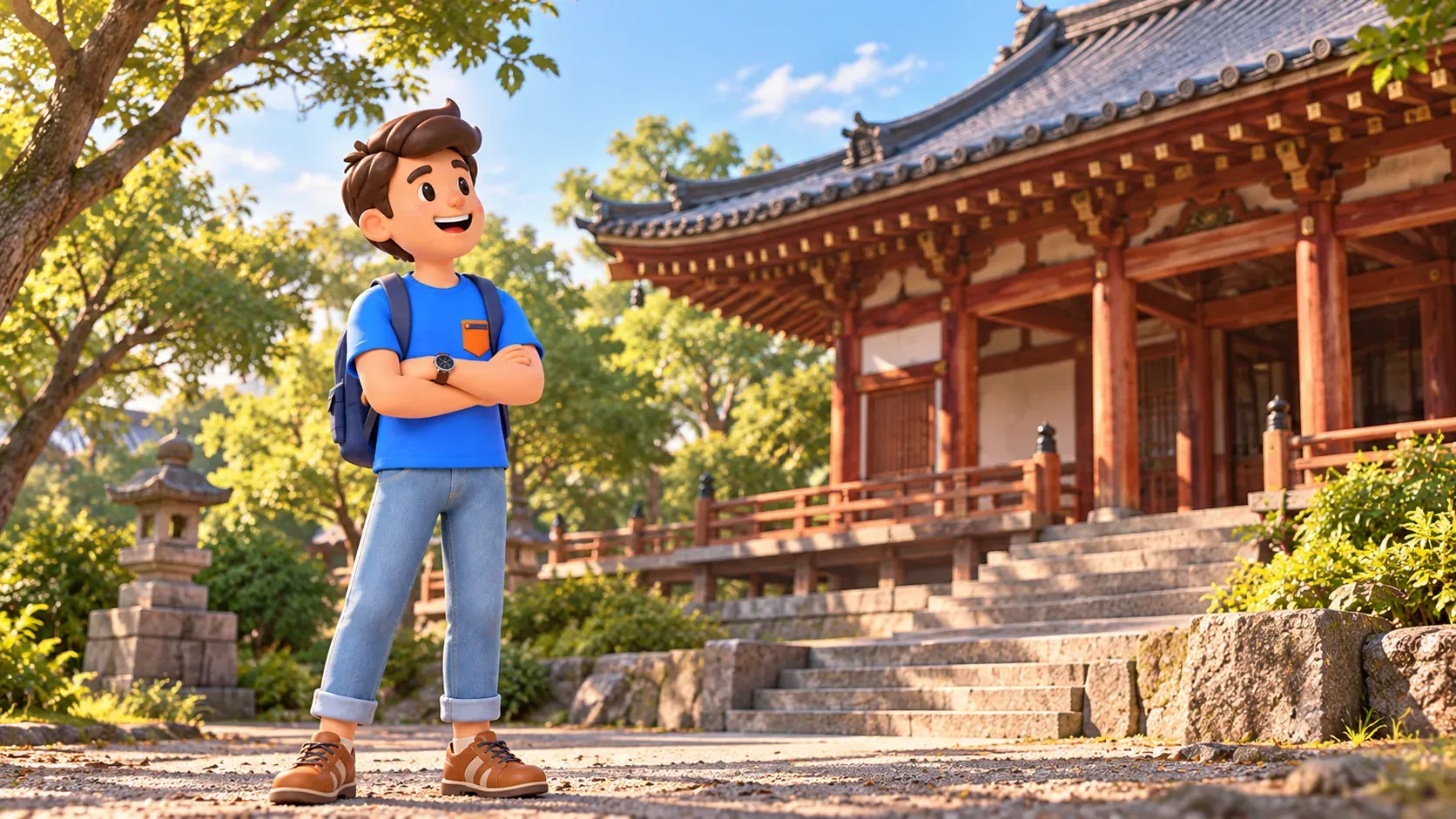
Kiyomizu Kannon-do was first built in 1631, taking inspiration from the famous Kiyomizu temple in Kyoto. The useful idea for this walk is a familiar architectural model appearing in a different urban setting. Ueno becomes a place of cultural connections rather than just a green interval between museum buildings.
Do not rush straight down to the pond. Look at how the hall sits in relation to the slope and how height changes your sense of the space. If a designated visitor area is open, follow the instructions on site. A route recommendation never gives permission to enter a closed room or photograph religious images without checking the rules.
This is an active Buddhist setting. Keep entrances clear, avoid turning a worship space into a lengthy photo session and do not copy rituals simply for a picture. Standing a little apart to observe the architecture is enough. Taking part in religious practice is not required to appreciate the building.
If the climb has already been tiring, remember that descending does not guarantee an effortless return. Consider the remaining time and energy before changing levels. Choose a likely finish: leave toward the station from the pond side or retain room for another ascent. You do not have to exit by the same entrance simply because it is familiar.
Shinobazu Pond: choose a limited waterside section
At Shinobazu Pond, the scale of attention changes from monument and facade to water, planting and open space. Do not make a full circuit compulsory. Find an available stretch of shore with a view you enjoy and stay for a while. This pause is a main part of the route, not empty time between temple stops.
The season affects what you see beside the water. Avoid building expectations around a single summer photograph or assuming the same flowers will be present every week. Look at the day's actual textures, reflections and movement of air. A good walk does not depend on matching an image from a guide.
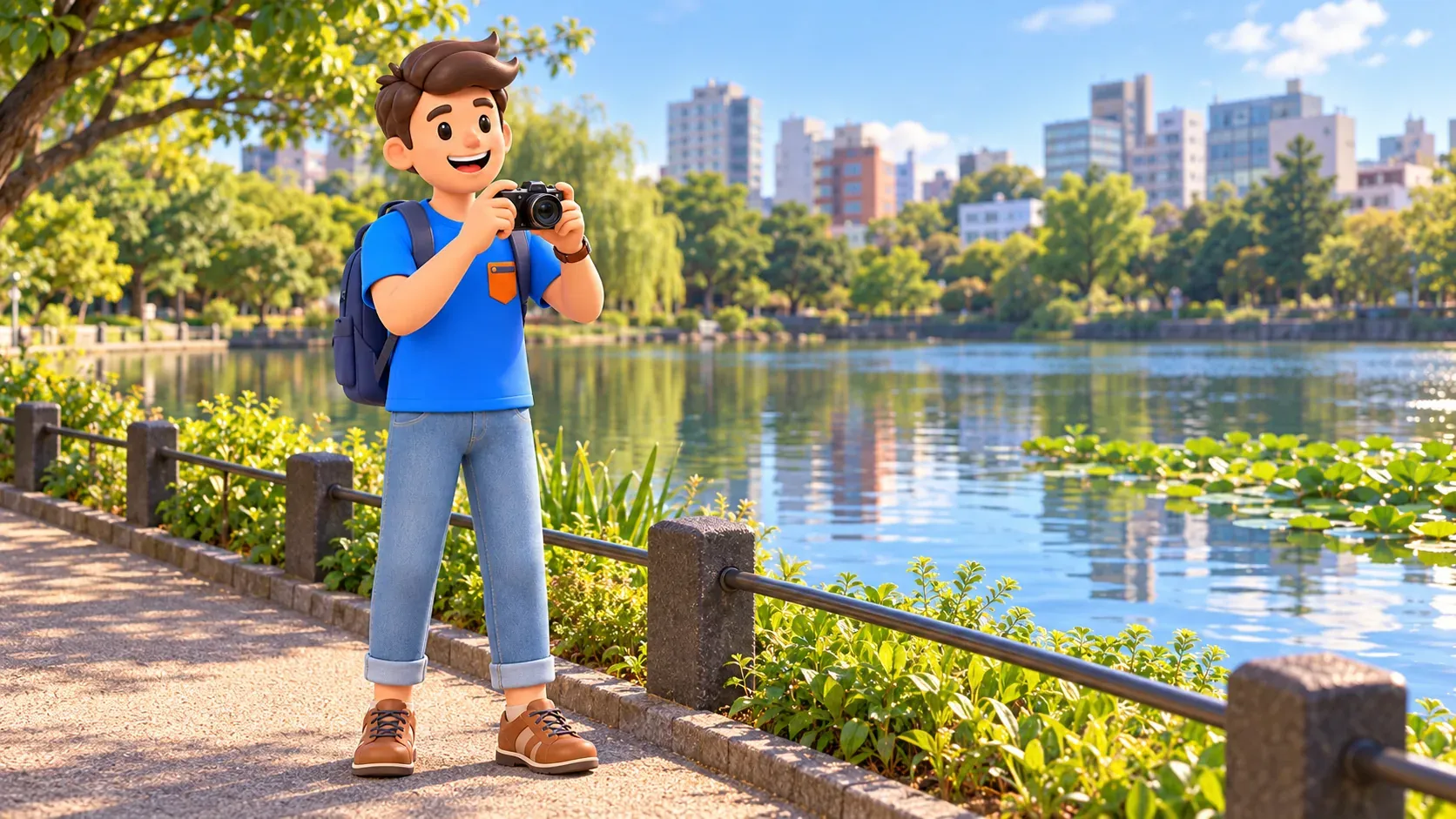
For photographs, choose one subject and make a few patient observations instead of constantly moving to the next angle. How does the water's edge change? What sits in the foreground? How much of the city remains visible behind the trees? Simple questions can give the walk substance without a long list of additional places and dates.
Boating can be a separate plan, but it is not built into the basic two hours. Tickets, waiting and the outing itself alter the allowance. If a boat matters more than temple stops, choose it deliberately and reduce something else. Every available activity should not be treated as a cost-free addition to an already occupied interval.
Bentendo: a temple focus among the water
Bentendo stands on the pond's island area and is associated with Benzaiten. It gives the walk a clear contrast: broad water views lead into a more focused temple approach. For an introduction, notice the building's position and the areas open to visitors. A small stop does not have to become a detailed study of every symbol.
Keep the passage clear and notice how other people are using the place. Some have come for worship rather than a sightseeing route. If a service or access restriction affects the visit, wait apart or continue the walk. A two-hour allowance is no reason to hurry anyone else or look for a way around a closed entrance.
After Bentendo, decide how to finish. For the quieter option, keep a little more time beside the pond and return to your chosen station. If temple stories interest you more than water, replace that additional shore section with the Great Buddha. It is an alternative ending rather than a demand to add another loop.
To give these walks a useful place across the whole trip, set your interests and preferred pace in RoadMe and let the app create a personal day-by-day itinerary. It makes organizing a relaxed Ueno visit alongside other experiences more convenient, with time for what you actually enjoy.
Optional finish: the face of the Ueno Great Buddha
The name Ueno Great Buddha can suggest a large, complete statue. What survives here today is the face of the earlier image, not a full seated figure. The small monument is interesting precisely because of that difference between its name and what remains. Do not judge it only by its scale beside Japan's famous monumental Buddhas.
Reaching it means a separate short visit on the park's higher level. The municipal sightseeing directory lists access from 10 a.m. to 4 p.m.; confirm current arrangements before visiting. The park's longer hours do not automatically apply here. If there is not enough time to see it calmly and return, finish beside the pond.
Allow for the climb rather than promising the group an entirely effortless final stop. If the walk has already involved enough steps, no additional location is necessary. A good two-hour route can end before the list of possible sights does and still feel complete, particularly when the last stretch remains pleasant instead of hurried.

Finish clearly and keep the walk's purpose
Check the way to your station before the final connection. Avoid a tight reservation across the city immediately afterward without a travel allowance. If you want a meal, add lunch as a separate block rather than subtracting it from the pond visit. Clear boundaries are part of what makes a short walk useful.
In heavy rain or heat, reduce the exposed section rather than preserving the original outline at any cost. A major museum needs a different plan and its own calendar checks; it is not an instant substitute for this whole walk. For a longer cultural day, use the Tokyo plan with a dedicated museum morning.
The discovery here is Ueno beyond its familiar museum list. A monument, a hall on higher ground and the water offer three ways of looking at the city. Give them enough attention and the two hours can feel like a visit in their own right, rather than a wait for the next major attraction.


