
Twickenham in Half a Day: Marble Hill or Strawberry Hill House?
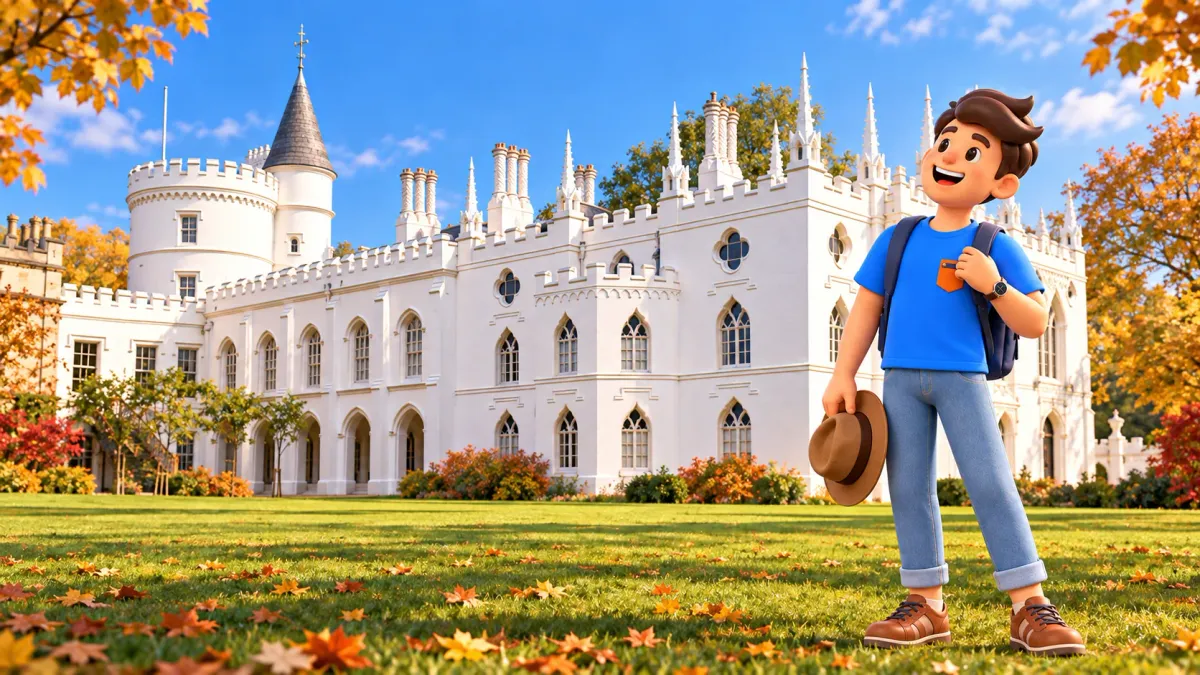
Twickenham offers two very different ways to spend half a day around a historic house. At Marble Hill, a restrained Palladian villa sits in parkland beside the Thames. At Strawberry Hill, white towers, pointed windows and richly imaginative interiors express another side of eighteenth-century taste. Both can reward a visit, but the best choice depends on what you want from the hours available: an open landscape around a compact house, or a more concentrated encounter with Gothic Revival architecture.
This guide gives two separate four-hour outlines. Choose one, including a house visit, outdoor time, a simple lunch and the return to its nearby railway station. Travel from your accommodation and train waiting come in addition. Combining the two houses would require a different day plan, with another connection and less time to linger. There is no need to make the choice by counting how many places you can collect.
Choose the experience before choosing the train
Pick Marble Hill for Georgian history with generous outdoor space and a view towards the river. Its ordinary house admission is free during the open season, which makes it appealing when you want a modest indoor visit without committing to another paid attraction. Choose Strawberry Hill if elaborate rooms, literary connections and the playful use of Gothic forms are the main interest. Its house requires paid admission; the garden is a separate, free attraction when open.
Try RoadMe to prepare the whole London trip more conveniently around your dates, interests, pace and budget. A personal plan in the app can give the house you choose an appropriate place among museum days, neighbourhood walks, meals and rest.
Both outlines begin around ten and return to the starting station around two. Marble Hill uses St Margarets station, while Strawberry Hill uses the station of the same name. They are different railway stops, not interchangeable entrances to a shared complex. The walking estimates below include selected interiors and grounds: roughly three to five kilometres for Marble Hill, or two to three for Strawberry Hill. They are planning estimates rather than measured tracks.
Before committing, check three things together: whether the house opens on your date, which rooms are available, and whether the actual access arrangements suit you. At the time of checking, Marble Hill’s lift was out of order. Strawberry Hill also has limits on which floors its lift serves. These details can be more decisive than the architectural style, especially if a particular room or level is the reason for coming.
Marble Hill: a villa and its riverside setting
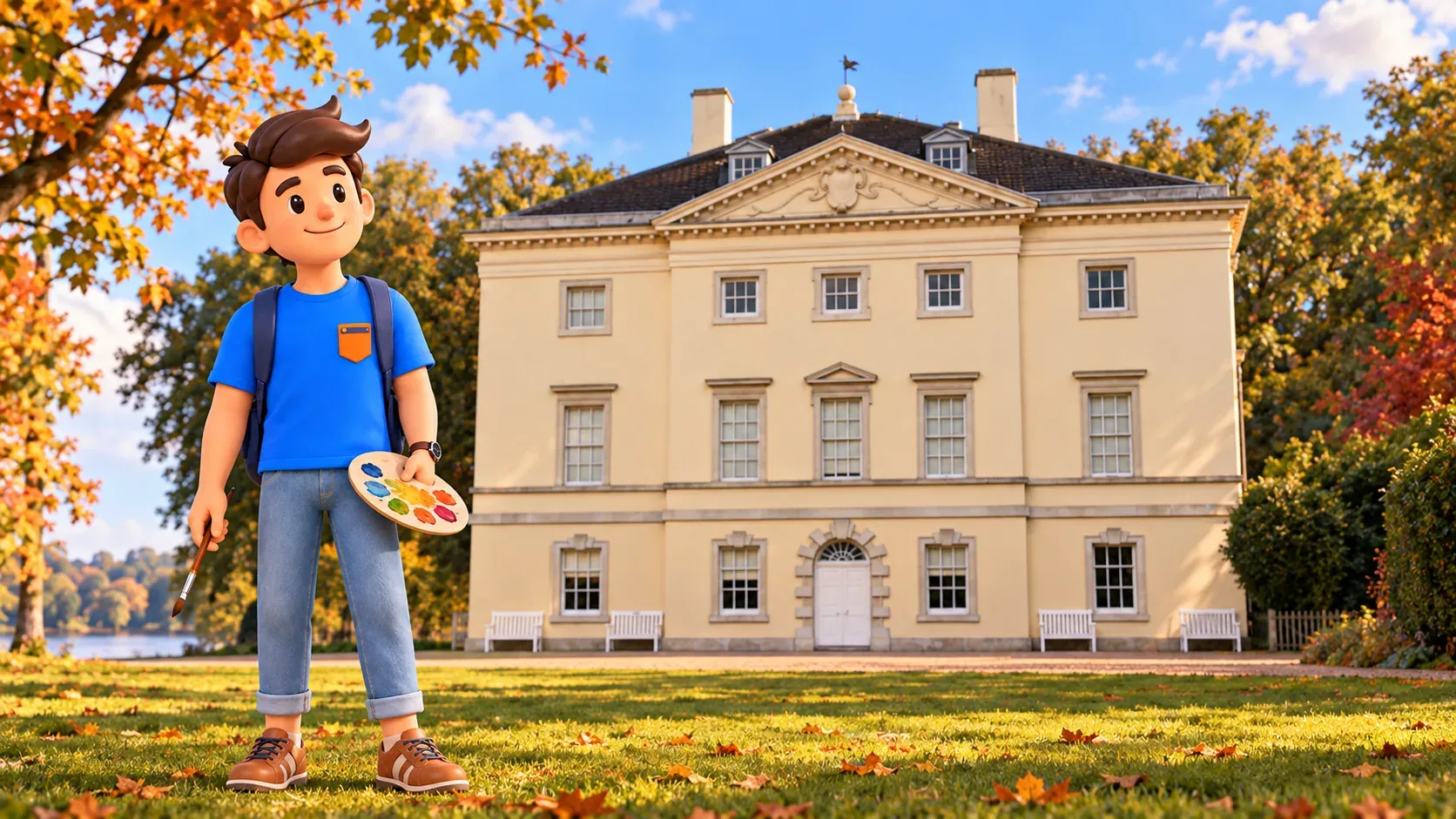
Marble Hill was created in the 1720s for Henrietta Howard as a retreat from court life. She was a significant figure in Georgian society, whose circle included writers and other influential neighbours. The house gives an opportunity to meet that story through a relatively compact building, rather than a vast royal palace. Its classical proportions and relationship with the surrounding landscape are as important to the visit as individual decorative details inside.
From the lawn, notice the balanced rows of windows, central pediment and low roofline. The pale façade has a measured quality that becomes clearer when you step back. Enter the open rooms with a simple question: what does the building reveal about its owner’s interests and social world? Read a selection of displays and compare the interiors with the exterior proportions, without feeling obliged to follow every possible thread of the eighteenth century.
The current visitor information describes free house opening from Wednesday to Sunday during the April-to-October season, with the timetable giving ten to five. Confirm your specific date rather than extending that pattern into winter. Advance booking is not compulsory, but a reserved free ticket guarantees entry. The breakfast parlour is currently closed for refurbishment. Do not interpret a free ticket as a promise that every room shown in an older account will be accessible.
Restoration has shaped the experience you see today. The house reopened in 2022 after conservation and renewed presentation, alongside work to bring the historical garden back into view. That offers a useful way to think about the estate: a place researched and cared for, as well as a surviving building. Its public park history also matters. The property was saved from development in 1902, helping preserve the celebrated landscape associated with the view from Richmond Hill.
A four-hour outline for Marble Hill
Start at St Margarets railway station and allow twenty minutes for the public street approach towards the Richmond Road entrance, entry and orientation. Use the current pedestrian directions for your actual platform exit and an available gate. This is a practical allowance, not an official measured walk. The operator also lists Twickenham station and Richmond as transport options, but using either changes the approach and should prompt a fresh calculation.
- Arrival and orientation: twenty minutes. Station to the estate and house approach.
- Selected house visit: sixty minutes. Open rooms and a manageable selection of displays.
- Park and riverside outlook: sixty minutes. Include all connections within this outdoor block.
- Simple lunch: forty minutes. At the Coach House Café, subject to service.
- Station return: twenty minutes. Leave through an available public entrance.
- Reserve: forty minutes. For a longer interior visit, slower paths or lunch.
The sixty outdoor minutes are for a selected walk around the villa, the garden between house and river and an available nearby outlook. They do not cover the whole park, an extended Thames Path stage or a trip across the river. Turn back within the time you have allowed and use open paths. If you prefer to spend longer inside, reduce the walk or use the reserve. The park should provide a change of rhythm rather than another checklist.
Choose a few details outside: the relationship between house and water, how trees frame a view, or the transition between a formal garden idea and a park used by the community. Longer visits can explore more historical features, but this outline leaves them optional. There is no ferry crossing to Ham House, ascent to Richmond Hill or extra gallery included. Each is a separate decision with its own journey, opening conditions and time requirement.
Strawberry Hill: an imagined Gothic world
Strawberry Hill expresses a different ambition. Horace Walpole acquired the original property in 1747 and transformed it into his vision of a small Gothic castle. The white exterior has battlements, pinnacles, pointed windows and a round tower. This is an eighteenth-century interpretation of medieval forms, not a medieval fortress preserved intact. Looking at it with that distinction in mind makes its theatrical qualities part of the interest, rather than a question about military defences.
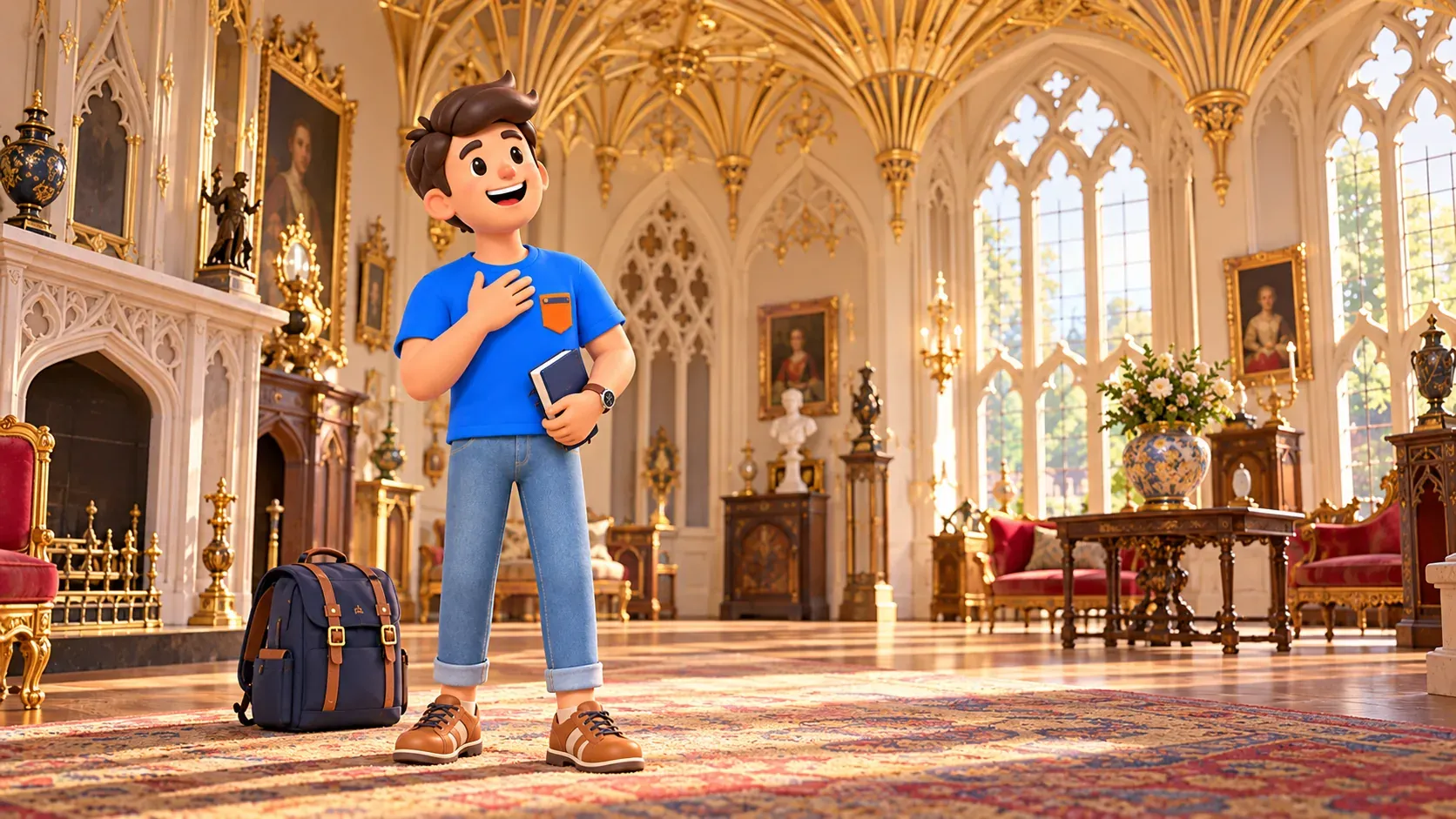
Walpole’s friends John Chute and Richard Bentley helped develop the design. Architectural details drew on Gothic vaulting, tombs and windows, bringing references from larger historical buildings into domestic rooms. Inside, look at the change in light and decorative intensity between spaces. In the Gallery, when available, the gilded fan-vaulted ceiling provides a strong focus. Choose a few features to examine carefully instead of trying to identify every borrowed pattern or decorative source.
The literary connection adds another reason to come. Walpole wrote The Castle of Otranto, widely regarded as the first Gothic novel. The house belongs to that culture of imagination, collecting and storytelling. It does not need an invented haunting or a promised supernatural encounter to feel distinctive. Nor should you assume that everything displayed belonged to Walpole: much of his collection was dispersed in the nineteenth century, and the present museum has its own history of restoration and collecting.
The ordinary house timetable is Wednesday to Sunday, ten to five, with last entry at four. Check special notices before selecting a slot. For example, the house and café are closed on 22 October 2026, and the Gallery has a private closure from half past eleven to half past two on 24 October. A partial room closure is different from the whole house being closed. Choose another time if that room is essential to your visit.
A four-hour outline for Strawberry Hill
Start at Strawberry Hill railway station. The operator gives five to ten minutes on foot to the house; our fifteen-minute allowance includes arrival and finding the entrance. Save the exact station name when planning the train, and check the current service. The house is at 268 Waldegrave Road. Its railway connection should not be mistaken for a direct Underground stop, or for an arrival at Twickenham town centre with the same short approach.
- Arrival: fifteen minutes. Station walk and entry arrangements.
- Selected interiors: ninety minutes. Within the operator’s typical one-to-two-hour visit.
- Garden and exterior: thirty-five minutes. A short walk and a few different views.
- Café break: forty minutes. A simple meal rather than a lengthy afternoon tea.
- Station return: fifteen minutes. Public streets back to Strawberry Hill station.
- Reserve: forty-five minutes. For extra observation, queues or a slower visit.
Book the paid house ticket for your date and category. Online booking offers the better price and guaranteed availability; tickets on arrival cost more and depend on space. Check concession conditions rather than assuming eligibility from the language you speak or where you live. The optional Gift Aid arrangement has its own UK taxpayer conditions. The garden is free, but check its current hours separately; an open garden does not provide access to paid interiors.
The garden offers a gentler finish after the house’s decorative intensity. Look back at the white elevations and allow yourself a pause among the trees. You do not need to extend the walk to a distant riverside destination to complete the experience. Café opening and hot-food service have their own hours, so check them if lunch is important. A booked afternoon tea or special tour should replace part of this outline and may require a longer visit.

Check practical limits, then keep the day spacious
For Marble Hill, ask about the current lift failure before relying on access to the upper floor. The usual access description mentioning a lift does not override that temporary notice. Staff can explain entrance assistance and the areas available. At Strawberry Hill, the lift serves the first floor but not the second: the Library, Walpole’s Bedchamber and Plaid Bedchamber are not wheelchair accessible. Garden lawns can also be uneven, even where the route to the café is step-free.
With RoadMe, it is easier to turn your preferred balance of architecture, gardens and rest into a personal plan for the complete trip. Try the app when arranging the remaining days, giving another historic house its own time rather than compressing both visits into this half-day.
Bring a small bag and follow staff guidance inside both houses. Strawberry Hill has no cloakroom and asks visitors not to bring large bags; Marble Hill advises against wearing backpacks in its small spaces. Respect photography rules and current room closures. Finish at the station chosen for your outing. For another day in west London, our Chiswick garden and Thames walk offers a separate plan, with its own current house closure to consider.


